
Bonsái y paz
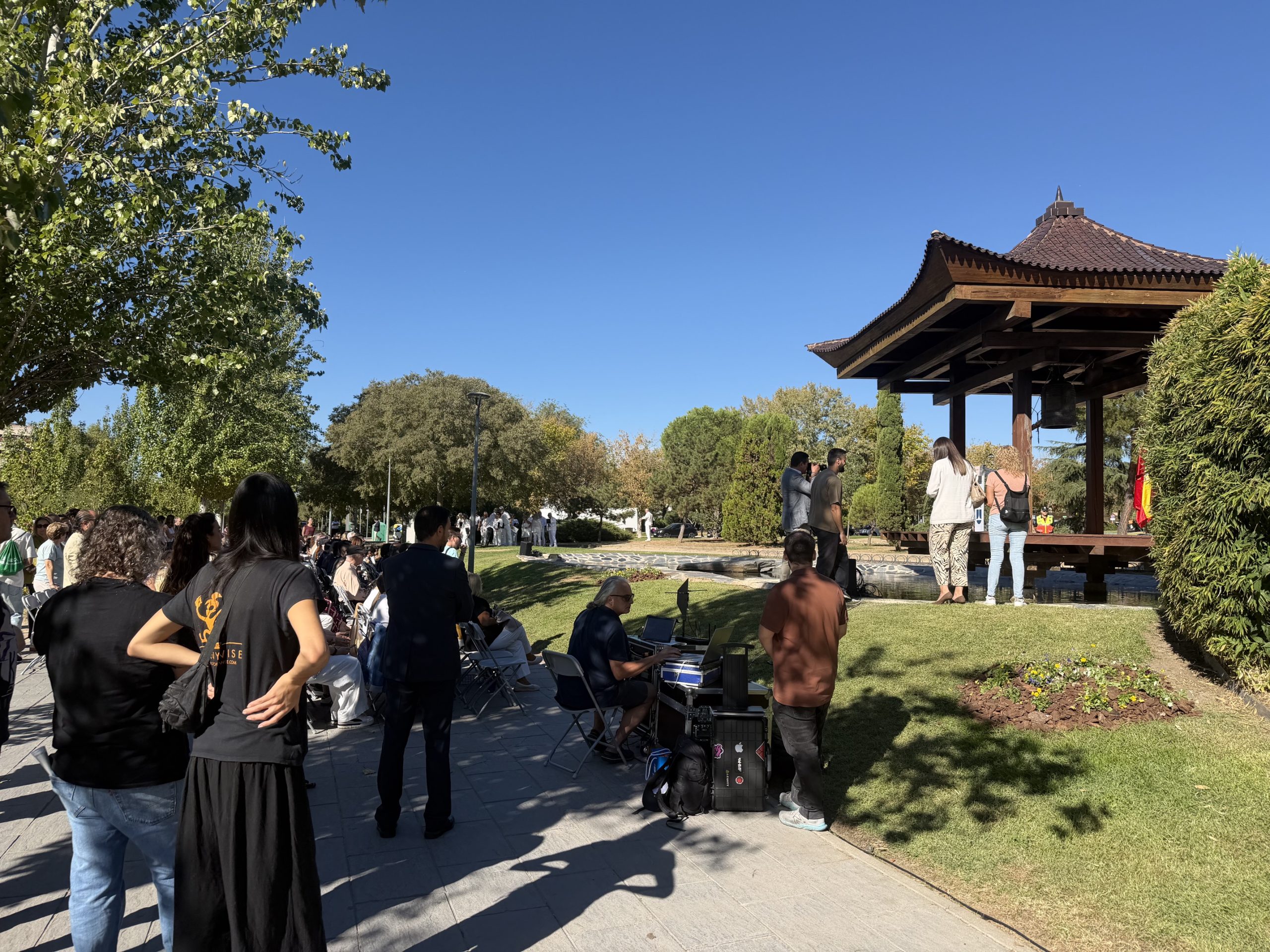
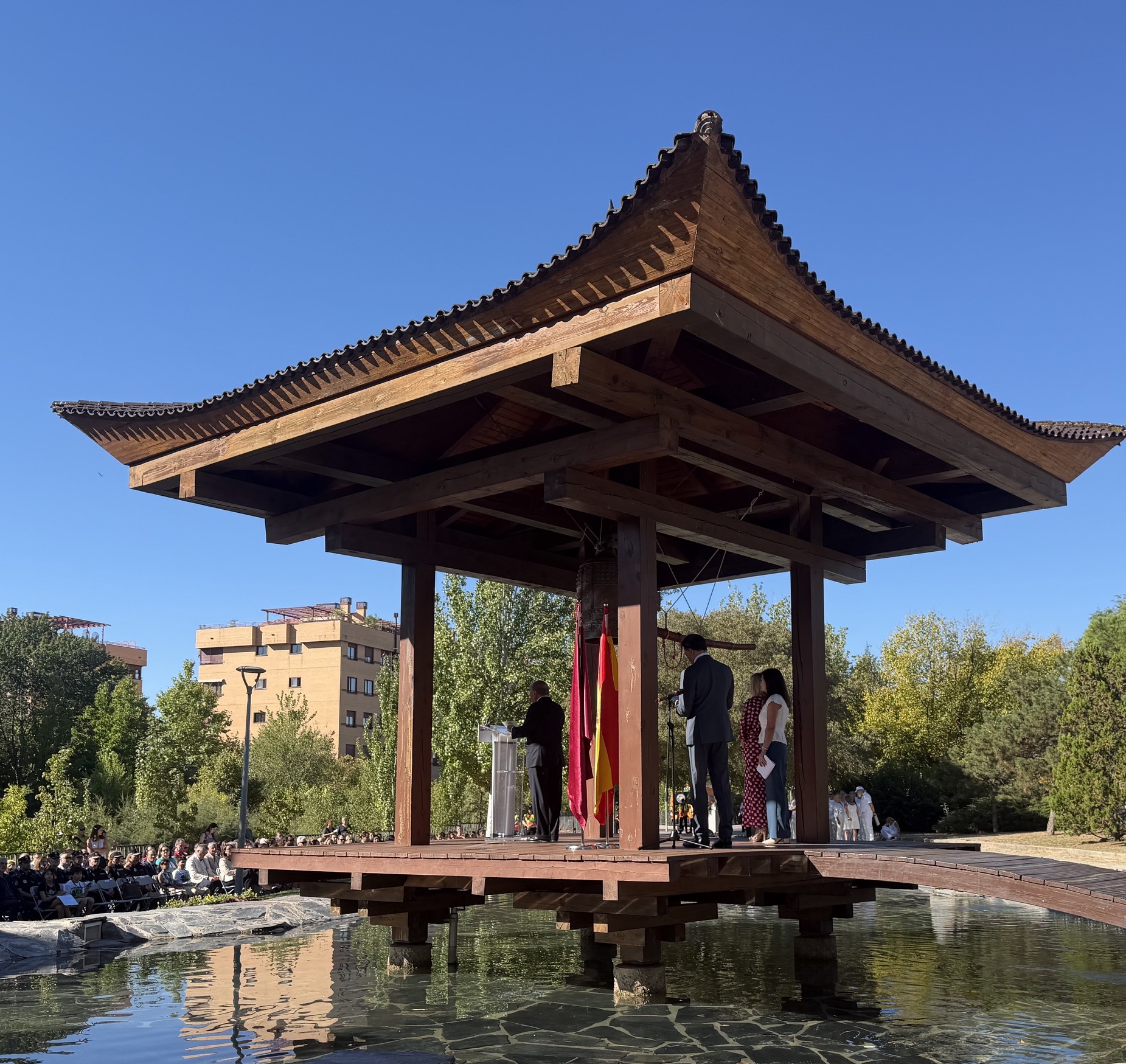
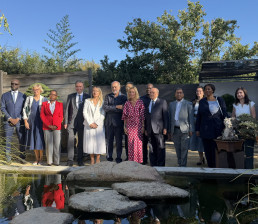
Un año más, el 21 de septiembre, celebramos el Día Internacional de la Paz. Desde hace dos ediciones por iniciativa del Ayuntamiento, en el jardín recibimos a las delegaciones diplomáticas invitadas a celebrar este día frente a la campana de la Paz.
La historia de las 23 reproducciones que hay en el mundo de la campana de la Paz (donada por Japón a las Naciones Unidas) y que hermanan a Alcobendas con ciudades como Okinawa, Ankara, Quito, Varsovia o Ulan Bator, ya la conté en otra ocasión…de este año me quedo con este pequeño vínculo entre nuestro jardín y la paz.
Y aquí que nos dedicamos al cultivo, ¿qué mejor vínculo podemos cultivar?
¨…espero que el arte de bonsái nunca muera y mantenga encendida la antorcha de la paz en todo el mundo. Espero que las amistades más cercanas y profundas nos unan. ¨
El espíritu del bonsái. Saburo Kato
Once again this year, on 21 September, we are celebrating the International Day of Peace. For the past two years, on the initiative of the Town Council, we have welcomed diplomatic delegations to the garden to mark this day in front of the Peace Bell.
I have already recounted on another occasion the story of the 23 replicas of the Peace Bell (donated by Japan to the United Nations) that exist around the world, linking Alcobendas with cities such as Okinawa, Ankara, Quito, Warsaw and Ulaanbaatar… but this year, I’d like to focus on this small connection between our garden and peace.
And here, as we devote ourselves to cultivation, what better bond could we possibly cultivate?
‘…I hope that the art of bonsai will never die and will keep the torch of peace burning throughout the world. I hope that our closest and deepest friendships will tie us together.’
Spirit of bonsai. Saburo Kato


BB
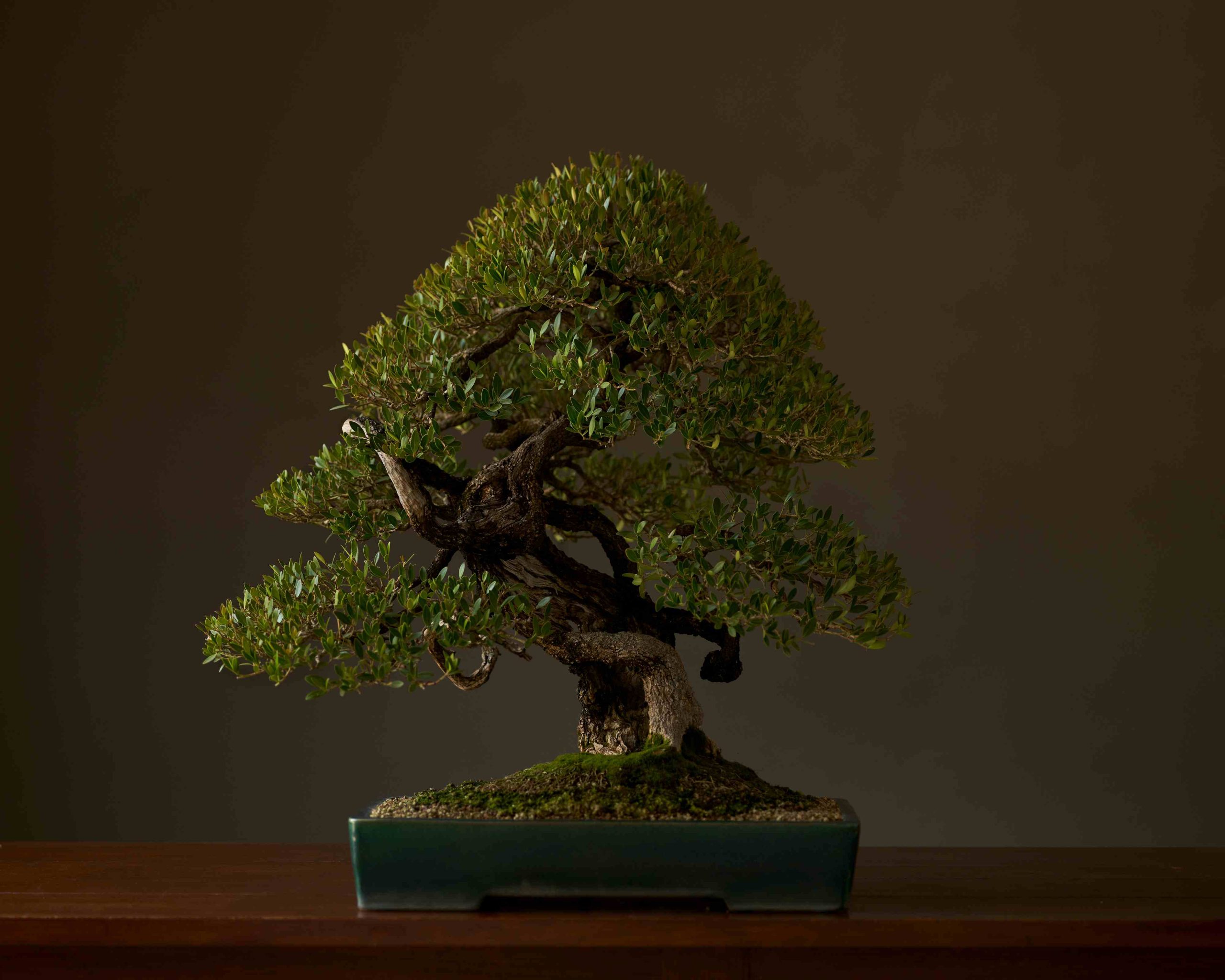
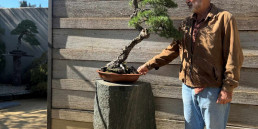
Este es nuestro “BB”, el buxus baleárica de la colección, un árbol diferente; se trata de un endemismo mediterráneo que también se conoce como boj de Mahón, aunque allí en Menorca ya no quedan, este es de Mallorca y su forma desafía el diseño tradicional. Llegó a la colección confundido dentro de un lote de acebuches.
Su imagen para mi está ligada a la música, Luis cuando ve su maceta azul siempre habla de Kind of Blue de Miles Davis y su madera es buenísima para crear instrumetos de viento, con ella se hacen los flabiols (flautas) y los xeremíes (una especie de gaita de las islas baleares).
“Kind of Blue. La trompeta de Miles Davis y la maceta azul de Koyo parecen unirse para hacer bailar a este boj balear…
A los pinos el viento. Luis Vallejo
This is our “BB”, the Balearic boxwood in the collection, a rather unusual tree; it is a Mediterranean endemic species also known as ‘Mahon boxwood’, although there are none left in Menorca – this one is from Mallorca and its shape defies traditional design. It ended up in the collection by mistake, mixed in with a batch of wild olive trees.
For me, it’s closely linked to music: whenever Luis sees its blue pot, he always talks about Miles Davis’s *Kind of Blue*, and its wood is excellent for making wind instruments – it’s used to make flabiols (flutes) and xeremíes (a type of bagpipe from the Balearic Islands).
Kind of Blue. Miles Davis’s trompet and Koyo’s blue pot appear to tram up to make this Balearic boxwood dance…
The Wind Among the trees. Luis Vallejo

Las piedras que hablan
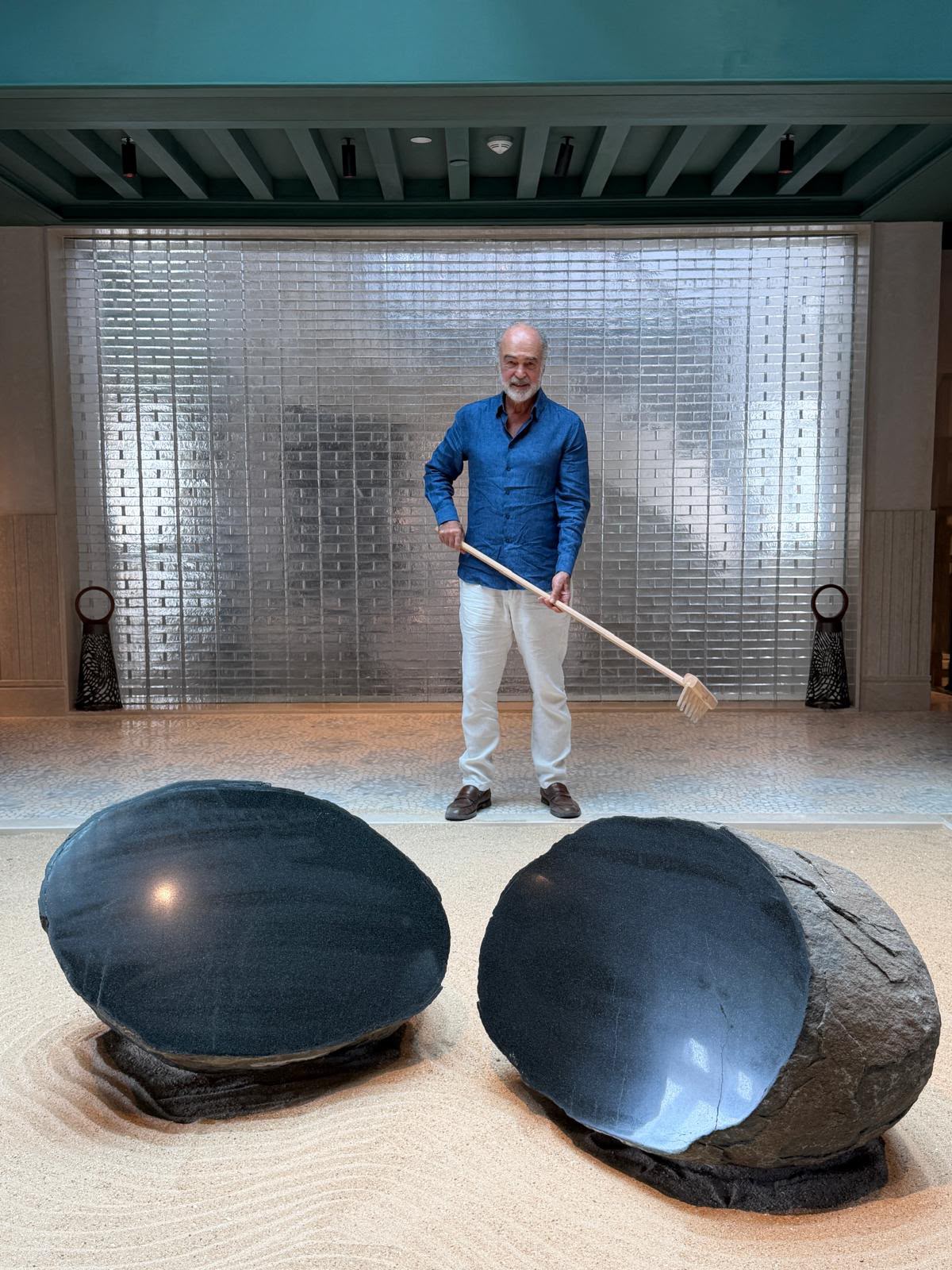


Hoy colocamos algunas piedras en la exposición con los suibanes de Kawasemi Studio. Mientras las coloca, Luis explica cada piedra, esta surgió de una laguna, esta tiene una densidad espectacular, esta está cortada y pulida para que podamos ver un pedacito de cielo. Luego las riega. Las piedras mojadas parecen más vivas.
Hay personas capaces de hacer hablar a las piedras. Luis es una de ellas, sus piedras hablan. Siempre cuenta que las piedras, sus formas, le encuentran a él y no al revés. Debe ser que lo llaman para que las escoja entre tantas…cada una gritando su origen, su historia o sus posibilidades…tantos años calladas.
A otras personas son las piedras las que les hacen hablar, Paco Gomez en su libro Derivas con Leo, visita la intervención de Luis en la base de la Torre de Sainz de Oiza en Castellana 81. …”La instalación contaba también con unas losas enormes de roca, seccionadas como si fueran lonchas de jamón, que descansaban directamente en el suelo evocando, de forma casi mística, los misterios de la geología terrestre” …
Today we’re placing some stones in the exhibition, using some suibans from Kawasemi Studio. As he arranges them, Luis explains each stone: ‘This one came from a lagoon,’ ‘This one has a spectacular density,’ ‘This one has been cut and polished so we can see a little piece of sky.’ Then he sprinkles them with water. The wet stones seem more alive.
There are people capable of making stones speak. Luis is one of them; his stones speak. He always says that the stones—their shapes—find him, and not the other way round. It must be that they call out to him so that he might choose them from amongst so many… each one proclaiming its origin, its history or its potential… after so many years of silence.
For some people, it is the stones that inspire them to speak. In his book *Derivas con Leo*, Paco Gómez visits the base of the Sainz de Oiza Tower at Castellana 81 during his wanderings and says: …”The installation also featured enormous slabs of rock, cut as if they were slices of ham, resting directly on the floor and evoking, in an almost mystical way, the mysteries of the Earth’s geology” …
Septiembre

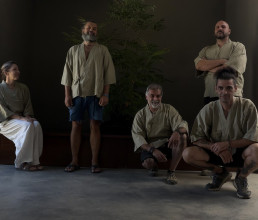
Llegó septiembre. Tras el parón del verano volvemos a abrir el jardín al público.
Es lo que tiene este momento del año, no importa cuantos años lleves haciendo lo mismo que te entran ganas de empezar de nuevo.
Aquí estamos todos listos y con la ilusión intacta. Todo es posible.
El equipo del jardín.
(estrenamos kimonos de @meibokupl)
September is here. After the summer break, we’re reopening the garden to the public.
That’s the thing about this time of year – no matter how many years you’ve been doing the same thing, you still feel like starting afresh.
Here we are, all ready and just as excited as ever. Anything is possible.
The garden team.
(We’re wearing our new kimonos from @meibokupl)