Es una de las cosas mas curiosas de este arte, los árboles pasan por distintas manos, evolucionan, no son fruto del trabajo de una sola persona.
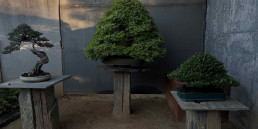
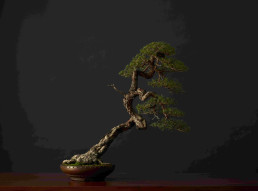
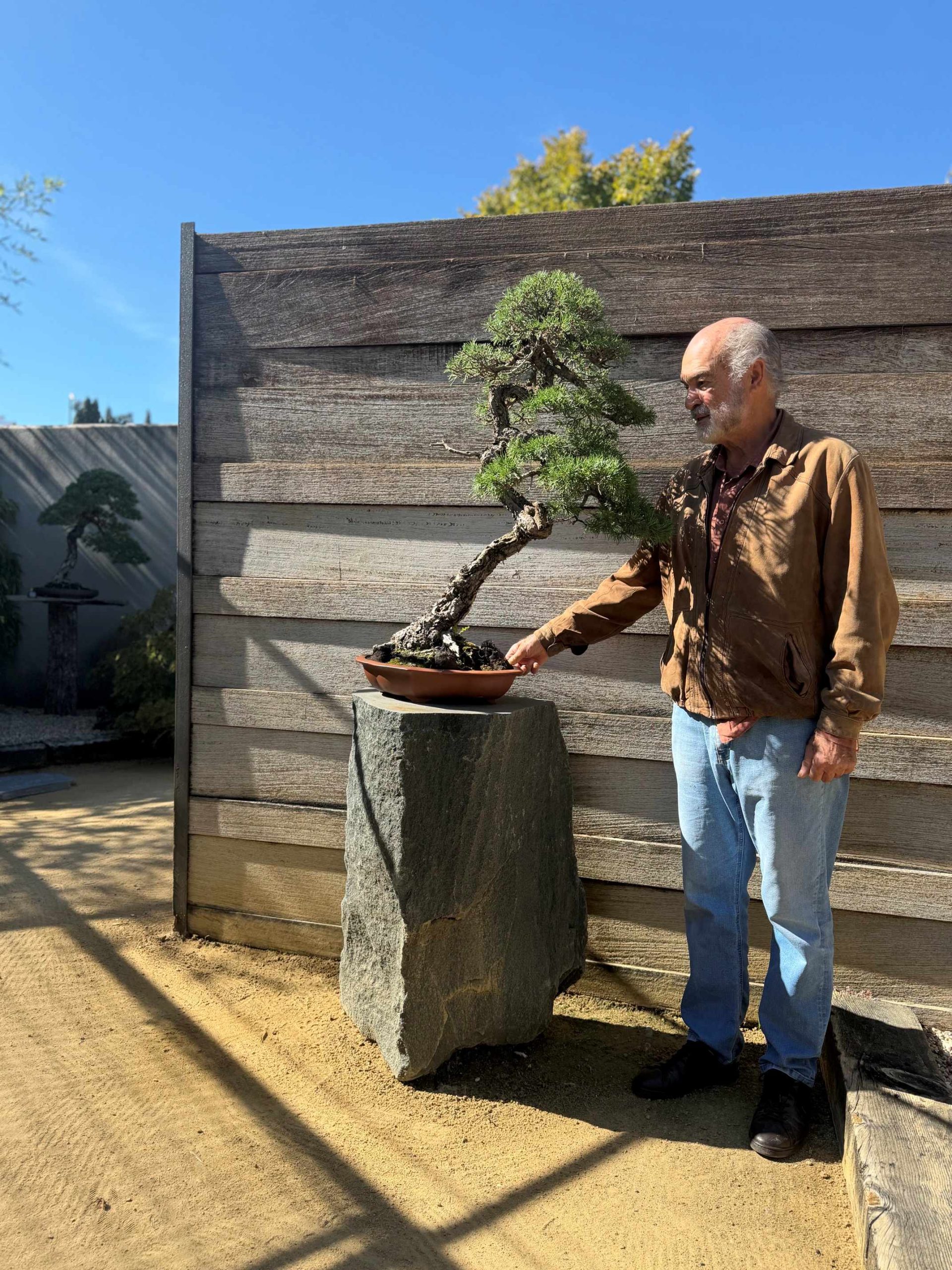
A este pino silvestre lo llamamos “el pino de Chiaru” en honor al maestro Imai Chiaru que lo trabajó hace 16 años. El próximo mes de noviembre, coincidiendo con su visita a España, estará unos días trabajando en el jardín y volverá a ver este árbol del que quizás ni se acuerde…es un ejemplo perfecto del estilo literati, esos árboles que viven rodeados, viéndose obligados a girar sus troncos y crecer altos buscando la luz..
Durante todo el tiempo que lleva en una maceta, e incluso antes, muchas otras personas han intervenido; su historia comienza con quien lo escogió y pensó en primer lugar, y sigue con todos los que le acompañan en su viaje. Lo mejor es que como obra nunca está totalmente terminada, es un ser vivo al que acompañamos el tiempo que lo tenemos con nosotros.
No hay otro arte en el que ocurra nada parecido.
It is one of the most fascinating aspects of this art form: the trees pass through different hands, evolve, and are not the result of a single person’s work.
We call this Scots pine ‘Chiaru’s pine’ after the master Imai Chiaru, who worked on it 16 years ago. Next November, during his visit to Spain, he’ll be spending a few days working in the garden and will see this tree again – a tree he may not even remember…It is a perfect example of the ‘literati’ style – those trees that grow surrounded by other trees, twisting their trunks and growing tall in search of the light.
During all the time it has been in a pot, and even before that,many other people have been involved; its story begins with the person who first chose it and conceived the idea and continues with everyone who has accompanied it on its journey. The best thing is that, as a work of art, it is never quite finished; it is a living being that we accompany for as long as it remains with us.
There is no other art form in which anything quite like this happens.