La belleza en los objetos cotidianos
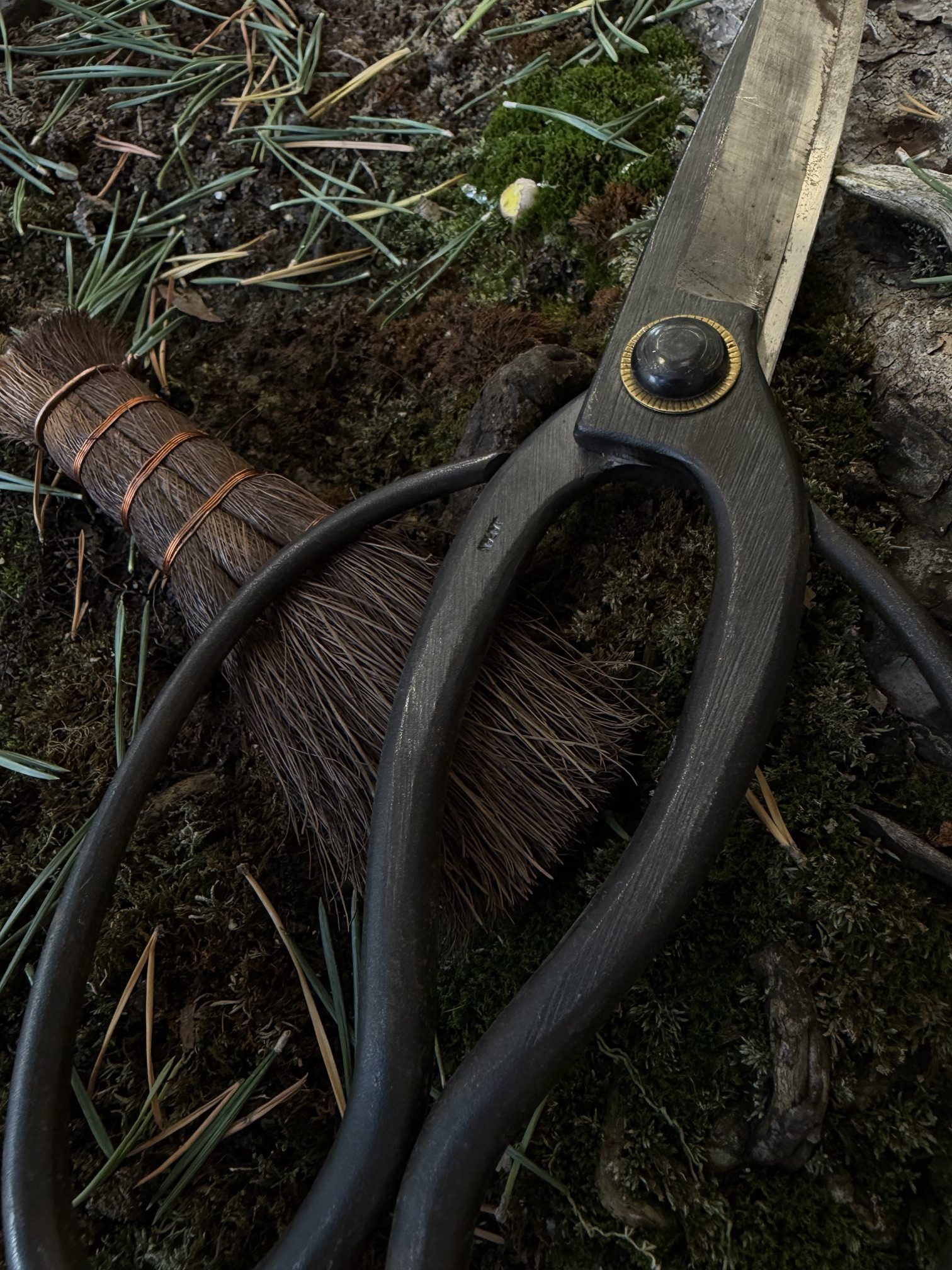
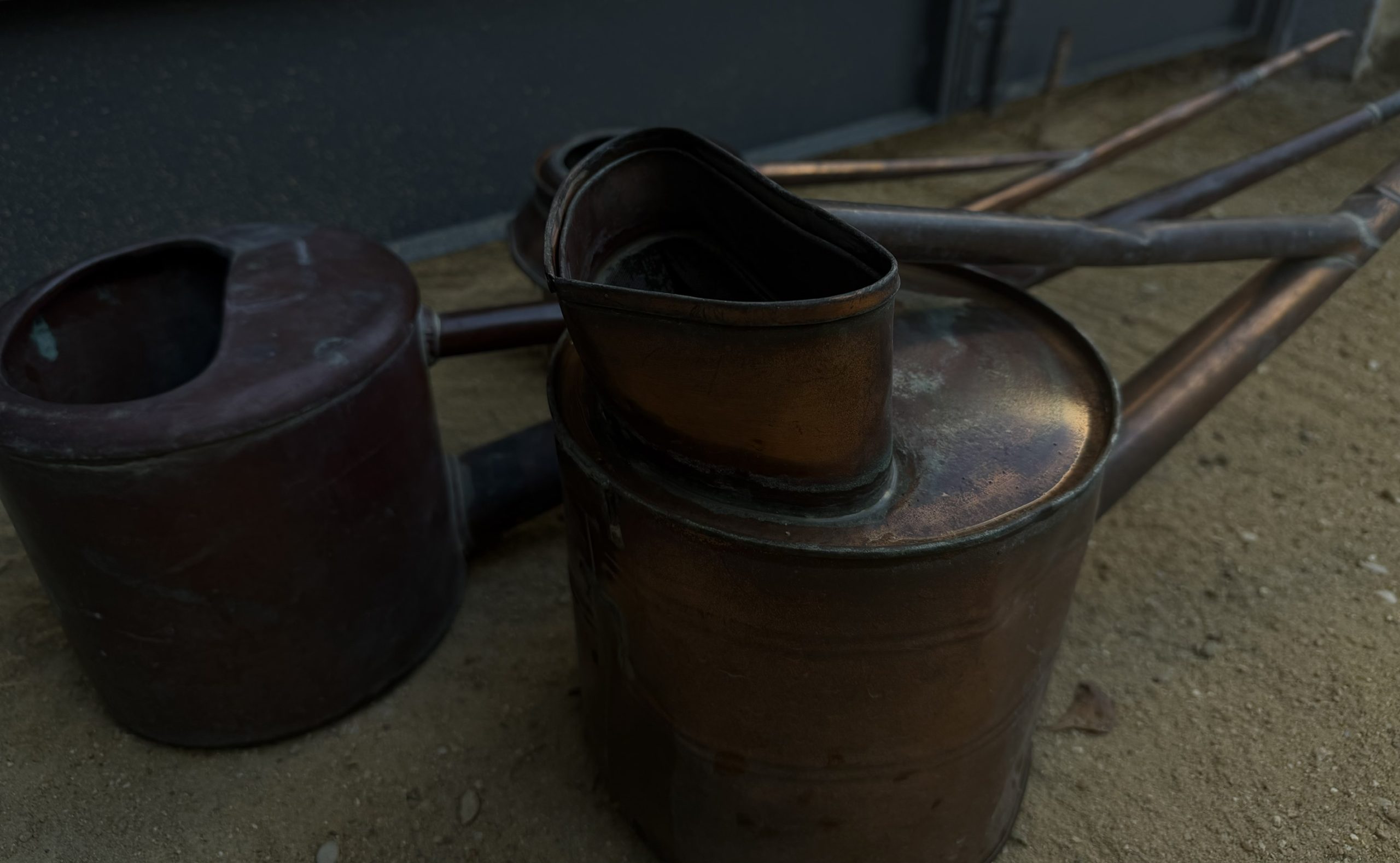
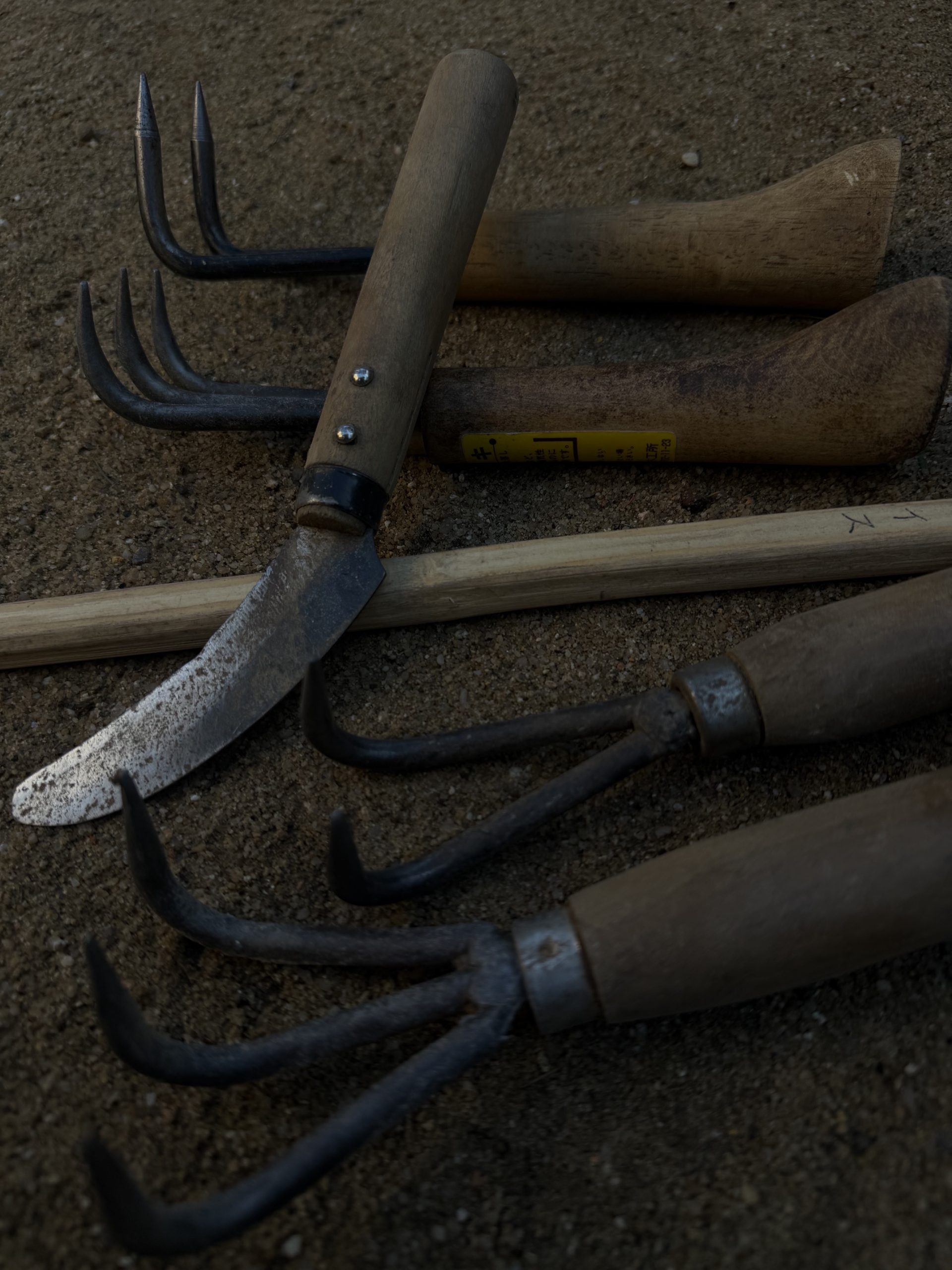
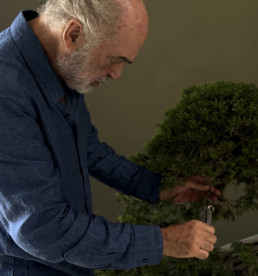
Hemos hecho obra en el taller. Poca cosa; ampliar la puerta (ya no cabían algunos árboles) cambiar algunos muebles, ordenar, pintar… de repente ha cambiado la luz y me ha hecho pensar en la importancia de la belleza cotidiana y lo mucho que nos influye.
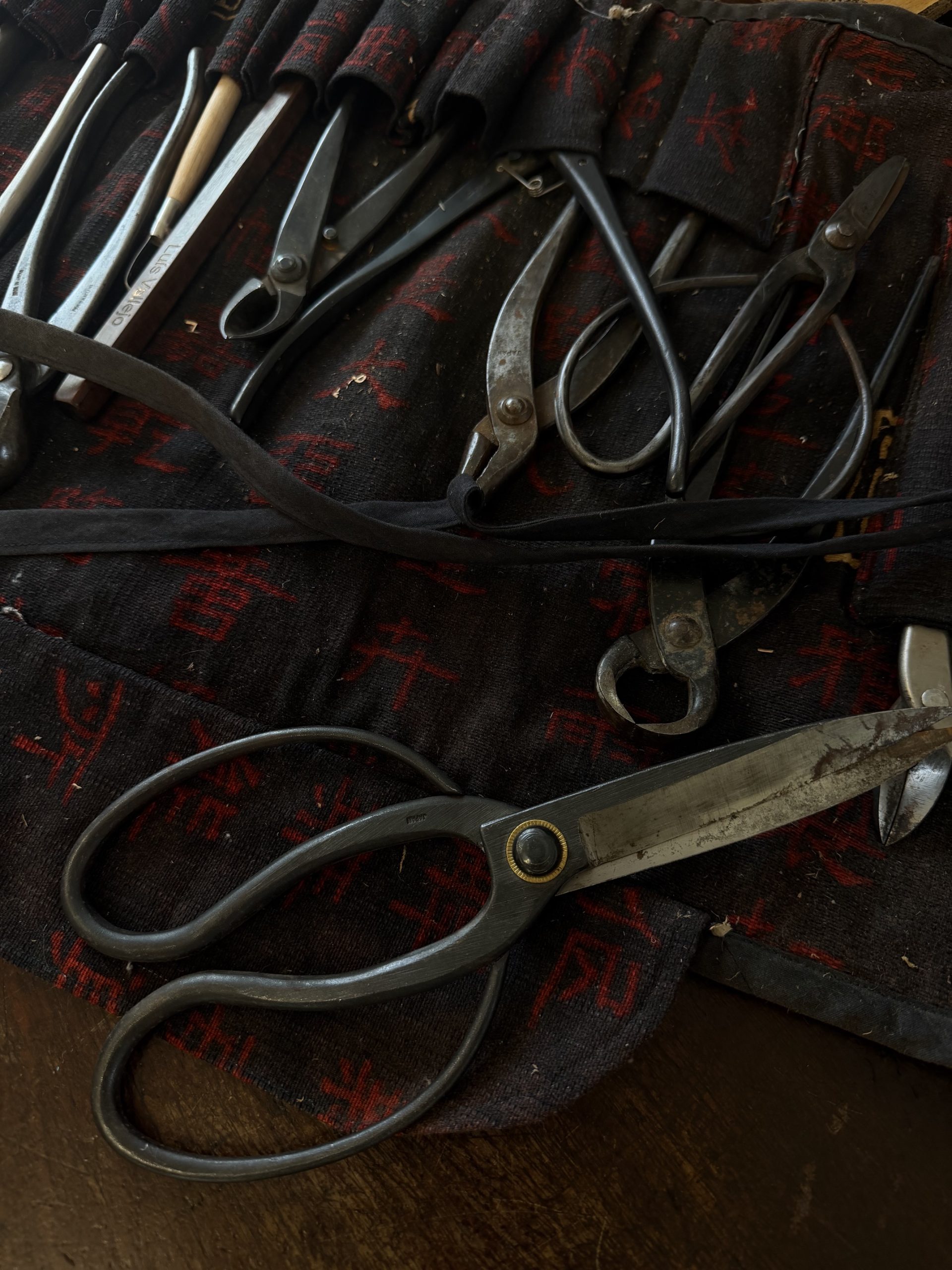
A medio camino entre el arte y la artesanía, vivimos rodeados de materiales y herramientas muy estéticas, las de bonsái tienen una belleza especial, fueron adaptadas de otros oficios por la necesidad de que fueran pequeñas. Una de las marcas míticas, (Masakuni) surgió de adaptar el instrumental de dentistas y cirujanos.
Nuestras herramientas no tienen adornos innecesarios, cada curva y cada ángulo responden a una necesidad, la forma sigue a la función, sus materiales son nobles, están pensadas con honestidad y ahí radica su belleza.
Son como dice Soetsu Yanagi en “La belleza del objeto cotidiano” los mingei; esos objetos cotidianos que usamos a diario y que acompañan silenciosa y humildemente nuestras vidas.
We’ve been doing renovations in the workshop. Nothing major; widening the door (some trees no longer fit through), moving some furniture around, tidying up, painting… Suddenly, the light has changed and it’s made me think about the importance of everyday beauty and just how much it influences us.
Halfway between art and craftsmanship, we live surrounded by highly aesthetic materials and tools; those used in bonsai have a special beauty, having been adapted from other trades due to the need for them to be small. One of the legendary brands, Masakuni, emerged from adapting the instruments used by dentists and surgeons.
Our tools have no unnecessary adornments; every curve and every angle serves a purpose – form follows function. They are made from fine materials and designed with integrity and therein lies their beauty.
As Soetsu Yanagi says in *The Beauty of Everyday Objects*, they are *mingei*: those everyday objects we use daily, which silently and humbly accompany our lives.

Arte compartido
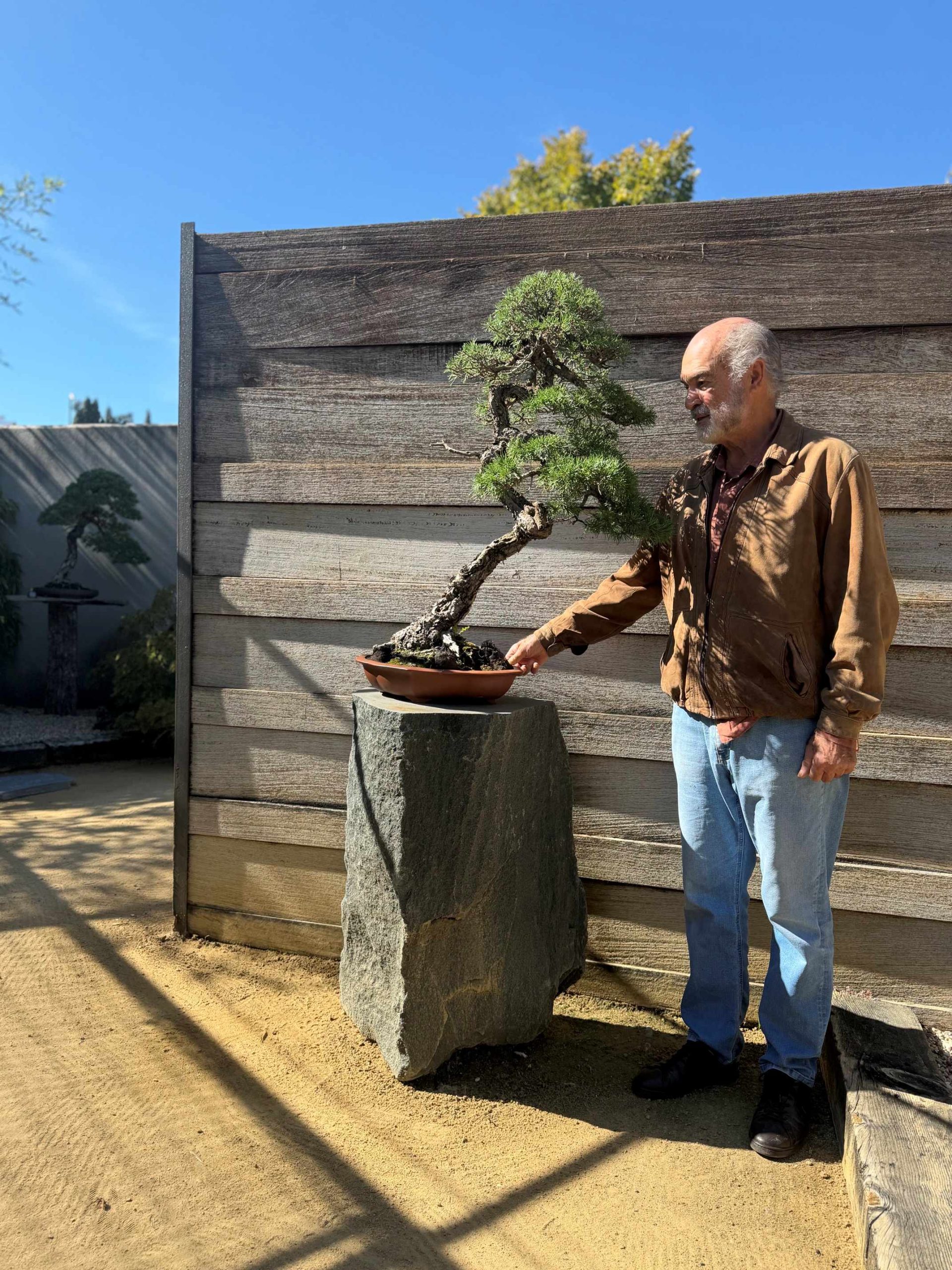
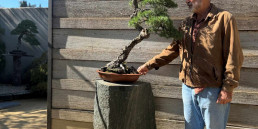
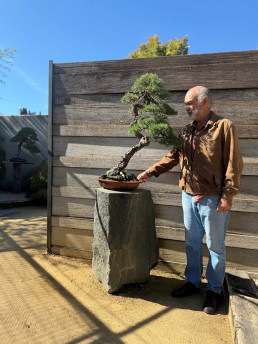
Es una de las cosas mas curiosas de este arte, los árboles pasan por distintas manos, evolucionan, no son fruto del trabajo de una sola persona.
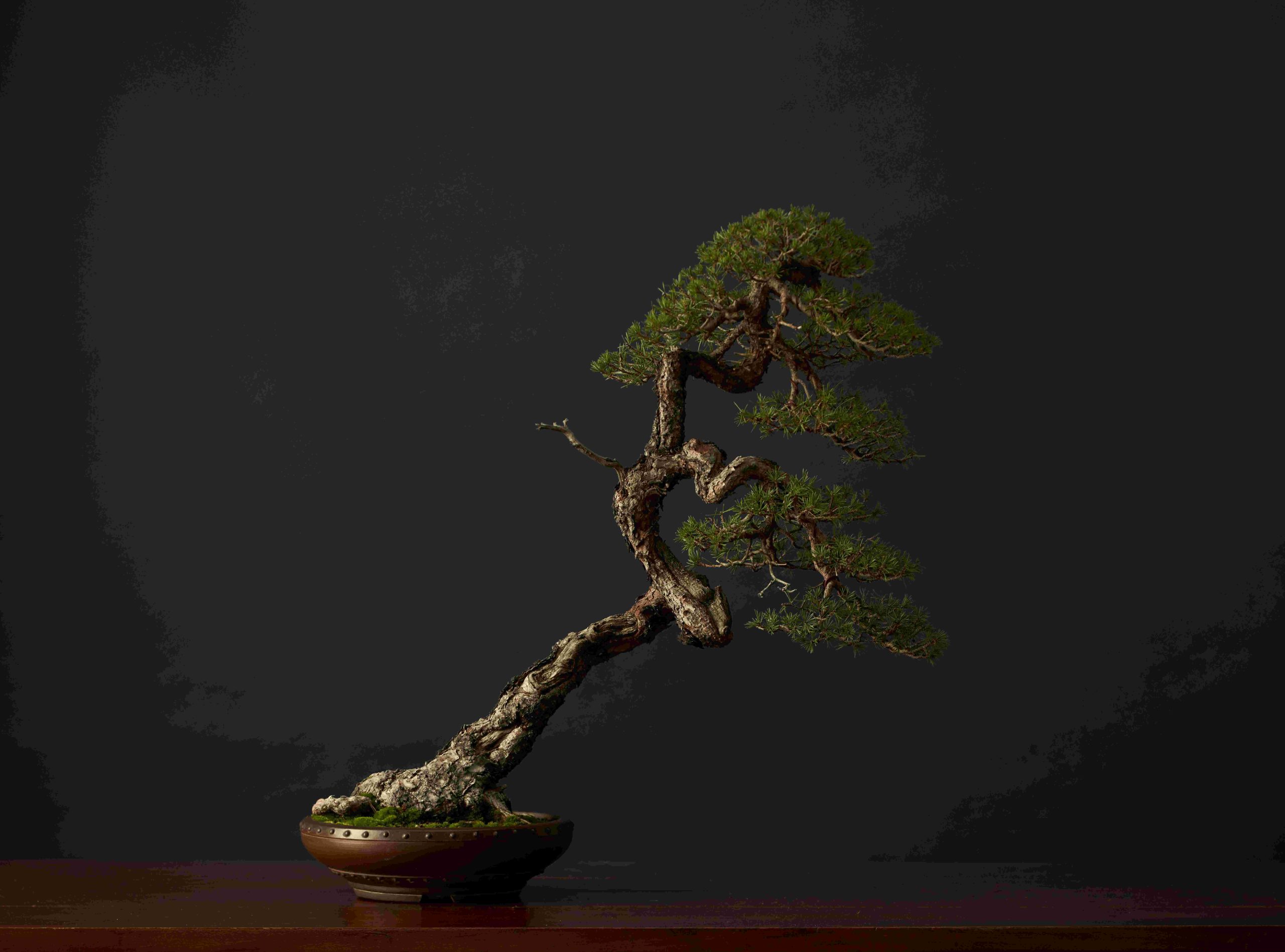
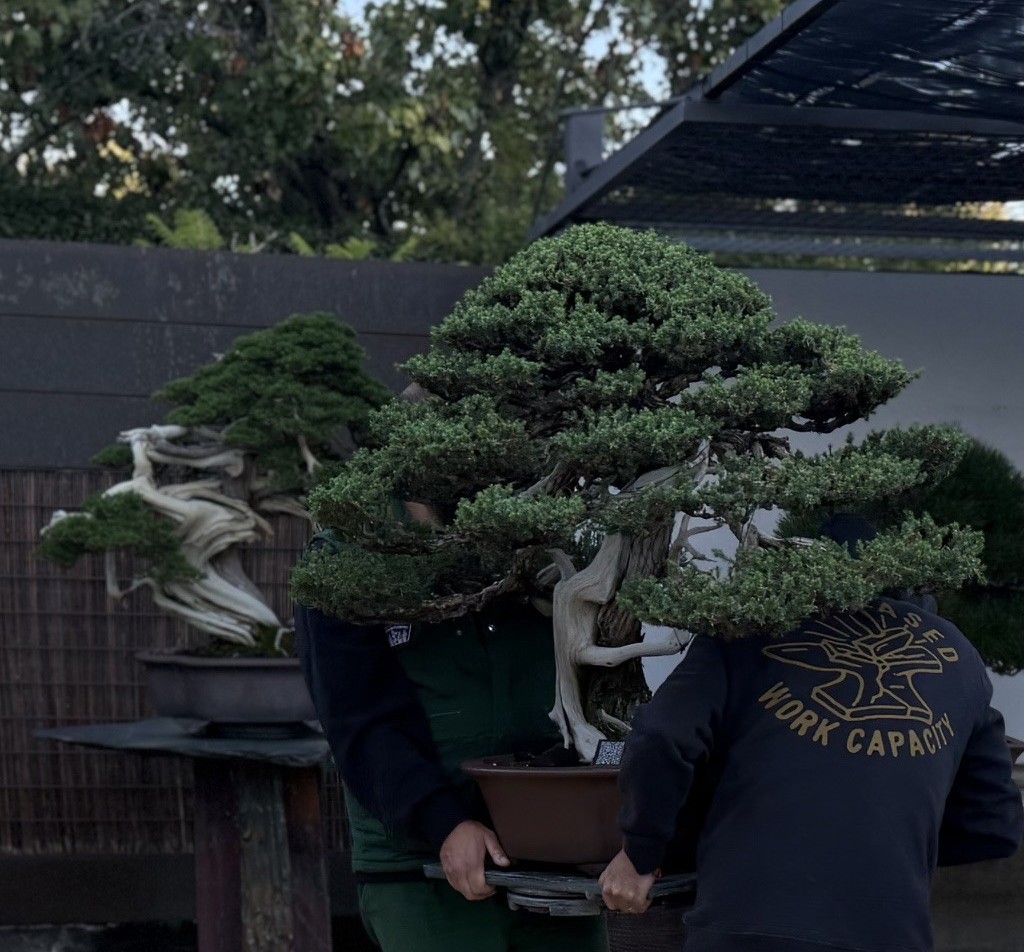
A este pino silvestre lo llamamos “el pino de Chiaru” en honor al maestro Imai Chiaru que lo trabajó hace 16 años. El próximo mes de noviembre, coincidiendo con su visita a España, estará unos días trabajando en el jardín y volverá a ver este árbol del que quizás ni se acuerde…es un ejemplo perfecto del estilo literati, esos árboles que viven rodeados, viéndose obligados a girar sus troncos y crecer altos buscando la luz..
Durante todo el tiempo que lleva en una maceta, e incluso antes, muchas otras personas han intervenido; su historia comienza con quien lo escogió y pensó en primer lugar, y sigue con todos los que le acompañan en su viaje. Lo mejor es que como obra nunca está totalmente terminada, es un ser vivo al que acompañamos el tiempo que lo tenemos con nosotros.
No hay otro arte en el que ocurra nada parecido.
It is one of the most fascinating aspects of this art form: the trees pass through different hands, evolve, and are not the result of a single person’s work.
We call this Scots pine ‘Chiaru’s pine’ after the master Imai Chiaru, who worked on it 16 years ago. Next November, during his visit to Spain, he’ll be spending a few days working in the garden and will see this tree again – a tree he may not even remember…It is a perfect example of the ‘literati’ style – those trees that grow surrounded by other trees, twisting their trunks and growing tall in search of the light.
During all the time it has been in a pot, and even before that,many other people have been involved; its story begins with the person who first chose it and conceived the idea and continues with everyone who has accompanied it on its journey. The best thing is that, as a work of art, it is never quite finished; it is a living being that we accompany for as long as it remains with us.
There is no other art form in which anything quite like this happens.
Cambio de estación
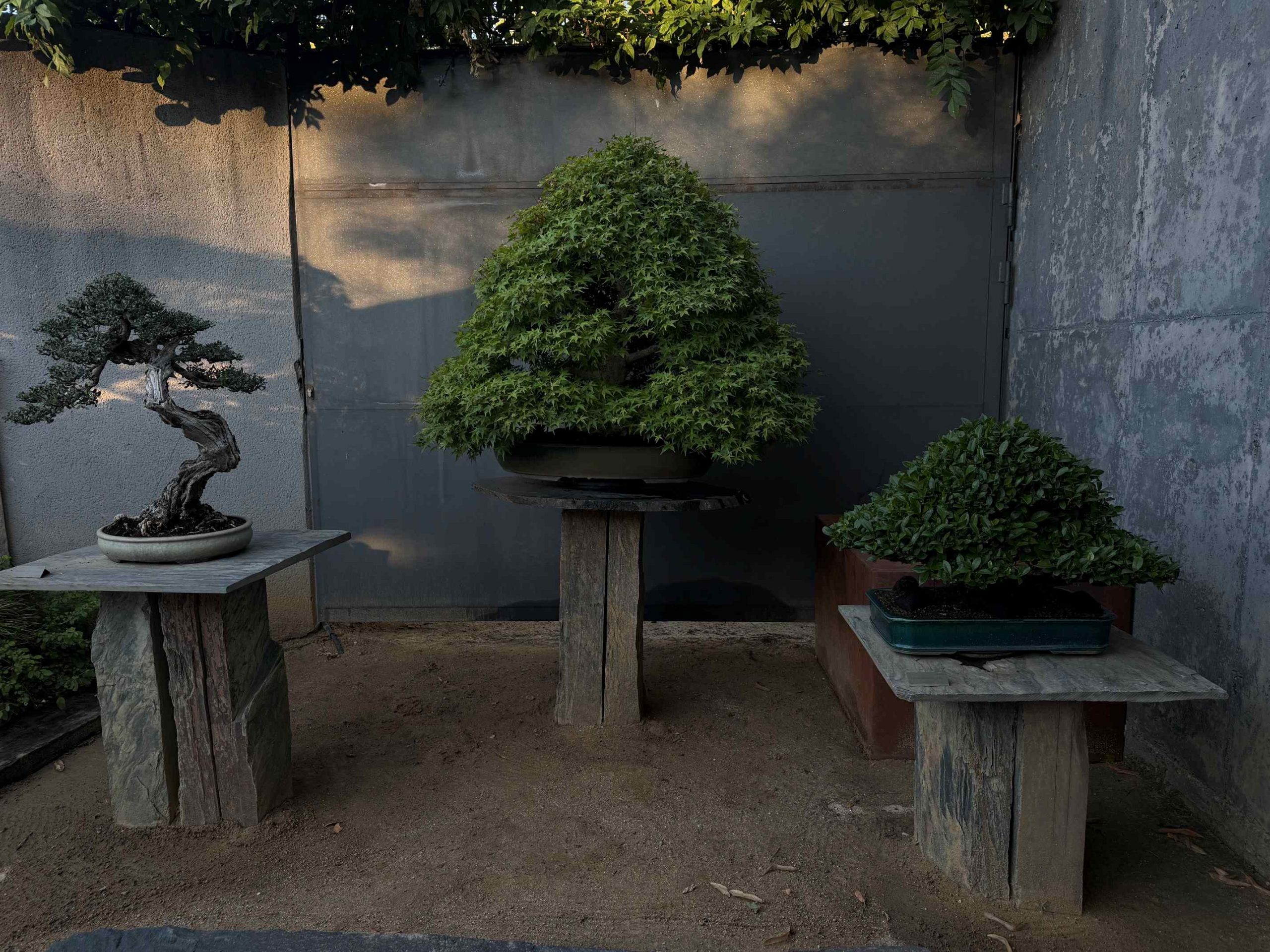
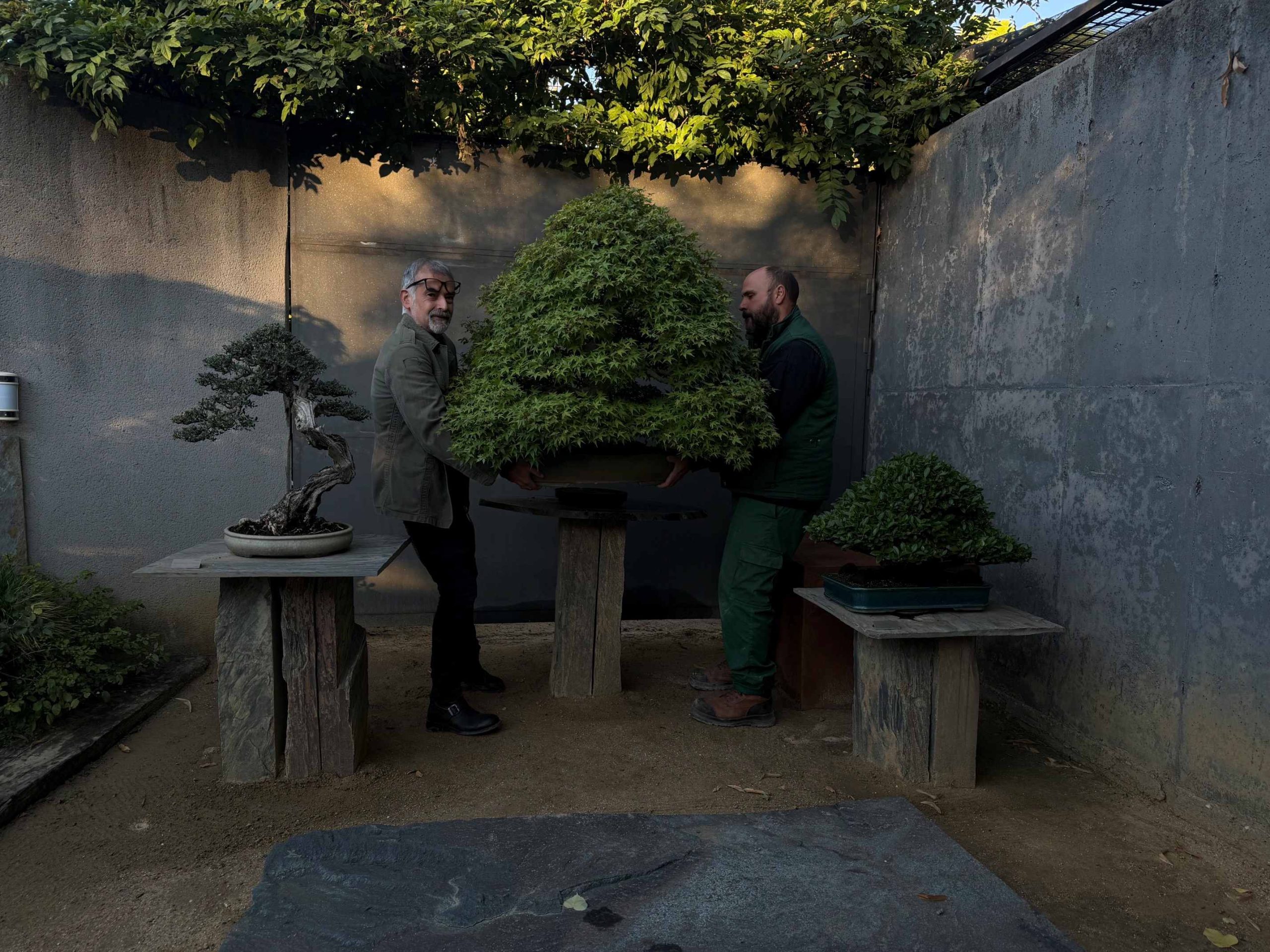
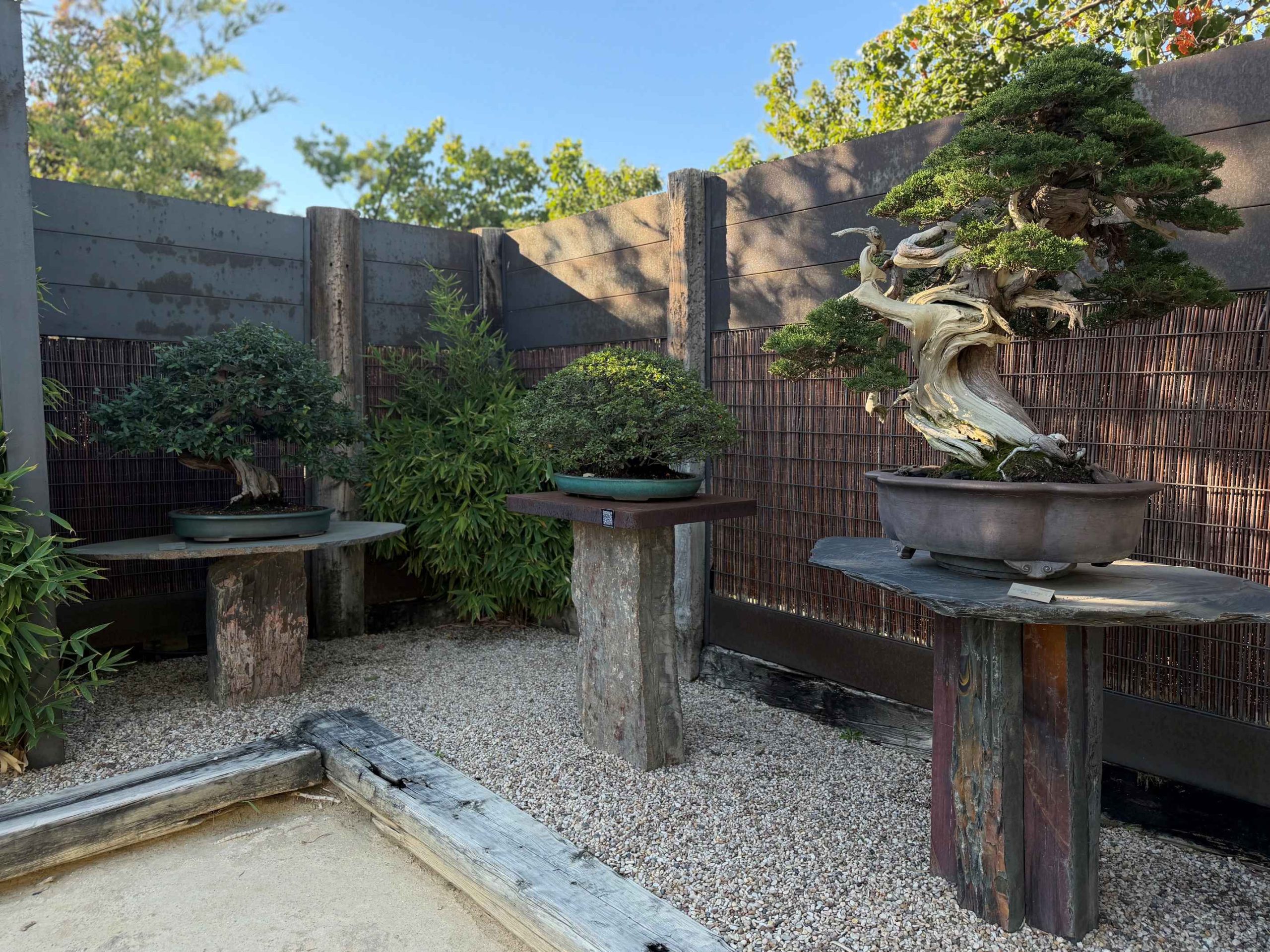
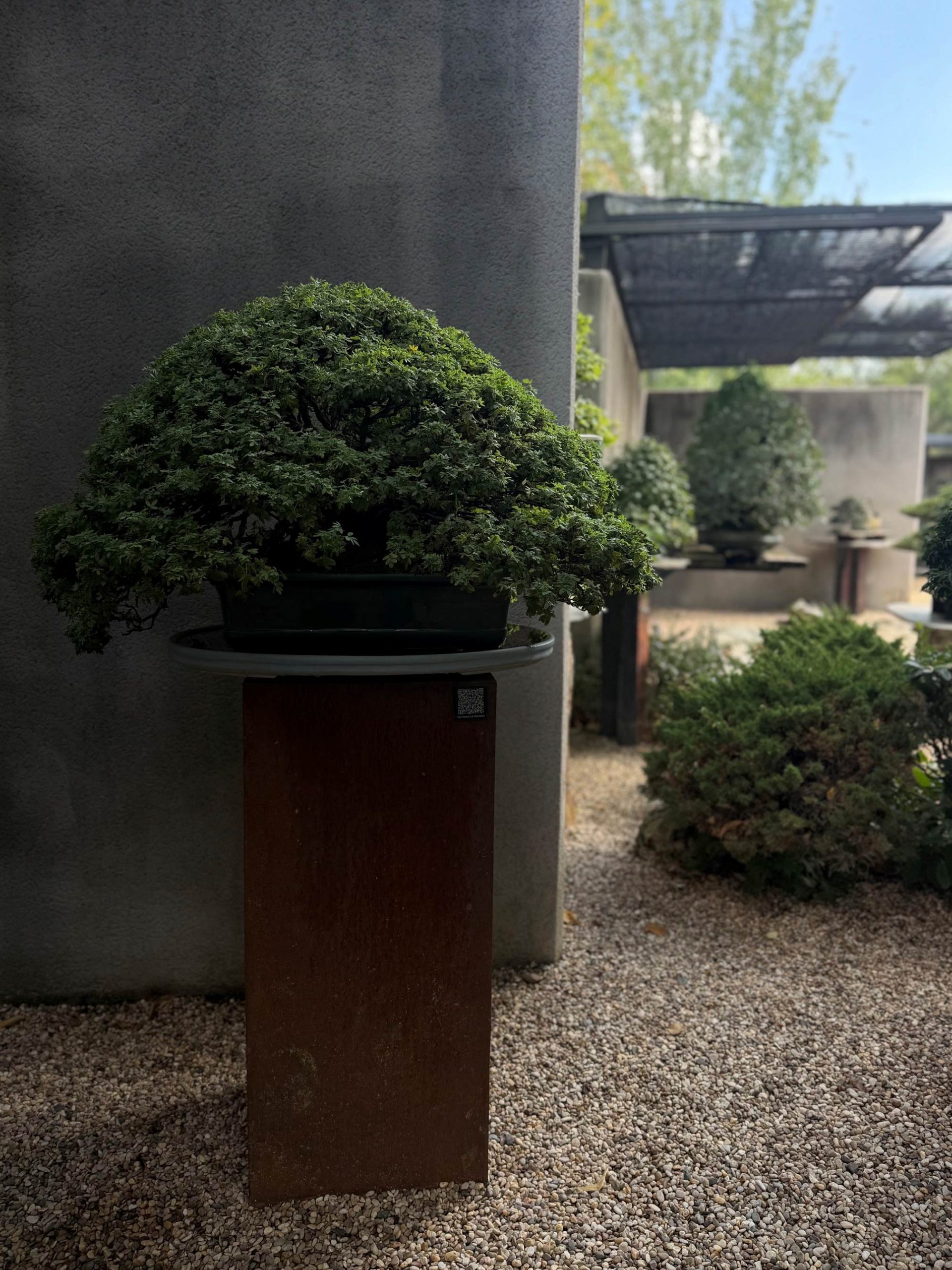
Con los cambios de estación siempre hay cambios en el jardín y para el otoño nos volvemos especialmente locos.
Quienes nos visitan pueden pensar que es una exposición fija pero no es así, como dice Luis se trata de una instalación pensada para emocionar, cambia constantemente. Nos pasamos gran parte del tiempo moviendo los árboles de un sitio a otro…ahora que sacamos por fin los caducos de las zonas de sombra, hay que pensar en las especies que los van a acompañar en este periodo de cambios. No hay otoño sin el contraste verde de las coníferas. El equilibrio perfecto entre lo que se transforma y lo que permanece.
Para colocarlos se tiene en cuenta todo: la especie, la forma, la altura, su inclinación. Los espacios vacíos, el agua, las plantas, la piedra.
Esta semana estamos en eso.
With the changing seasons, there are always changes in the garden, and we go particularly crazy for autumn.
Visitors might think it’s a permanent exhibition, but that’s not the case; as Luis says, it’s an installation designed to inspire emotion, and it’s constantly changing. We spend a great deal of time moving the trees from one place to another… now that we’ve finally removed the deciduous trees from the shaded areas, we need to think about the species that will accompany them during this period of changing colours. There’s no autumn without the green contrast of the conifers. The perfect balance between what changes and what remains the same.
When positioning them, we take everything into account: the species, the shape, the height, and their angle. The empty spaces, the water, the plants, the stone.
That’s what we’re doing this week.
Granado
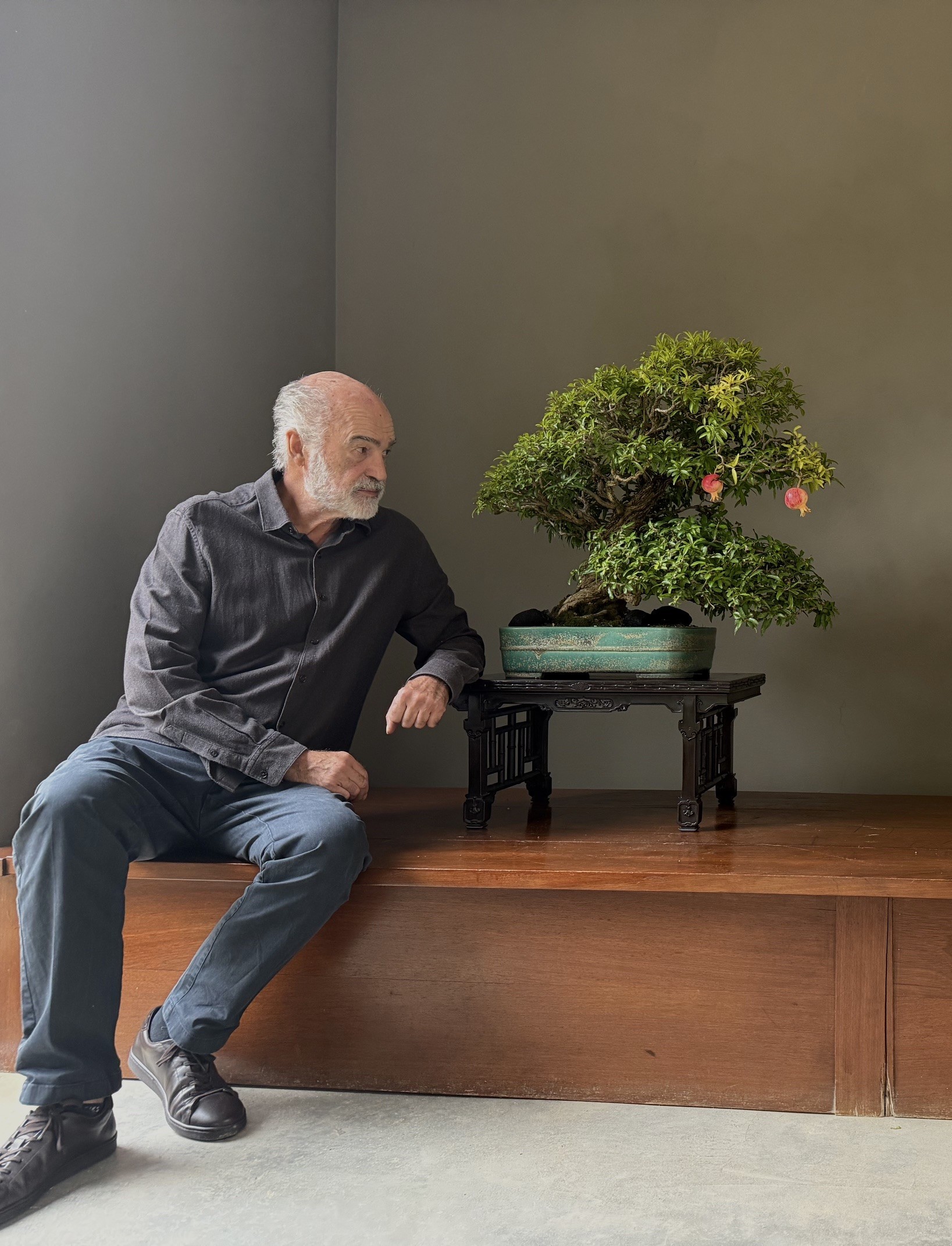
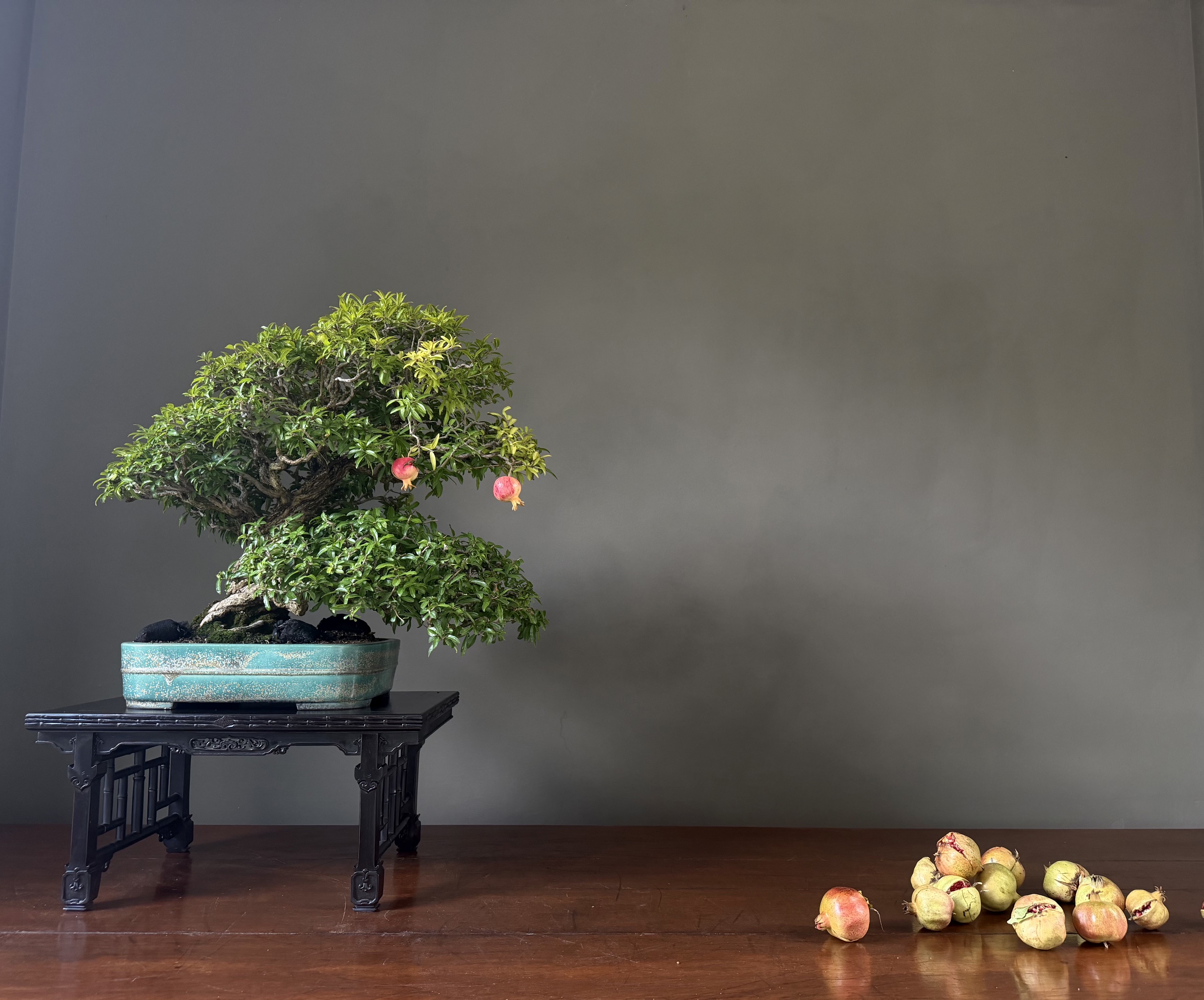
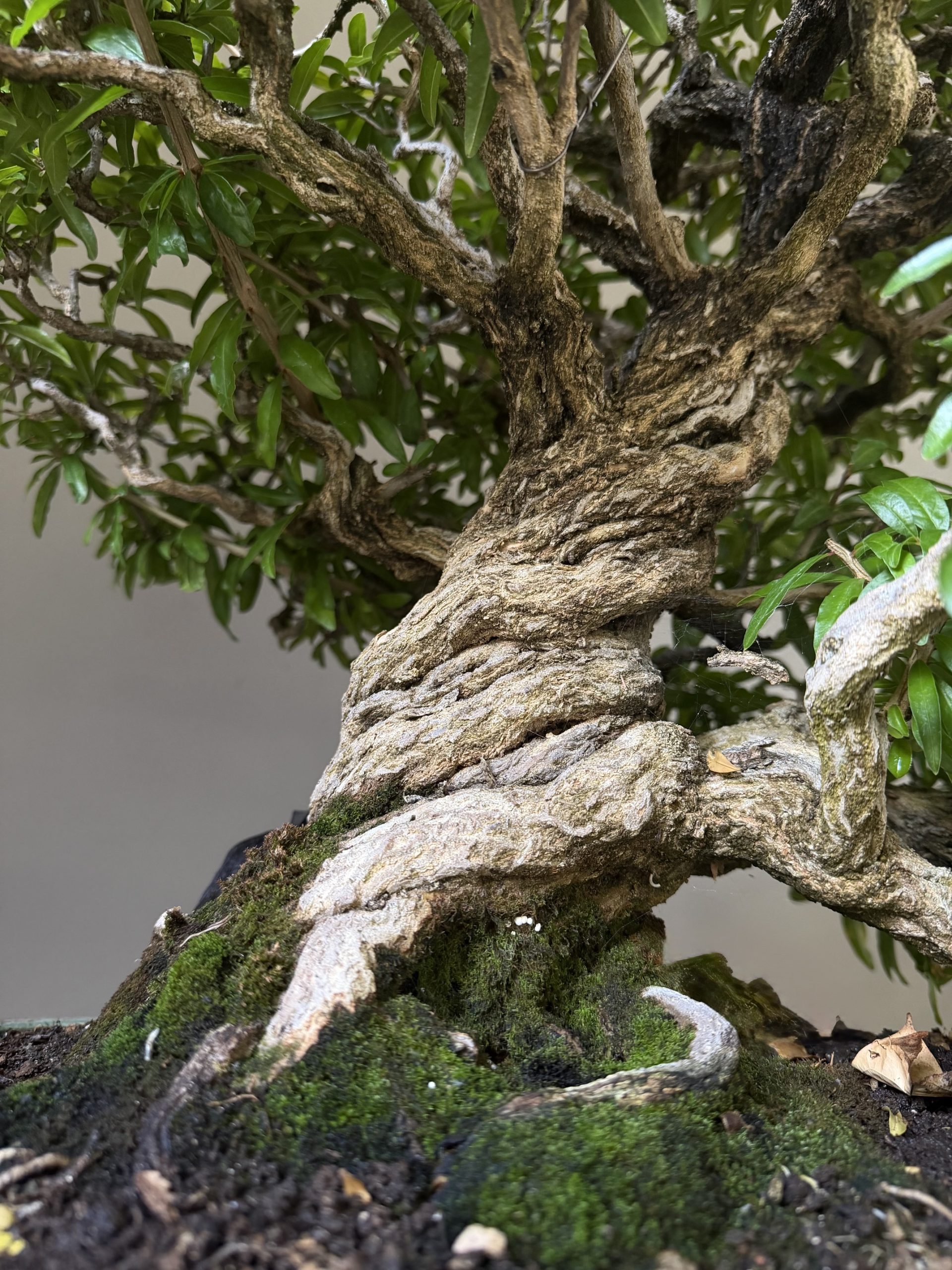
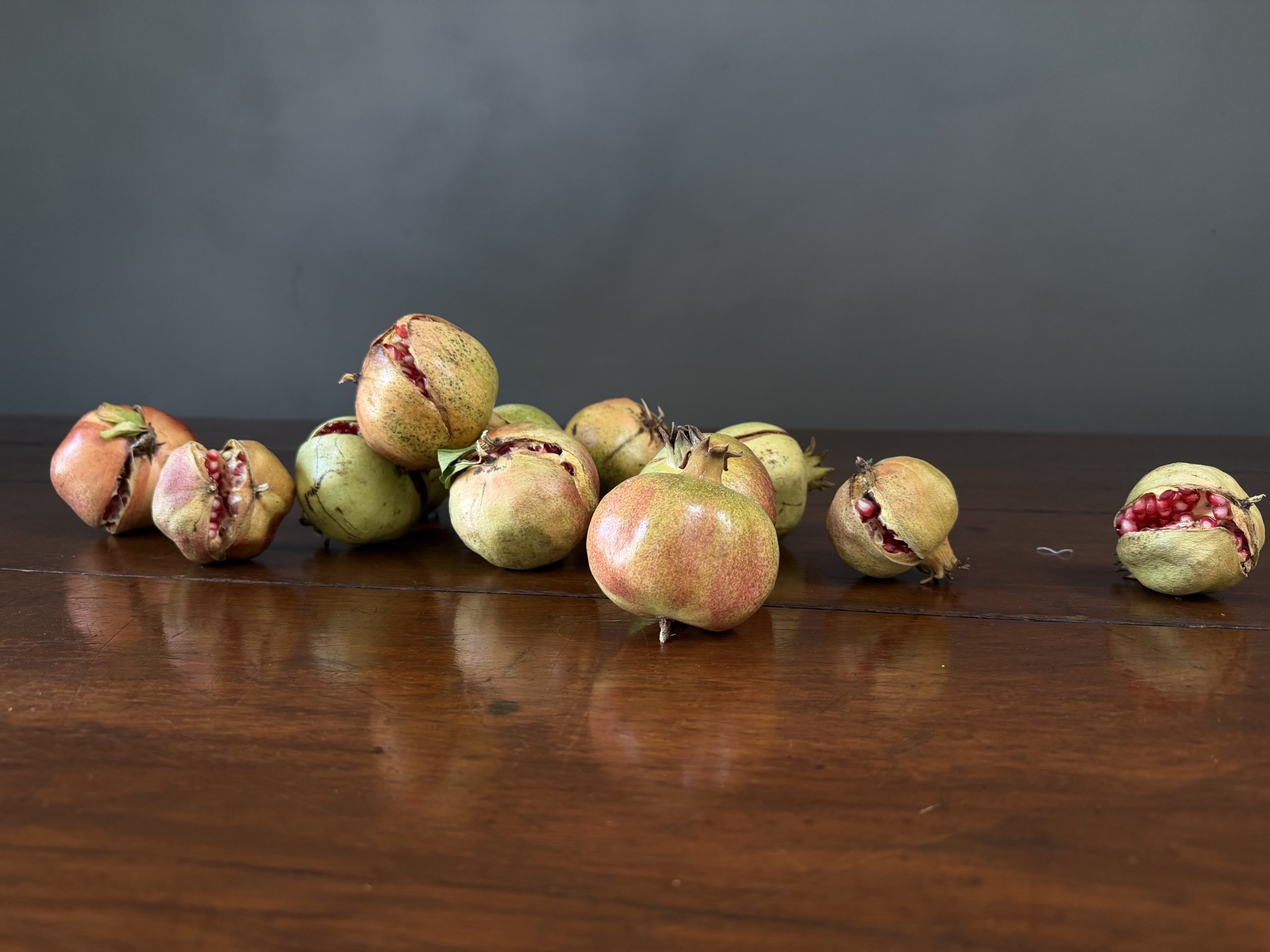
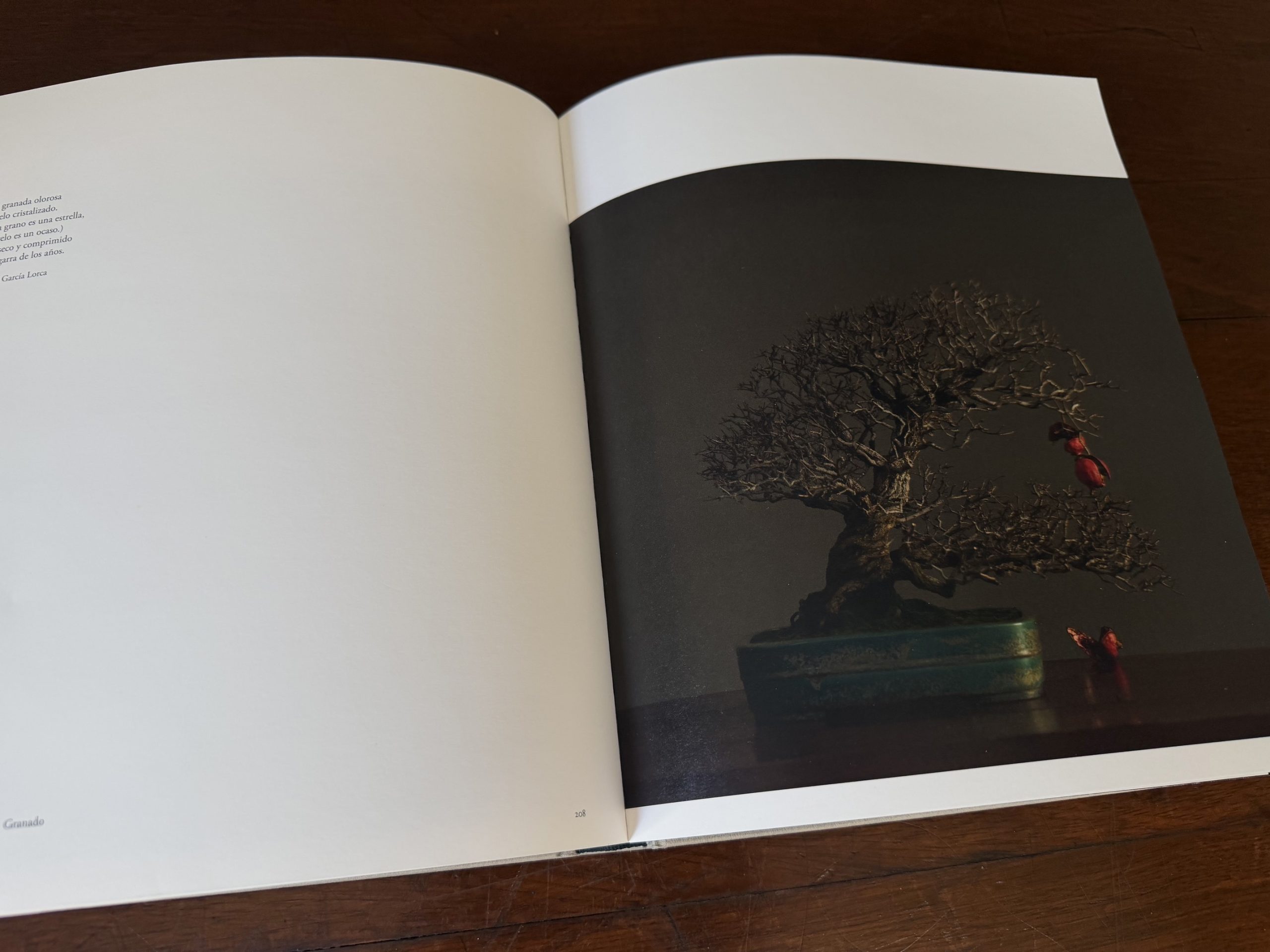
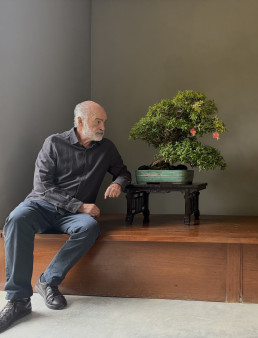
Hoy dedicamos el tokonoma al granado. El nuestro es japonés, de la variedad nejikan, que hace referencia a su tronco retorcido.
Cada año justo antes del otoño, empiezan algunas señales que lo anuncian, este año el verano ha sido tan largo que estas señales merecen una celebración.
Algunos rhus han empezado a cambiar de color y ya es la temporada de las granadas…así que hemos llenado todo con ellas…son símbolo de sabiduría, madurez, prosperidad, fertilidad, los egipcios se enterraban con ellas y los babilonios masticaban sus granos porque pensaban que les hacían invencibles. Me entero de que la granada, no importa su tamaño, tiene siempre 613 granos…
La literatura está llena de referencias a la granada, me quedo con la del libro de Luis. (a los pinos el viento)
Es la granada olorosa
un cielo cristalizado.
(Cada grano es una estrella,
cada velo es un ocaso.)
cielo seco y comprimido
por la garra de los años.
Federico García Lorca
Today we are dedicating the tokonoma to the pomegranate tree. Ours is Japanese, of the ‘nejikan’ variety, a name that refers to its twisted trunk.
Every year, just before autumn, certain signs begin to appear announcing its arrival; this year, summer has been so long that these signs are well worth celebrating.
Some rhus trees have started to change colour and it’s already pomegranate season… so we’ve filled the whole space with them… they’re a symbol of wisdom, maturity, prosperity and fertility; the Egyptians were buried with them and the Babylonians chewed their seeds because they believed they made them invincible. I’ve learnt that a pomegranate, regardless of its size, always has 613 seeds…
Literature is full of references to the pomegranate; I’ll go with the one from Luis’s book. (The Wind among the Leaves)
The fragrant pomegranate
Is a crystallised sky.
(Each grain is a stat,
each membrane is a sunset.)
A dry sky, compressed
by the talon of the years.
Federico García Lorca