
Arboles de concejo
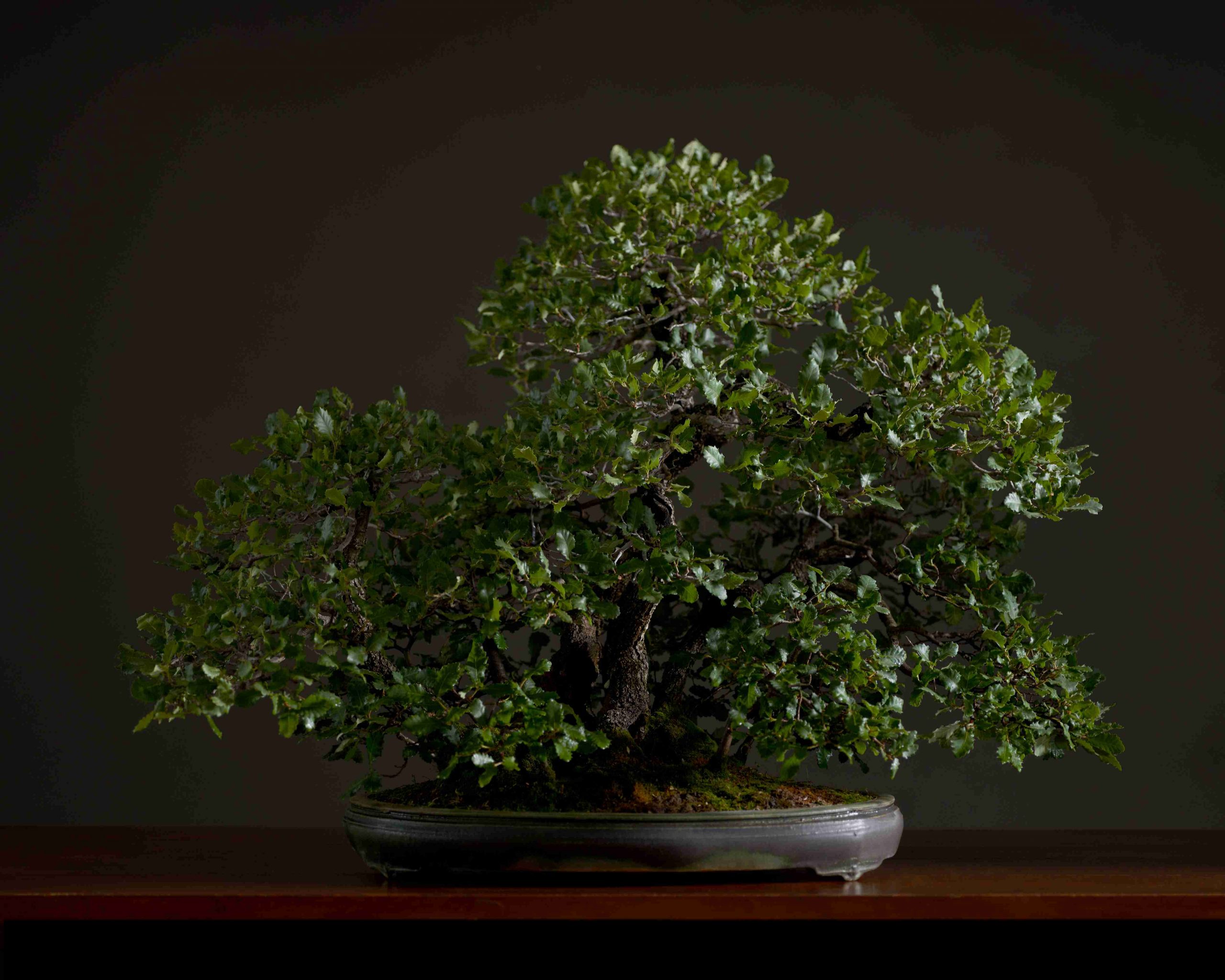
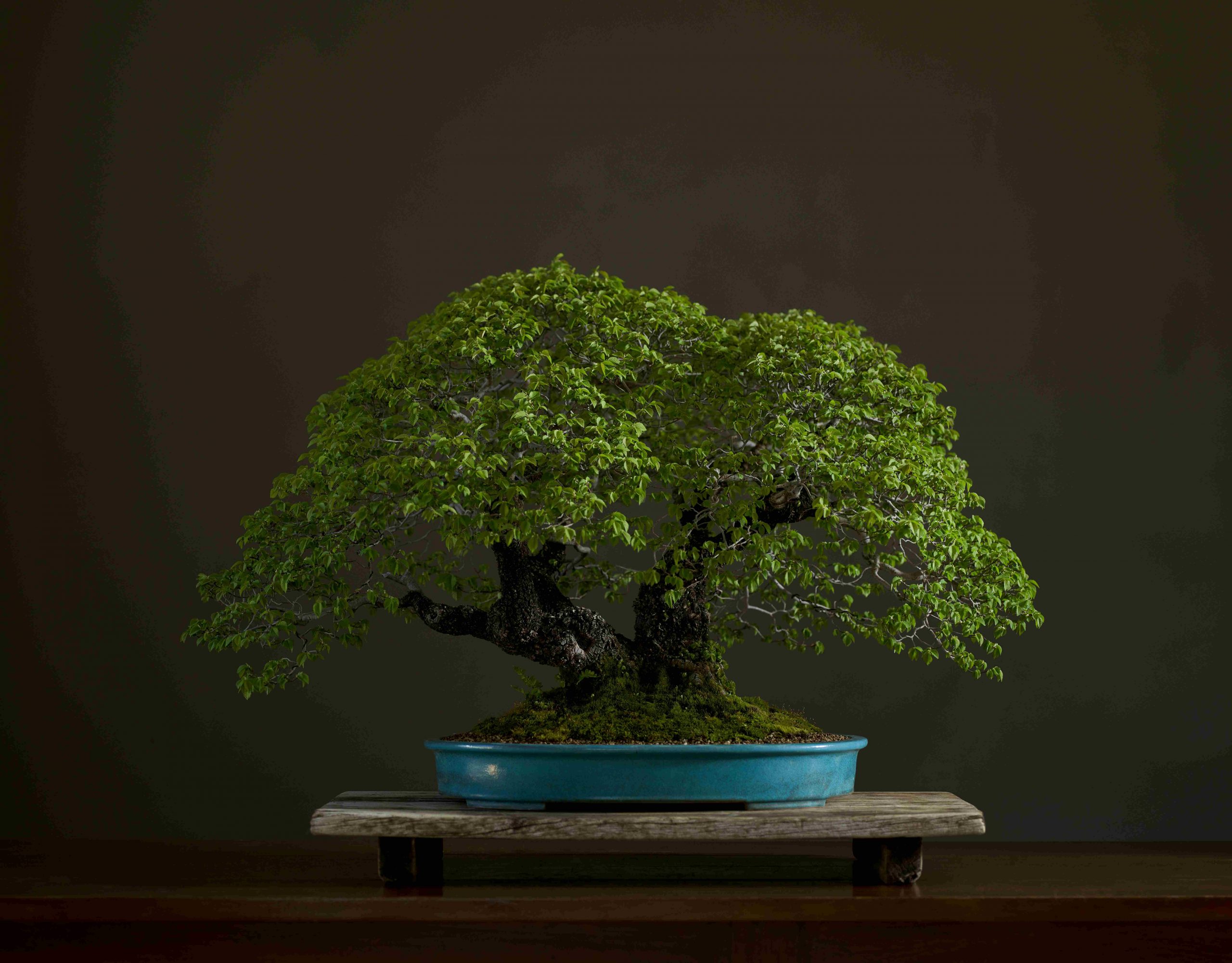
Antiguamente existía una bonita tradición en los pueblos de reunirse bajo los árboles, grandes árboles como los robles, tejos y olmos. Ahí se tomaban decisiones, se impartía justicia y se celebraba. Los árboles eran testigos de todo, eran elementos centrales de la sociedad, la conexión entre los hombres y la naturaleza.
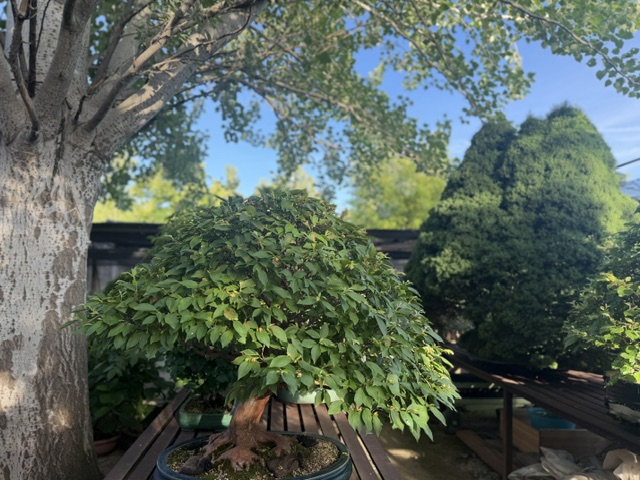
En el jardín hay dos grandes árboles plantados. Uno es el tilo en el centro de la exposición y el otro un gran álamo blanco en la zona del vivero. La próxima semana, cuando el jardín esté cerrado al público, recolocaremos los bonsáis para protegerlos del sol reubicándolos a la sombra de estos dos árboles. No puedo evitar imaginarlos evocando sus lugares de origen y debatiendo por las tardes sobre los problemas del medio ambiente.
Igual este verano arreglamos el mundo.
Many years ago, there was a lovely tradition in villages of gathering beneath trees – large trees such as oaks, yews and elms. It was there that decisions were made, justice was administered and celebrations took place. The trees bore witness to everything; they were central to society, the link between people and nature.
There are two large trees planted in the garden. One is the lime tree at the centre of the exhibition, and the other is a large white poplar in the nursery area. Next week, when the garden is closed to the public, we will move the bonsais to protect them from the sun, relocating them into the shade of these two trees. I can’t help but imagine them evoking their places of origin and debating environmental issues in the afternoons .
Perhaps this summer we’ll fix the world.
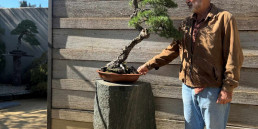
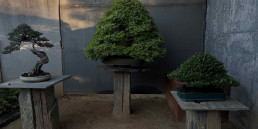

Sugi
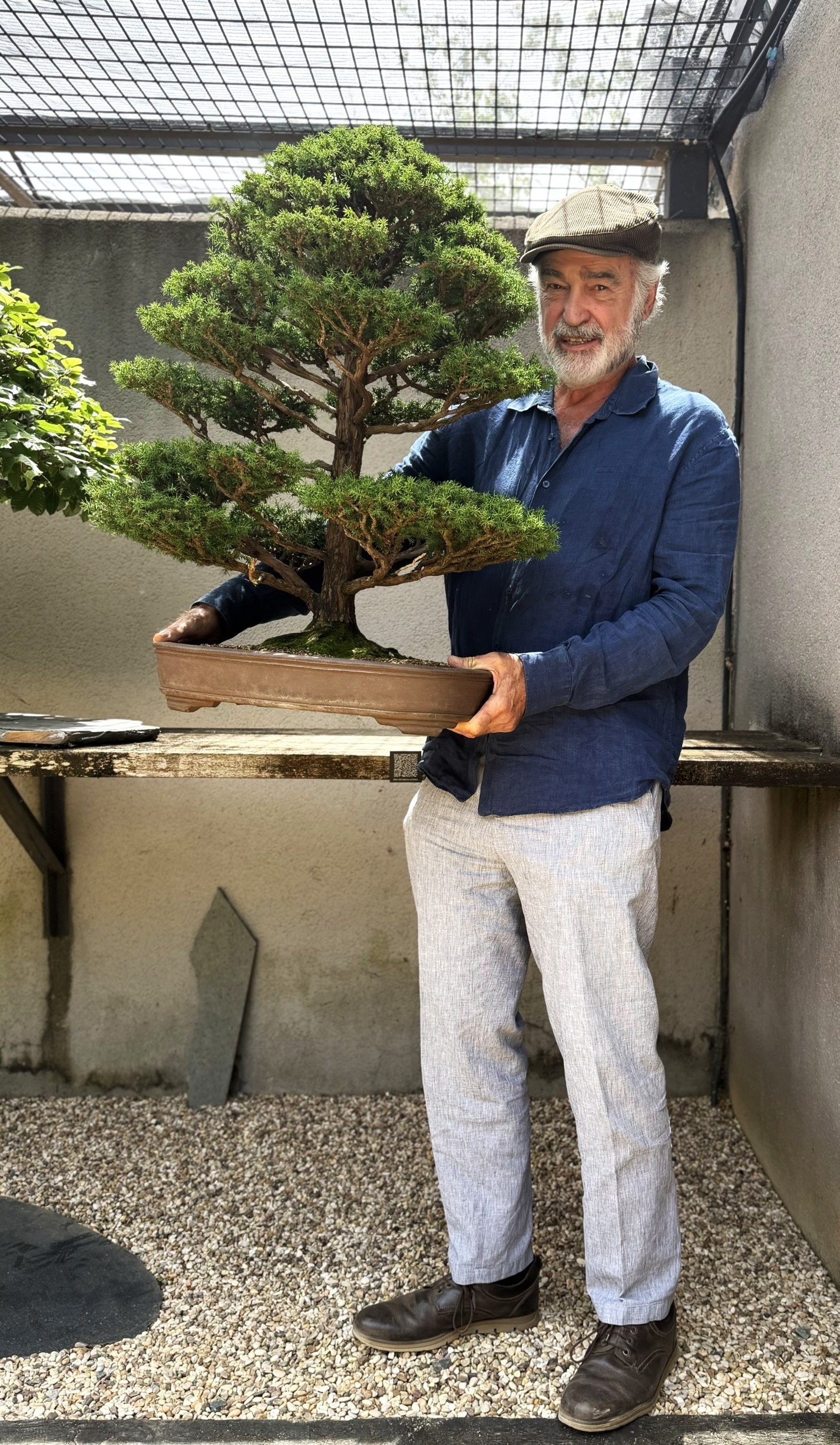
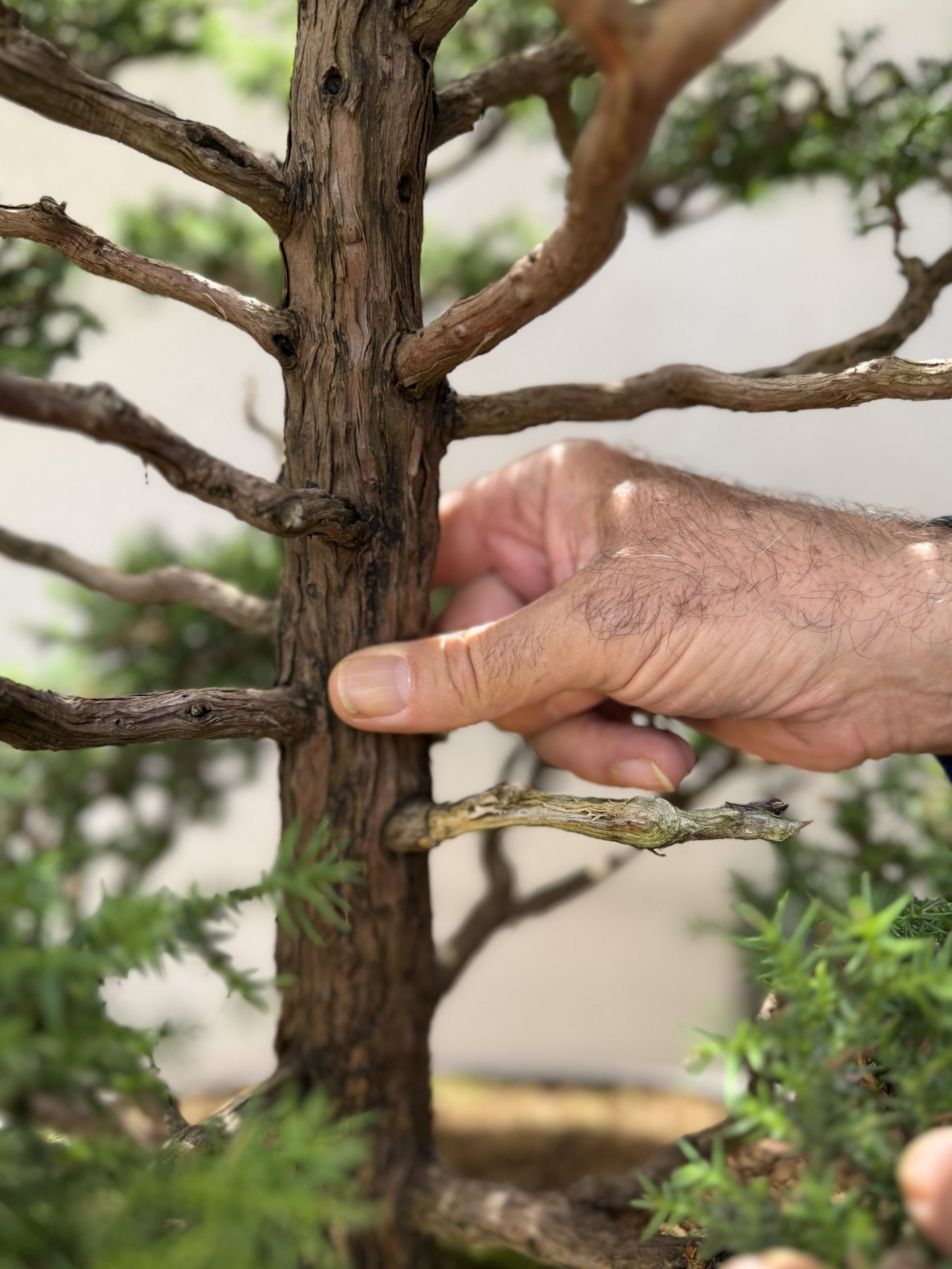
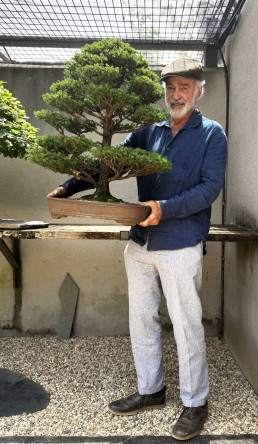
Luis con el Sugi.
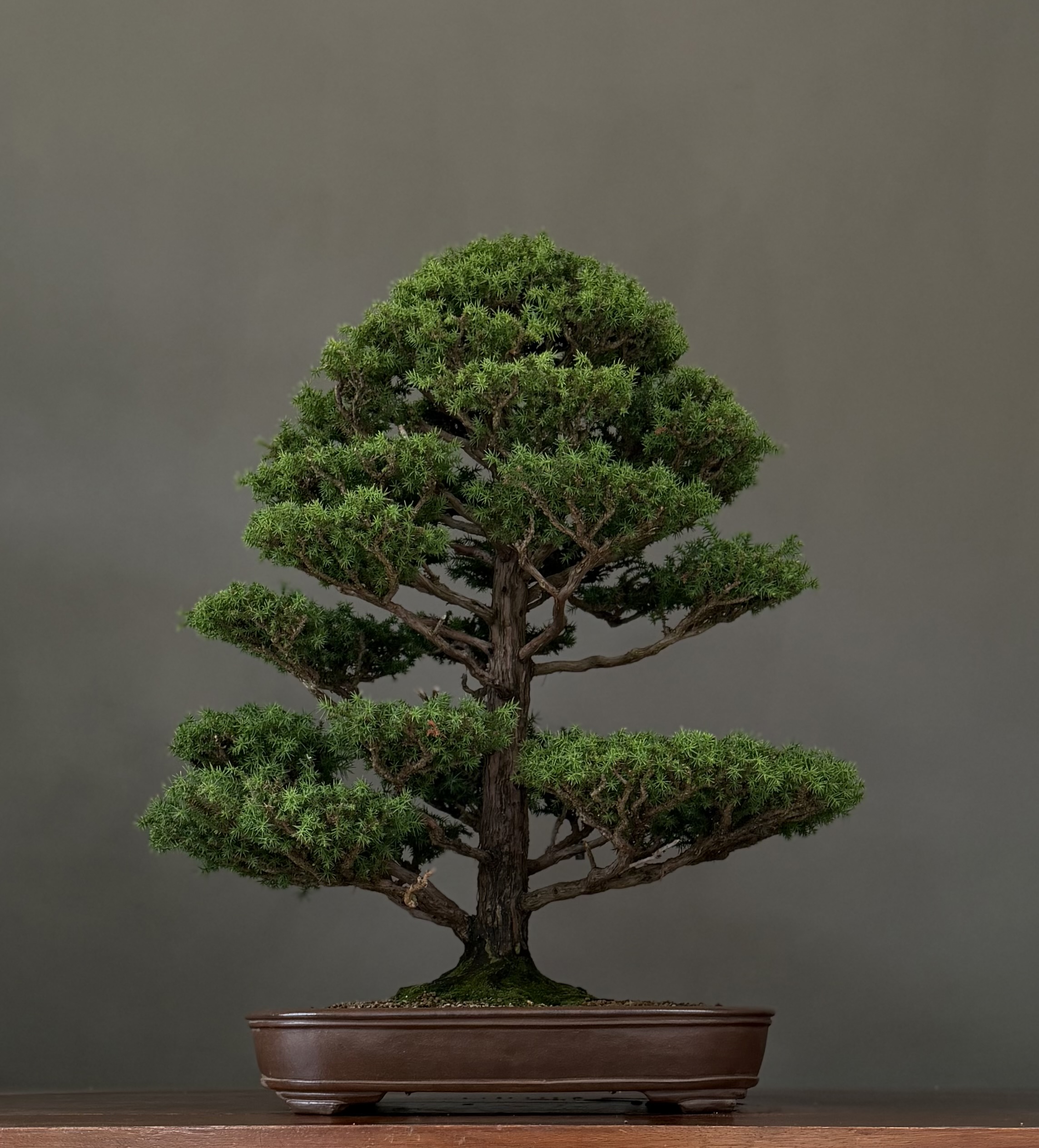
Con la primera ola de calor oficial de este verano, apetece pensar en grandes coníferas, bosques , sombra y aire fresco, así que hoy hablamos del Sugi (Cryptomeria japónica). Es un árbol endémico de Japón, su origen en la mitología japonesa tiene que ver con los pelos de barba que plantó Susano-o, dios de las tormentas y el mar y que dieron lugar a sus troncos rectos…tiene muchísima simbología, es el custodio de los templos, sus copas de forma triangular servían de escalera a los dioses y su tronco como apoyo del voladizo de las casas de té. Luis recuerda cuando en Tokio le contaron que cuanto más viejo es el tronco más prestigio tenía la casa de té.
El Sugi busca el sol y crece alto, se cultiva por todo el mundo por su magnífica madera. Es hermano de los tejos y las sequoias. El ejemplar más viejo es el mítico Jomon Sugi de la isla de Yakushima.
El nuestro vino del vivero de Ideo Kato en Japón hace ya años y por lo recto que es, estamos seguros de que es uno de los descendientes directos de los pelos de Susano-o.
Luis with the Sugi.
With the first official heatwave of this summer, it’s tempting to think of tall conifers, forests, shade and fresh air, so today we’re talking about the Sugi (Cryptomeria japonica). It is a tree native to Japan; its origins in Japanese mythology are linked to the beard hairs planted by Susano-o, the god of storms and the sea, which gave rise to its straight trunks… It is steeped in symbolism: it is the guardian of temples; its triangular crowns served as a stairway for the gods; and its trunk was used to support the roofs of tea houses. Luis remembers when, in Tokyo, he was told that the older the trunk, the more prestigious the tea house.
The Sugi seeks out the sun and grows tall; it is cultivated all over the world for its magnificent timber. It is a relative of yew trees and sequoias. The oldest specimen is the legendary Jomon Sugi on the island of Yakushima.
Ours came from Ideo Kato’s nursery in Japan many years ago, and given how straight it is, we’re certain it’s one of the direct descendants of Susano-o’s hair.
Backstage/vivero
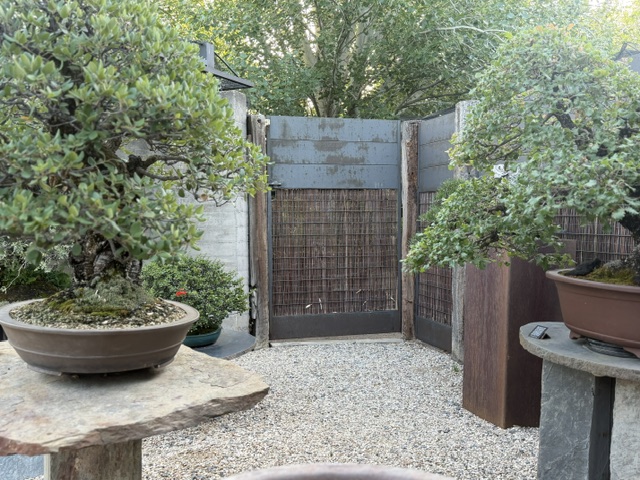
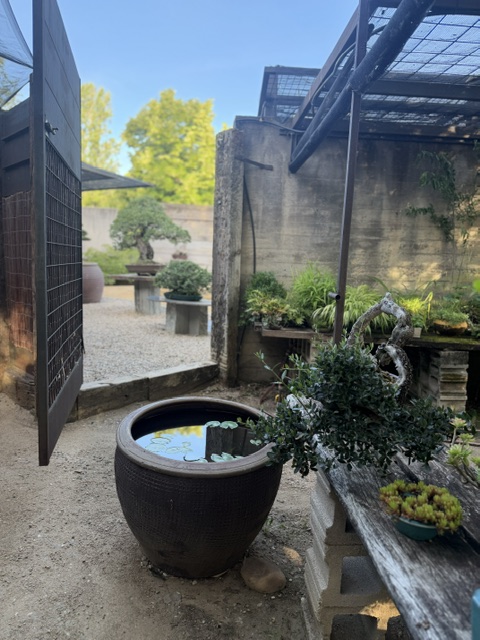
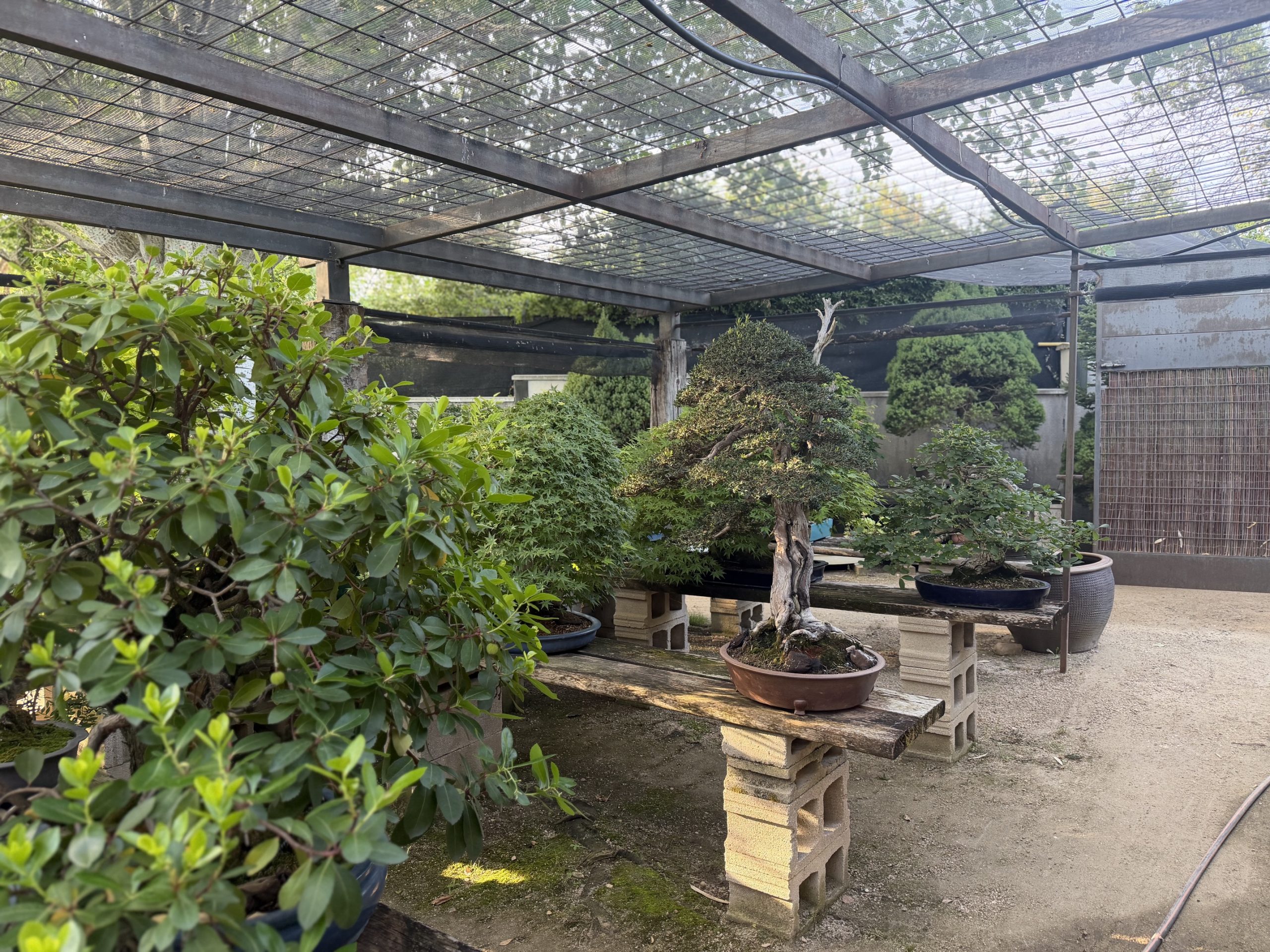
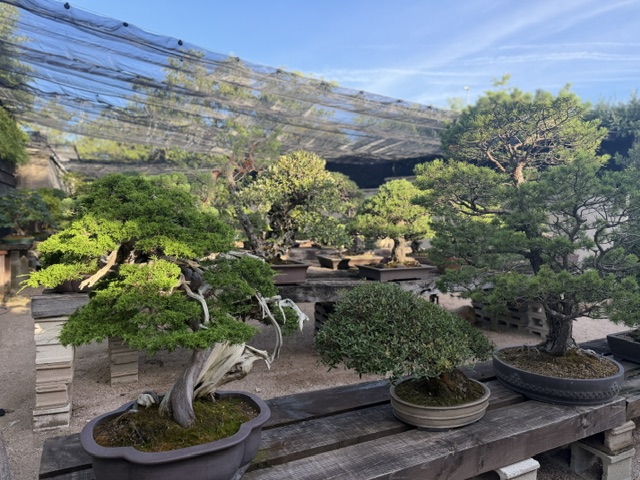
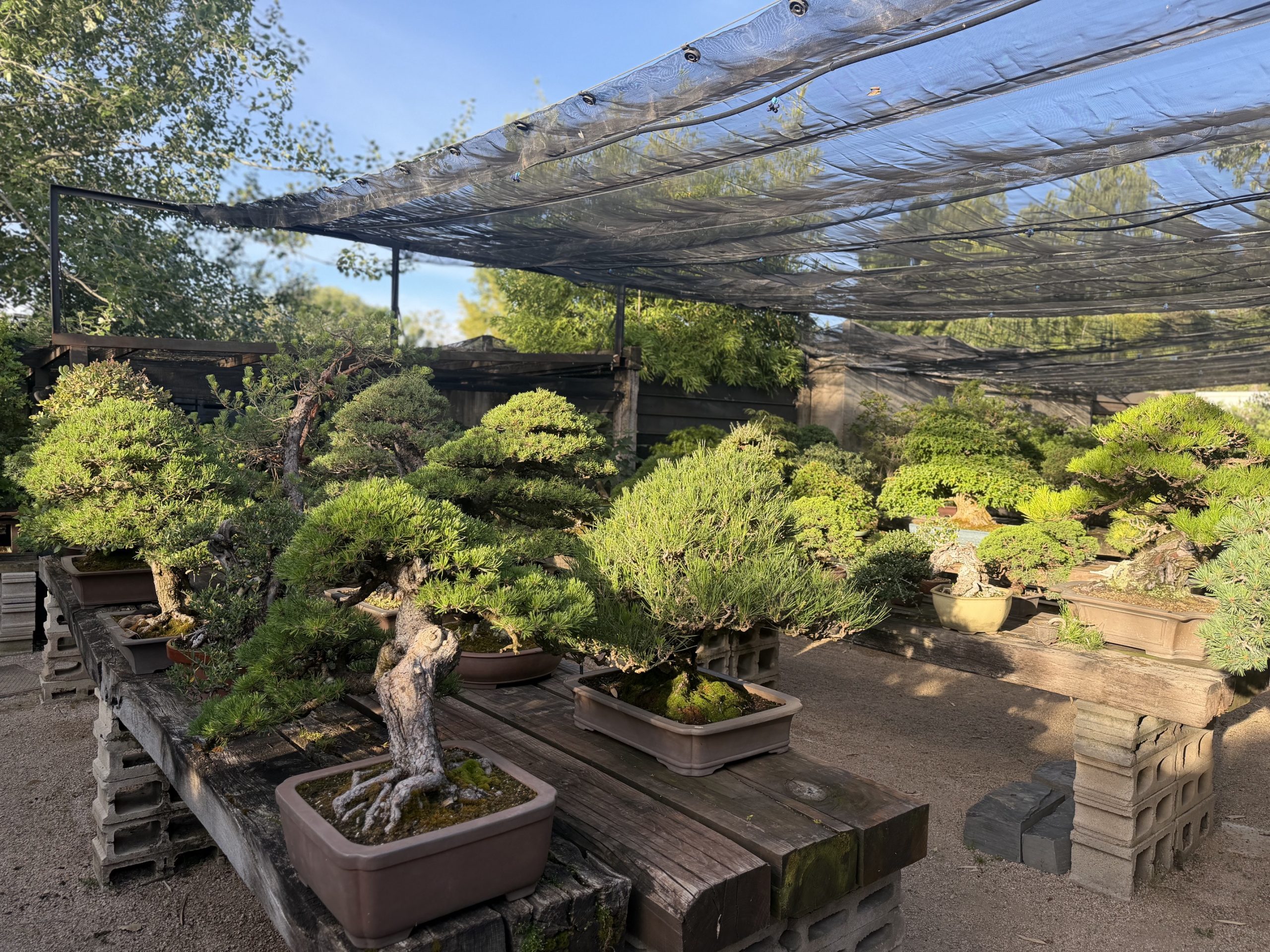
Tras esta puerta y detrás de los muros de la exposición está nuestro vivero/backstage. De aquí sale la magia.
Algunos afortunados entran con Luis, que les cuenta las historias de los árboles. Todos los árboles tienen su historia, unos tienen grandes historias y otros mas pequeñas, pero todos están aquí por algo.
Está el gran tejo recuperado en España por Kimura que es uno de los árboles más viejos de la colección, un pequeño boj balear que vino confundido entre un grupo de acebuches y se quedó para siempre, el bosque gigante de piceas donde duermen dos conejos que se cuelan en el jardín y un palmito que es probablemente el único bonsái de su especie en el mundo.
En un espacio como este se tiende a acumular, pasa mucho en bonsái; es el efecto “Arca de Noe”…uno de cada especie. Por eso cada cierto tiempo toca recapitular y reducir, es un momento difícil pero también necesario y esta semana estamos en eso…
Behind this door and within the walls of the exhibition lies our nursery/backstage area. This is where the magic happens.
A few lucky visitors are allowed in with Luis, who tells them the trees’ stories. Every tree has its own story; some have great stories and others have smaller ones, but they are all here for a reason.
There is the great yew tree recovered in Spain by Kimura, which is one of the oldest trees in the collection; a small Balearic boxwood that ended up here by mistake amongst a group of wild olive trees and stayed for good; the giant forest of spruce trees where two rabbits that sneak into the garden sleep; and a dwarf palm that is probably the only bonsai of its kind in the world.
In a space like this, things tend to pile up; it happens a lot in bonsai; it’s the ‘Noah’s Ark’ effect… one of each species. That’s why from time to time we have a recap and reduce, it’s a difficult but necessary moment and this week we’re doing just that…
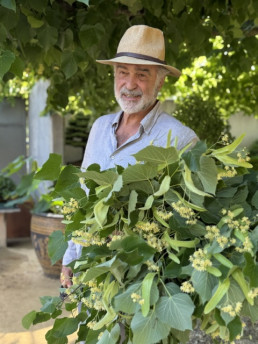
El tilo en flor
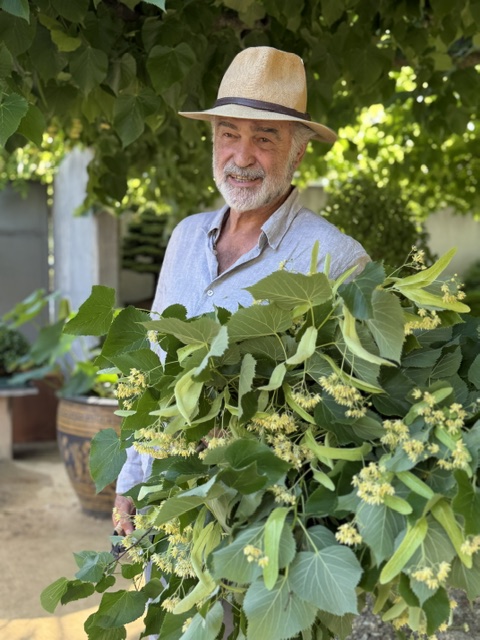
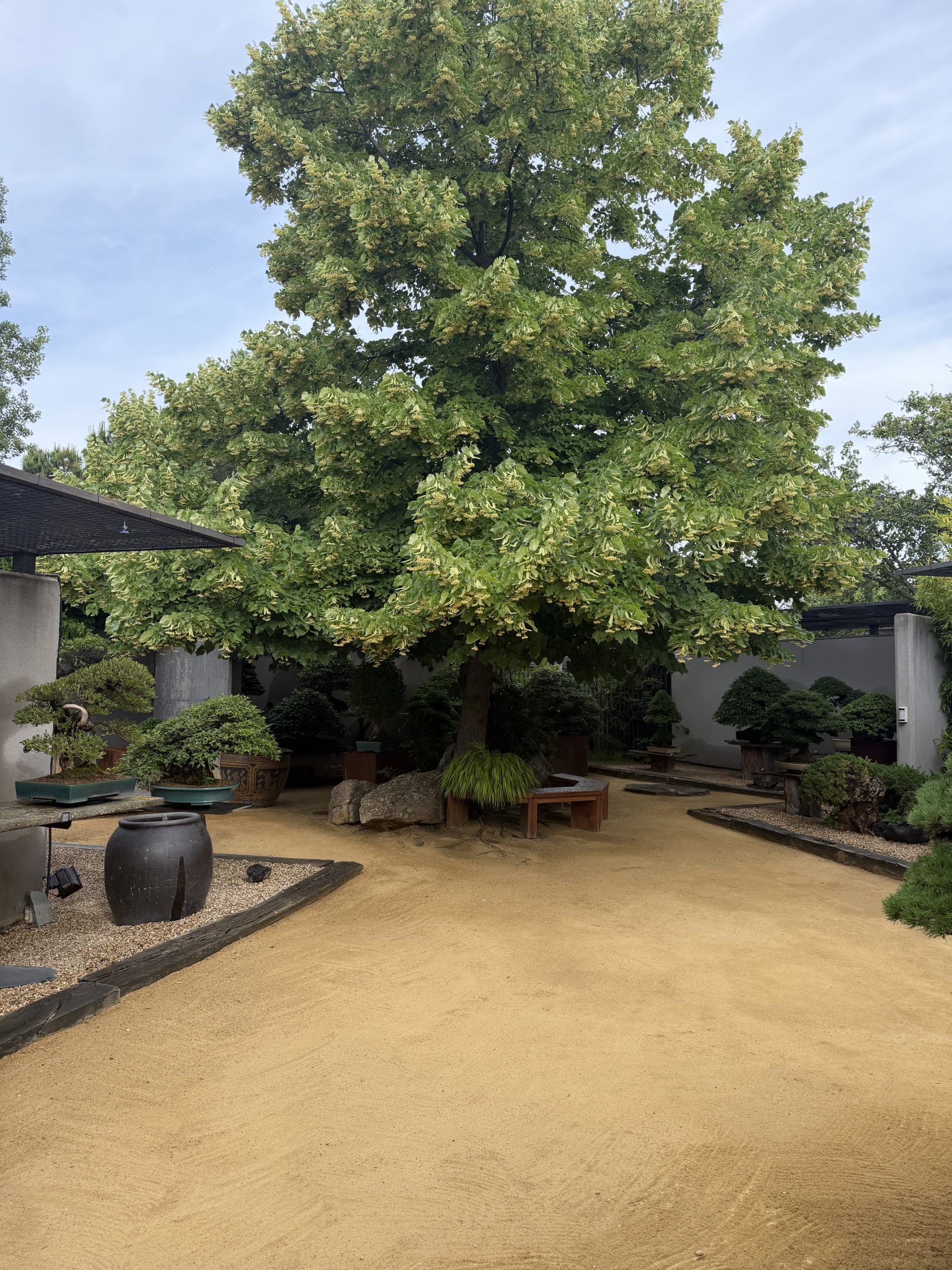
Las noticias de Madrid para este primer fin de semana de junio asustan; calles cortadas, cientos de miles de personas visitando, zonas con acceso limitado con QR y la casita rosa de Bad Bunny.
Estar algo alejados del centro tiene sus inconvenientes, pero también muchas ventajas, se aparca sin problemas, tenemos menos contaminación, noches algo más frescas y mucho menos lío.
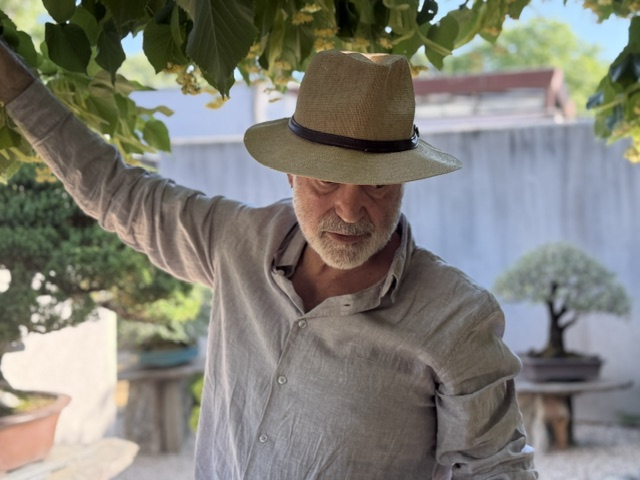
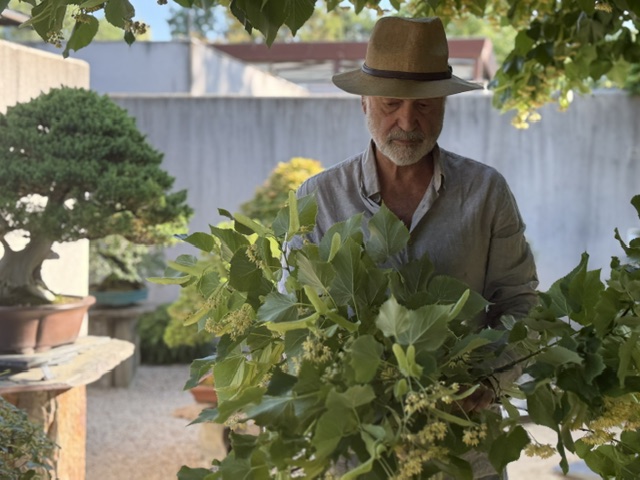
Hoy la temperatura es perfecta y el tilo está en flor perfumándolo todo. En verano cerramos para lidiar con el verano… último mes para visitarnos.
The news from Madrid for this first weekend in June sounds scary: roads closed, hundreds of thousands of visitors, areas with restricted access via QR codes, and Bad Bunny’s little pink house.
Being a bit further from the centre has its drawbacks, but also many benefits: parking is no problem, there’s less pollution, the nights are a bit cooler, and there’s far less chaos.
Today the temperature is perfect and the lime tree is in bloom, perfuming everything. We’re closing for the summer to cope with the summer…this is the last month to visit us.