
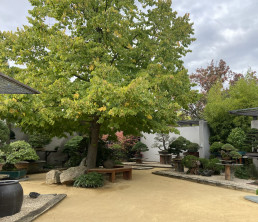
Time lapse
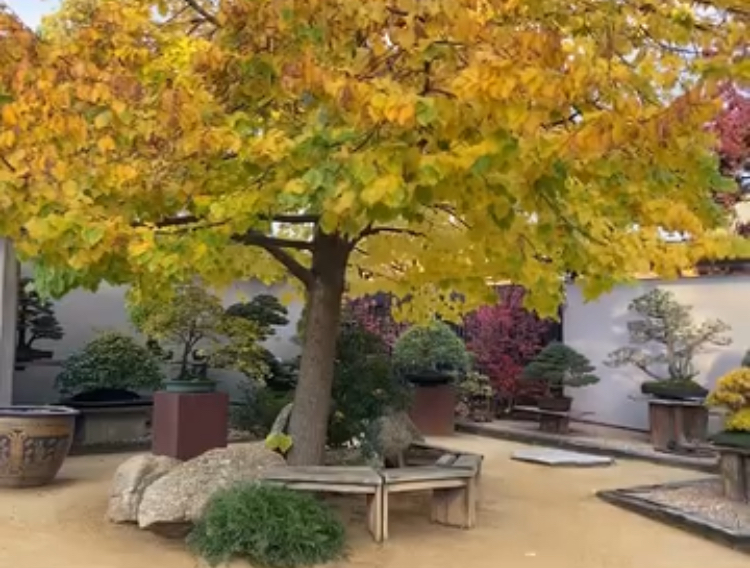
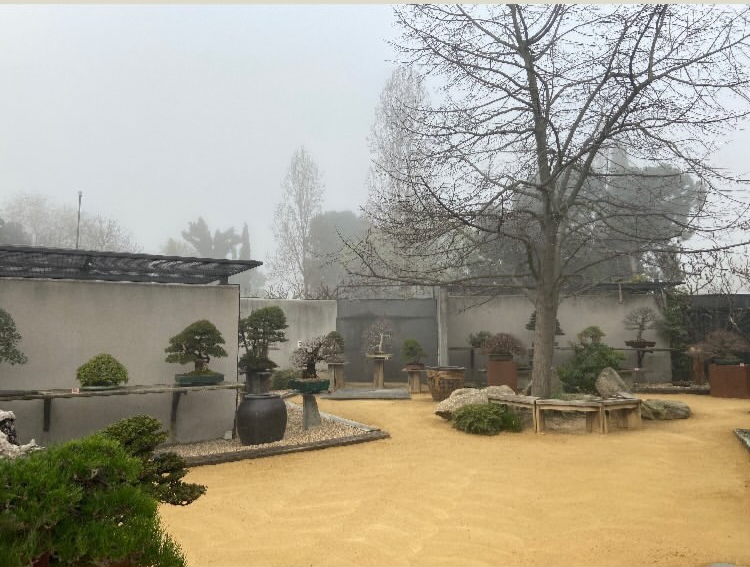
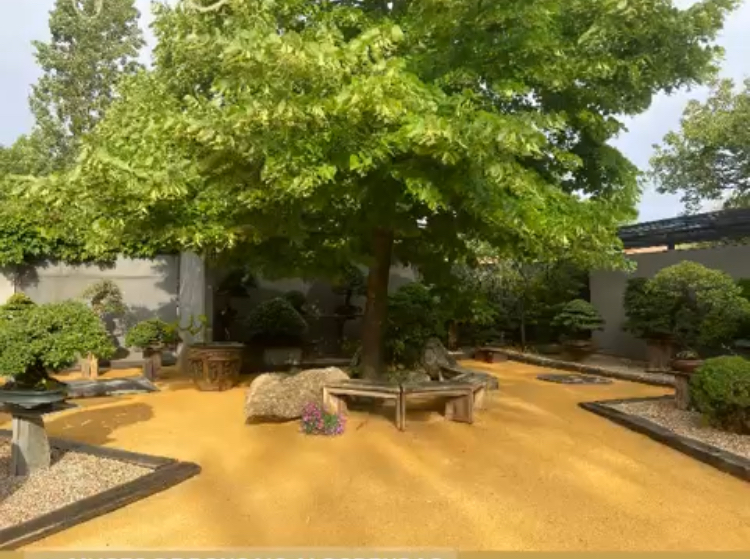
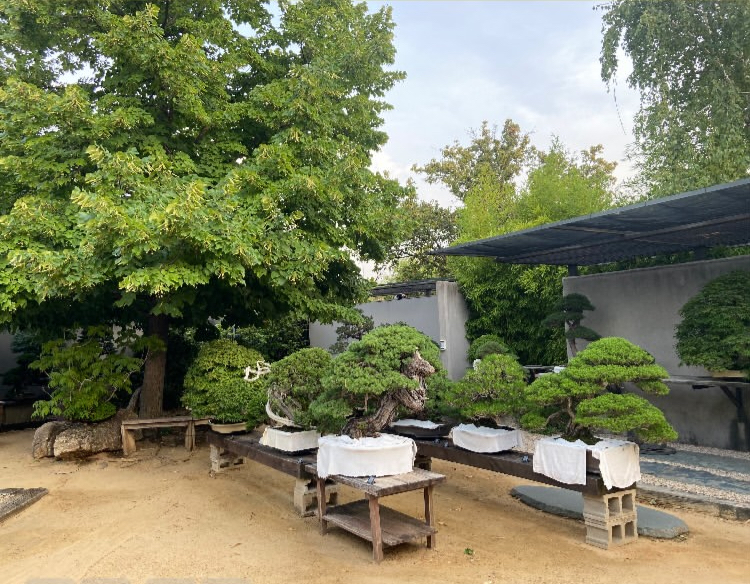
En este jardín/museo…joyero (como dijo un amigo) exponemos arte.
Pero sus necesidades son muy distintas a otras piezas de arte. Las nuestras necesitan frío para descansar durante el invierno, sombra para protegerse del sol en verano, sol para brotar en primavera o para tener los maravillosos colores del otoño. Necesitan, ser trasplantadas, desaparecer por un tiempo, a veces descansar…
Esta semana mientras quitábamos los sombreos, Alejandro y Santi volvían a colocar algunos arces al sol y Mario metía al taller el junípero de Kimura. Pensé en todos los cambios y movimientos que hacemos a lo largo del año; ojalá pudieran grabarnos desde arriba, un time lapse de un año; moviendo los árboles de un lugar a otro del jardín, como las hormigas cumpliendo una misión que solo ellas saben y que nadie más entiende.
Llega el otoño, nos movemos otra vez. ¿Alguien se anima con el video?
In this garden/museum…jewellery box (as a friend said) we exhibit art.
But its needs are very different from other pieces of art. Ours need cold to rest during the winter, shade to protect them from the sun in summer, sun to sprout in spring or to have the wonderful colors of autumn. They need to be transplanted, to disappear for a while, sometimes to rest…
This week while we were removing the shades, Alejandro and Santi were putting some maples back in the sun and Mario was bringing Kimura’s juniper into the workshop. I thought about all the changes and moves we make during the year. I wish they could record us from above, a time lapse of a year; moving the trees from one place to another in the garden, like ants; filling a mission that only they know and that nobody else understands.
Autumn comes, we move again. Anyone up for this video?


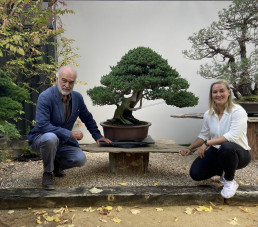
Sara, Luis y un kicho bonsai
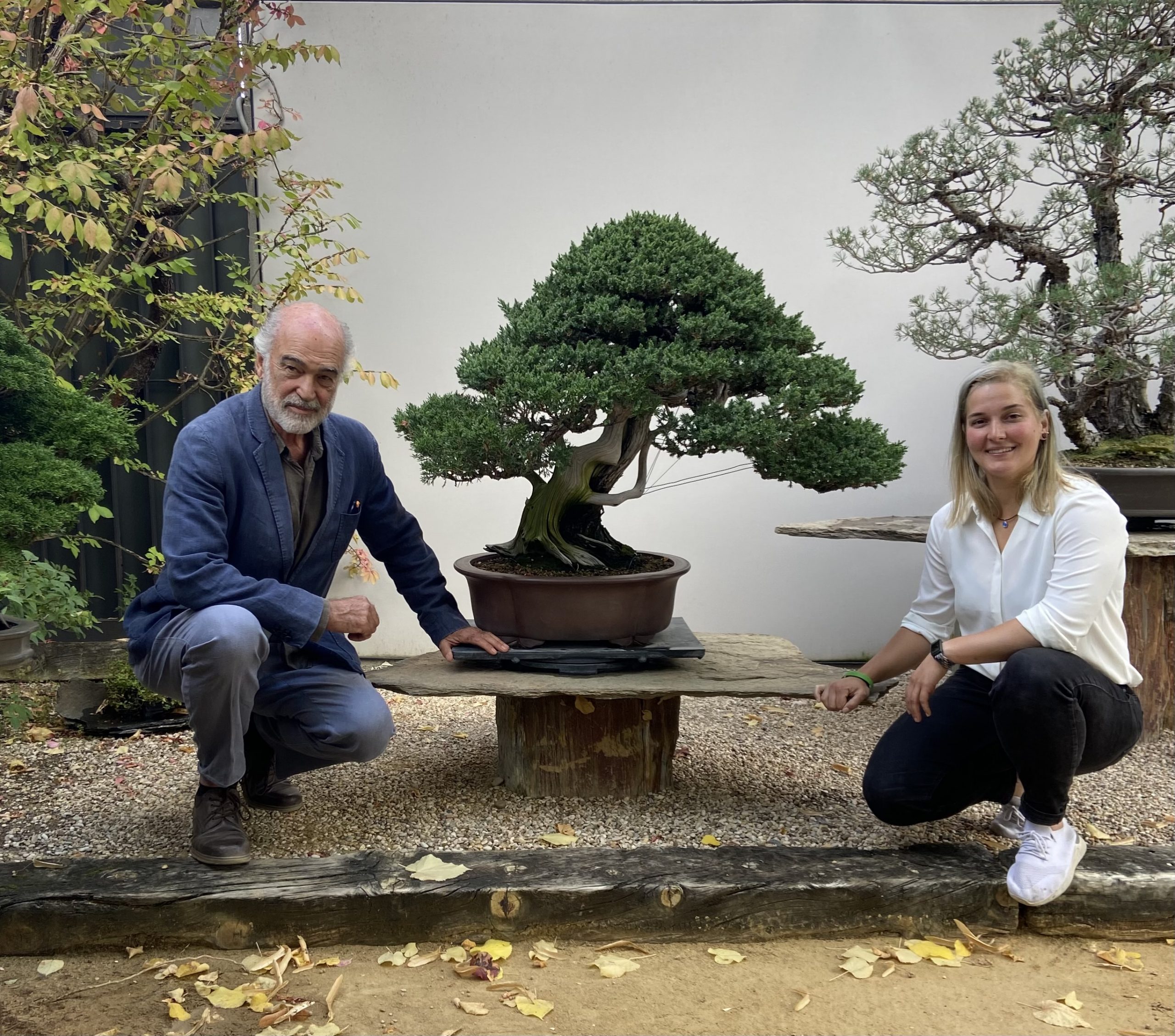
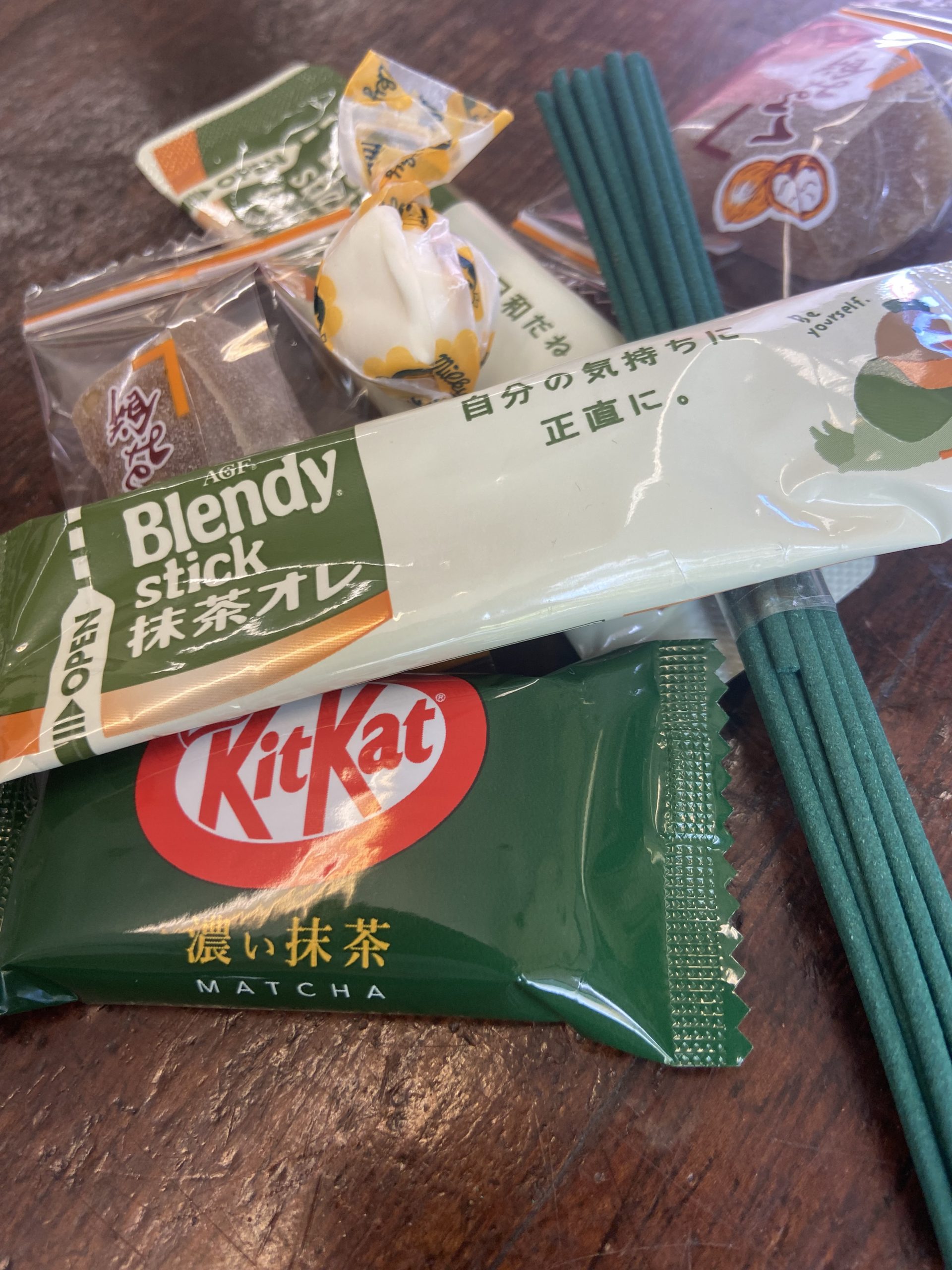
Esta semana ha venido a visitarnos Sara desde Japón; siempre que viene nos cuenta de su vida allí…venía cargada de pequeños tesoros japoneses…kit-kat de te matcha, incienso, libretas japonesas, galletitas que parecen de talco, washi tape,.. una autentica fiesta!
Esta vez traía un regalo muy especial para Luis. En la colección tenemos un kicho bonsai; un árbol reconocido como obra maestra por la Nippon bonsai Association por su excelencia artística y técnica. Tratándose de algo vivo, llama la atención que esta distinción sea de por vida. Con el paso del tiempo puede empeorar, mejorar, enfermar, en fin cambiar; pero esta distinción nos recuerda que se trata de un bonsái que ejemplifica un valor artístico que transmitir y proteger.
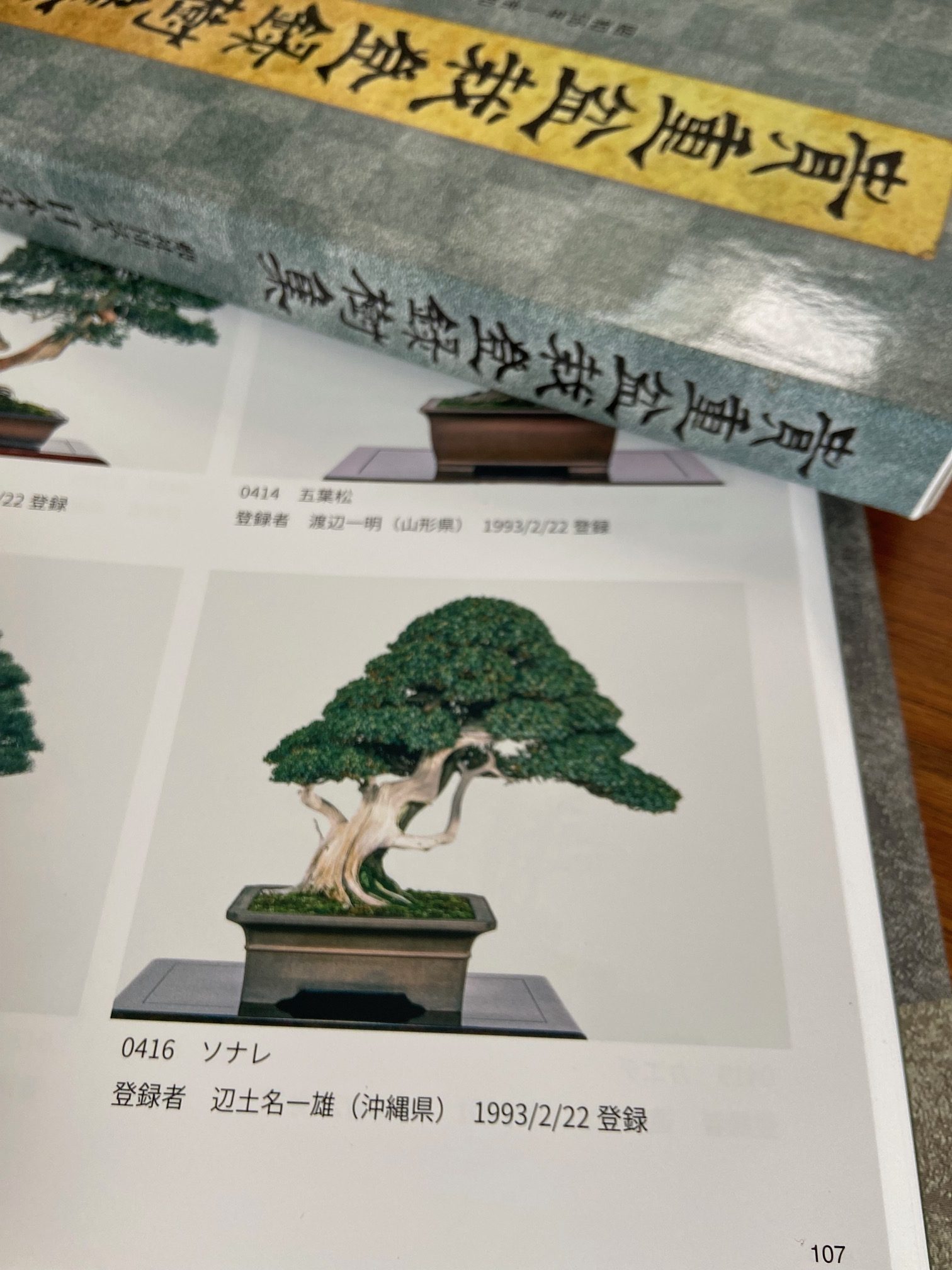
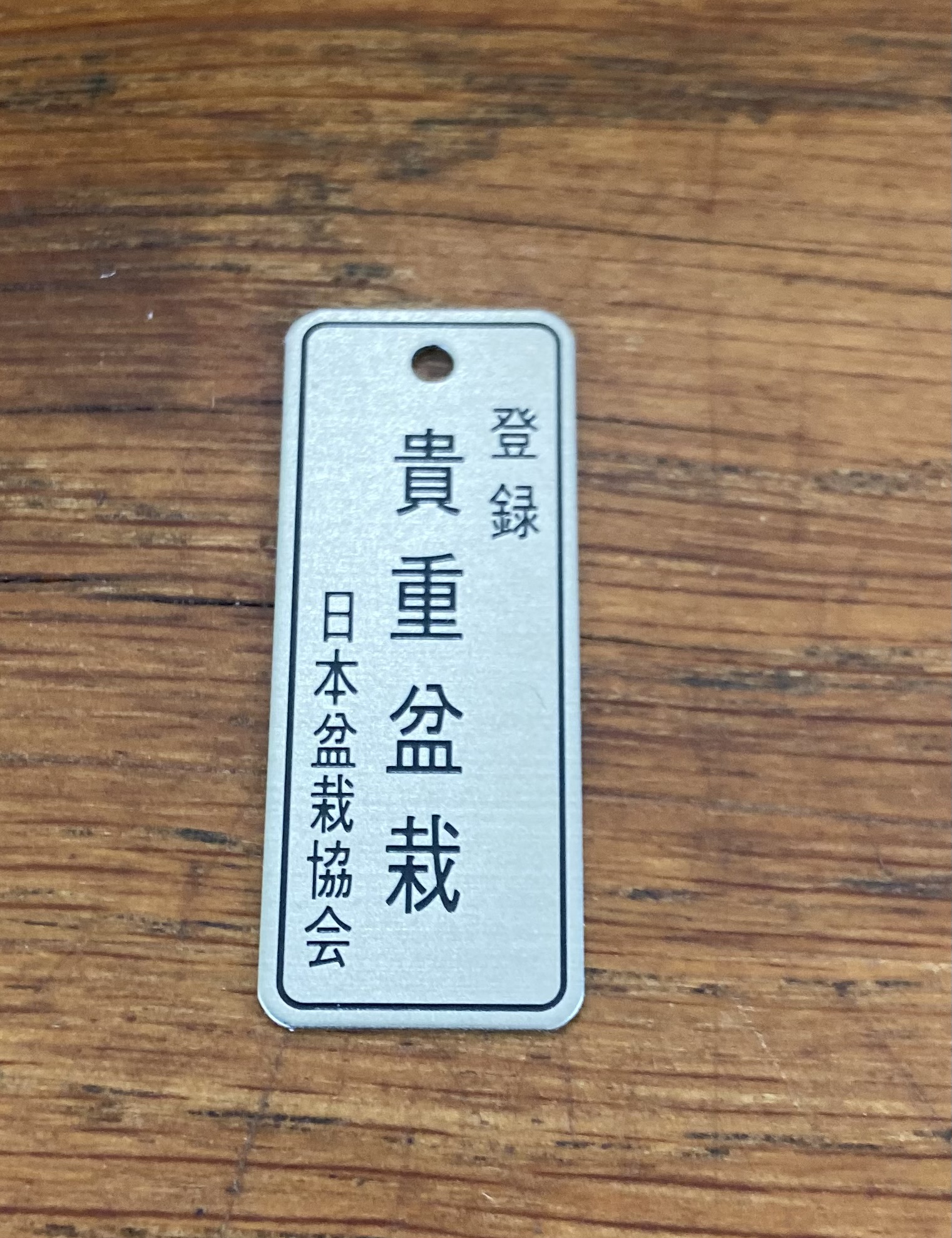
Nuestro kicho bonsai; un ejemplar de Juniperus procumbens, hace años perdió la etiqueta identificativa que colgaba de una de sus ramas. De vez en cuando Luis se preguntaba si sería posible conseguir una copia. Sara ha traído la etiqueta de vuelta con un ejemplar del libro, publicado por la asociación, con los árboles considerados “Obras Maestras de bonsái”. Y en la página 107 sorpresa…
This week Sara came to visit us from Japan; she always tells us about her life there. She came loaded with little Japanese treasures… matcha tea kit-kat, incense, Japanese notebooks, biscuits that look like talcum powder, washi tape,… a real feast!
This time she brought a very special gift for Luis. In the collection we have a kicho bonsai; a tree recognised as a masterpiece by the Nippon bonsai Association for its artistic and technical excellence. Being a living thing, it is remarkable that this distinction is for life. With the passing of time it can get worse, improve, get sick and ultimately change; but this distinction reminds us that it is a bonsai that exemplifies an artistic value to be passed on and protected.
Our kicho bonsai; a specimen of Juniperus procumbens, years ago lost the identification tag that hung from one of its branches. From time to time Luis wondered if it would be possible to get a copy. Sara has brought the identification tag back with a copy of the book published by the association with the trees considered ‘Important Bonsai Masterpieces’. And on page 107 surprise…
Paz/Peace
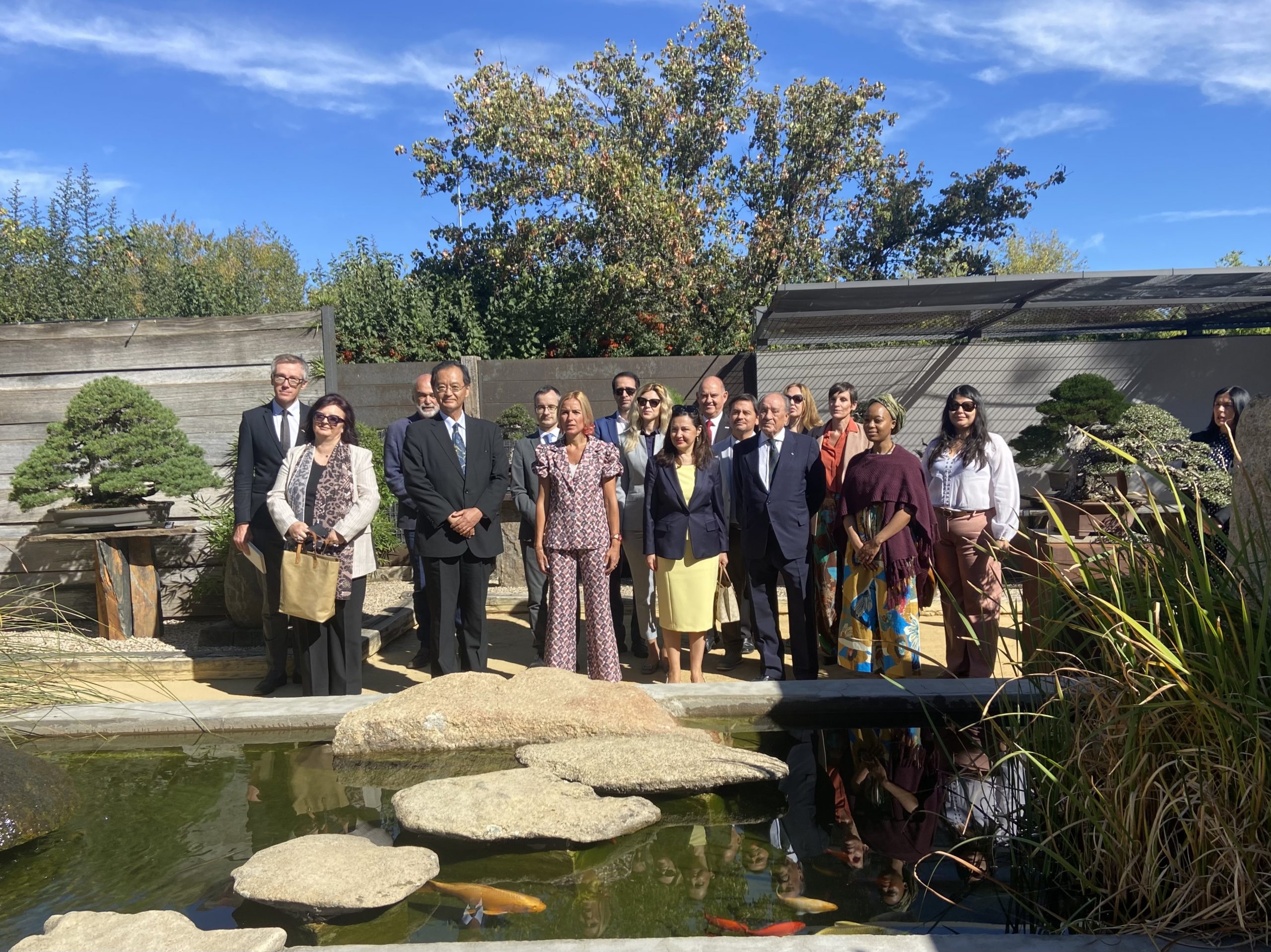
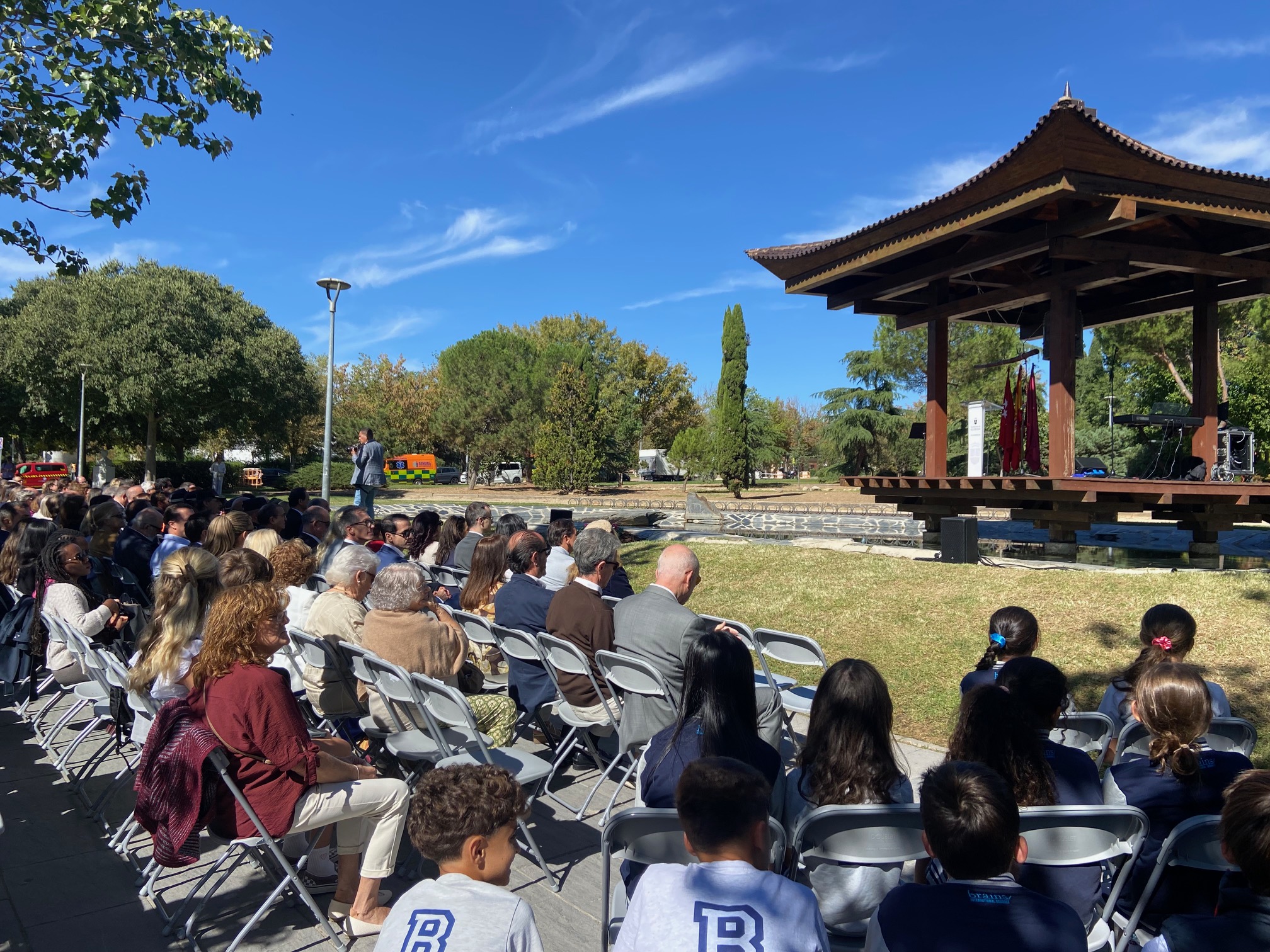
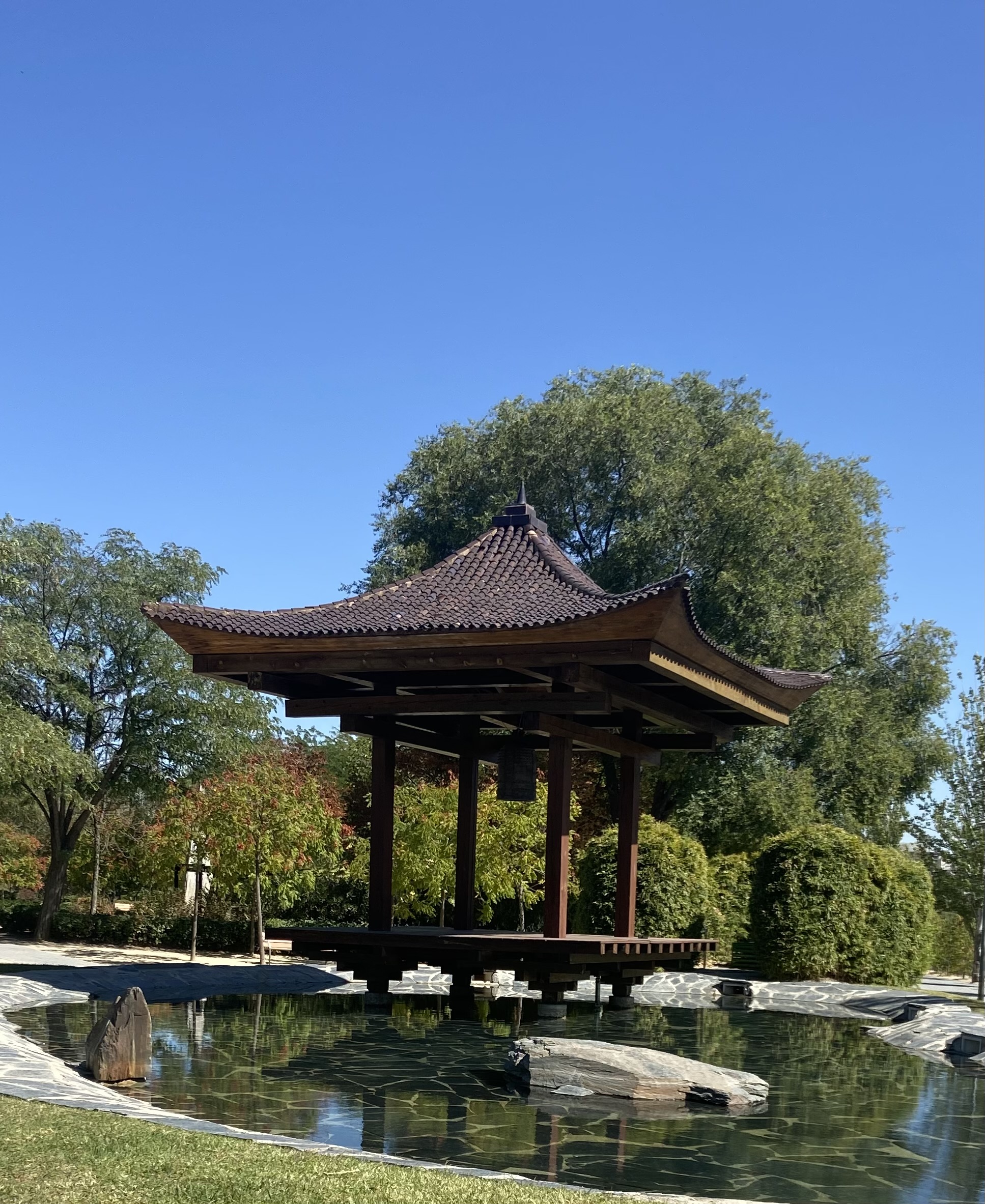
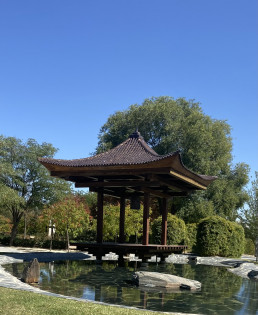
Desde 1981, el Día Mundial de la Paz se celebra todos los 21 de septiembre. En Alcobendas, cerca del jardín tenemos una pagoda con una reproducción de la Campana de la Paz. La original, está en Nueva York, en la sede de las Naciones Unidas, regalo del pueblo japonés en 1954.
Hay 23 reproducciones de esa campana en el mundo, así que en Alcobendas compartimos ese vínculo con ciudades como Okinawa, Ankara, Quito, Varsovia o Ulan Bator …no se las otras (aunque me imagino que todas son iguales), pero nuestra campana pesa media tonelada, mide un metro de altura y tiene un diámetro de 50 centímetros. Cuentan que estuvo esperando ubicación ocho años, guardada en un almacén del Ayuntamiento de Madrid…
Las campanas de la paz repican todas juntas el Día Mundial de la Paz, la organización debe ser complicada; ¿como hacer coincidir los actos conmemorativos teniendo en cuenta festivos locales, diferencias horarias y otras cuestiones?… ¿se llamarán todos los Ayuntamientos para organizarlo? Espero que sí, porque la imagen de todos esas personas reunidas al mismo tiempo alrededor de su campana para escucharla sonar y pensar por un momento en algo tan importante es preciosa.
Since 1981, World Peace Day has been celebrated every 21st September. In Alcobendas, near the garden, there is a pagoda with a reproduction of the Peace Bell. The original is in New York, at the United Nations headquarters, a gift from the Japanese people in 1954.
There are 23 reproductions of this bell in the world, so in Alcobendas we share this link with cities like Okinawa, Ankara, Quito, Warsaw or Ulan Bator… I don’t know about the others (although I imagine they are all the same), but ours weighs half a ton, is one metre high and has a diameter of 50 centimetres. They say that it waited for eight years in a storage room of the Madrid City Council…
The bells of peace ring all together on World Peace Day, the organisation must be complicated. How can the commemorative events be coordinated, taking into account local holidays, time differences and other issues?.. will all the City Councils call each other to organise it? I hope so, because the image of all that people gathered at the same time around their bells to hear them ring and think for a moment about something so important is beautiful.
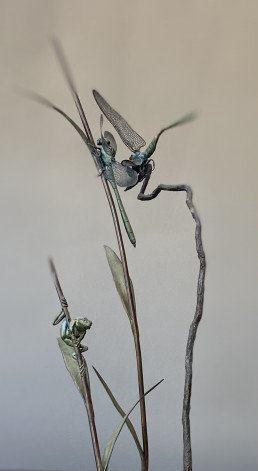
Tesoros vivientes./ Living treasures.
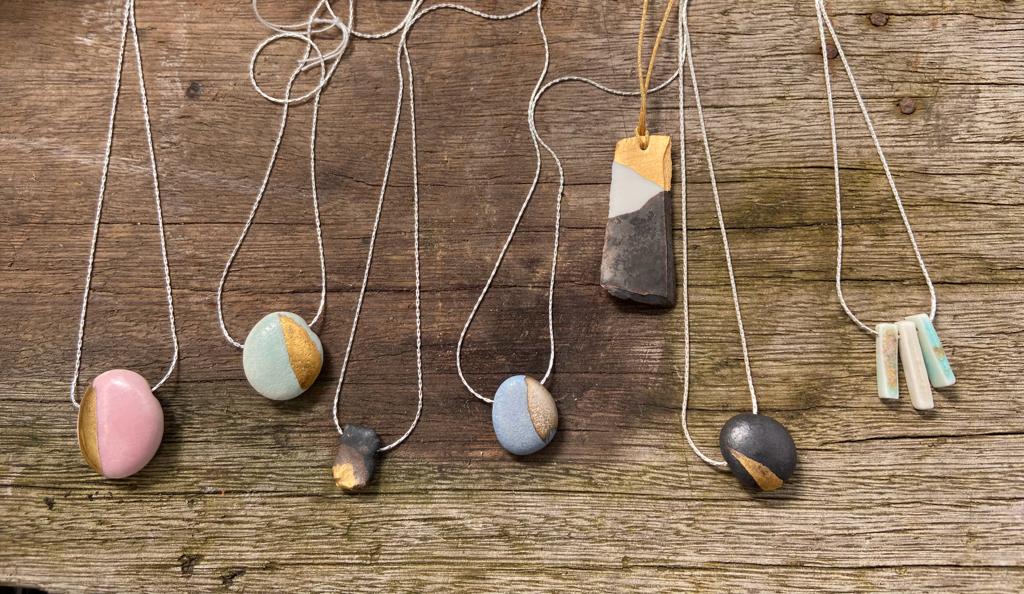
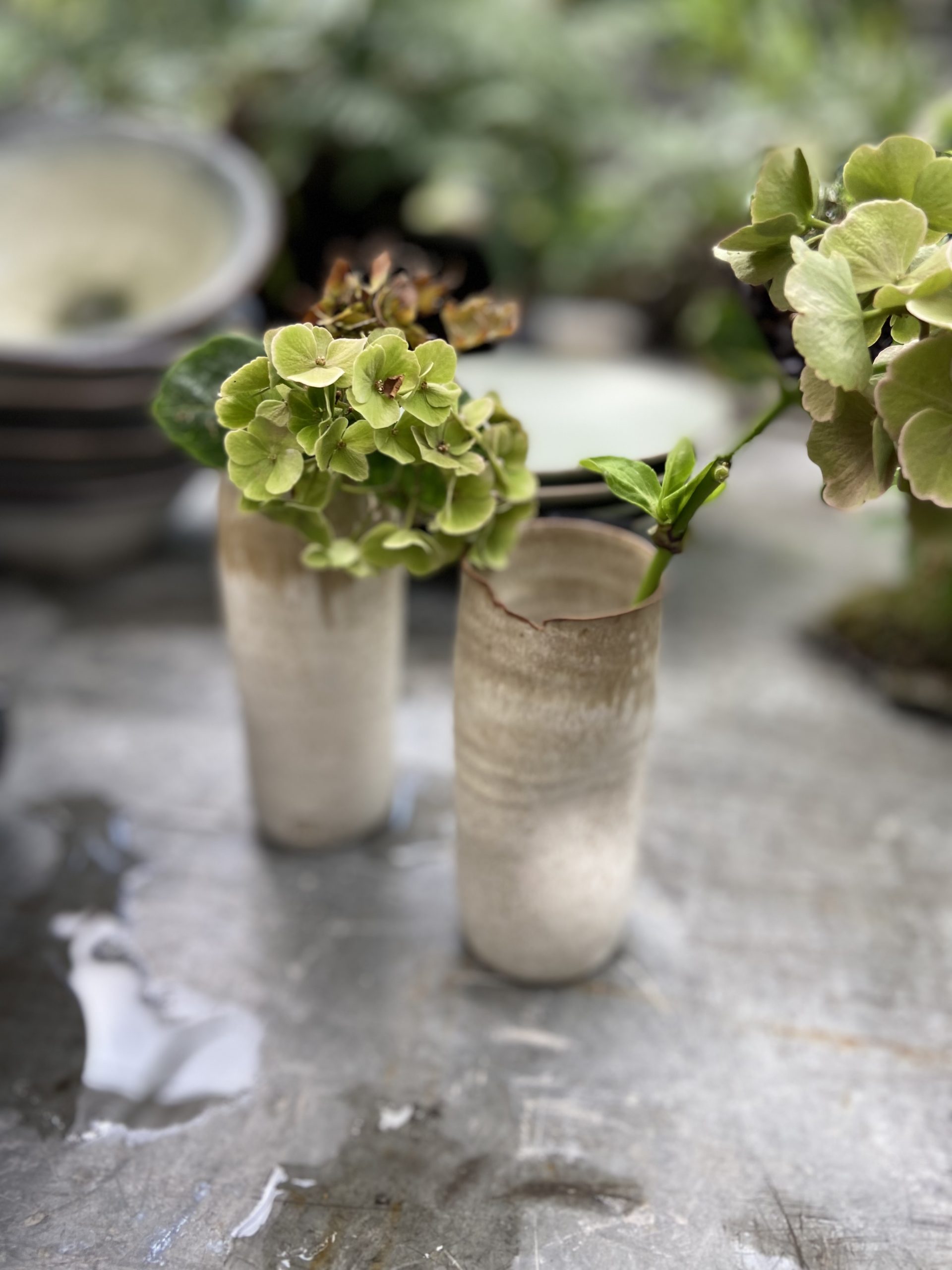
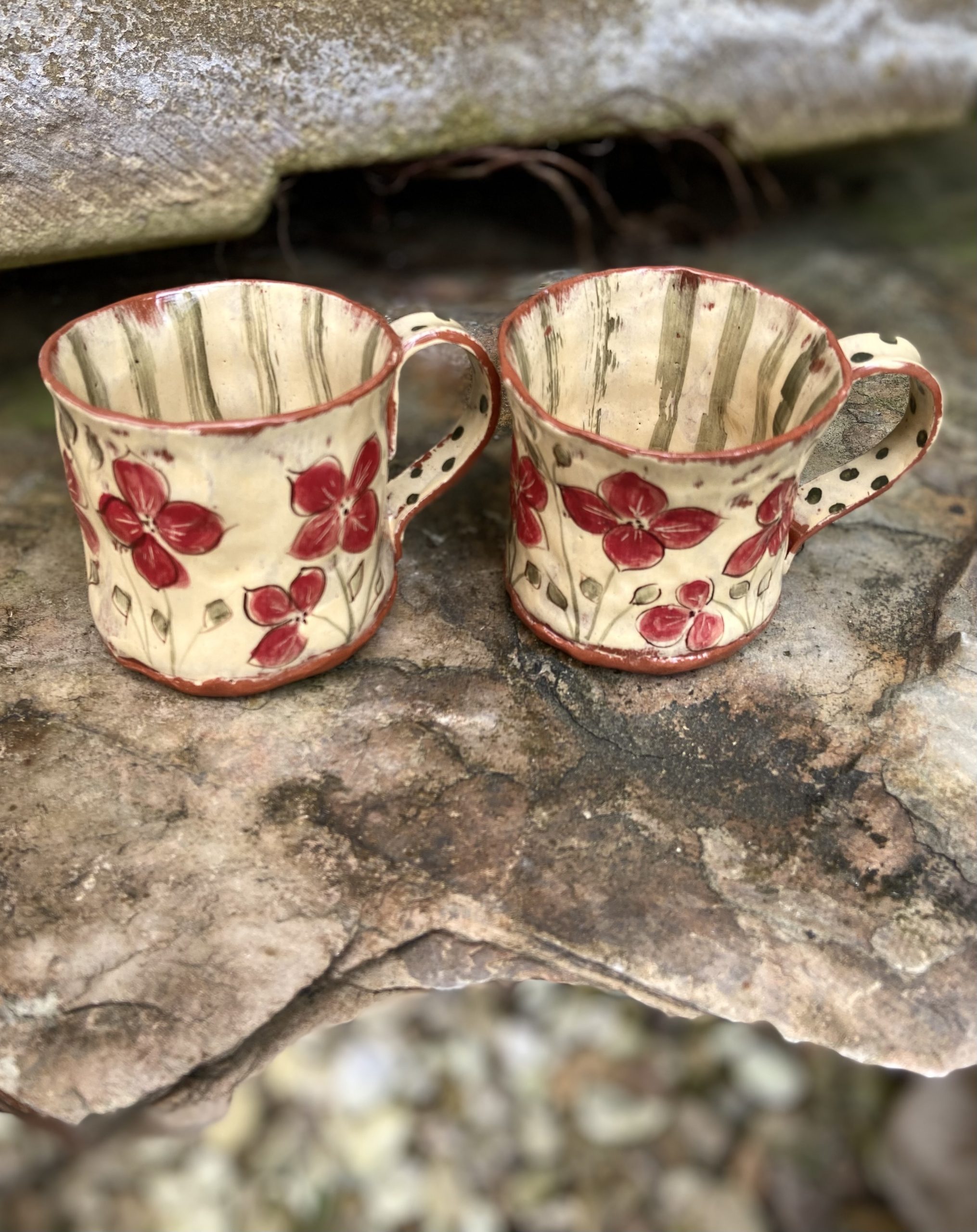
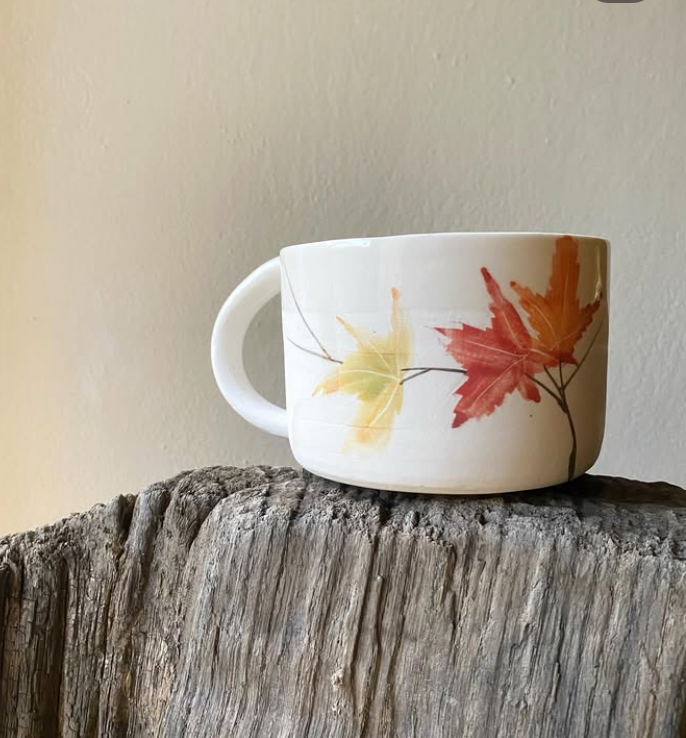
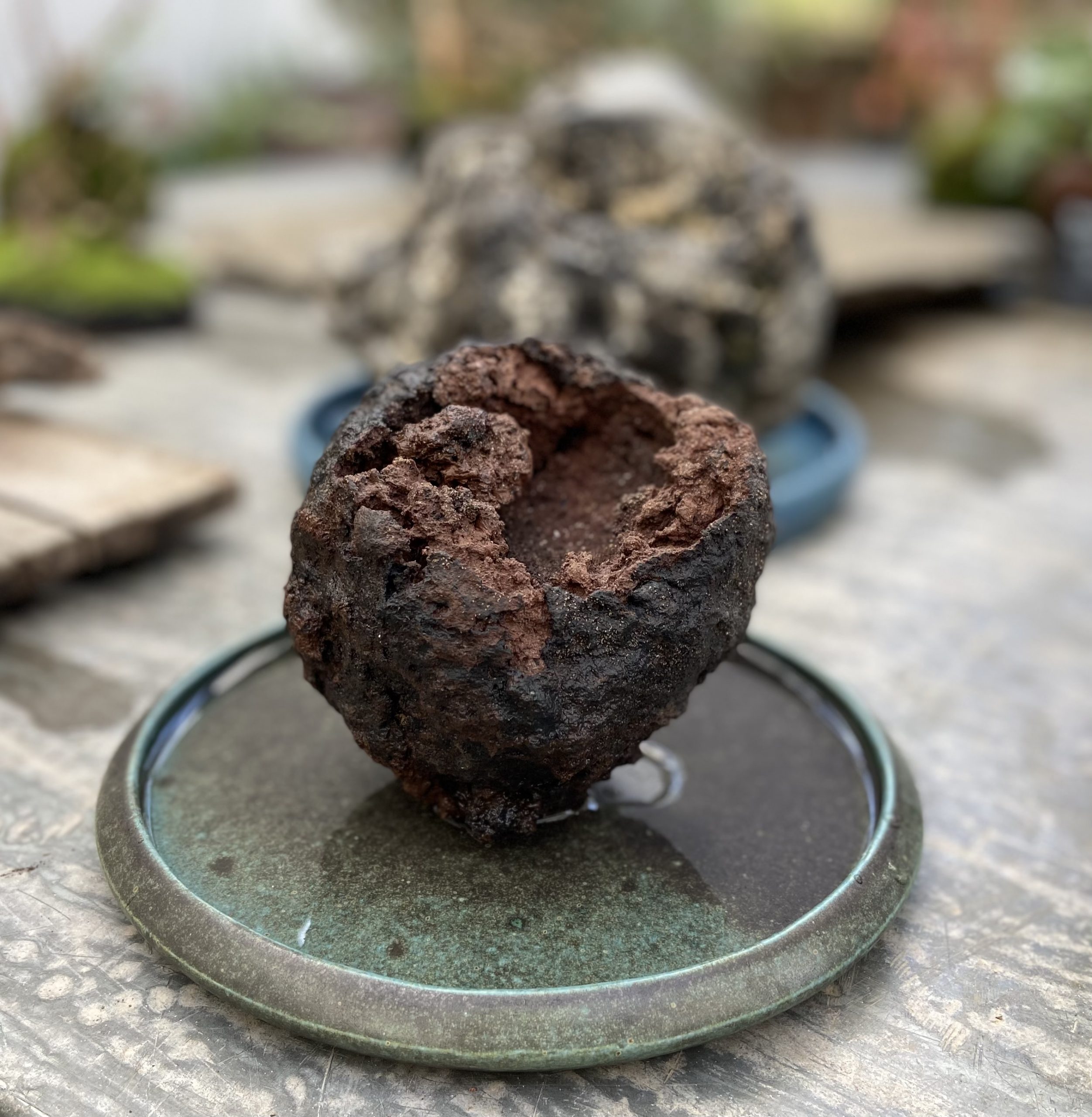
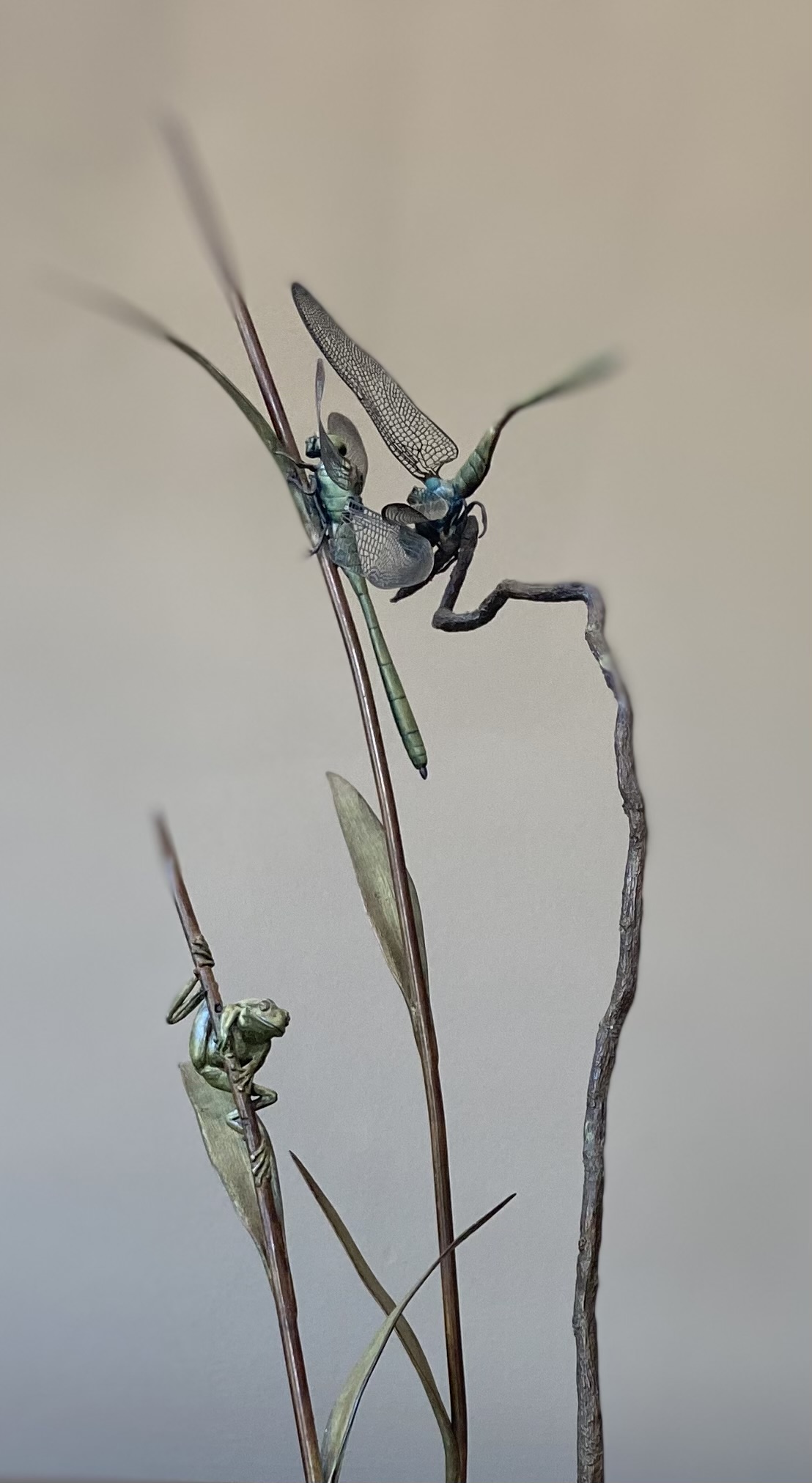
En el jardín tenemos una pequeña tienda. Muchos aficionados al bonsái vienen preguntando por sustratos, abonos o alambres, puede que queden decepcionados porque nuestra tienda es de otro tipo. Hace tiempo que nuestro interés aquí, así como en el resto del jardín, se centra en la búsqueda de la belleza. Y buscándola hemos encontrado a grandes artistas:
Micazuki; a Saika y Miguel los visitamos en su pequeño estudio en un pueblito de Granada para descubrir porcelana transparente y pátinas hechas con cenizas vegetales. Joyas de porcelana que tienen entre nuestros visitantes un club de fans. Didem Firat desde Turquia, cada una de sus piezas es un poema de rayas y flores. Cristina Ortiz; que inspirada en nuestros árboles los pinta sobre sus piezas de porcelana. En su taller de Cantabria descubres a las ballenas de su exposición “Navegantes”, que se asoman desde cualquier rincón y que un día intentaremos traer al jardín. Nadja de Kawasemi desde Suiza con sus increíbles suibanes de pátinas imposibles que tienen la capacidad de acompañar las piedras de Luis como si nunca hubieran estado separados. Henk Fresen y su universo de ranas, libélulas y juncos de bronce. The Rooster and the Rose que perfuma la tienda con sus aceites y jabones
Artesanos todos, en sus pequeños talleres diseñan objetos que no solo perduran pero mejoran con el tiempo. Entre todos han hecho que esto no sea una tienda, ya es otro museo.
In the garden we have a small shop. Many bonsai enthusiasts come here asking for substrates, fertilisers or wires, but they may be disappointed because our shop is of a different kind. For a long time our interest here, as in the rest of the garden, has been in the search for beauty. And in search of it we have found great artists:
Micazuki; Saika and Miguel we visited in their small studio in a little village in Granada to discover transparent porcelain and patinas made with vegetable ashes. Porcelain jewels that have a fan club among our visitors. Didem Firat from Turkey, each of her pieces is a poem of stripes and flowers. Cristina Ortiz; who, inspired by our trees, paints them on her porcelain pieces. In her workshop in Cantabria you discover the whales of her exhibition ‘Navegantes’, which appear from every corner and that one day we will try to bring to the garden. Nadja de Kawasemi from Switzerland with her incredible suibanes of impossible patinas that have the capacity to accompany Luis’ stones as if they had never been separated. Henk Fresen and his universe of frogs, dragonflies and reeds of bronze. The Rooster and the Rose that perfumes the shop with its oils and soaps
Artisans all, in their small workshops they design objects that not only last but improve with time. Together they have made this not just a shop, but another museum.
Nada dura, nada está completo, nada es perfecto/Nothing lasts, nothing is complete, nothing is perfect.
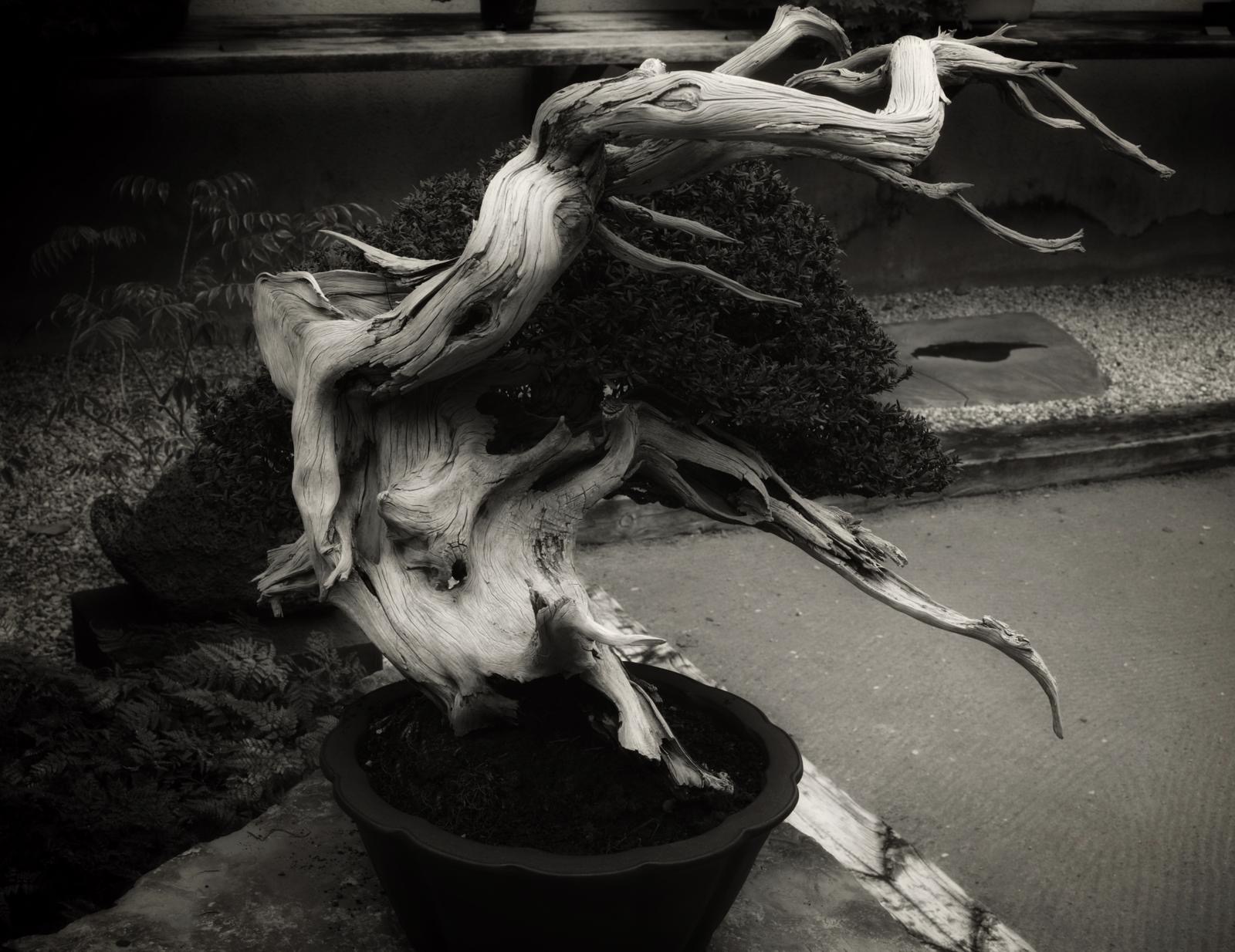
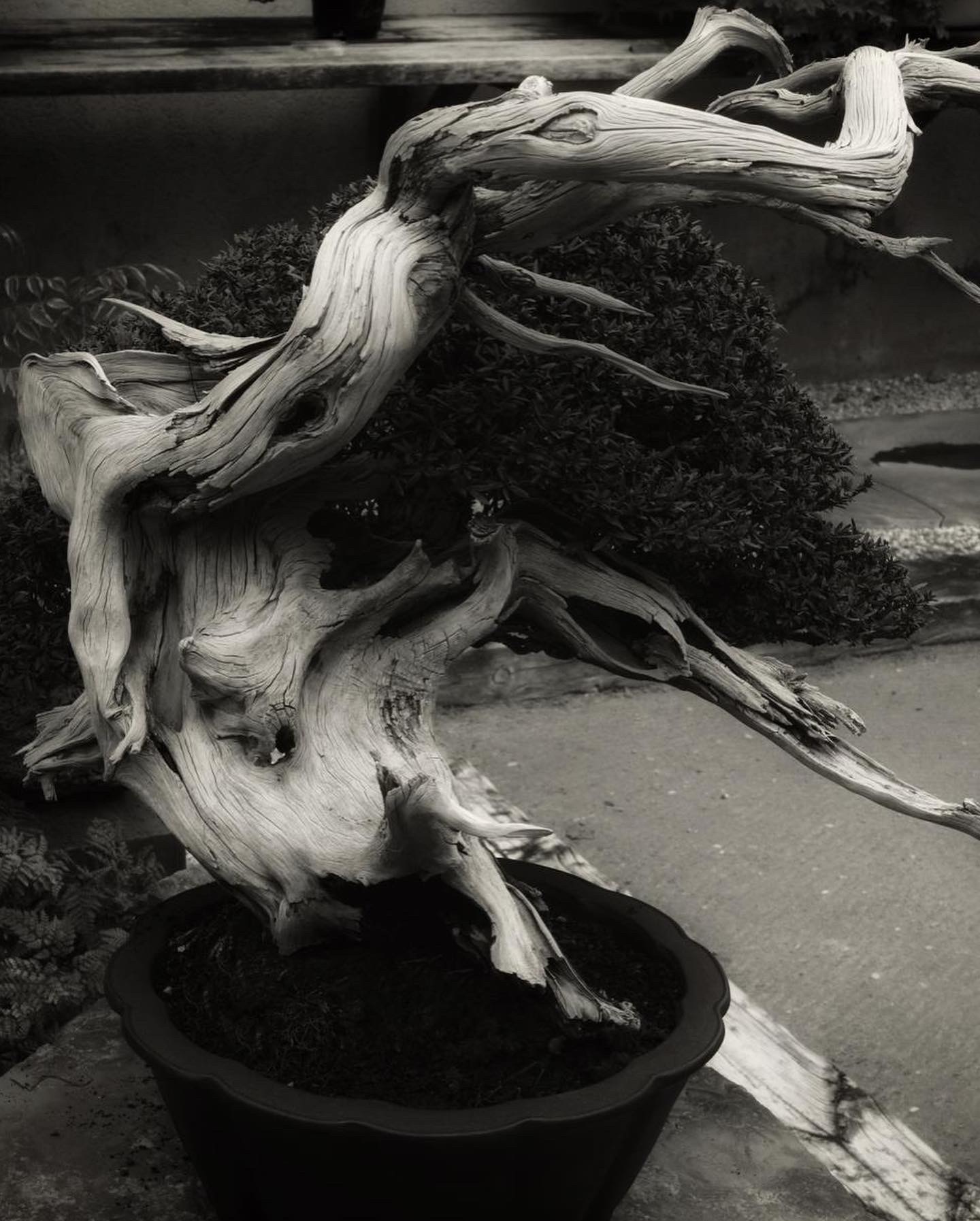
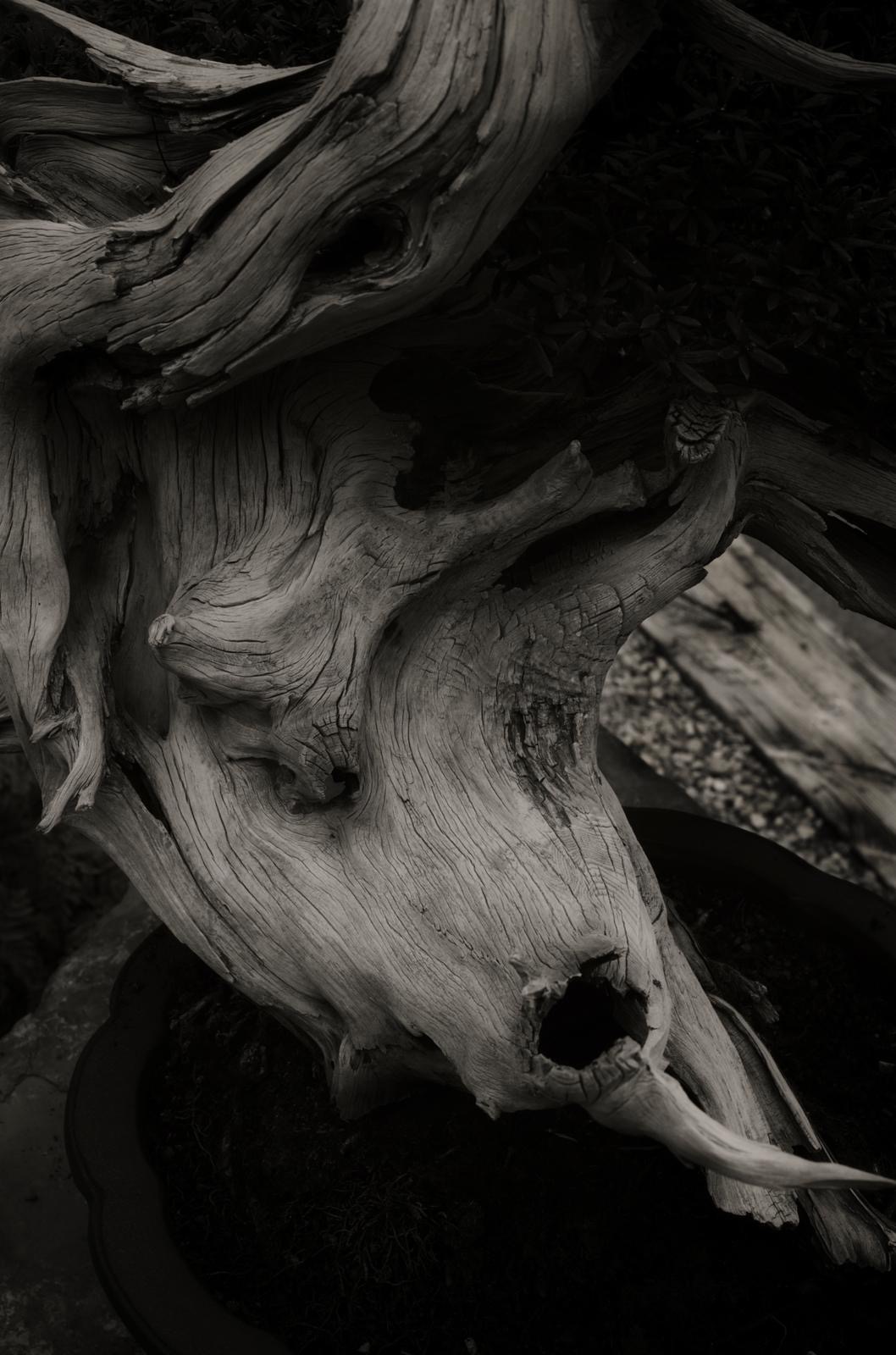
En noviembre de 2018, celebramos la exposición; “La Naturaleza y el tiempo”. Tuvimos varias conferencias y entre ellas la de Peter Warren sobre la filosofía wabi sabi. Disfrutamos también de una exposición de fotografías de los árboles de Carmen Ballvé. Ambas nos impresionaron profundamente.
Entendimos entonces que el jardín es un manifiesto wabi-sabi: imperfección, naturaleza y tiempo. No hay reglas, se trata de evocar la belleza en su forma más modesta. Buscar la armonía en lo natural, no en la ausencia de defectos, enfatizar la imperfección y el paso del tiempo; el ciclo de la vida.
Entendimos también que no solo es estética, es ese sentimiento de emoción y nostalgia que nos inunda ante la elegancia y la nobleza en la sencillez. Hay personas que tienen wabi sabi del alma; aquellas personas capaces de apreciar la belleza en cosas insignificantes que están ahí para ser descubiertas por unos pocos.
Las fotografías de Carmen Ballve, otro manifiesto wabi sabi.
In November 2018, we were holding the exhibition; ‘Nature and Time’. We had several conferences, including Peter Warren’s lecture on the wabi sabi philosophy. We also enjoyed an exhibition of photographs of the trees by Carmen Ballvé. Both made a deep impression on us.
We understood then that the garden is a wabi-sabi manifesto: imperfection, nature and time. There are no rules, it is about evoking beauty in its most modest form. To seek harmony in the natural, not in the absence of defects, to emphasise imperfection and the passing of time; the cycle of life.
We also understood that it is not only aesthetics, it is that feeling of emotion and nostalgia that floods us with elegance and nobility in simplicity. There are people who have wabi sabi of the soul; those who are able to appreciate the beauty in insignificant things that are there to be discovered by a few.
Carmen Ballve’s photographs, another wabi sabi manifesto.
Piedra, paisajes y árboles/ Stone,landscapes and trees
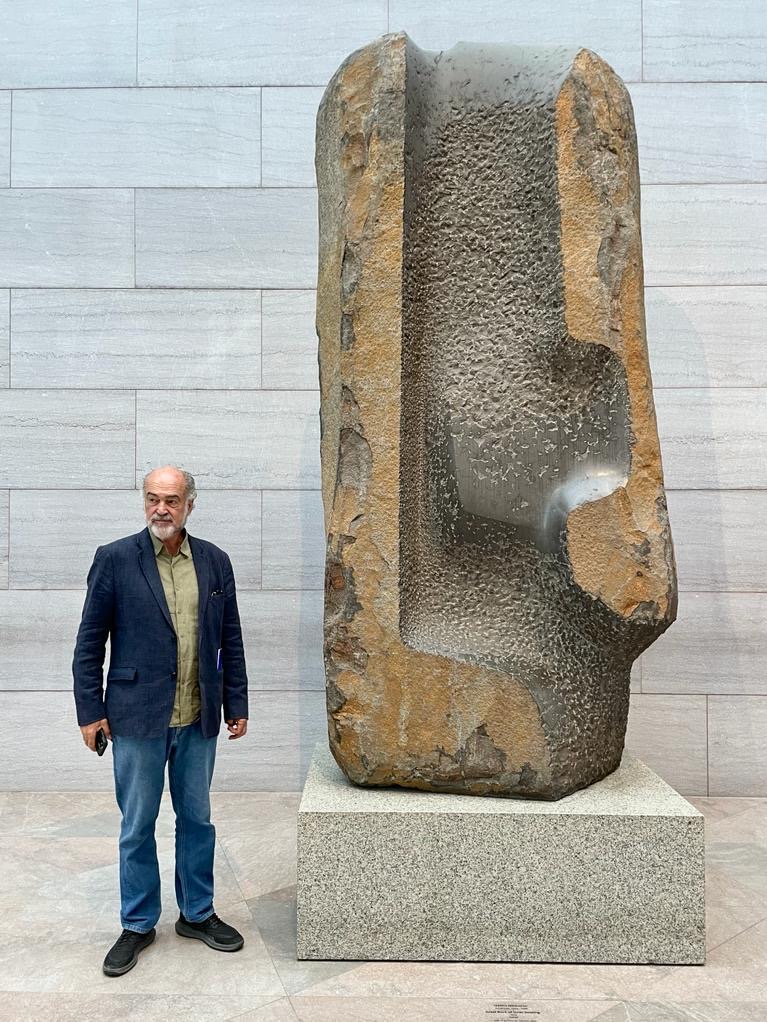
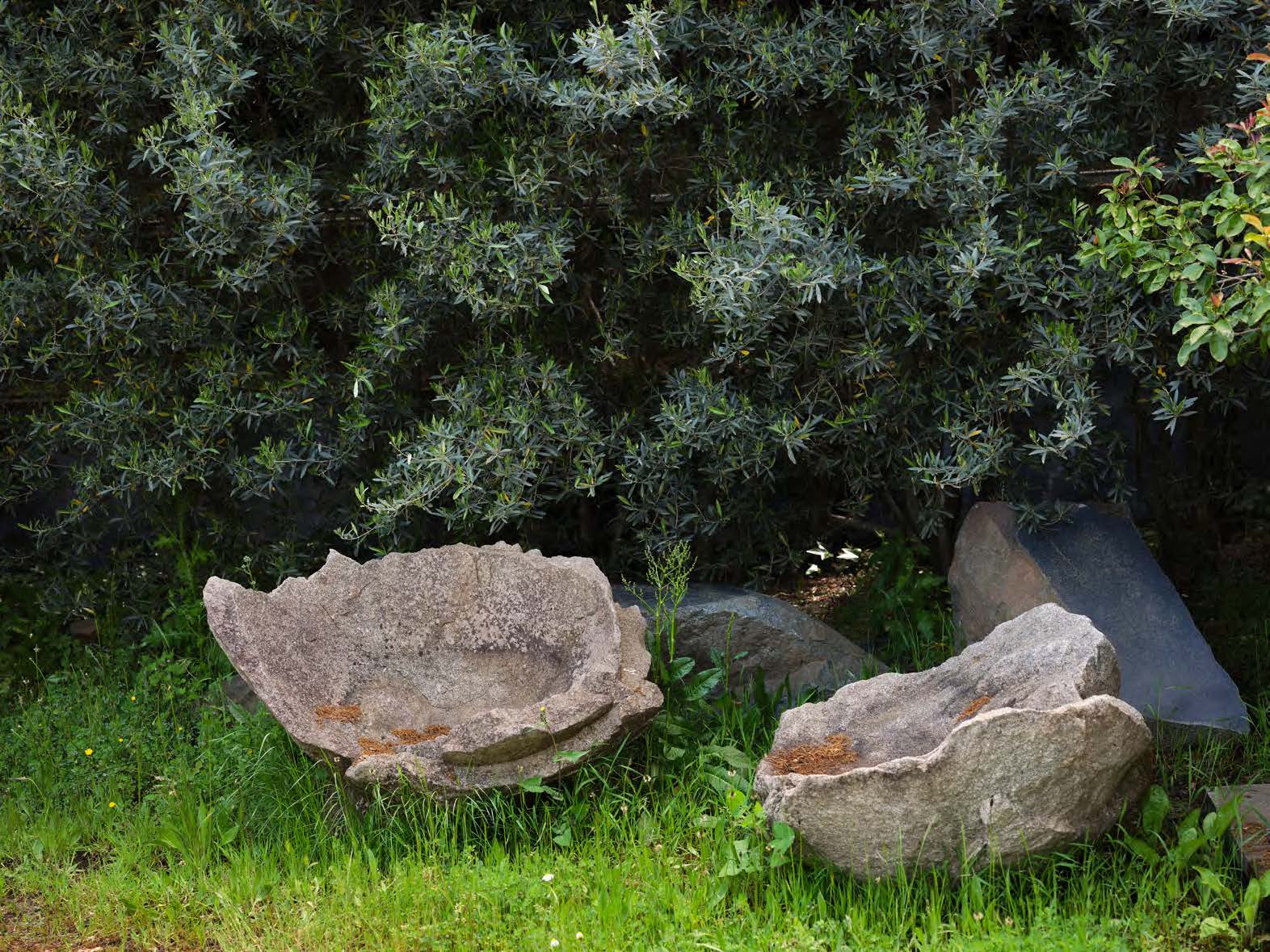
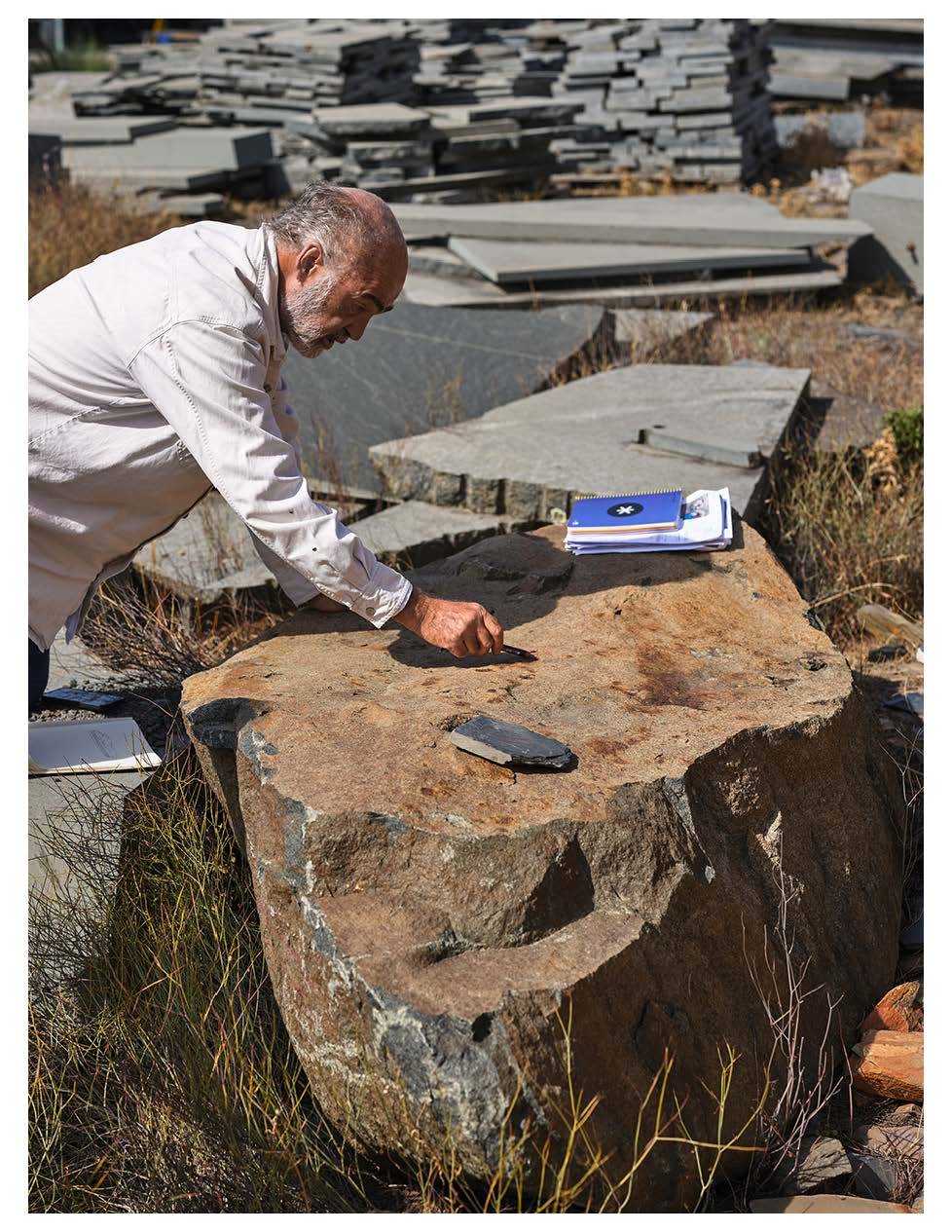
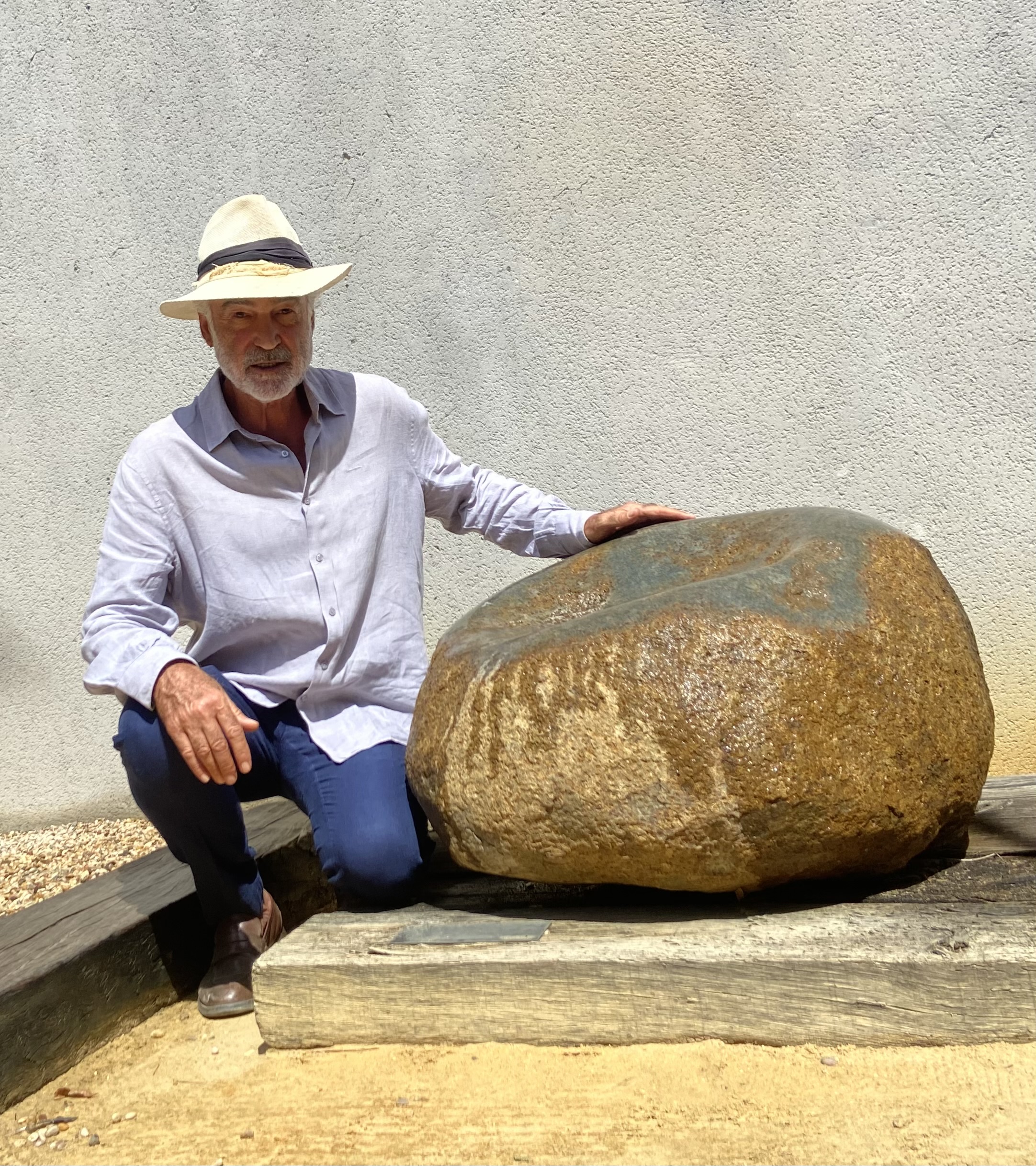
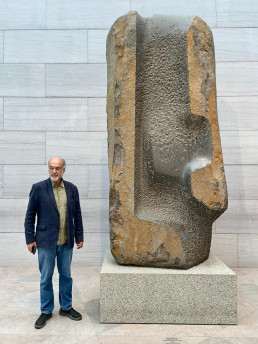
La primera foto es del 2023, Luis en Washington en la National Gallery of Art junto a una obra de Isamu Noguchi, coincidiendo con el viaje que hicimos para la presentación de su libro “a los pinos el viento”. Las siguientes son de su estudio de paisajismo, trabajando en la cantera y aquí en el jardín.
La piedra es una constante en la obra y en la vida de Luis, y aquí en el jardín no podía ser de otra manera. La piedra nos acompaña siempre; desde los grandes bancos de la entrada, pasando por los pedestales de pizarra que sostienen los árboles, las esculturas que salpican la exposición o la piedra de agua del estanque. Tenemos mil historias ligadas a estas piedras; el bolo de granito que acompaña al junípero de Kimura que estuvo a punto de viajar a un proyecto de Renzo Piano en Nueva York, las piedras espejo, negro encina, que instaló Luis junto al alcornoque o el paisaje grande de piceas que llegó hace años de Japón con la maceta partida y que puso en una laja de cuarcita de Segovia, convirtiéndolo en un punto de encuentro entre oriente y occidente…
La piedra con su presencia silenciosa es el contraste perfecto a la vitalidad de los árboles, a su naturaleza cambiante y demandante de cuidados. Para nosotros es un recordatorio de que pertenecemos a algo más grande que la propia colección. Pertenecemos a su universo de piedra, paisajes y árboles.
The first photo is from 2023, Luis in Washington at the National Gallery of Art next to a work by Isamu Noguchi, coinciding with the trip we made for the presentation of his book ‘The Wind among the Leaves”. The following are from his landscaping studio, working in the quarry and here in the garden.
Stone is a constant in Luis’ work and life, and here in the garden it could not be otherwise. Stone is always with us; from the large benches at the entrance, to the slate pedestals that support the trees, the sculptures that dot the exhibition or the water stone in the pond. We have a thousand stories linked to these stones; the granite boulder that accompanies the kimura juniper tree that was about to travel to a Renzo Piano project in New York, the oak mirror black stones that Luis installed next to the cork oak or the large landscape of spruce trees that arrived years ago from Japan with the pot broken and that he placed on a quartzite slab in Segovia, turning it into a meeting point between East and West…
The stone with its quiet presence is the perfect contrast to the vitality of the trees, to their changing and demanding nature and for us it is a reminder that we belong to something bigger than the collection itself. We belong to its universe of stone, landscapes and trees.
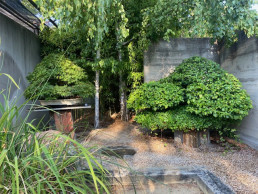
Última semana de agosto/Last week of August
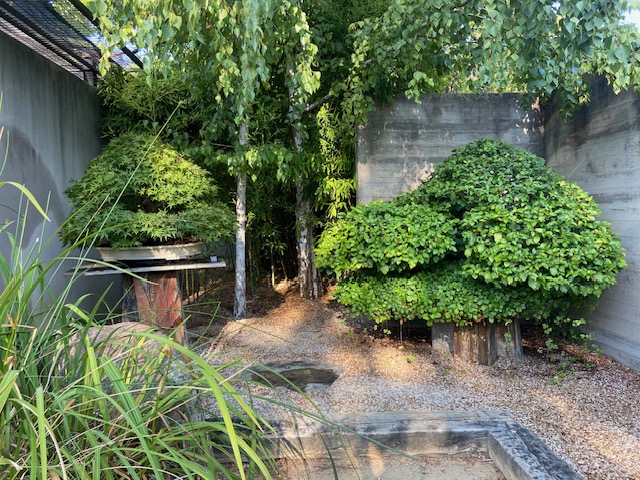
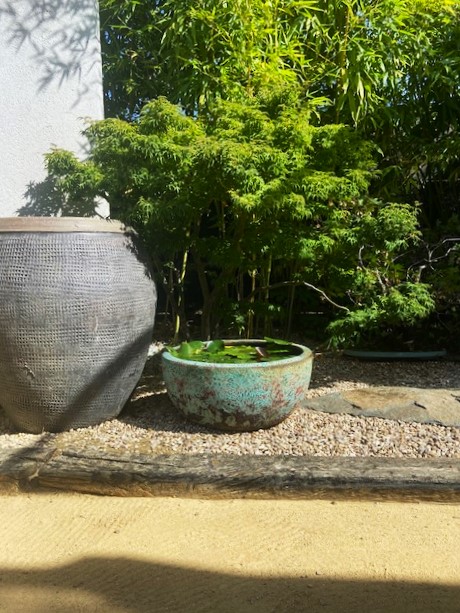
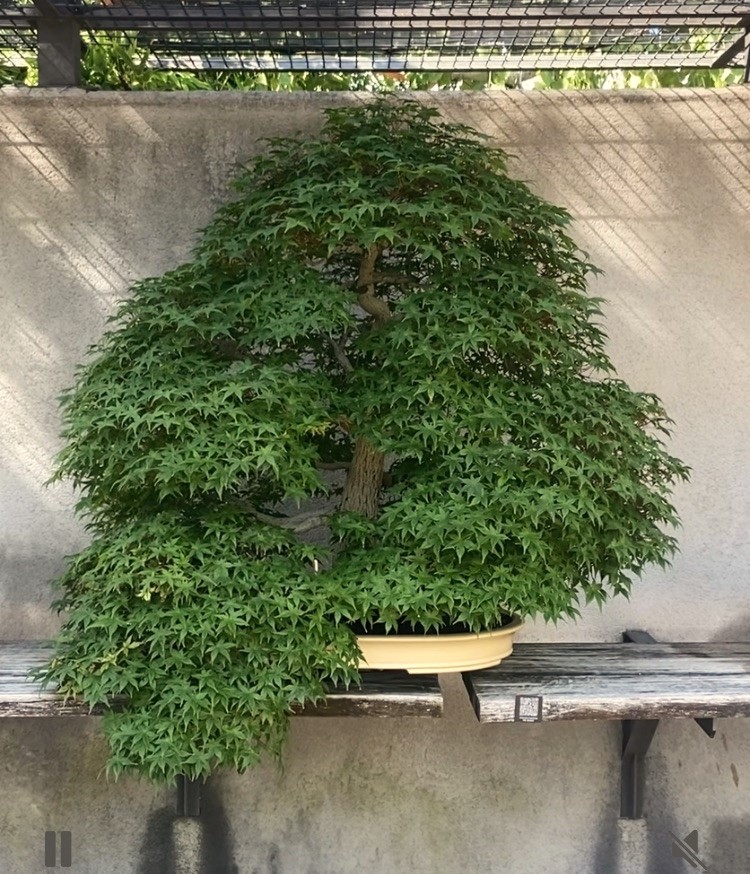
Esta mañana huele a otoño. Todavía falta para que llegue, pero el aire es más fresco y la luz ha cambiado.
Hoy en la radio hablaban de que esta semana se produce una especie de nostalgia anticipada por el final del verano; aquí de tener alguna nostalgia anticipada es por el otoño…
Poco a poco vuelve la gente, por la mañana volvemos a ver a los habituales cruzando el parque de camino al trabajo. Empezamos a preparar todo para la reapertura; los árboles volverán a su sitio, la tienda que ha servido de albergue para plantas vuelve a llenarse de libros y cerámicas. El taller a pleno rendimiento con todo el equipo de vuelta.
Y sobre todo volveremos a tener el jardín lleno de gente.
This morning smells like autumn. It is still some time away, but the air is cooler and the light has changed.
Today on the radio they were saying that this week there is a kind of early nostalgia for the end of summer; here if there is any early nostalgia it is for autumn…
Little by little people are coming back, in the morning we see again the usual people crossing the park on their way to work. We begin to prepare everything for the reopening; the trees will return to their place, the store that has served as a shelter for plants will be filled again with books and ceramics. The workshop will be back to full capacity with all the team back.
And above all, the garden will be full of people again.
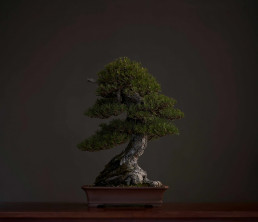
Pino negro del Pirineo/Pyrenean mountain pine
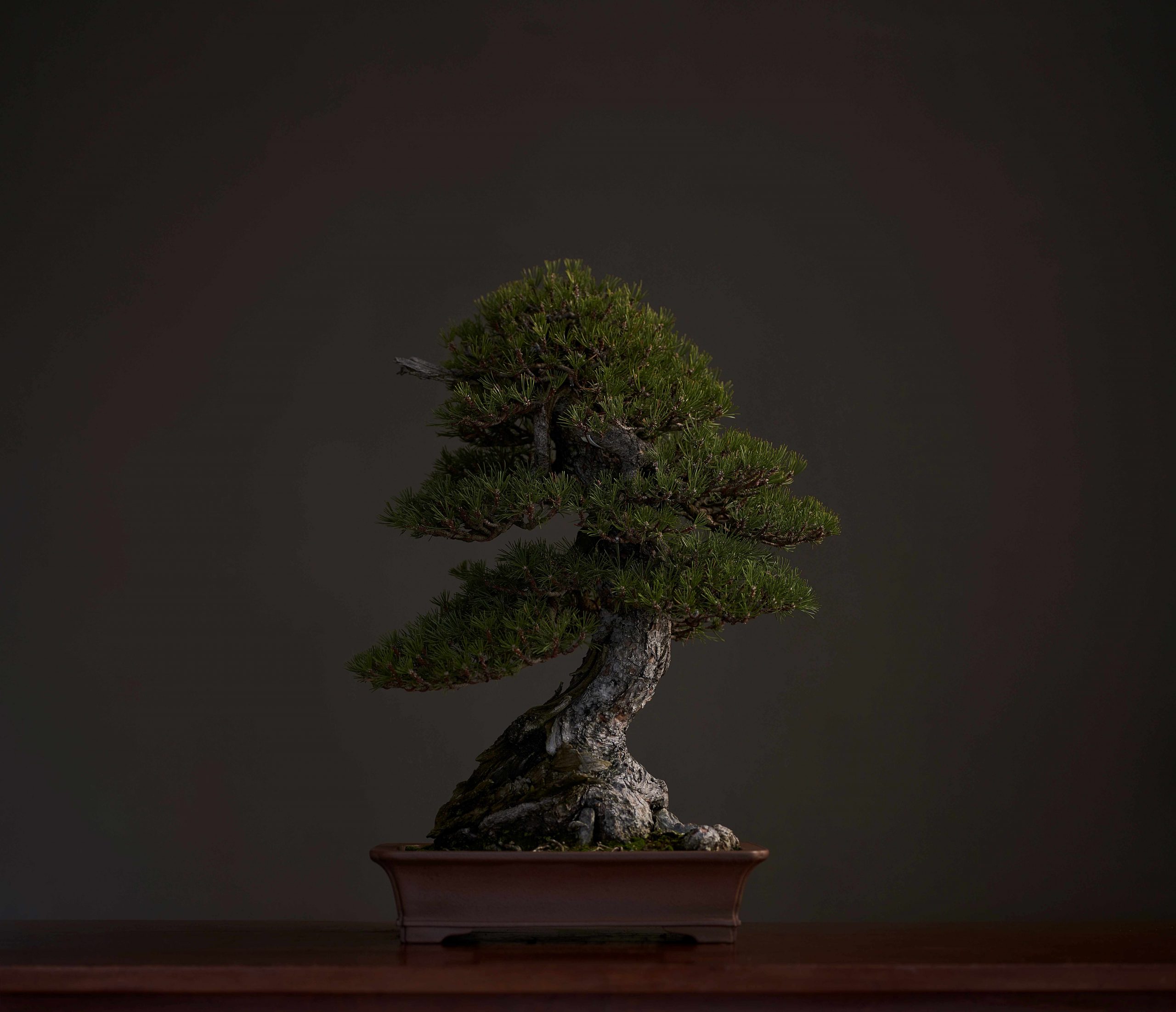
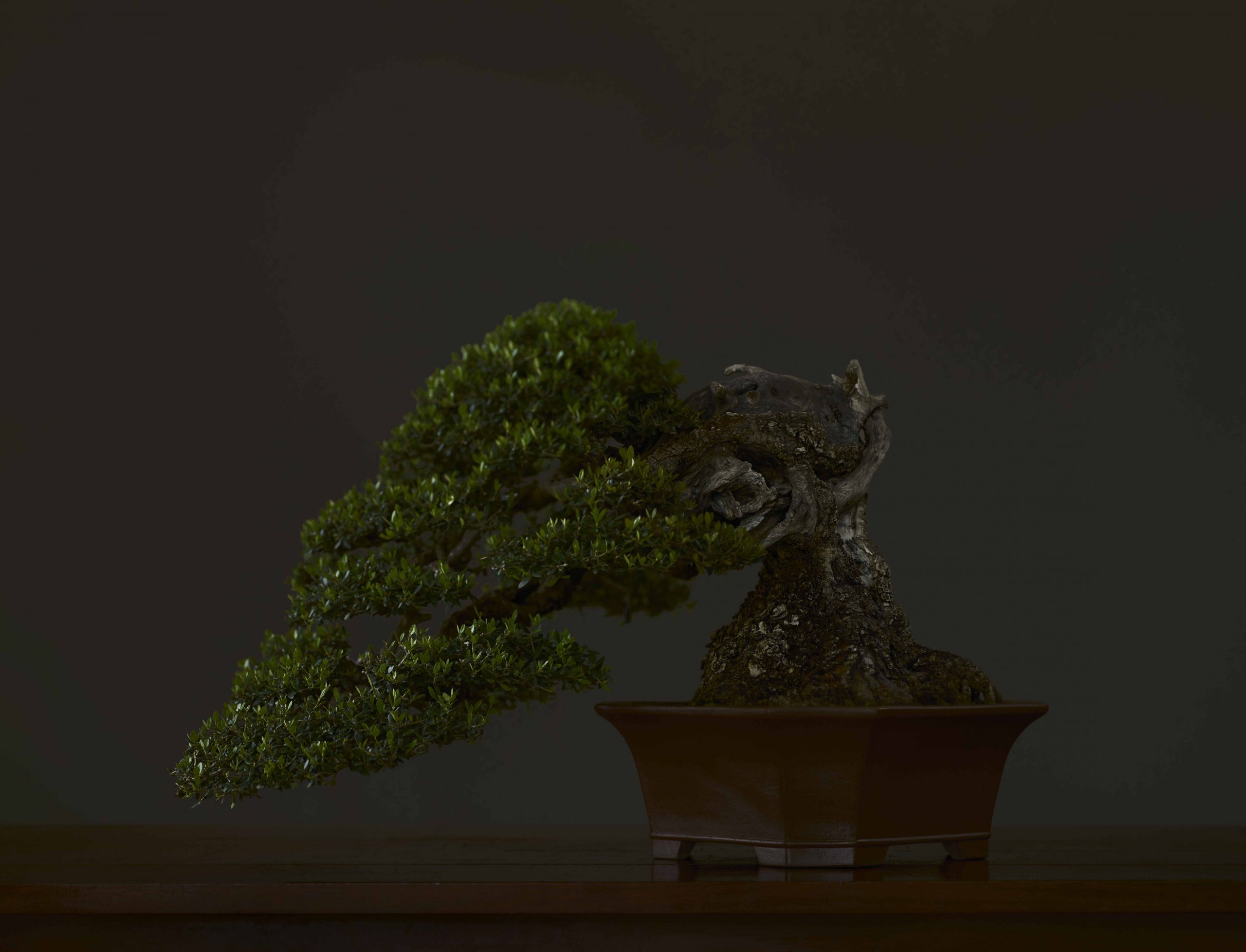
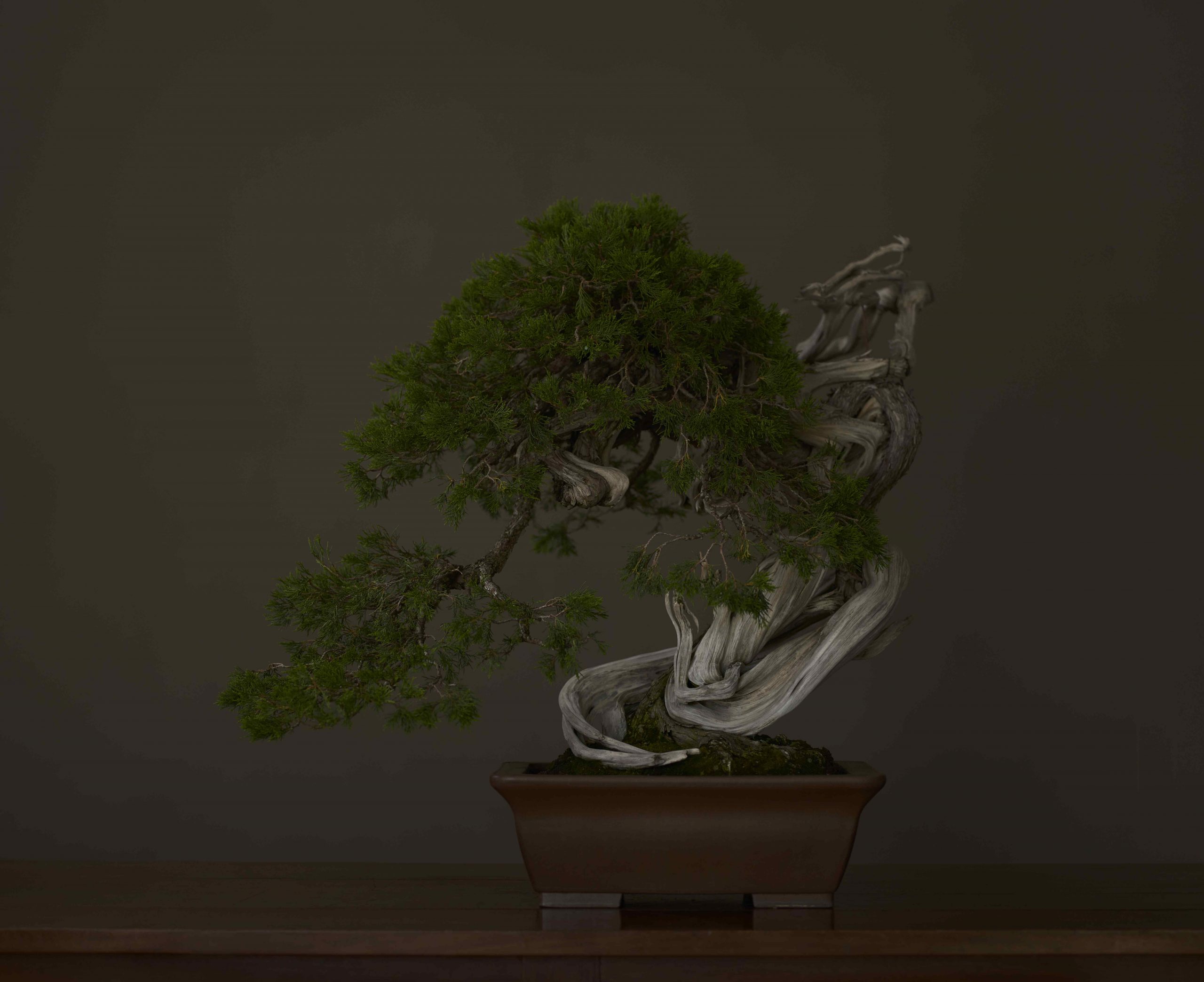
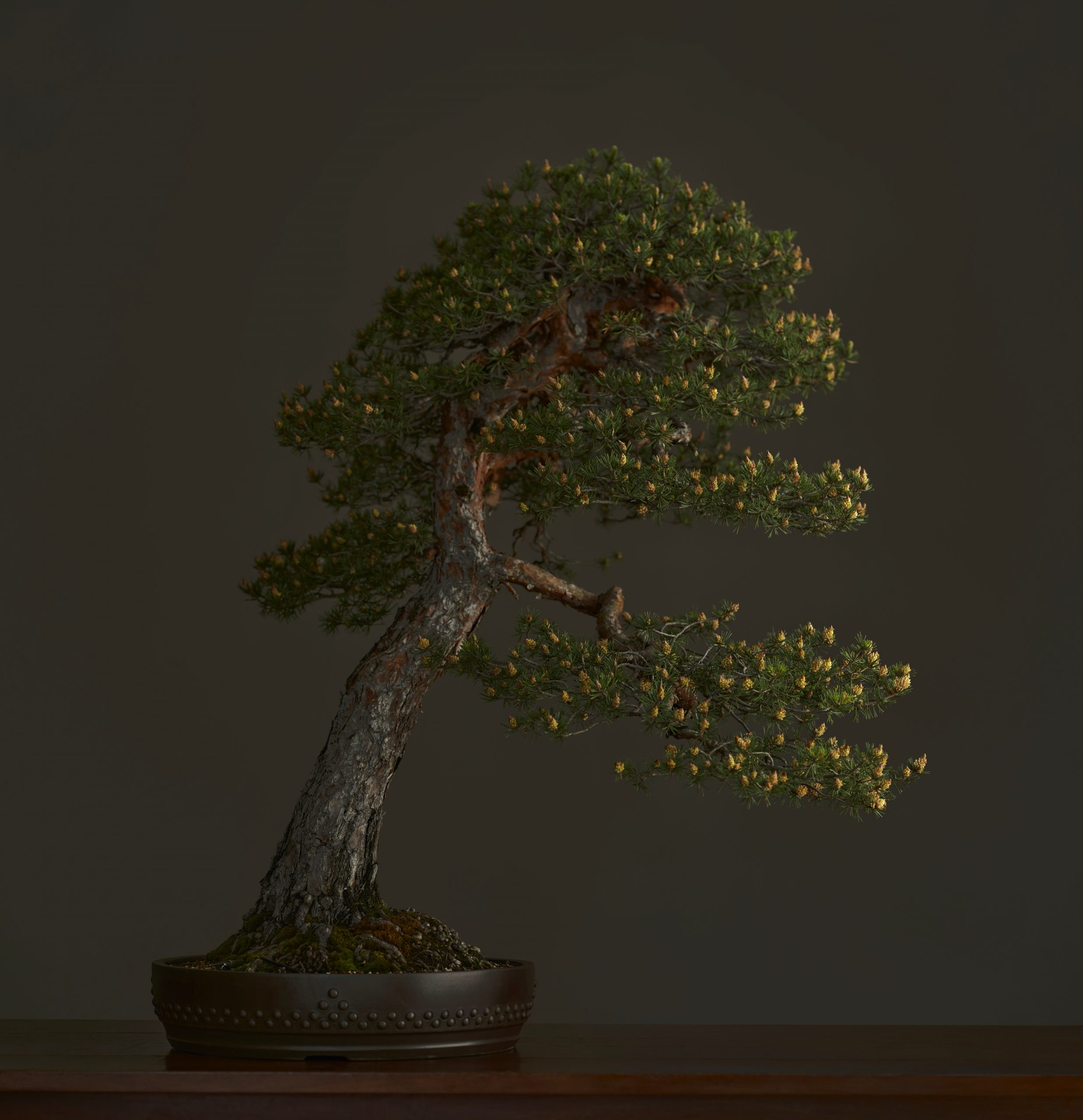
En una semana complicada en gran parte de España, un pequeño homenaje a nuestros paisajes y a nuestros árboles; olivos, encinas, alcornoques, sabinas, hayas, robles, pinos…
Pino negro del Pirineo.
En los altos pirenaicos de Belagua van
cojeando los rebaños de ovejas lachas entre
pinos negros, sobre un terreno kárstico
repleto de agujeros.
“a los pinos el viento”. Luis Vallejo
fotografía Fernando Maquieira.
In what has been a difficult week in much of Spain, here is a small tribute to our landscapes and our trees: olive trees, holm oaks, cork oaks, junipers, beeches, oaks, pines…
Pyrenean mountain pine.
In the pyrenean heights of Belagua the flocks
of Latxa sheep hobble along among black pines
over a Karstic terrain full of holes.
“The Wind among the Leaves”. Luis Vallejo
Photograph Fernando Maquieira.
Riego/Watering
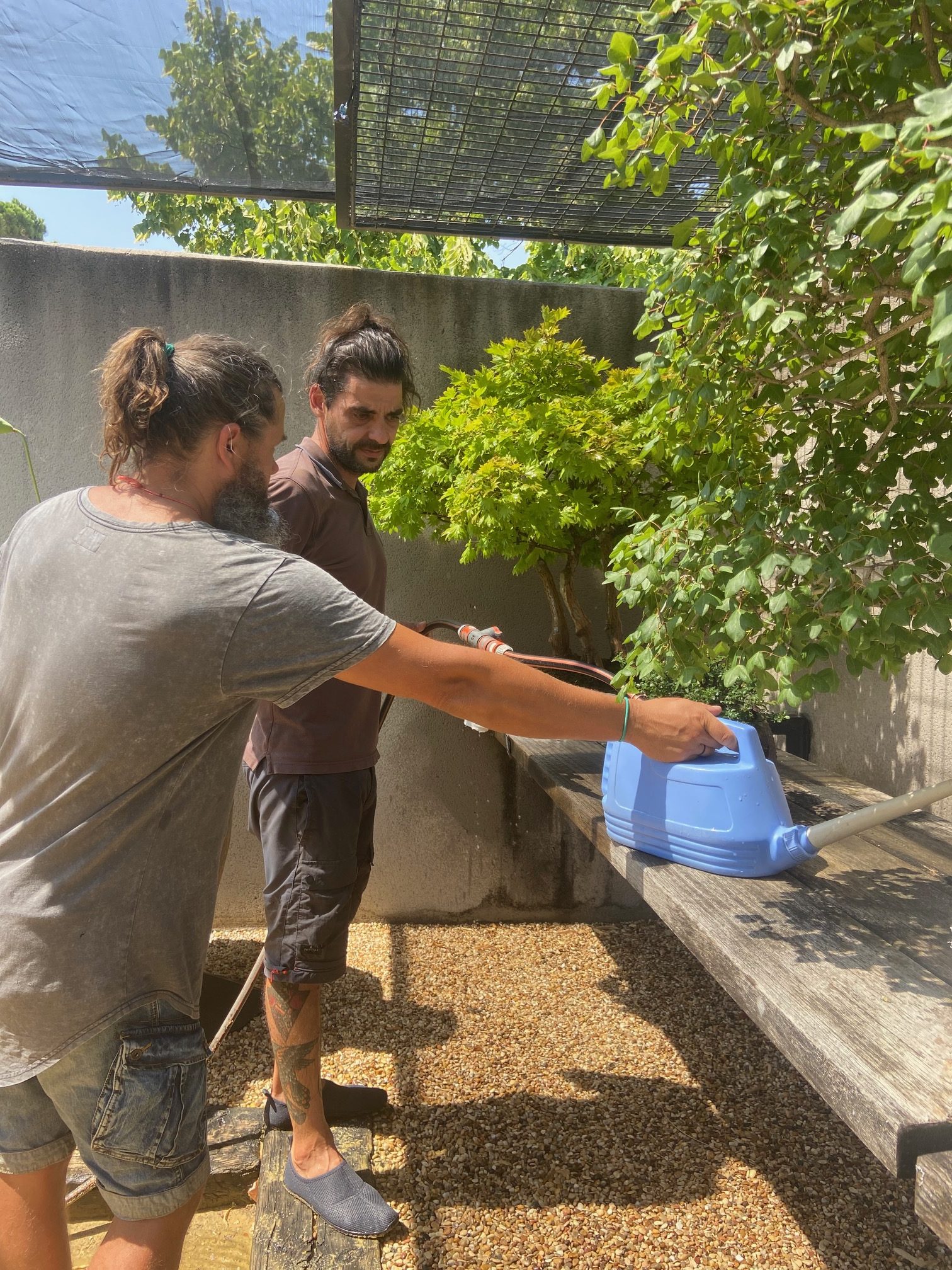
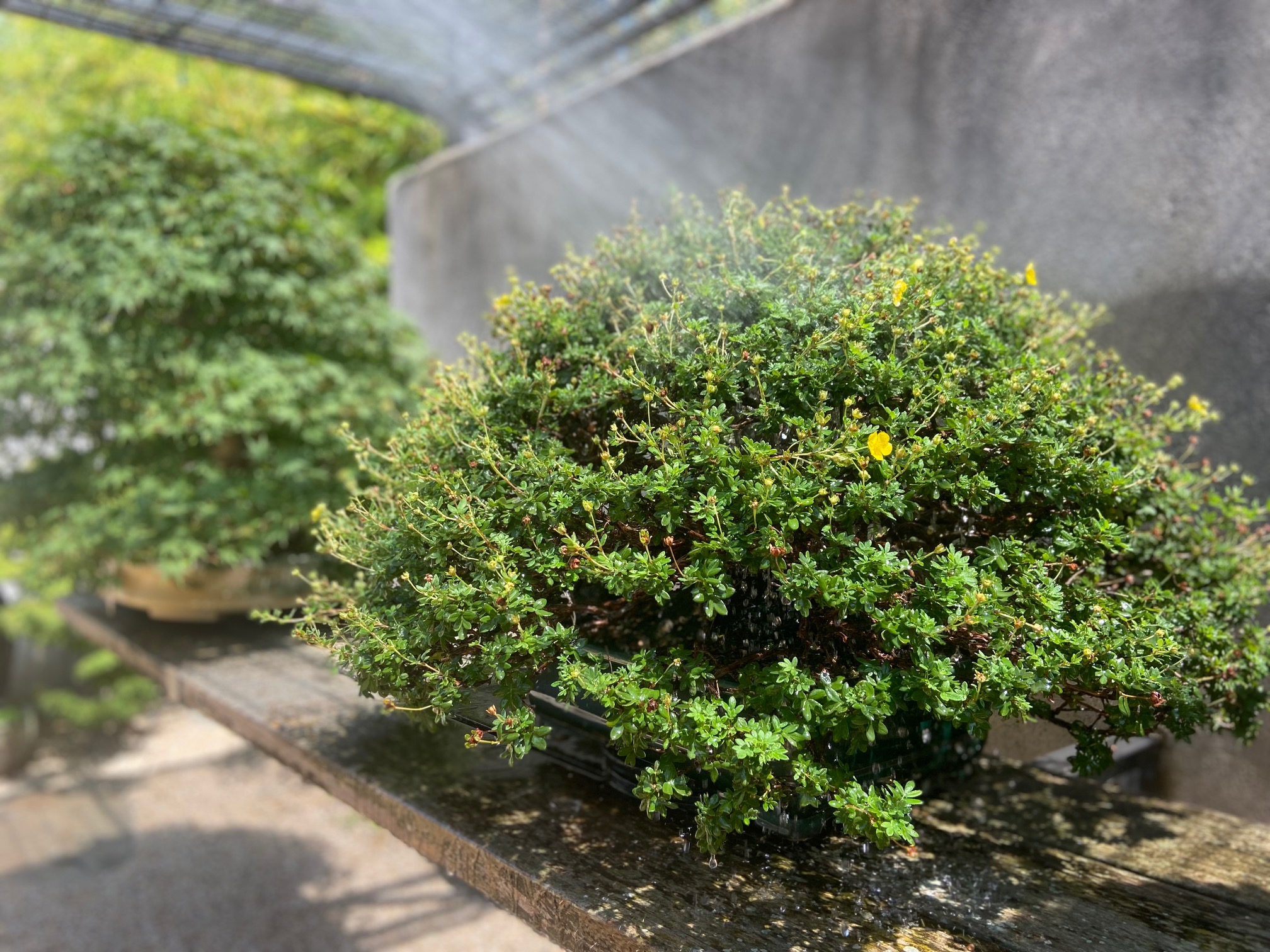
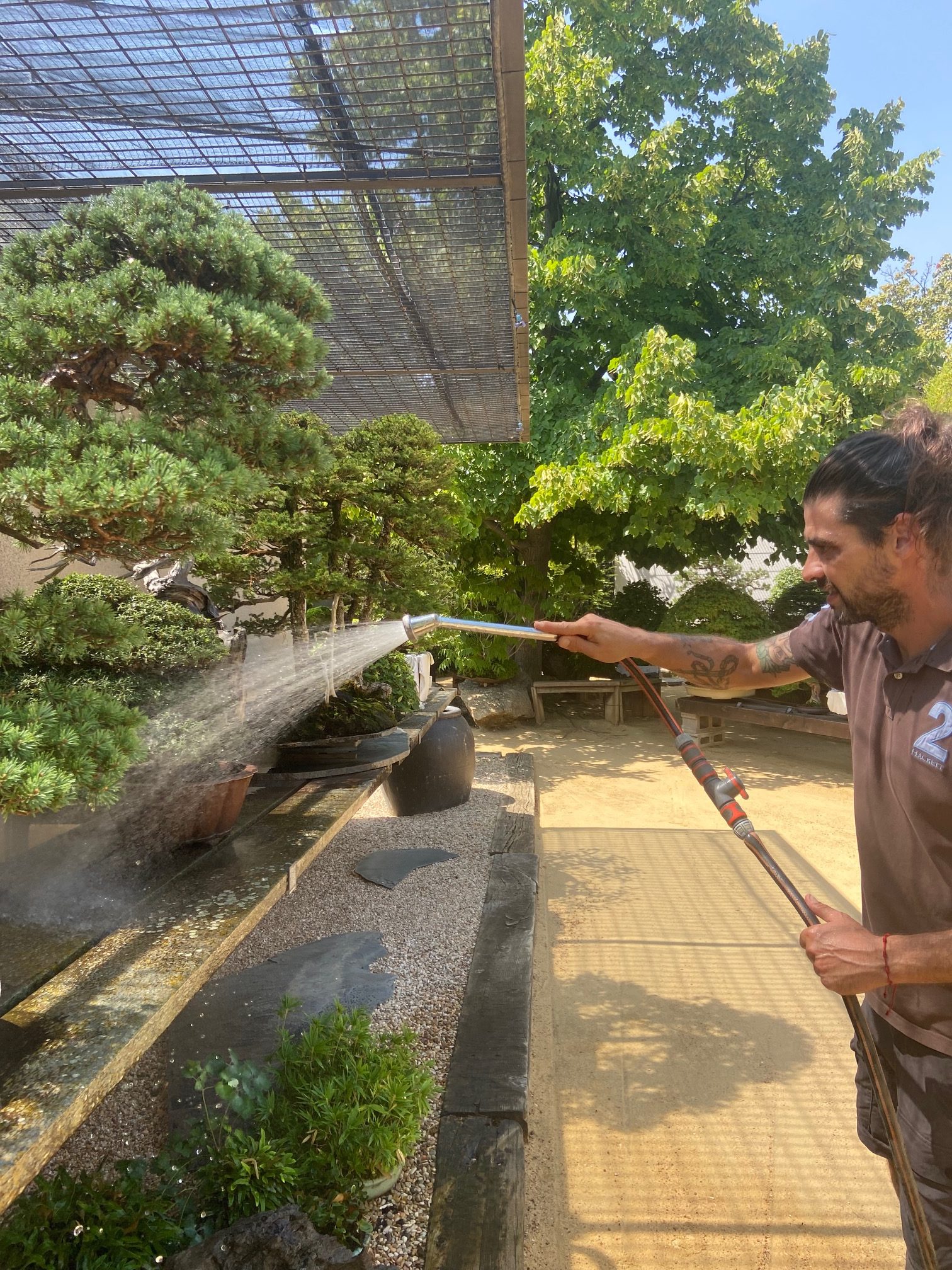
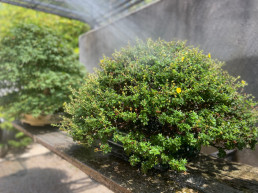
Llevamos una semana de mucho calor,, el riego lo ocupa todo.; nuestro tiempo y nuestra energía. Para saber regar hace falta experiencia,…en Japón para regar necesitas una formación de unos tres años.
Cuando te pones frente a un bonsái y tomas la decisión de regarlo o no, tienes en cuenta algunos factores; último riego, ubicación, época del año, especie, si el sustrato drena bien, profundidad de la maceta, estado general, experiencia en los días anteriores… todo esto a 40 grados y con un número considerable de arboles por regar. Si le añadimos que las nuevas generaciones riegan escuchando reguetón o el ultimo podcast sobre fenómenos UFO…igual habría que ampliar la formación unos cuantos años más…
Pero con la experiencia, la cosa no es para tanto, la decisión se toma muy rápido y el resto del tiempo aprovechas para ver los árboles, el jardín…observar las plantas que nacen en las traviesas o en las piedras. En estos días invertir tanto tiempo en algo, concentrare en una sola cosa y darle el tiempo que necesita puede ser terapéutico y cuando la temperatura no es tan alta hasta lo disfrutas.
Watering takes up all our time and energy. To know how to water properly, you need experience. It takes about three years of training to learn how to water in Japan.
When you stand in front of a bonsai and decide to water it or not, you take a number of factors into account: when it was last watered, its location, the time of year, the species, if the substrate drains well, the depth of the pot, its general condition, your experience in previous days… all this at 40 degrees and with a considerable number of trees to water. If we add to that the fact that the younger generations water while listening to reggaeton or the latest podcast on UFO phenomena… maybe we should extend the training by a few more years…
But with experience, it’s not such a big deal, the decision is made very quickly and the rest of the time you can enjoy looking at the trees, the garden… observing the plants that grow on the sleepers or stones. These days, investing so much time in something, concentrating on one thing and giving it the time it needs can be therapeutic, and when the temperature isn’t so high, you can even enjoy it.
Nombres/Names
Los nombres son importantes, de pequeños lo primero que aprendemos a nombrar es lo que mas nos importa. En el jardín tenemos nombres para todos los árboles. Según su procedencia: ” el junípero de kimura” (hay varios juníperos de Kimura, pero solo a uno lo llamamos así) “la zelcova de Gabriel García Márquez” (y su historia…) “el kaede de Kato”….y según la especie cuando solo hay uno: “el procumbens”, “el arakawa”,” el shirasawanum”…
Tenemos otro tipo de nombres, los míticos, heredados de un pasado que alguno ni hemos vivido: “el hermano pequeño” y “el hermano mayor” dos pinos albares de los primeros diseños de Luis que estaban plantados en kurama y se hicieron famosos, “el luchador de sumo”; un acebuche al que puso nombre Kobayashi mientras imitaba la postura de un luchador, “la Medusa” de Luis, un haya de melena imponente, o” la bailarina” un pino blanco bunjin que parece que está bailando.
Por último, están los nombres de estar por casa; estos surgen de un momento de necesidad o de inspiración (según se mire) de uno de nosotros. En esta categoría tenemos al pulpo, el flying rock, el no manzano, el antenas, el saca ojos, el ex feo, …y una larga lista de la que no estamos orgullosos.
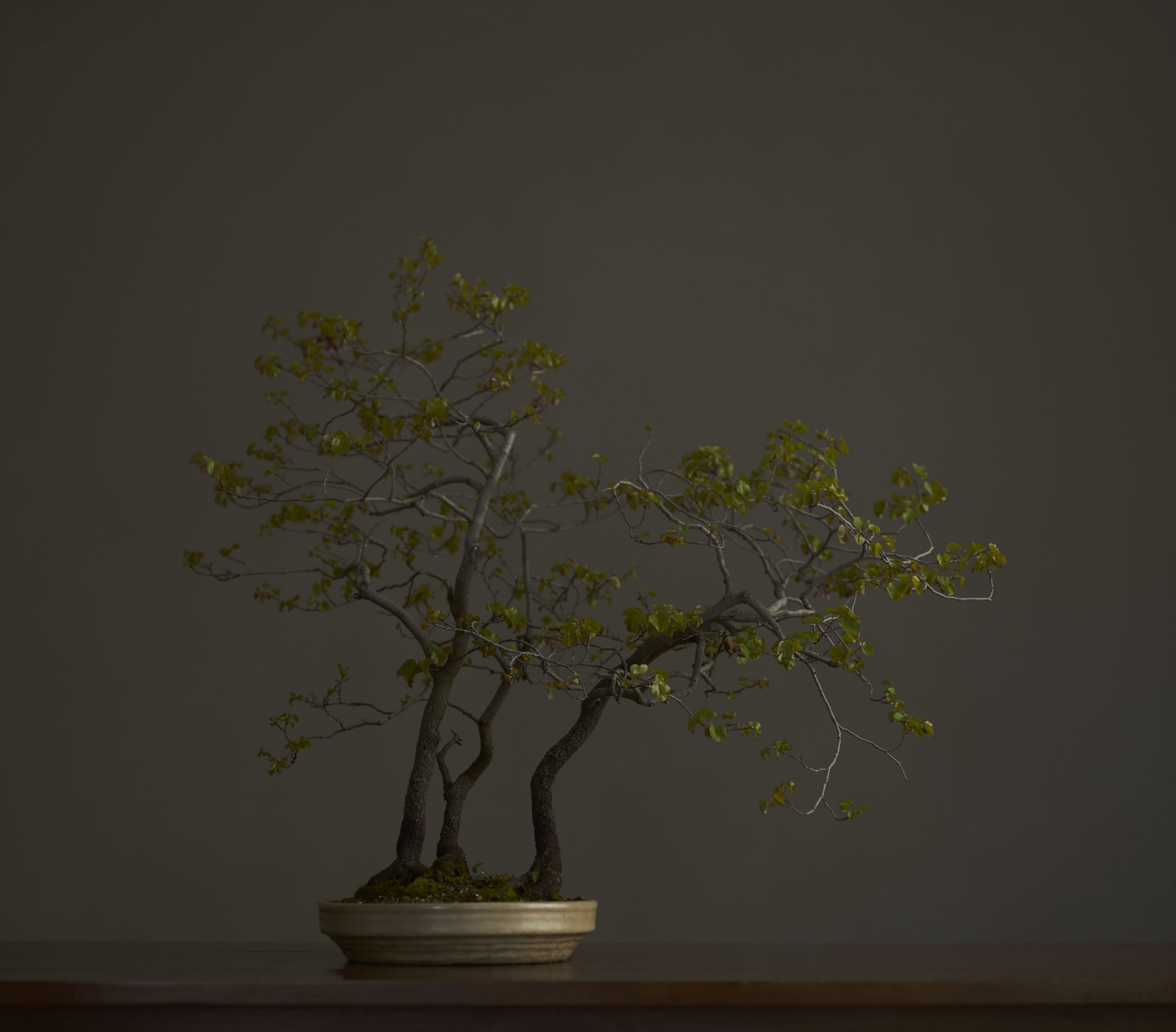
Al de la foto, un grupo de cercis silicuastrum, Luis le puso hace unos días “el castigado”. Estos días está al fondo del vivero, resguardado del sol… cree que deberíamos darle una ubicación más digna.
.
Names are important. As children, the first thing we learn to name is what matters most to us. In the garden, we have names for all the trees. Depending on their origin: ‘Kimura’s juniper’ (there are several Kimura junipers, but we only call one of them that), ‘Gabriel García Márquez’s zelkova’ (and its story…), ‘Kato’s kaede’… and depending on the species when there is only one: ‘the procumbens’, ‘the arakawa’, ‘the shirasawanum’…
We have other types of names, the mythical ones, inherited from a past that some of us have not experienced: ‘the little brother’ and ‘the big brother’, two Scots pines from Luis’s early designs that were planted in Kurama and became famous, ‘the sumo fighter’; a wild olive tree that Kobayashi named while imitating the posture of a fighter, Luis’s ‘Medusa’, a beech tree with an imposing mane, or ‘the ballerina’, a bunjin white pine that looks like it is dancing.
Finally, there are the everyday names; these arise from a moment of necessity or inspiration (depending on how you look at it) from one of us. In this category we have the octopus, the flying rock, the non-apple tree, the antennae, the eye-gouger, the ex-ugly… and a long list that we are not proud of.
The one in the photo, a group of cercis silicuastrum, was named ‘the punished one’ by Luis a few days ago. These days it is at the back of the nursery, sheltered from the sun… he thinks we should give it a more dignified location.