

Las piedras que hablan


Hoy colocamos algunas piedras en la exposición con los suibanes de Kawasemi Studio. Mientras las coloca, Luis explica cada piedra, esta surgió de una laguna, esta tiene una densidad espectacular, esta está cortada y pulida para que podamos ver un pedacito de cielo. Luego las riega. Las piedras mojadas parecen más vivas.
Hay personas capaces de hacer hablar a las piedras. Luis es una de ellas, sus piedras hablan. Siempre cuenta que las piedras, sus formas, le encuentran a él y no al revés. Debe ser que lo llaman para que las escoja entre tantas…cada una gritando su origen, su historia o sus posibilidades…tantos años calladas.
A otras personas son las piedras las que les hacen hablar, Paco Gomez en su libro Derivas con Leo, visita la intervención de Luis en la base de la Torre de Sainz de Oiza en Castellana 81. …”La instalación contaba también con unas losas enormes de roca, seccionadas como si fueran lonchas de jamón, que descansaban directamente en el suelo evocando, de forma casi mística, los misterios de la geología terrestre” …
Today we’re placing some stones in the exhibition, using some suibans from Kawasemi Studio. As he arranges them, Luis explains each stone: ‘This one came from a lagoon,’ ‘This one has a spectacular density,’ ‘This one has been cut and polished so we can see a little piece of sky.’ Then he sprinkles them with water. The wet stones seem more alive.
There are people capable of making stones speak. Luis is one of them; his stones speak. He always says that the stones—their shapes—find him, and not the other way round. It must be that they call out to him so that he might choose them from amongst so many… each one proclaiming its origin, its history or its potential… after so many years of silence.
For some people, it is the stones that inspire them to speak. In his book *Derivas con Leo*, Paco Gómez visits the base of the Sainz de Oiza Tower at Castellana 81 during his wanderings and says: …”The installation also featured enormous slabs of rock, cut as if they were slices of ham, resting directly on the floor and evoking, in an almost mystical way, the mysteries of the Earth’s geology” …


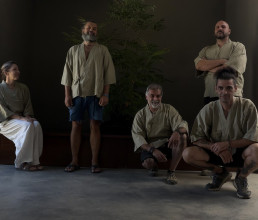
Septiembre

Llegó septiembre. Tras el parón del verano volvemos a abrir el jardín al público.
Es lo que tiene este momento del año, no importa cuantos años lleves haciendo lo mismo que te entran ganas de empezar de nuevo.
Aquí estamos todos listos y con la ilusión intacta. Todo es posible.
El equipo del jardín.
(estrenamos kimonos de @meibokupl)
September is here. After the summer break, we’re reopening the garden to the public.
That’s the thing about this time of year – no matter how many years you’ve been doing the same thing, you still feel like starting afresh.
Here we are, all ready and just as excited as ever. Anything is possible.
The garden team.
(We’re wearing our new kimonos from @meibokupl)

Alcornoque/ Cork oak
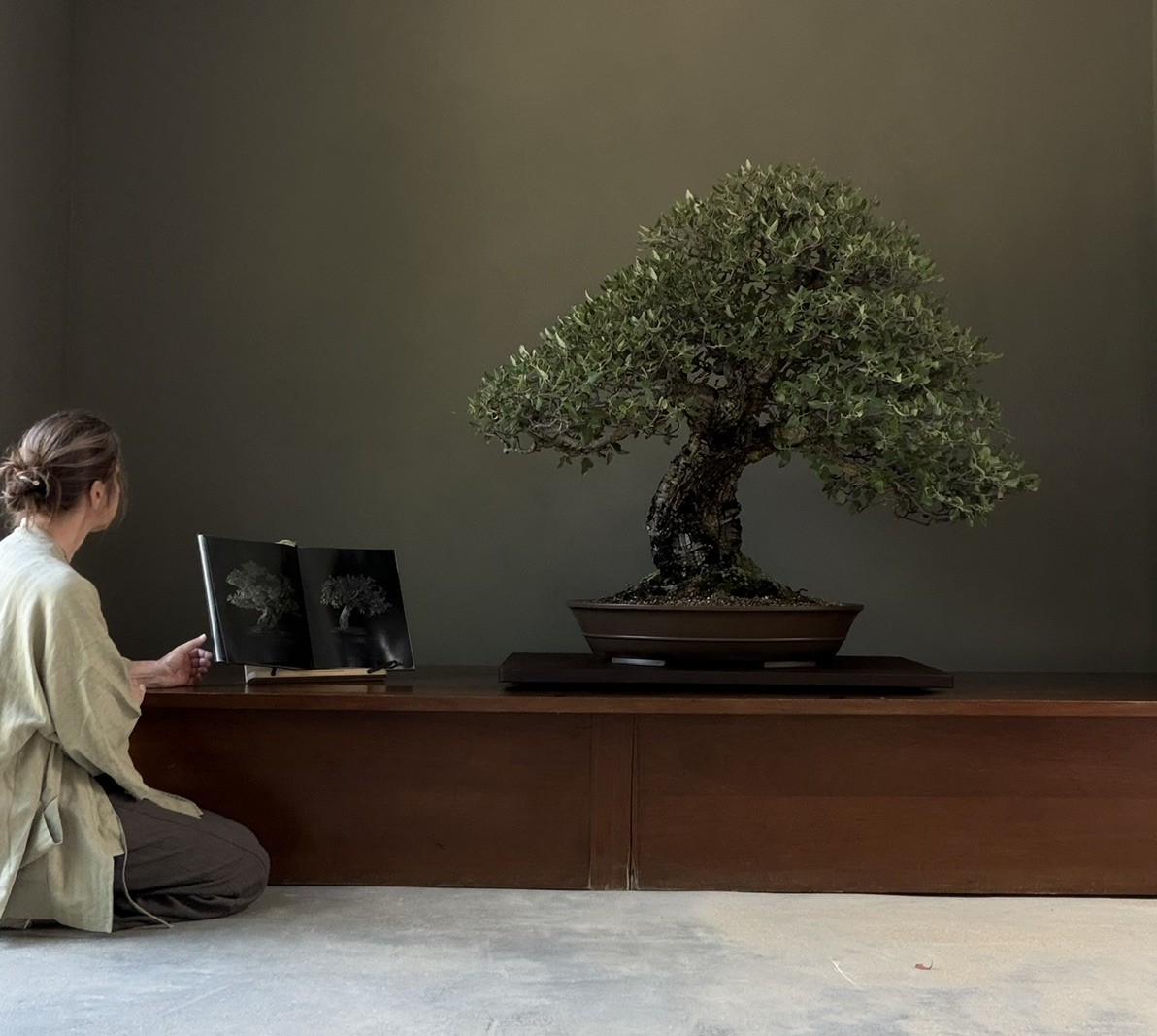
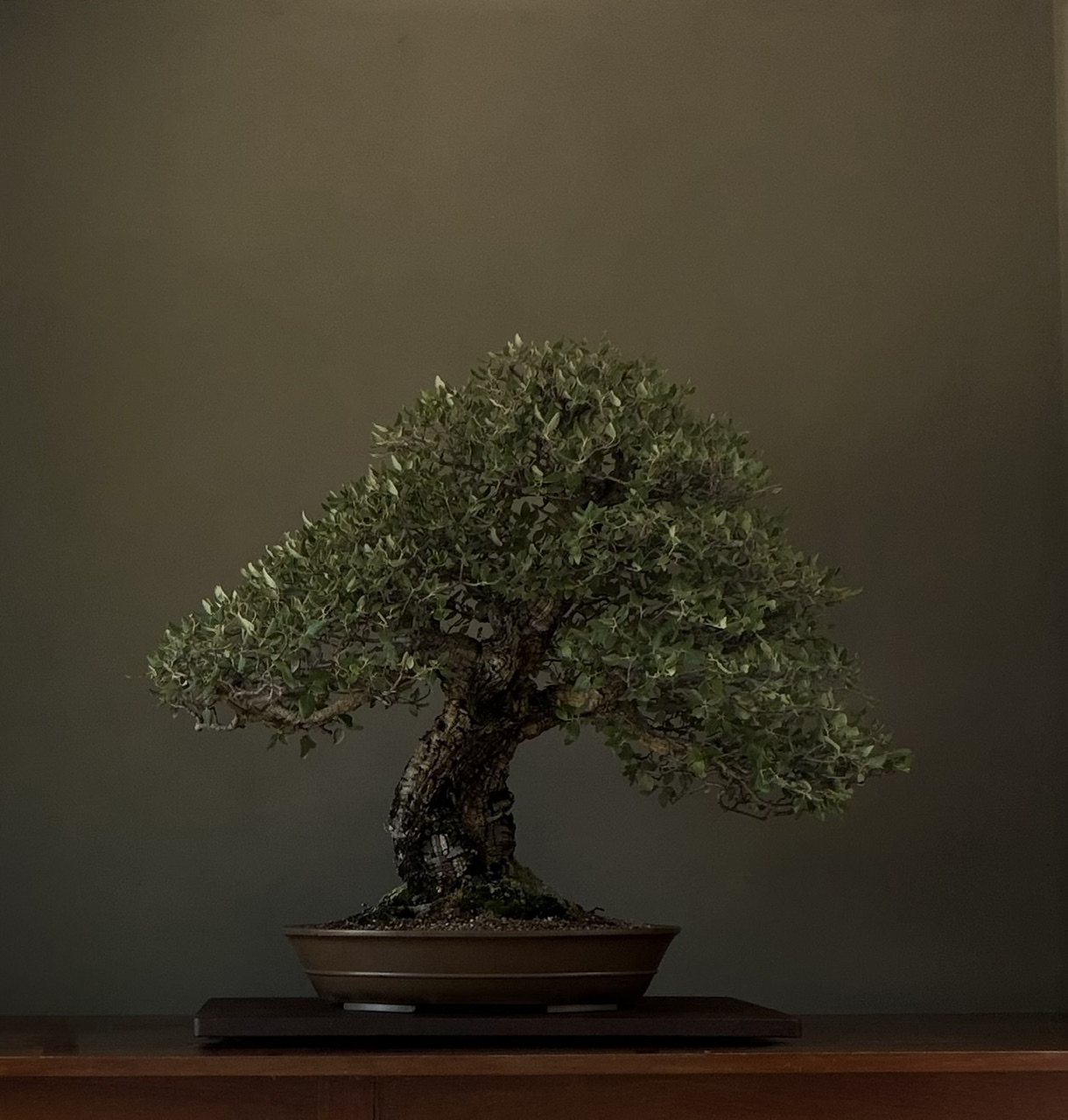
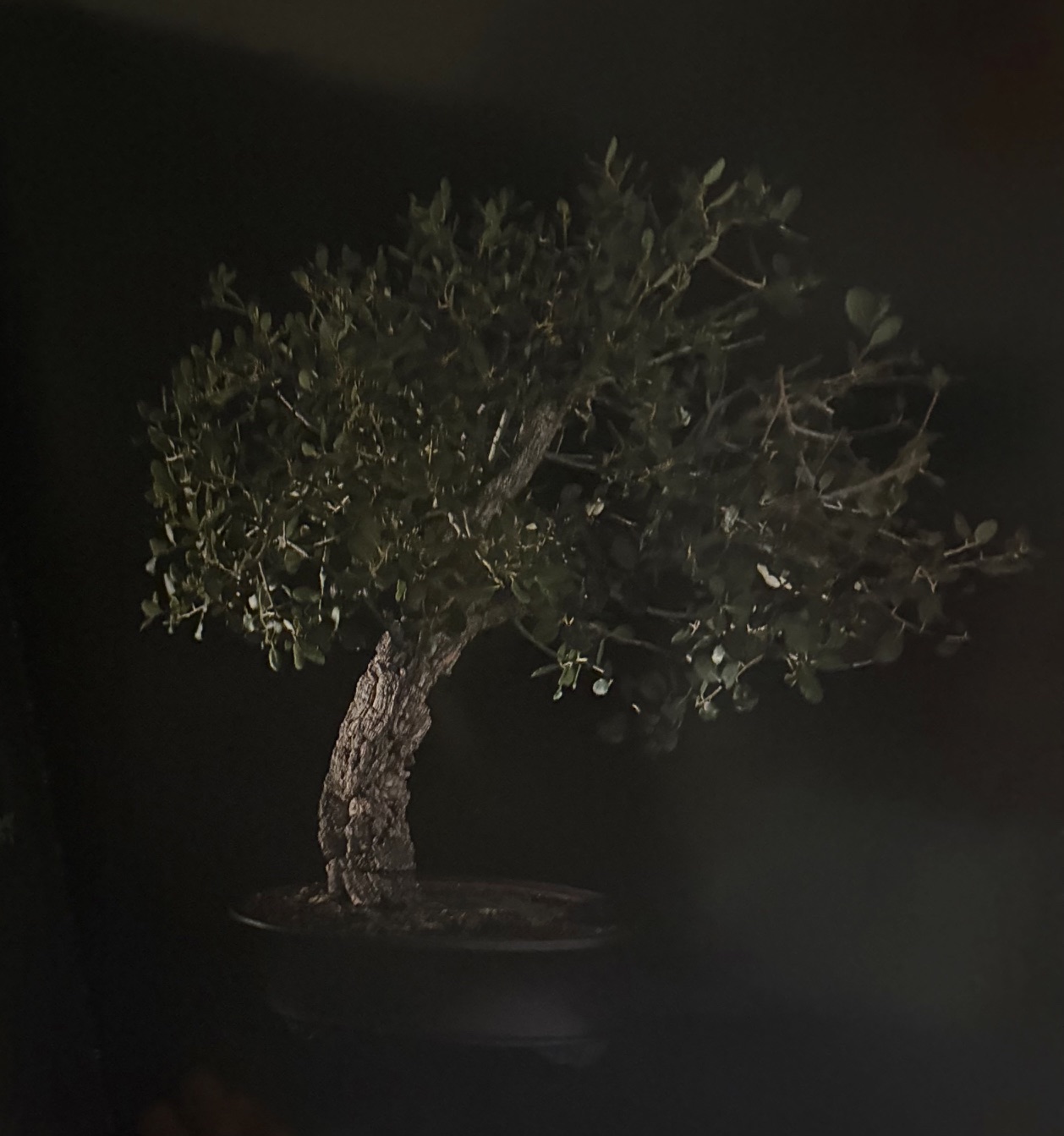
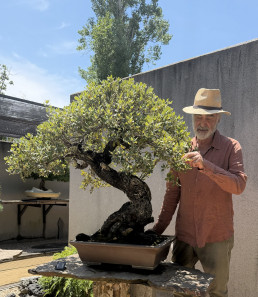
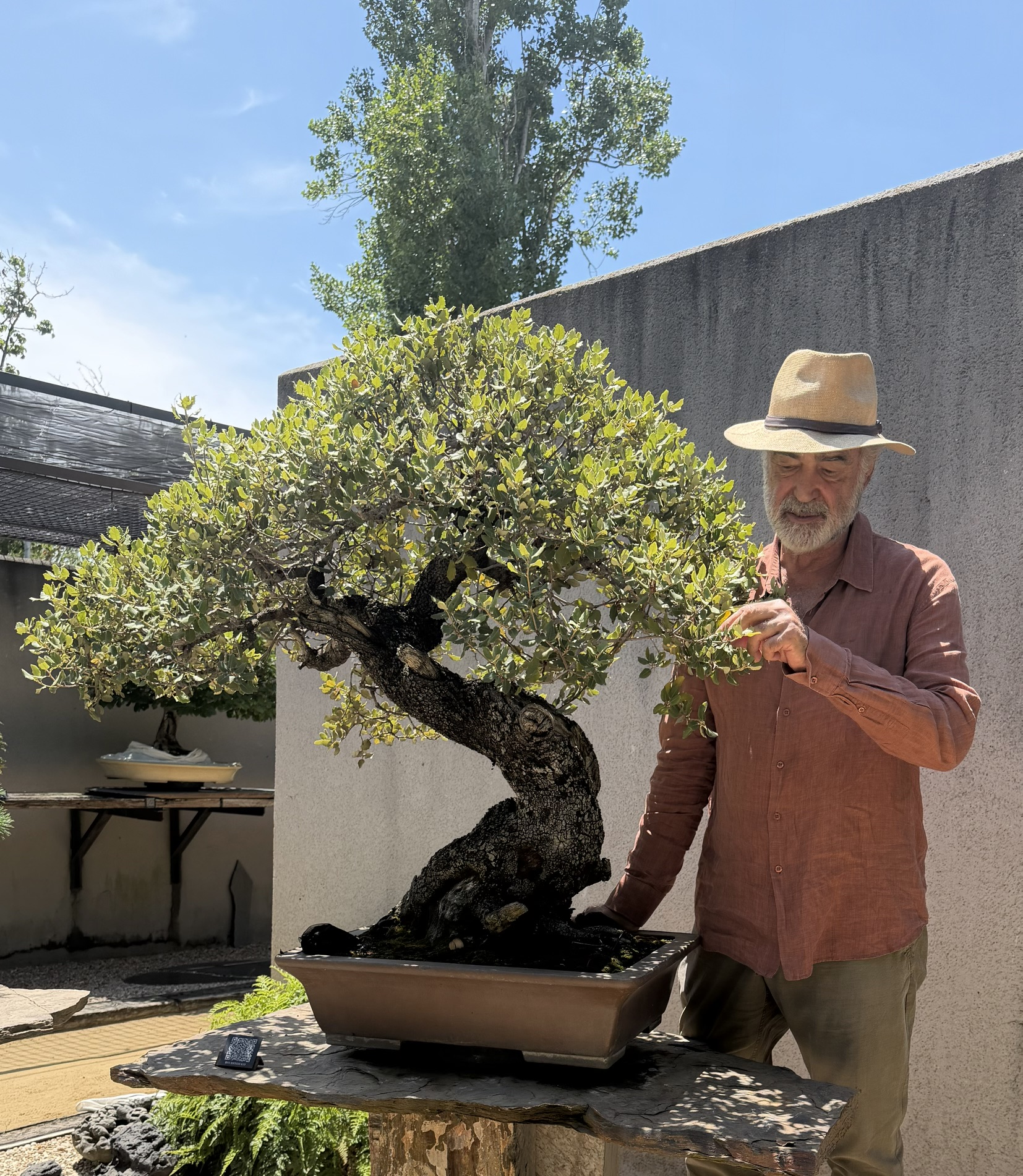
Hay árboles de la colección que conectan directamente con su ejemplo en la naturaleza, este alcornoque es uno de ellos.
Su historia se remonta a los años ochenta y su evolución es asombrosa. La fotografía es del primer libro de Luis: “Escultura y Naturaleza” (año 2000)
El árbol de hace 26 años era menos alcornoque que ahora, esta es la evolución lógica, llegar con el tiempo al modelo idealizado que un día conocimos en la naturaleza; los alcornoques de las dehesas extremeñas, los de las sierras de Cadiz, Málaga…del bosque Mediterraneo.
Es esencial en nuestro ecosistema; refugio de aves, pequeños mamíferos e insectos. Sus bellotas alimentan a la fauna local, sus raíces profundas evitan la erosión y ayudan a recargar los acuíferos subterráneos, el corcho protege al alcornoque del fuego, permitiendo que se regenere tras un incendio.
Lo tiene todo, incluida su espectacular belleza.
There are trees in the collection that connect directly with their example in nature; this cork oak is one of them.
Its history dates back to the 1980s and its evolution is astonishing. The photograph is from Luis’s first book: ‘Escultura y Naturaleza”. (2000)
The tree from 26 years ago looked less like a cork oak than it does now; this is the logical evolution – gradually reaching the idealised model we once encountered in nature: the cork oaks of the Extremaduran dehesas, those of the mountains of Cádiz and Málaga, and those of the Mediterranean forest.
It is essential to our ecosystem: a refuge for birds, small animals and insects… its acorns feed the local wildlife; its deep roots prevent erosion and help to replenish underground aquifers; the cork protects the tree from fire, allowing it to regenerate after a wildfire.
It has it all, including its spectacular beauty.
Norte

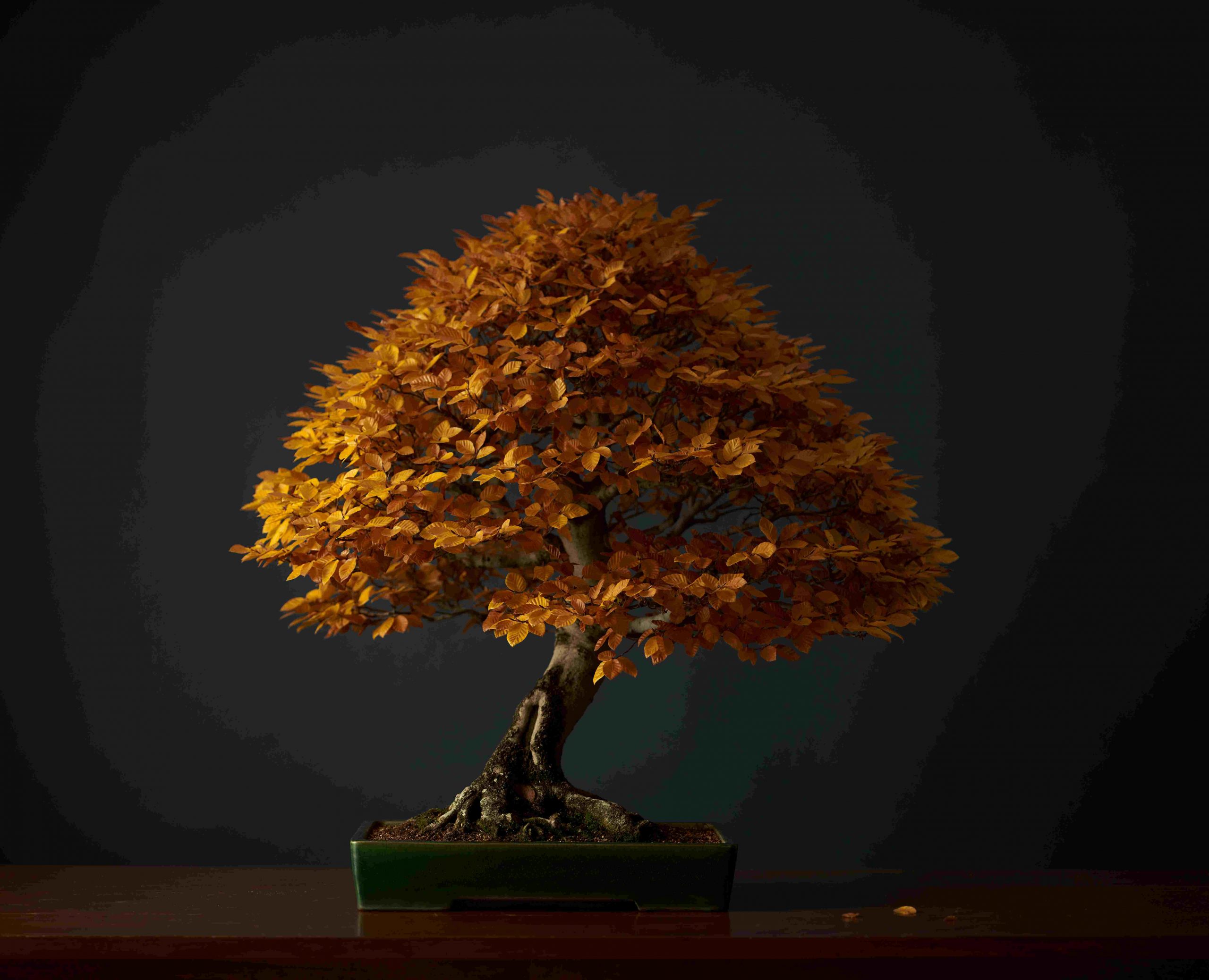
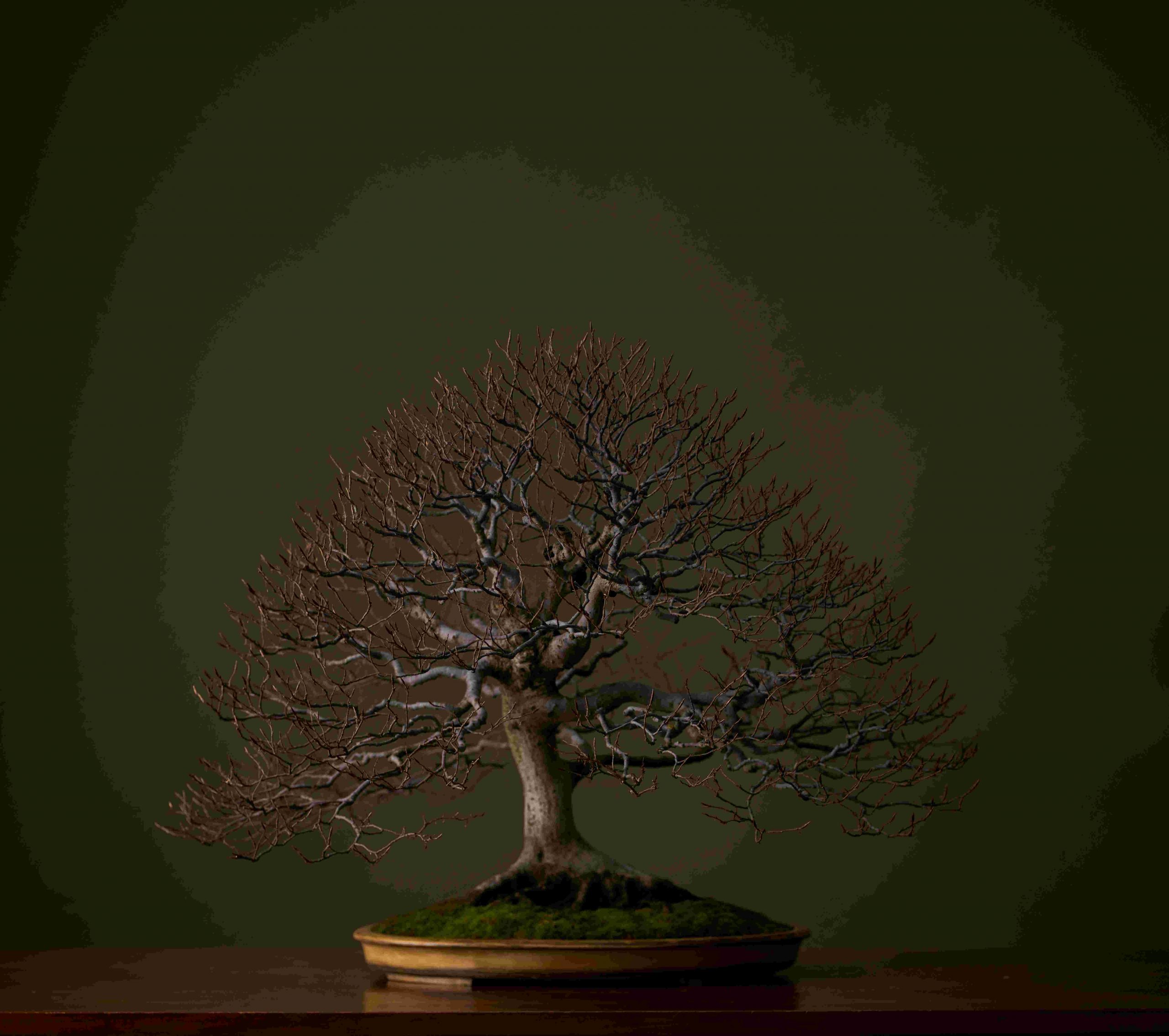
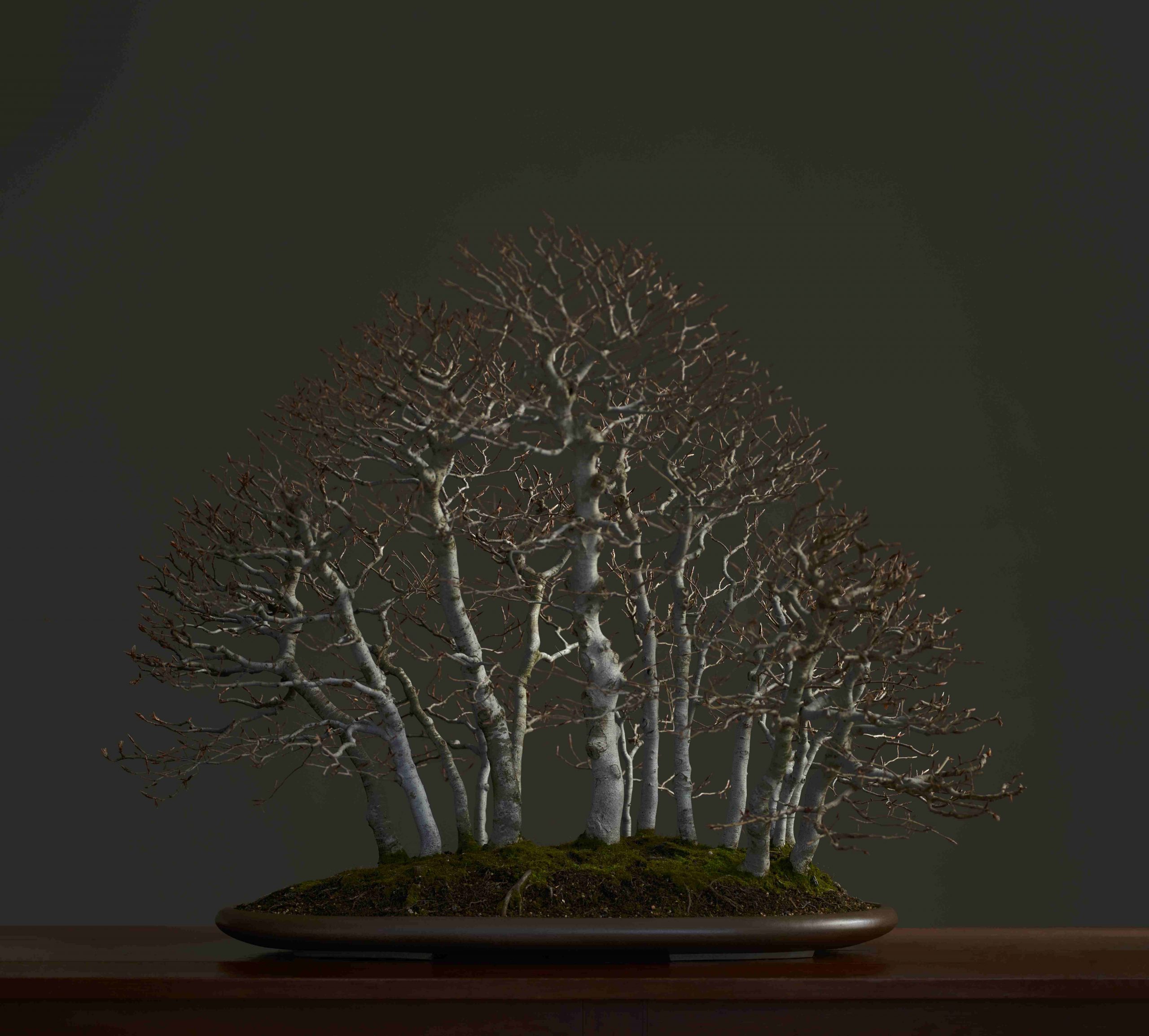
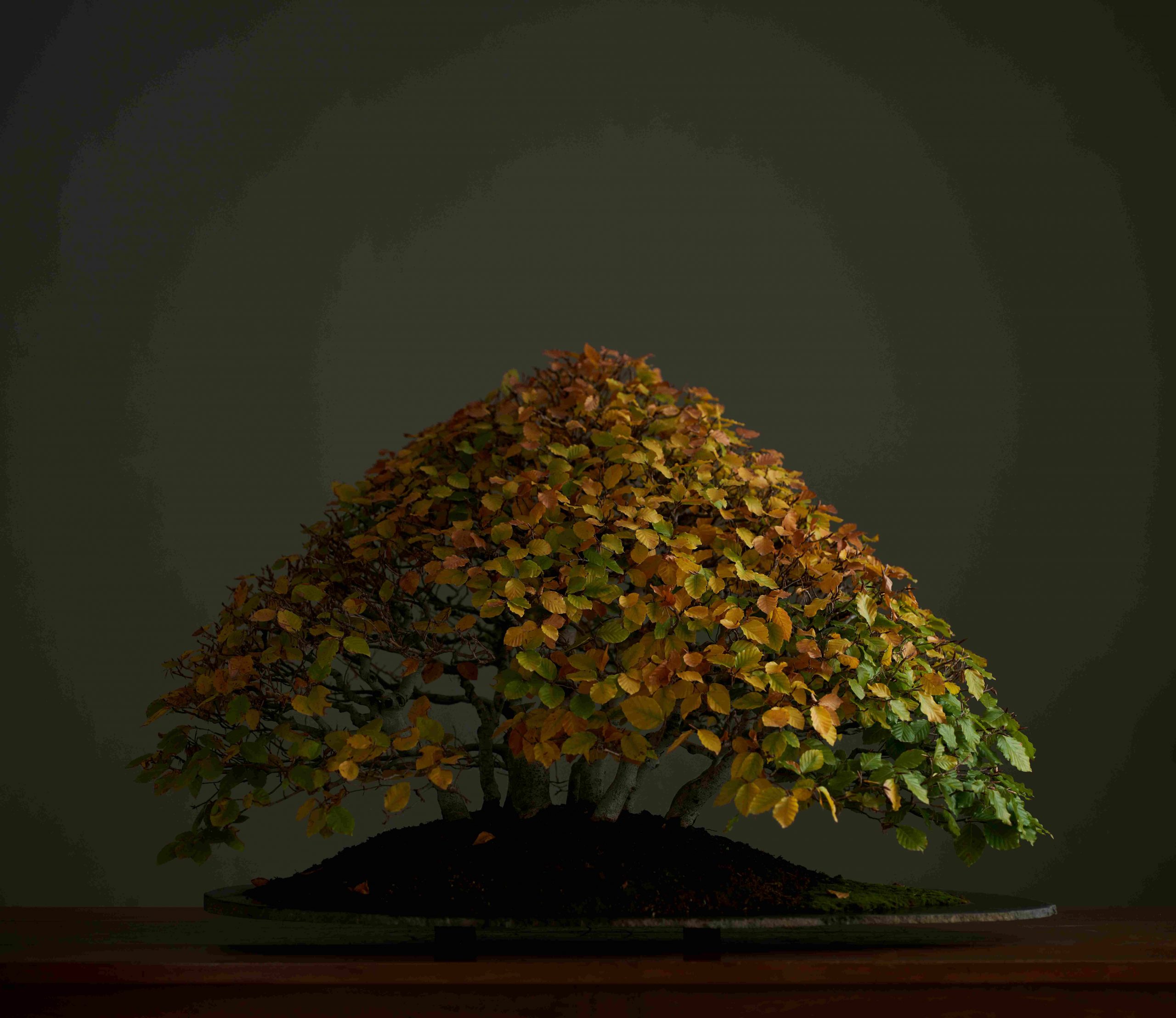
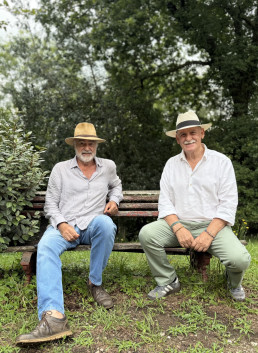
Esta foto está llena de norte, con Tomás Bustamante hablando de bonsái y rodeados de hayas. En su honor traemos hoy algunas hayas de la colección.
Hay personas con las que te cruzas toda la vida. Con Tomás Luis ha coincidido siempre, por distintos lugares de España, Europa y Japón desde hace muchísimos años.
Empezaron en una época en la que como dijo alguien “internet era campo”, todos eran autodidactas y no se conocían, pero gracias a ese interés común, sus caminos se cruzaban. Los dos empezaron inspirados por libros y aprendieron solos.
Tomás cuenta que tuvo acceso a la Moncloa donde pudo ver los bonsáis de Felipe González y conocer a Luis. En todos estos años ha visto cómo ha cambiado todo; los avances en el cultivo de los árboles, en la manera de exponerlos y sobre todo en la forma de entender este arte.
Los dos tienen en común su amor por Japón, la naturaleza, la piedra, los libros, las hayas…y los sombreros.
This photo is full of northern charm, with Tomás Bustamante talking about bonsai and surrounded by beech trees. In his honor, we’re bringing today some of the beech trees from the collection.
There are people you keep crossing paths with throughout your life. Luis has always crossed paths with Tomás, in different parts of Spain, Europe and Japan, for many, many years.
They started out at a time when there was no internet; they were all self-taught and didn’t know one another, but thanks to that shared interest, their paths kept crossing. Both were inspired by books and taught themselves.
Tomás recounts that he had access to the Moncloa, where he was able to see Felipe González’s bonsai collection and meet Luis. Over all these years, he has witnessed how everything has changed: advances in the cultivation of the trees, in the way they are displayed and, above all, in the way this art is understood.
The two share their love for Japan, nature, stones, books, beech trees… and hats.
El Sabinon
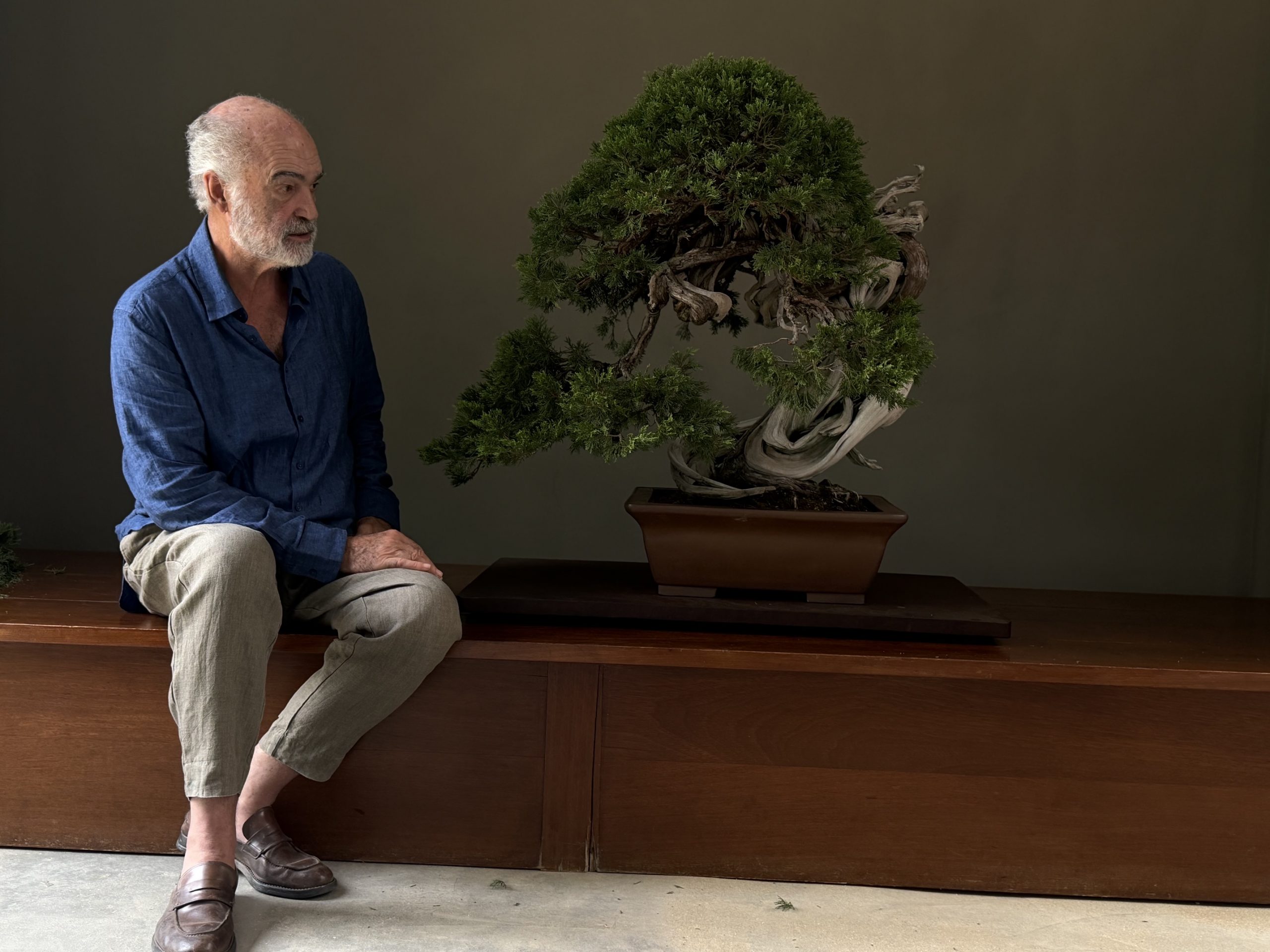
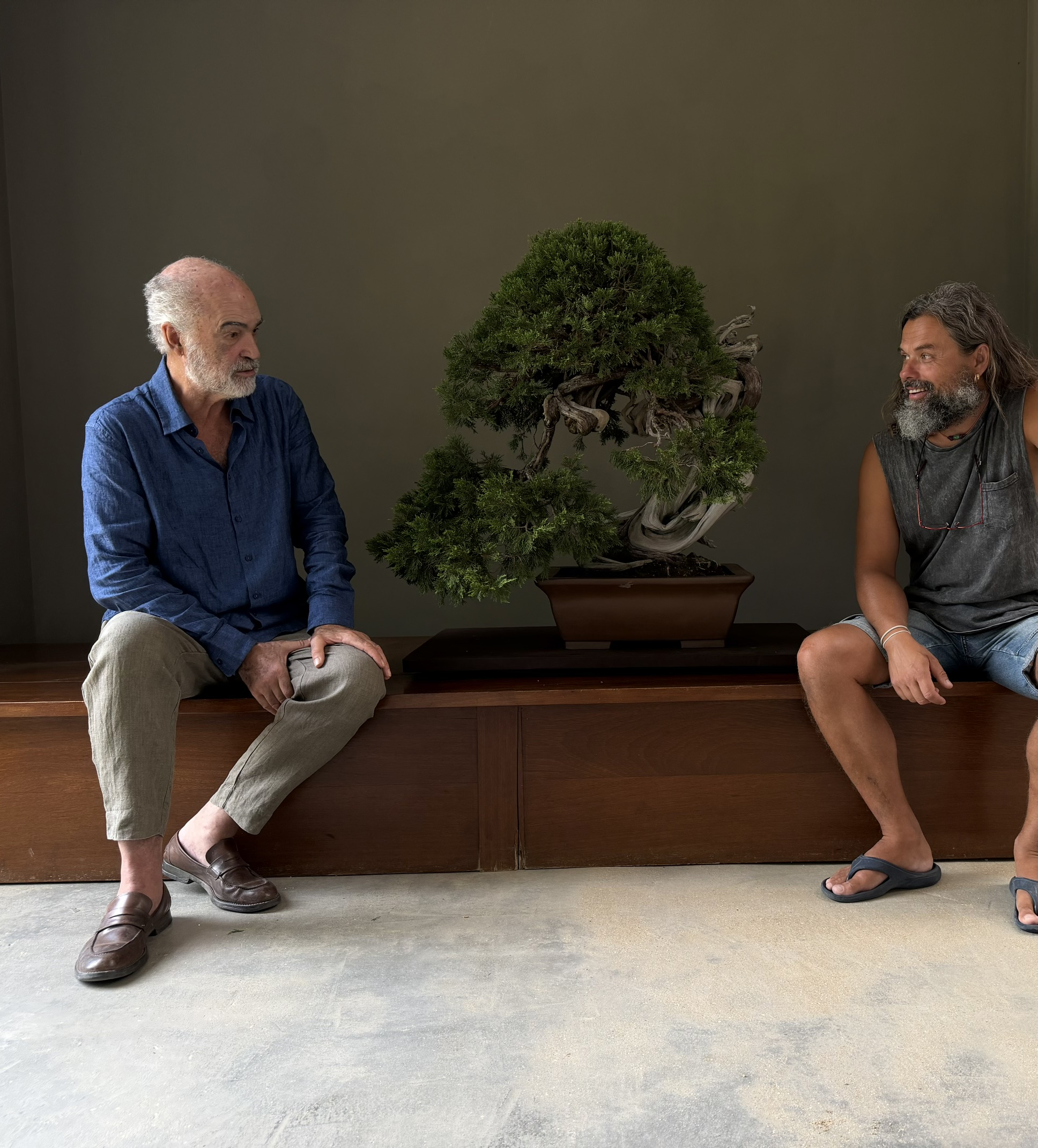
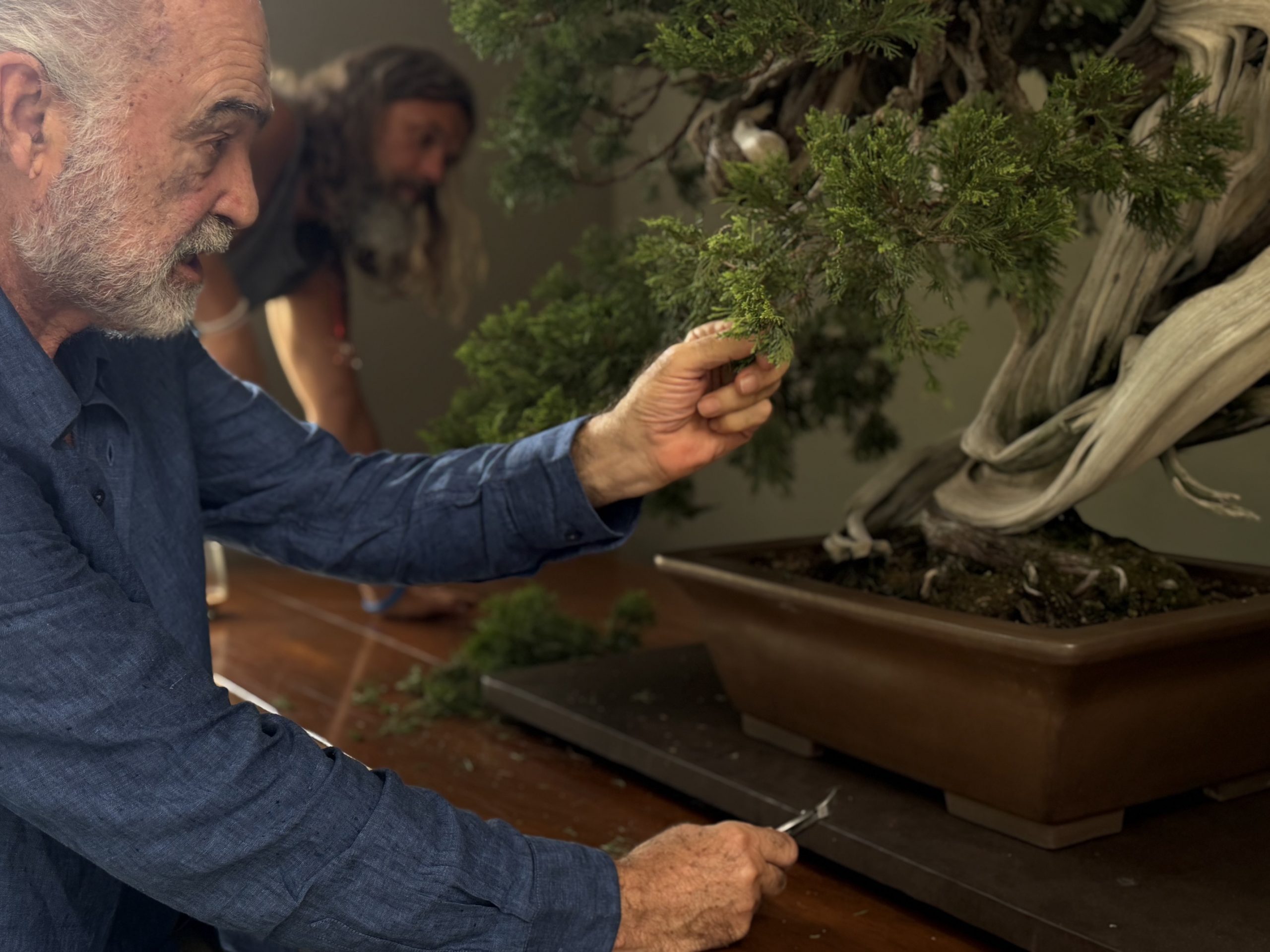
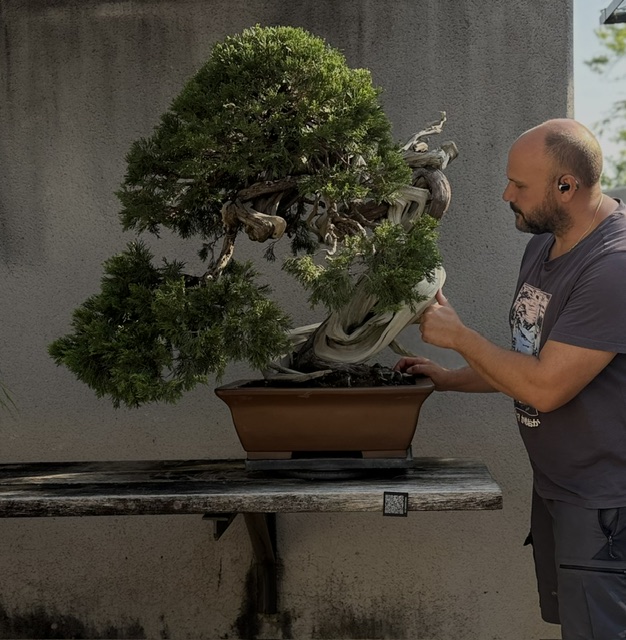
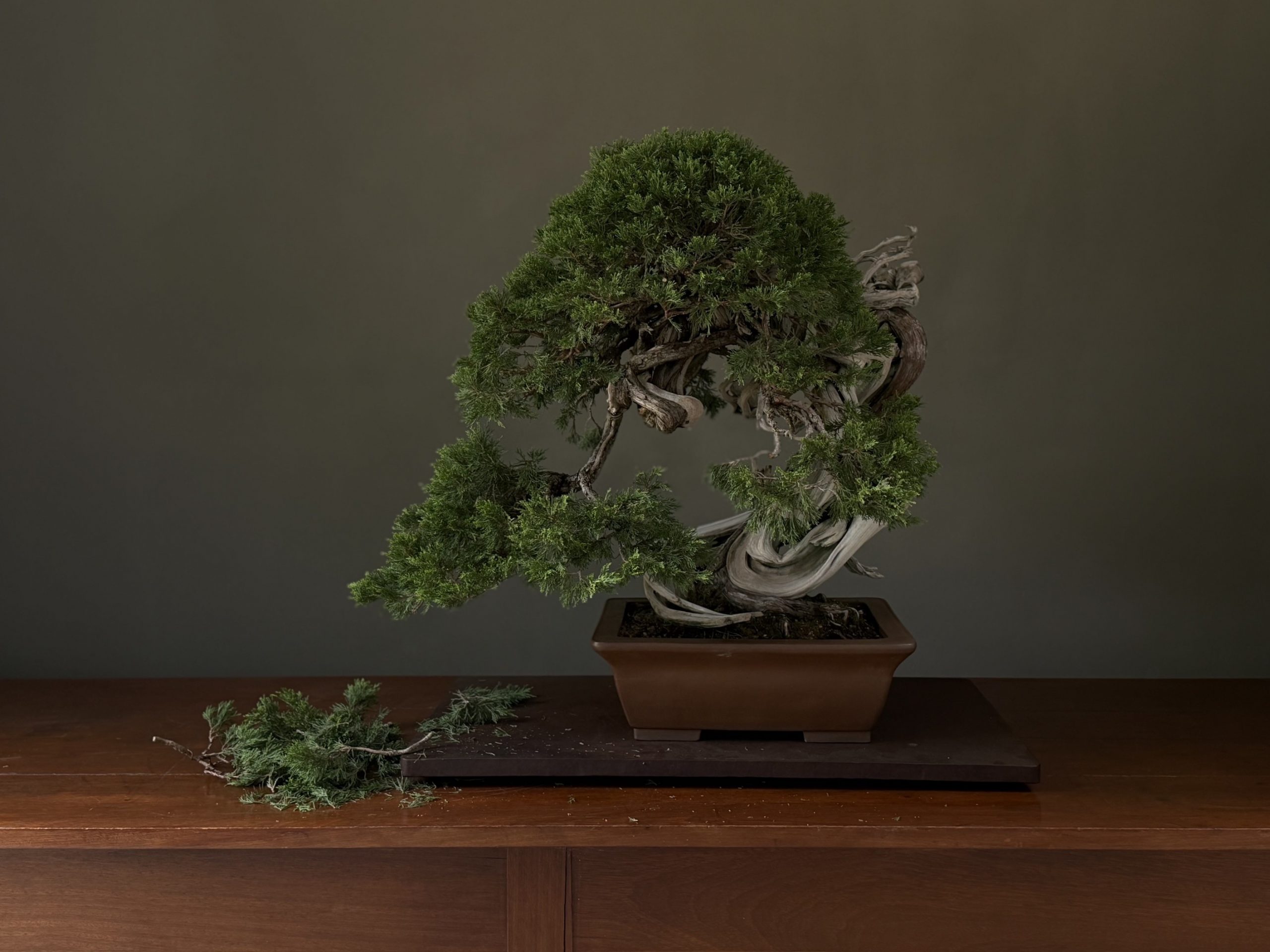
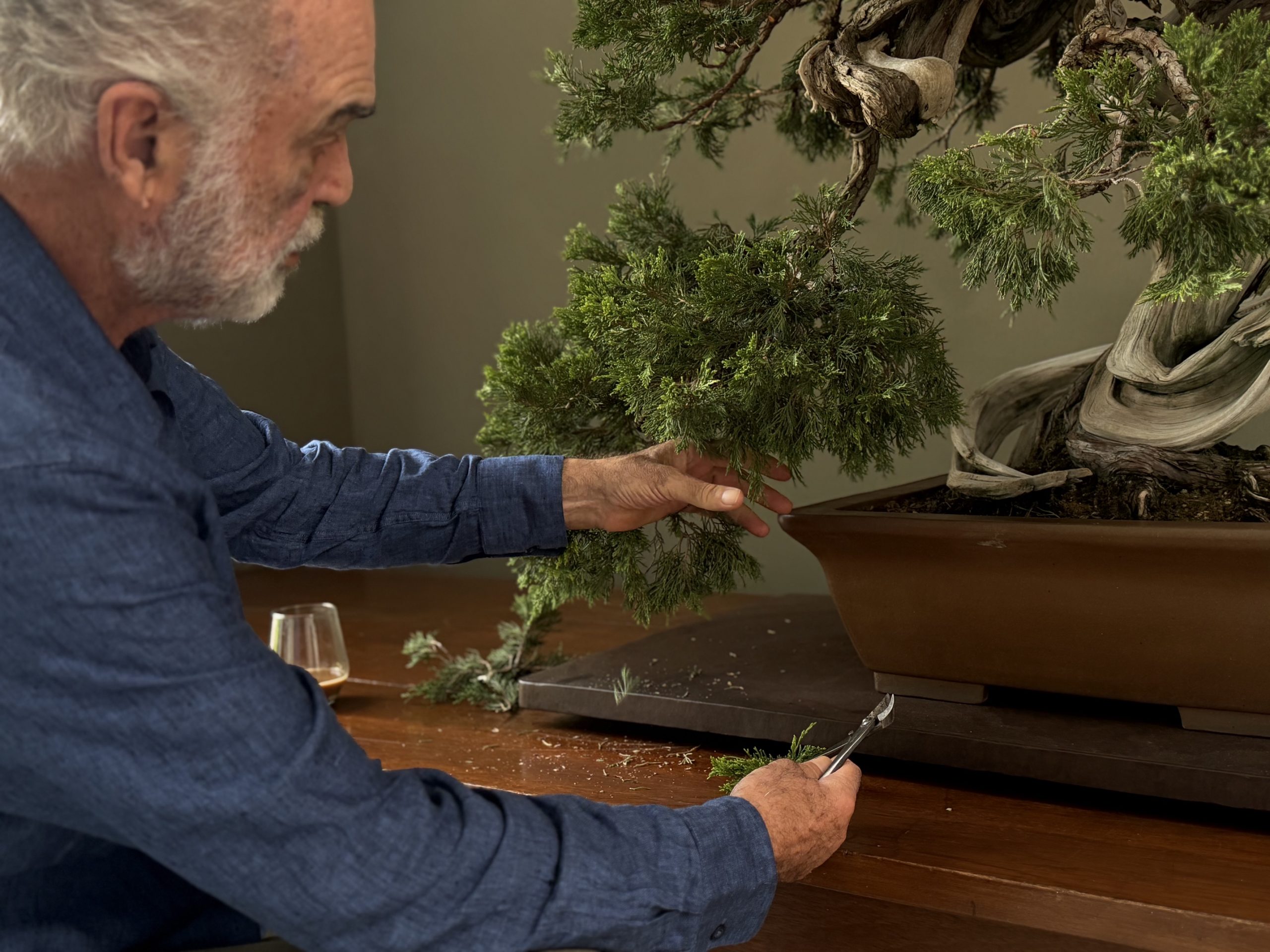
Entre los árboles autóctonos de Luis, esta sabina es de las más conocidas. Era una sabina de dos cabezas y perdió una de ellas en el primer diseño. Luis la pensó como un homenaje a su maestro Kimura y sus míticos juníperos, pero lo hizo respetando su naturaleza, la naturaleza de una sabina de hojas escamadas, bastas y salvajes imposibles de domar.
Esta semana Santi le ha limpiado la madera, la hemos puesto en el tokonoma y por unos instantes ha sido la protagonista del día. Todos reunidos frente a ella, Luis nos ha contado su historia, hemos hecho fotos y entre Mario y Luis le han dado el toque final.
Cuarenta años en una maceta, la gente que la ha acompañado todos estos años…la verdadera magia del bonsái, la intervención de tantos para llegar a lo que es ahora.
Among Luis’s native trees, this juniper is one of the best known. It was a two-headed juniper and lost one of them in the initial design. Luis conceived it as a tribute to his mentor Kimura and his legendary junipers, but he did so respecting its nature – the nature of a savin juniper with scaly, rough and wild leaves that are impossible to tame.
This week, Santi has cleaned its wood;, we’ve placed it in the tokonoma and, for a few moments, it was the star of the day. With everyone gathered in front of it, Luis told us its story, we took photos, and Mario and Luis together gave it that brilliant finishing touch.
Forty years in a pot, the people who have been with it all these years… the true magic of bonsai, the contribution of so many to make it what it is today.
Alguna cosa se nos está escapando
Empieza agosto, llevamos un tiempo callados, estamos aturdidos con todas las cosas que han pasado, mucho ruido en el mundo, mucha inquietud.
Pero seguimos aquí, los árboles sorprendentemente bien, el jardín es agradecido y los cuidados se hacen notar. En estos tiempos, dedicarse a algo relacionado con la naturaleza, con el mundo vegetal es complicado. Oigo comentarios cada día sobre dejar de tener árboles, la esclavitud que supone cuidar de plantas, la necesidad de simplificar nuestra vida y de pronto escucho una reflexión que habla de como la simplificación es precisamente lo que ha causado todos los problemas en nuestro paisaje. La naturaleza es complicada y funciona, nuestro paisaje original era un complejo sistema formado por bosques de frondosas de distinta edad, tamaño y especie, dehesas que combinaban grandes árboles, espacios abiertos, matorral y fauna silvestre. Un mosaico capaz de defenderse de todo. Lo hemos simplificado y ya no funciona.
Compliquémonos la vida todo lo que podamos.
August begins, and we’ve been quiet for a while; we’re reeling from everything that’s happened – there’s so much noise in the world, so much unease.
But we’re still here; the trees are doing surprisingly well, the garden is rewarding, and the care we’ve put into it is paying off. In times like these, devoting oneself to something connected with nature, with the plant world, is complicated. Every day I hear comments about giving up on trees, the drudgery of looking after plants, the need to simplify our lives – and then suddenly I hear a reflection on how simplification is precisely what has caused all the problems in our landscape. Nature is complicated and it works; our original landscape was a complex system made up of deciduous forests of varying ages, sizes and species, and pastures that combined large trees, open spaces, scrubland and wildlife. A mosaic capable of defending itself against anything. We’ve simplified it, and now it no longer works.
Let’s make our lives as complicated as we possibly can.
Naturalezas diferentes
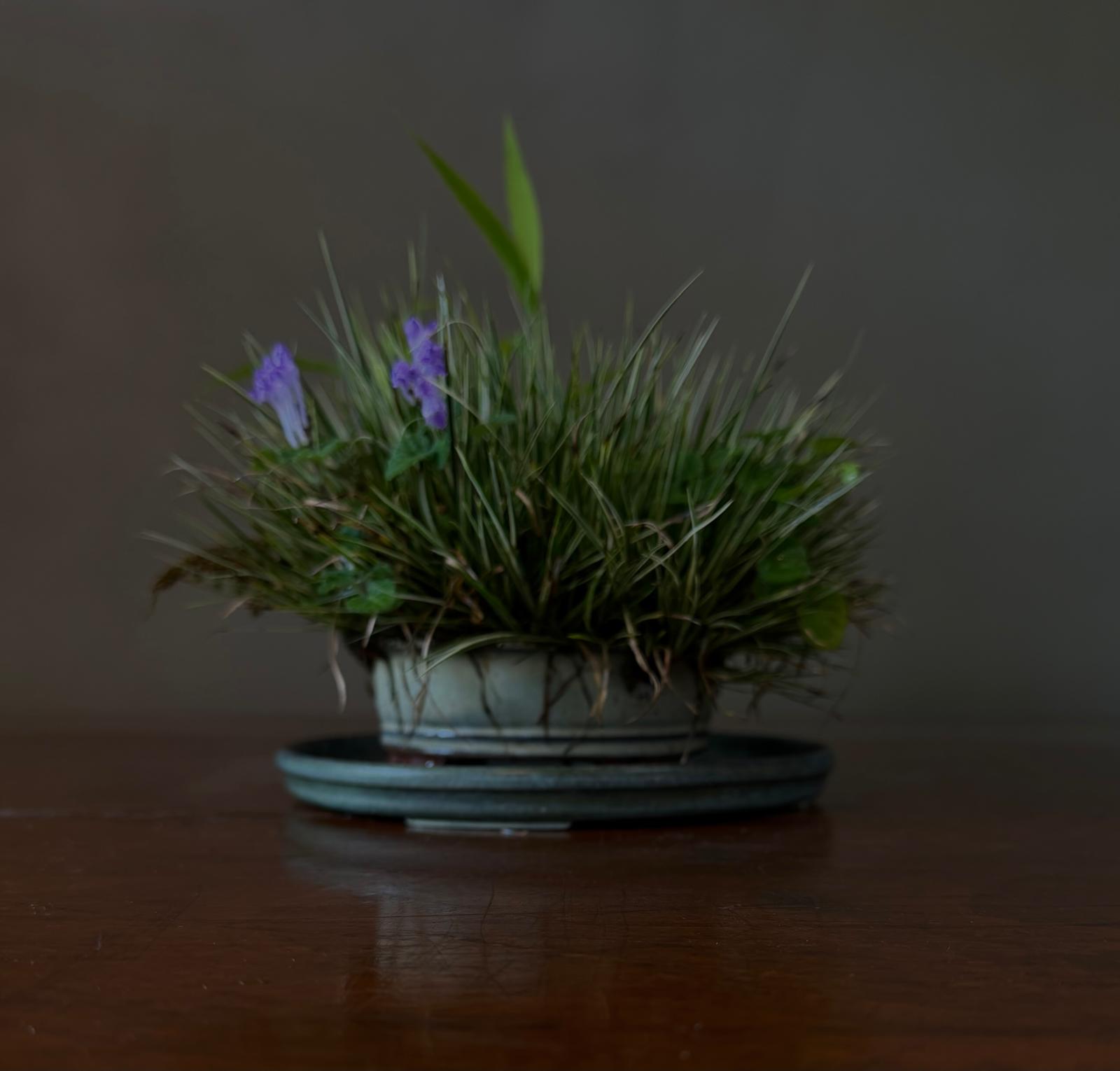
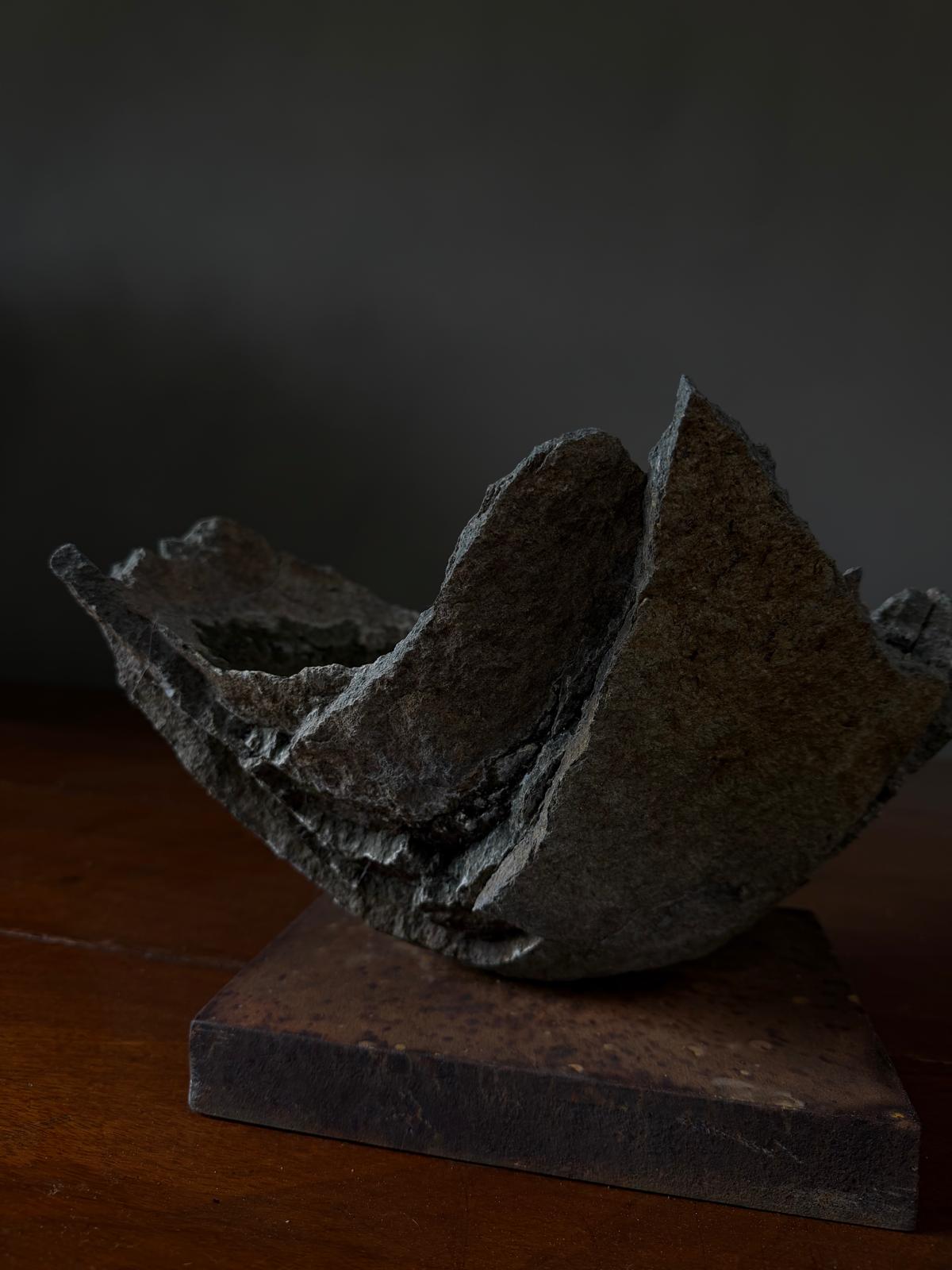
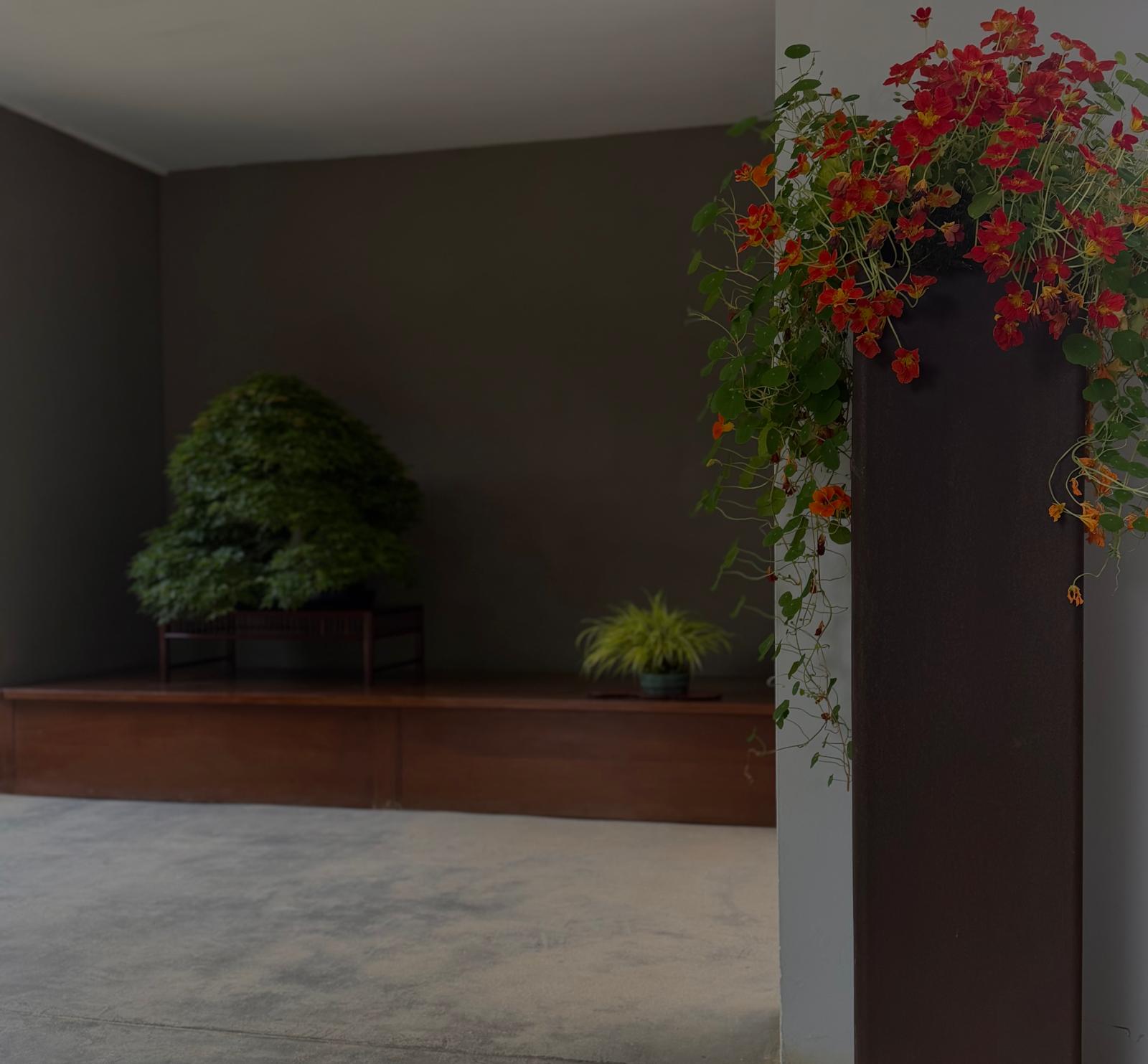
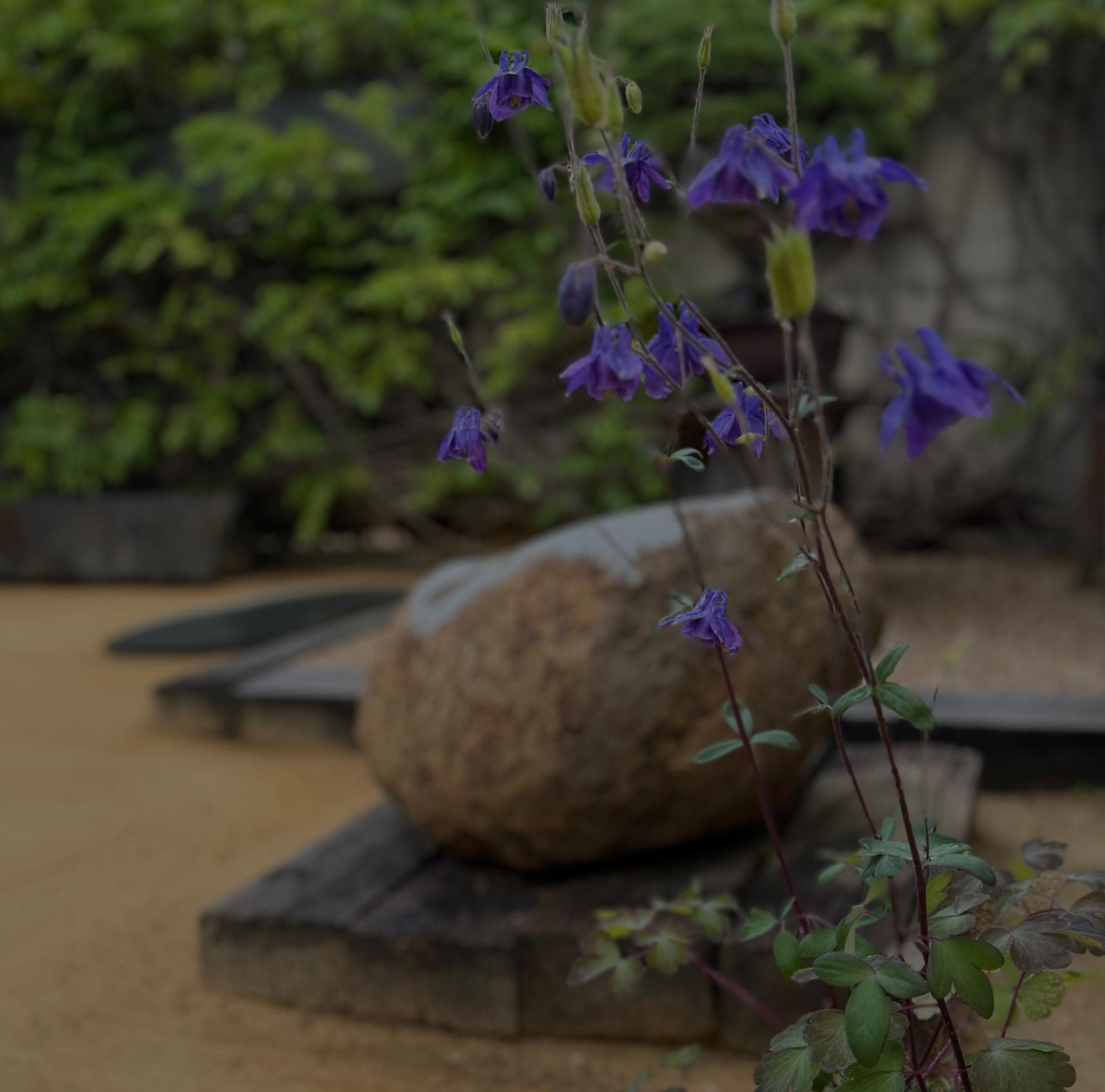

Aquí están todas, la piedra, los árboles, las plantas, peces, agua y nosotros mismos. Todo naturaleza y todo tan diferente en tiempo y presencia. Los árboles creciendo lentamente, las plantas en su eterno ciclo de brotar, florecer y marchitarse. El milagro de los nenúfares y lotos de verano, el tiempo de los peces… y la piedra en silencio para siempre.
Y luego estamos cada uno de nosotros y nuestro tiempo.
Cuando todos estas naturalezas conviven un pequeño universo emerge: un jardín.
Here they all are: the stone, the trees, the plants, the fish, the water and ourselves. All nature, and all so different in time and presence. The trees growing slowly, the plants in their eternal cycle of sprouting, blooming and withering. The miracle of summer water lilies and lotuses, and the stone, silent for ever.
And then there is each one of us and our own time.
When all these times and forms of nature coexist, a small universe emerges: a garden.
Los árboles que se fueron/ The trees that are gone.
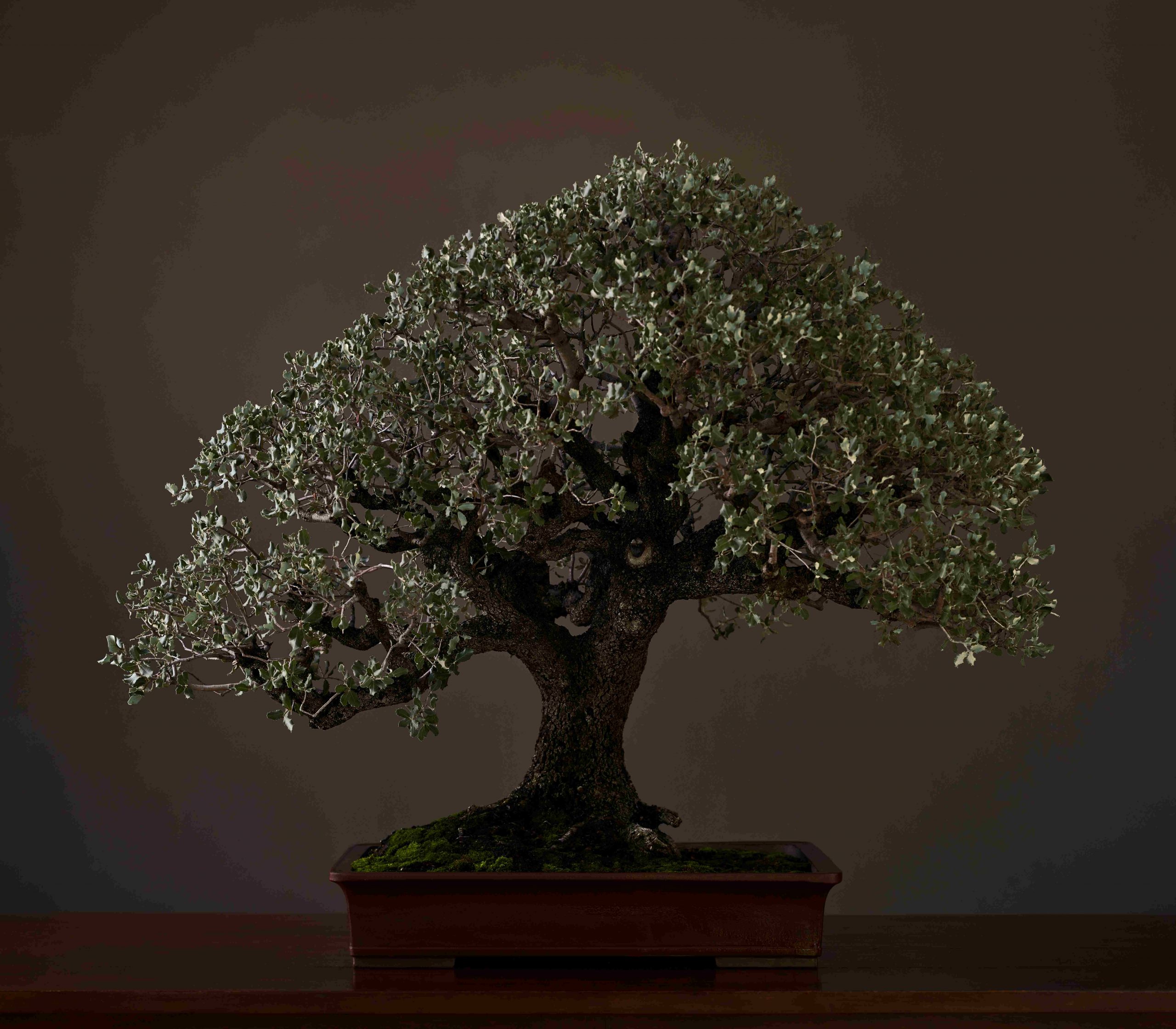
Los árboles que se fueron no son muchos, pero Luis siempre dice que se acuerda de cada uno de ellos. Árboles que estuvieron en el jardín muchísimos años y que, aunque ya no están, nos han dejado un montón de historias que contar.
Hoy nos estábamos acordamos de una encina increíble que se fue con la histórica tormenta Filomena que paralizo Madrid con casi un metro de nieve, dejó registros insólitos y temperaturas de hasta -10°C. Esta encina la recuperó Masahiko Kimura en los años 90 en una visita organizada por Luis para visitar la finca de toros bravos de un conocido ganadero. Era una encina ya vieja que no había crecido mucho por el ramoneo constante de los toros. Kimura bajo del Jeep y rodeado por los toros ayudo a sacarla, pinchándose con aquellas hojas tan extrañas para él.
Cuando Luis le contó la perdida de la encina a su amigo José Luis Crespo, este le regalo la que sale en la foto y que, aunque no sustituye a la otra, ha empezado una nueva historia y ya tiene un lugar entre nosotros.
There aren’t many trees that have gone, but Luis always says he remembers every single one of them. Trees that stood in the garden for many, many years and which, although they are no longer there, have left us with plenty of stories to tell.
Today we were thinking about an incredible holm oak that was lost during the historic Filomena storm, which brought Madrid to a standstill with nearly a metre of snow, setting unprecedented records and bringing temperatures as low as -10°C. This holm oak was found by Masahiko Kimura in the 1990s during a visit organised by Luis to the bullfighting farm of a well-known cattle breeder. It was an old holm oak that had not grown any further because the bulls were constantly breaking its branches. Kimura got out of the Jeep and, surrounded by those bulls, helped to pull it out, pricking himself on those leaves that were so unfamiliar to him.
When Luis told his friend José Luis Crespo about the loss of the holm oak, he gave him the one shown in the photo which, although it cannot replace the other, has begun a new story and already has a place amongst us.
Arboles de concejo
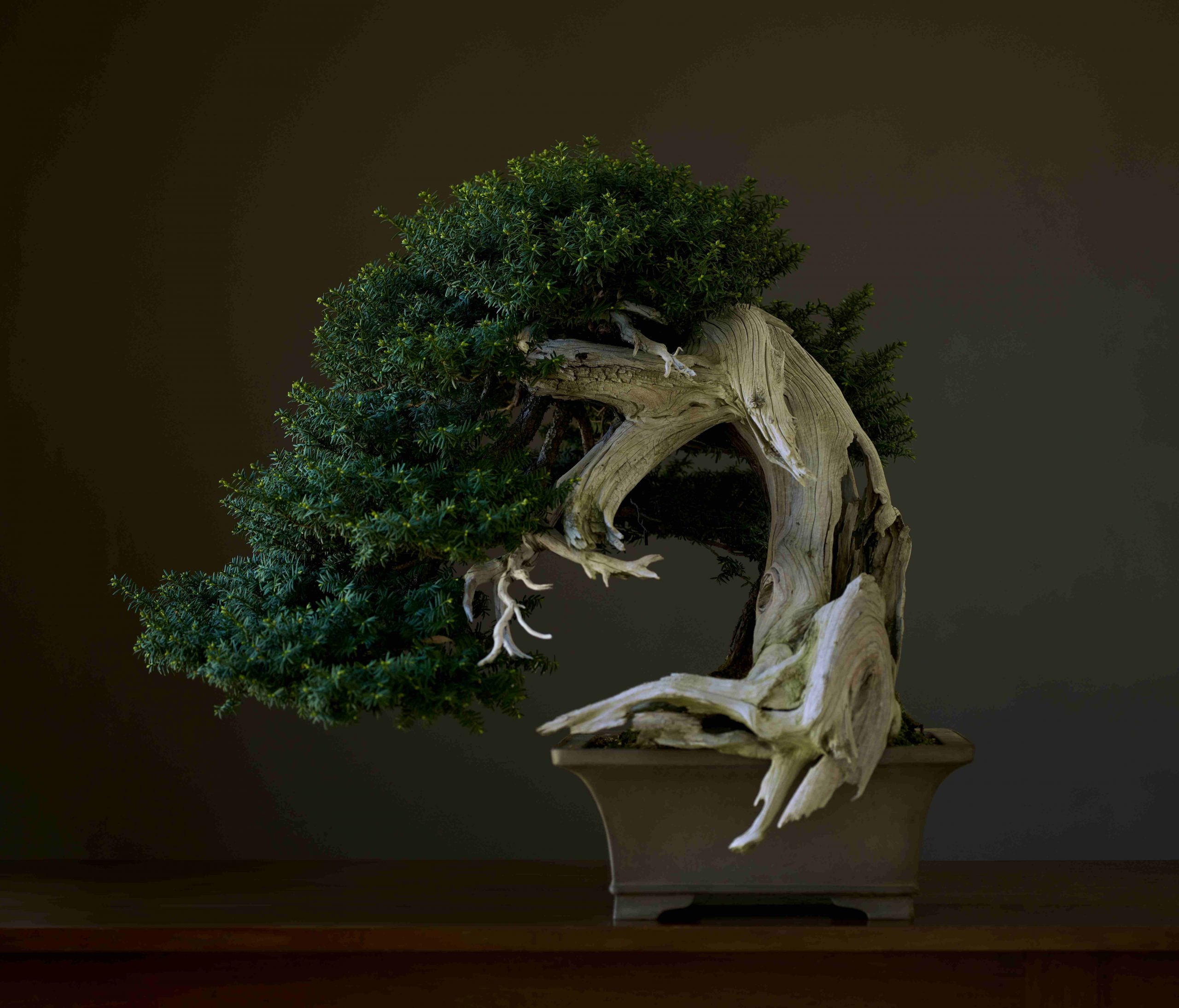
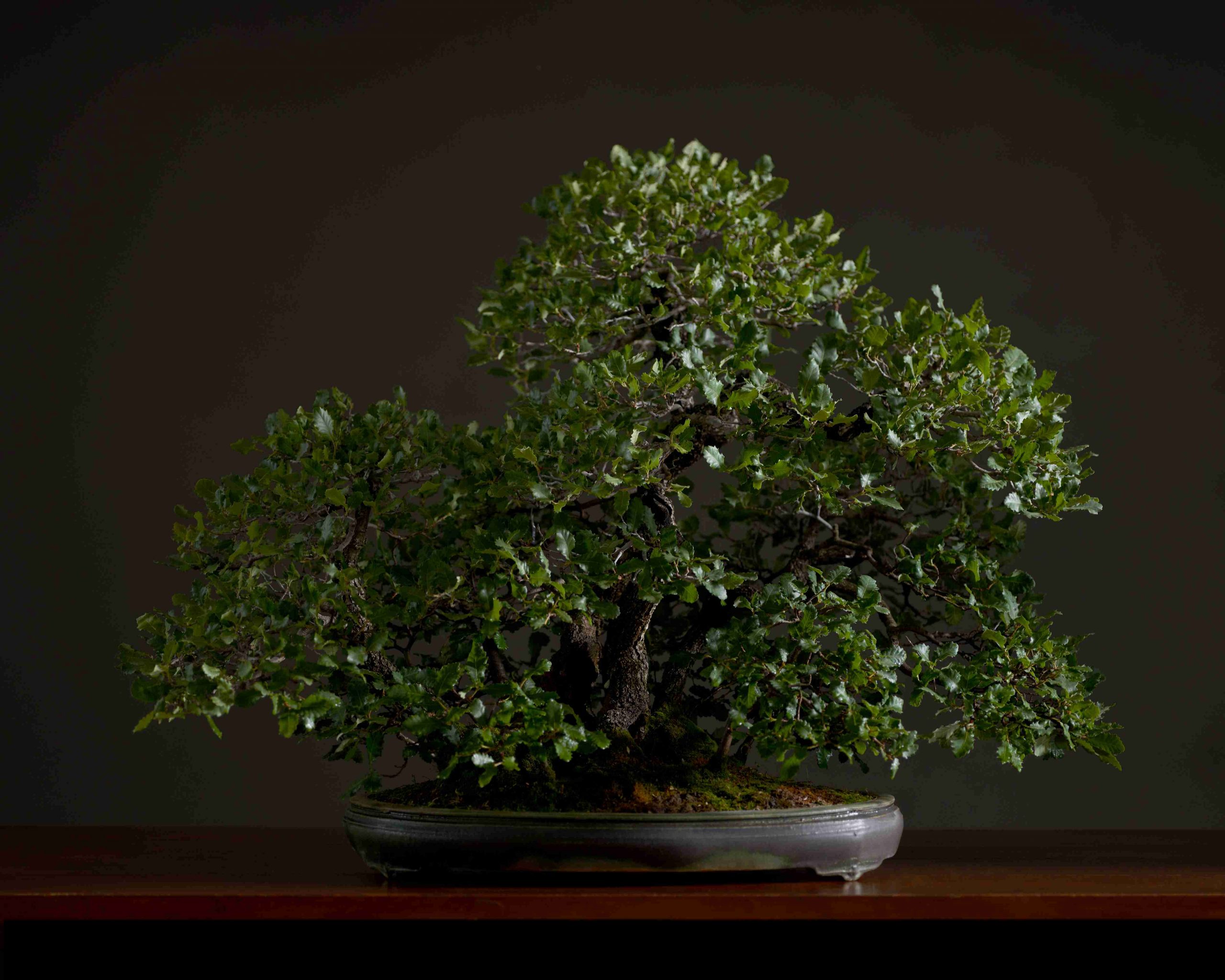
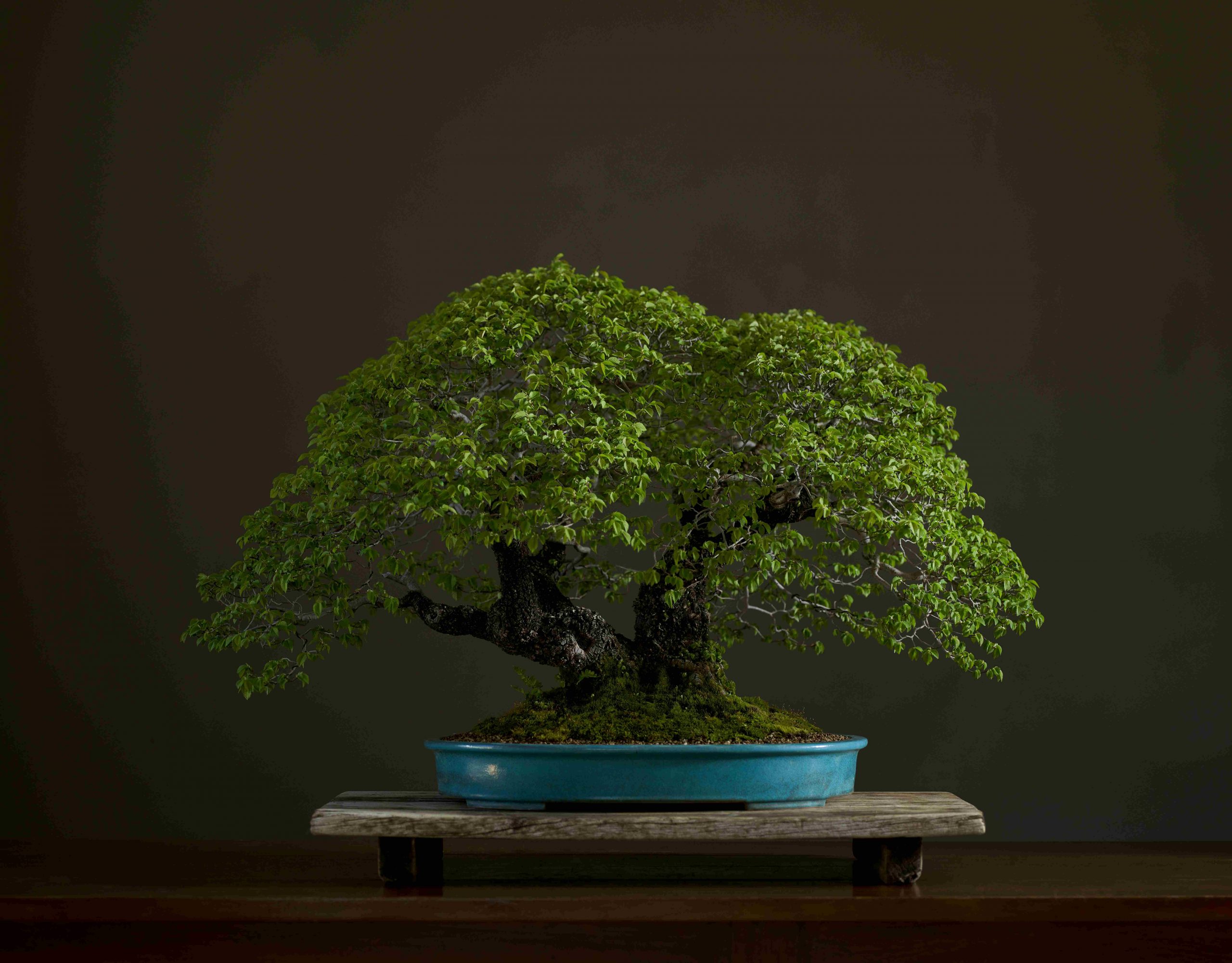
Antiguamente existía una bonita tradición en los pueblos de reunirse bajo los árboles, grandes árboles como los robles, tejos y olmos. Ahí se tomaban decisiones, se impartía justicia y se celebraba. Los árboles eran testigos de todo, eran elementos centrales de la sociedad, la conexión entre los hombres y la naturaleza.
En el jardín hay dos grandes árboles plantados. Uno es el tilo en el centro de la exposición y el otro un gran álamo blanco en la zona del vivero. La próxima semana, cuando el jardín esté cerrado al público, recolocaremos los bonsáis para protegerlos del sol reubicándolos a la sombra de estos dos árboles. No puedo evitar imaginarlos evocando sus lugares de origen y debatiendo por las tardes sobre los problemas del medio ambiente.
Igual este verano arreglamos el mundo.
Many years ago, there was a lovely tradition in villages of gathering beneath trees – large trees such as oaks, yews and elms. It was there that decisions were made, justice was administered and celebrations took place. The trees bore witness to everything; they were central to society, the link between people and nature.
There are two large trees planted in the garden. One is the lime tree at the centre of the exhibition, and the other is a large white poplar in the nursery area. Next week, when the garden is closed to the public, we will move the bonsais to protect them from the sun, relocating them into the shade of these two trees. I can’t help but imagine them evoking their places of origin and debating environmental issues in the afternoons .
Perhaps this summer we’ll fix the world.
Sugi
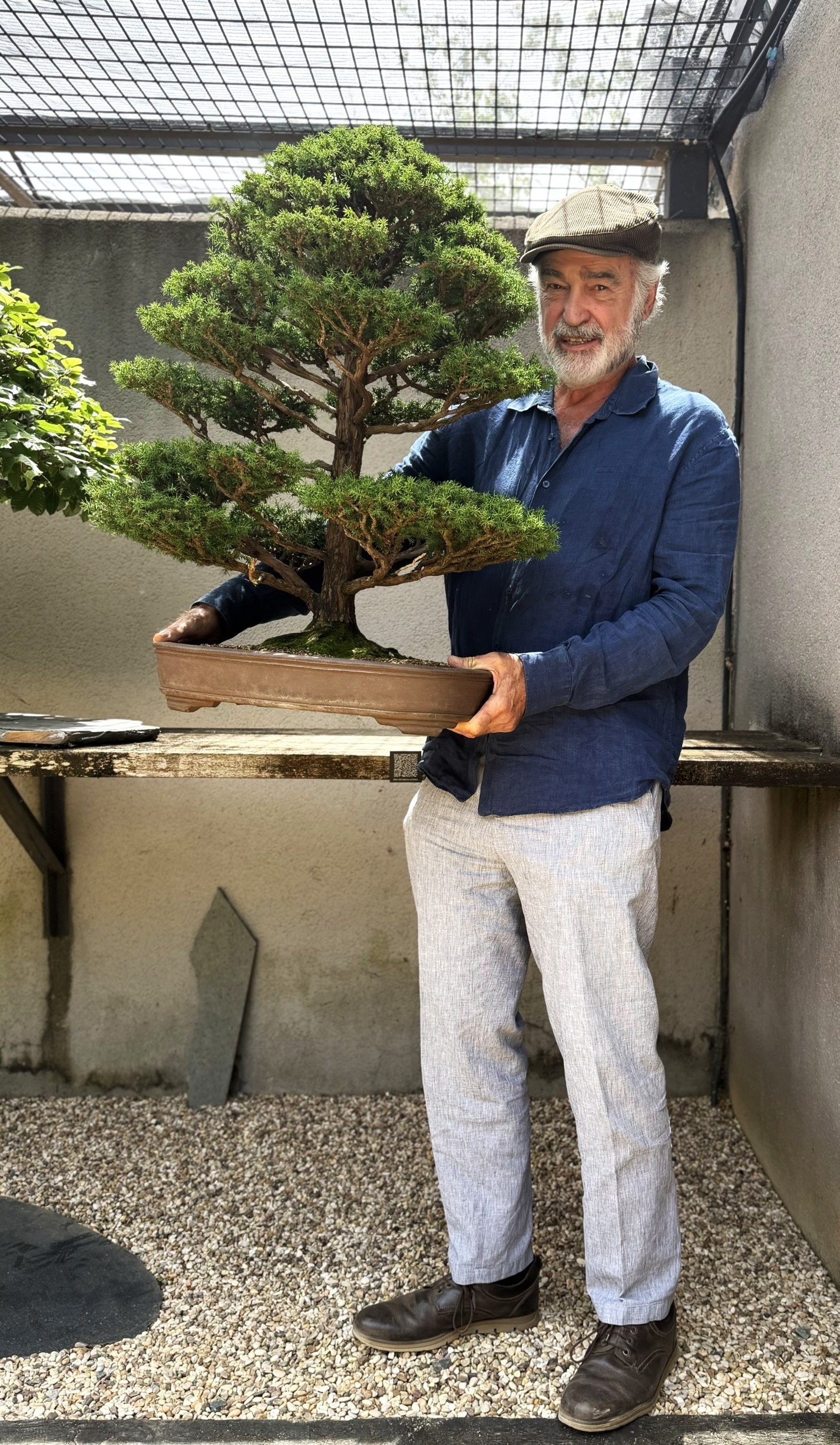
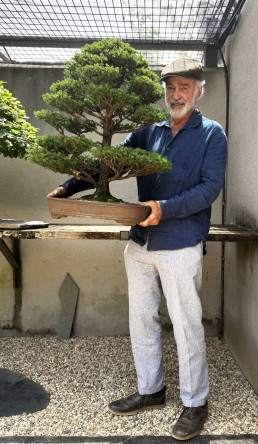
Luis con el Sugi.
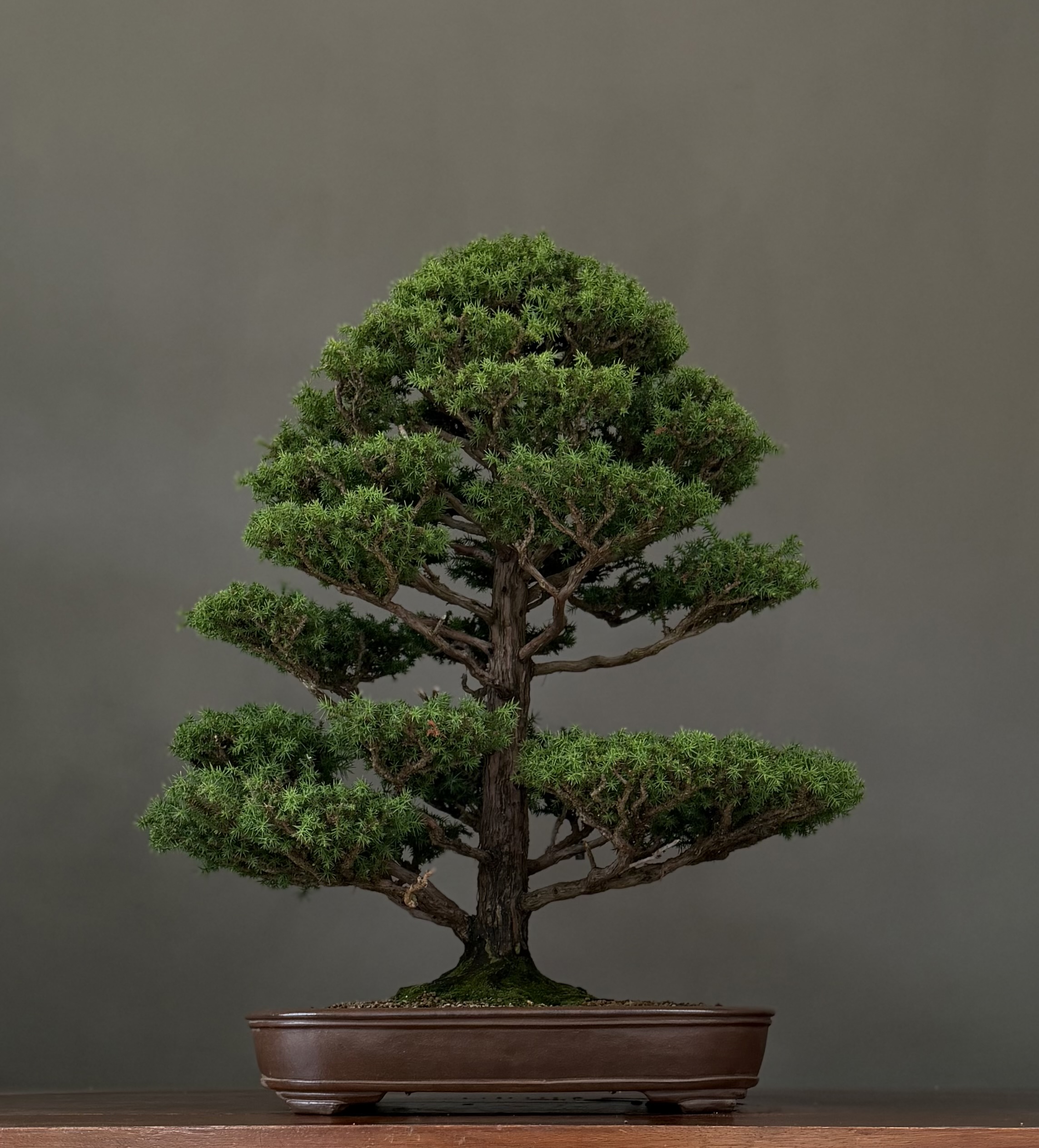
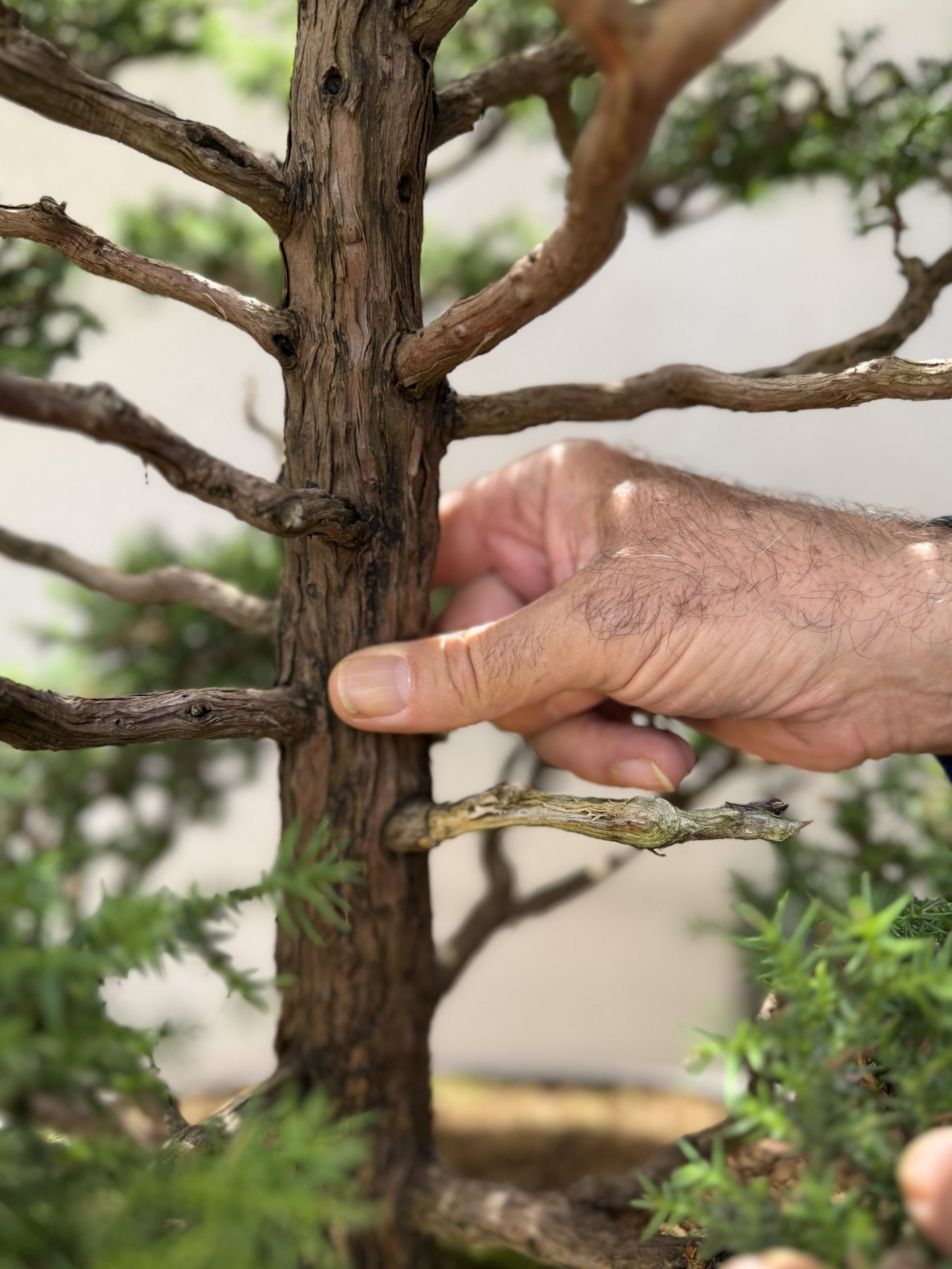
Con la primera ola de calor oficial de este verano, apetece pensar en grandes coníferas, bosques , sombra y aire fresco, así que hoy hablamos del Sugi (Cryptomeria japónica). Es un árbol endémico de Japón, su origen en la mitología japonesa tiene que ver con los pelos de barba que plantó Susano-o, dios de las tormentas y el mar y que dieron lugar a sus troncos rectos…tiene muchísima simbología, es el custodio de los templos, sus copas de forma triangular servían de escalera a los dioses y su tronco como apoyo del voladizo de las casas de té. Luis recuerda cuando en Tokio le contaron que cuanto más viejo es el tronco más prestigio tenía la casa de té.
El Sugi busca el sol y crece alto, se cultiva por todo el mundo por su magnífica madera. Es hermano de los tejos y las sequoias. El ejemplar más viejo es el mítico Jomon Sugi de la isla de Yakushima.
El nuestro vino del vivero de Ideo Kato en Japón hace ya años y por lo recto que es, estamos seguros de que es uno de los descendientes directos de los pelos de Susano-o.
Luis with the Sugi.
With the first official heatwave of this summer, it’s tempting to think of tall conifers, forests, shade and fresh air, so today we’re talking about the Sugi (Cryptomeria japonica). It is a tree native to Japan; its origins in Japanese mythology are linked to the beard hairs planted by Susano-o, the god of storms and the sea, which gave rise to its straight trunks… It is steeped in symbolism: it is the guardian of temples; its triangular crowns served as a stairway for the gods; and its trunk was used to support the roofs of tea houses. Luis remembers when, in Tokyo, he was told that the older the trunk, the more prestigious the tea house.
The Sugi seeks out the sun and grows tall; it is cultivated all over the world for its magnificent timber. It is a relative of yew trees and sequoias. The oldest specimen is the legendary Jomon Sugi on the island of Yakushima.
Ours came from Ideo Kato’s nursery in Japan many years ago, and given how straight it is, we’re certain it’s one of the direct descendants of Susano-o’s hair.