BB
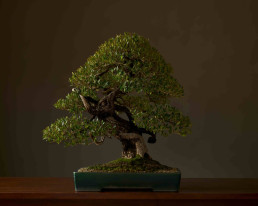
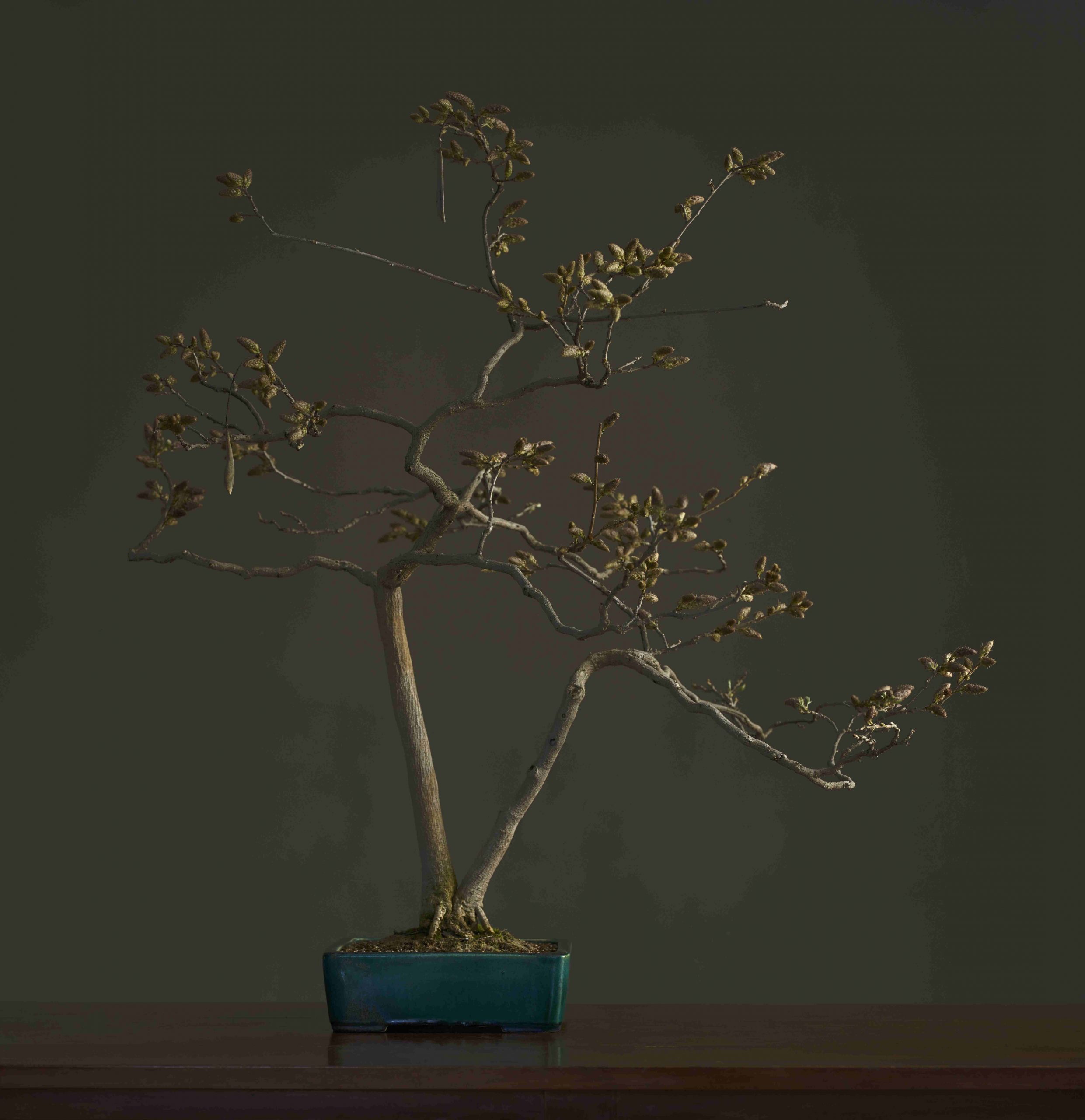
Este es nuestro “BB”, el buxus baleárica de la colección, un árbol diferente; se trata de un endemismo mediterráneo que también se conoce como boj de Mahón, aunque allí en Menorca ya no quedan, este es de Mallorca y su forma desafía el diseño tradicional. Llegó a la colección confundido dentro de un lote de acebuches.
Su imagen para mi está ligada a la música, Luis cuando ve su maceta azul siempre habla de Kind of Blue de Miles Davis y su madera es buenísima para crear instrumetos de viento, con ella se hacen los flabiols (flautas) y los xeremíes (una especie de gaita de las islas baleares).
“Kind of Blue. La trompeta de Miles Davis y la maceta azul de Koyo parecen unirse para hacer bailar a este boj balear…
A los pinos el viento. Luis Vallejo
This is our “BB”, the Balearic boxwood in the collection, a rather unusual tree; it is a Mediterranean endemic species also known as ‘Mahon boxwood’, although there are none left in Menorca – this one is from Mallorca and its shape defies traditional design. It ended up in the collection by mistake, mixed in with a batch of wild olive trees.
For me, it’s closely linked to music: whenever Luis sees its blue pot, he always talks about Miles Davis’s *Kind of Blue*, and its wood is excellent for making wind instruments – it’s used to make flabiols (flutes) and xeremíes (a type of bagpipe from the Balearic Islands).
Kind of Blue. Miles Davis’s trompet and Koyo’s blue pot appear to tram up to make this Balearic boxwood dance…
The Wind Among the trees. Luis Vallejo
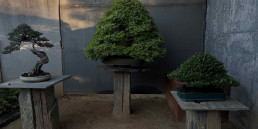

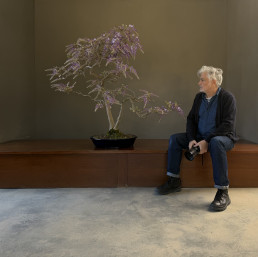
La foto del fotógrafo
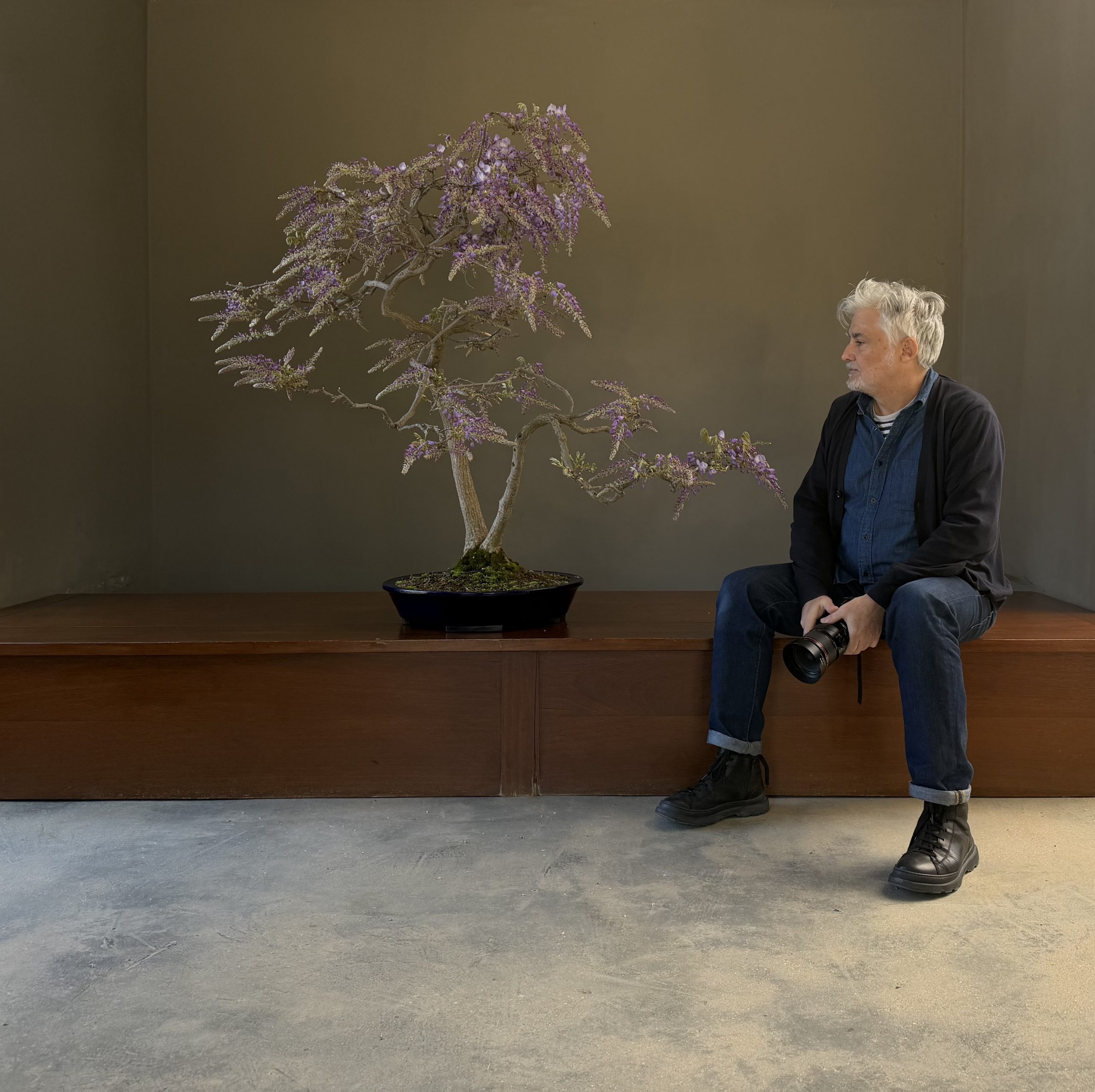
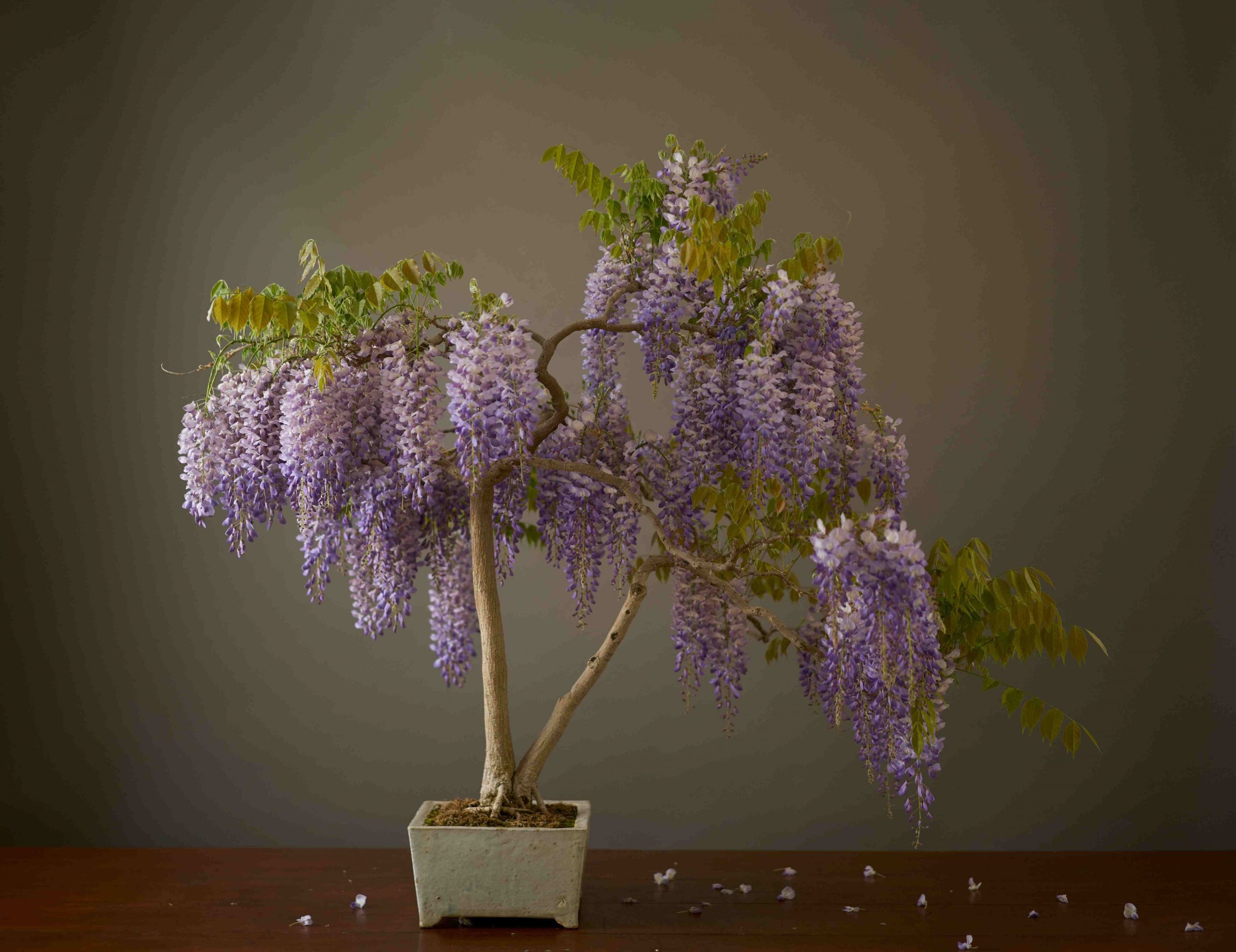
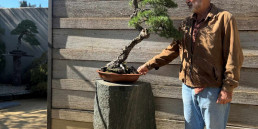
Fernando ;Maquieira llegó al jardín hace ya siete años, vino con el encargo de hacer fotografías para el libro de Luis «a los pinos el viento» y se quedó para siempre. Trajo consigo su universo de arte, barcos, museos, volcanes, islas, hormigas, arquitectura y paisaje.
Las fotografías las hace en nuestro tokonoma, aprovechando la luz natural que entra por el ventanal que tiene a su izquierda y desde el invernadero. Para el libro hizo fotos durante casi cuatro años, en todas las estaciones y en distintos momentos del día mientras Luis le contaba historias de los árboles. En sus fotos se ve el cambio de las estaciones, el paso del tiempo, los cambios de macetas, los días de sol y los nublados. Se ve su naturaleza y algo tan difícil de mostrar como es la concentración de arte y tiempo.
Ayer organizamos una sesión de fotos con los árboles de primavera. Como cuando te encuentras con viejos amigos, los árboles le cuentan lo que les ha pasado en el tiempo que no se han visto y él les hace fotos.
Fernando Maquieira arrived at the garden seven years ago; he came on assignment to take photographs for Luis’s book «The Wind among the Trees» and stayed for good. He brought with him his own world of art, ships, museums, volcanoes, islands, ants, architecture and landscape.
He takes his photographs in our tokonoma, making the most of the natural light streaming in through the large window to his left and from the greenhouse. For the book, he took photos for almost four years, across all the seasons and at different times of day, while Luis told him stories about the trees. In his photos, you can see the changing seasons, the passing of time, the changing pots, the sunny days and the cloudy ones. You can see their nature and something that is so difficult to show: the concentration of art and time.
Yesterday we organized a photo shoot with the spring trees. Just like when you meet up with old friends, the trees tell him what has happened to them since they last saw each other, and he takes their photos.
El anden 9 y 3/4/Platform 9 and 3/4
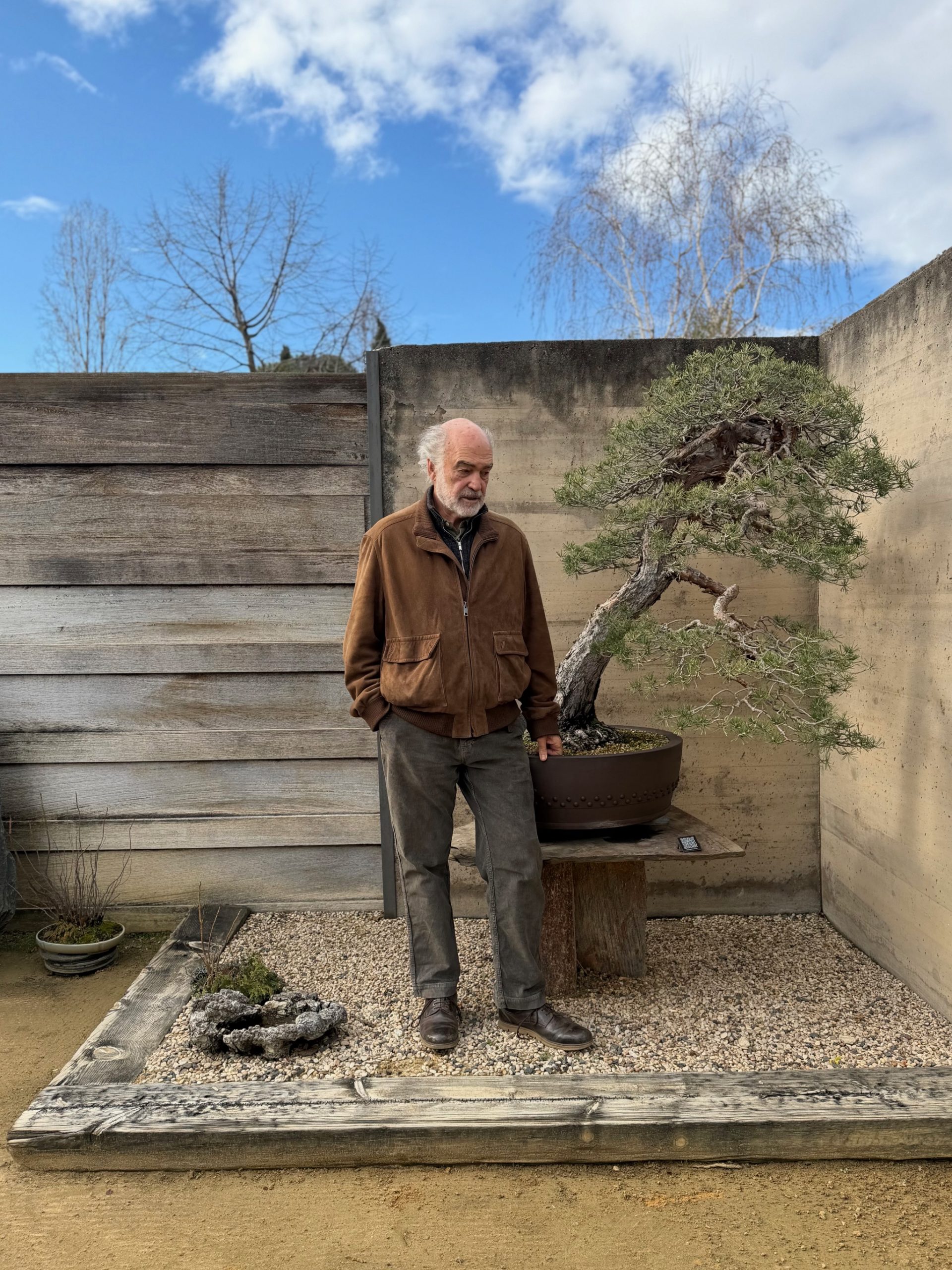
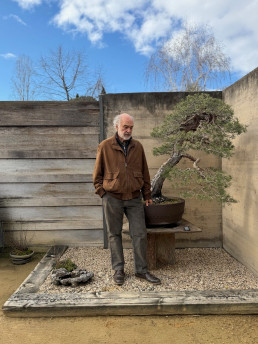
Seguimos inmersos en la magia de estos días, El tiempo queda suspendido, leo en alguna parte que es un fenómeno parecido al del andén 9 y ¾ de Harry Potter; doblas a toda carrera la esquina del día 25 y el tiempo se para.
Entramos en un tiempo distinto, ralentizado. Los árboles parecen contagiados por esa magia, como si estuvieran congelados (hoy igual lo están).
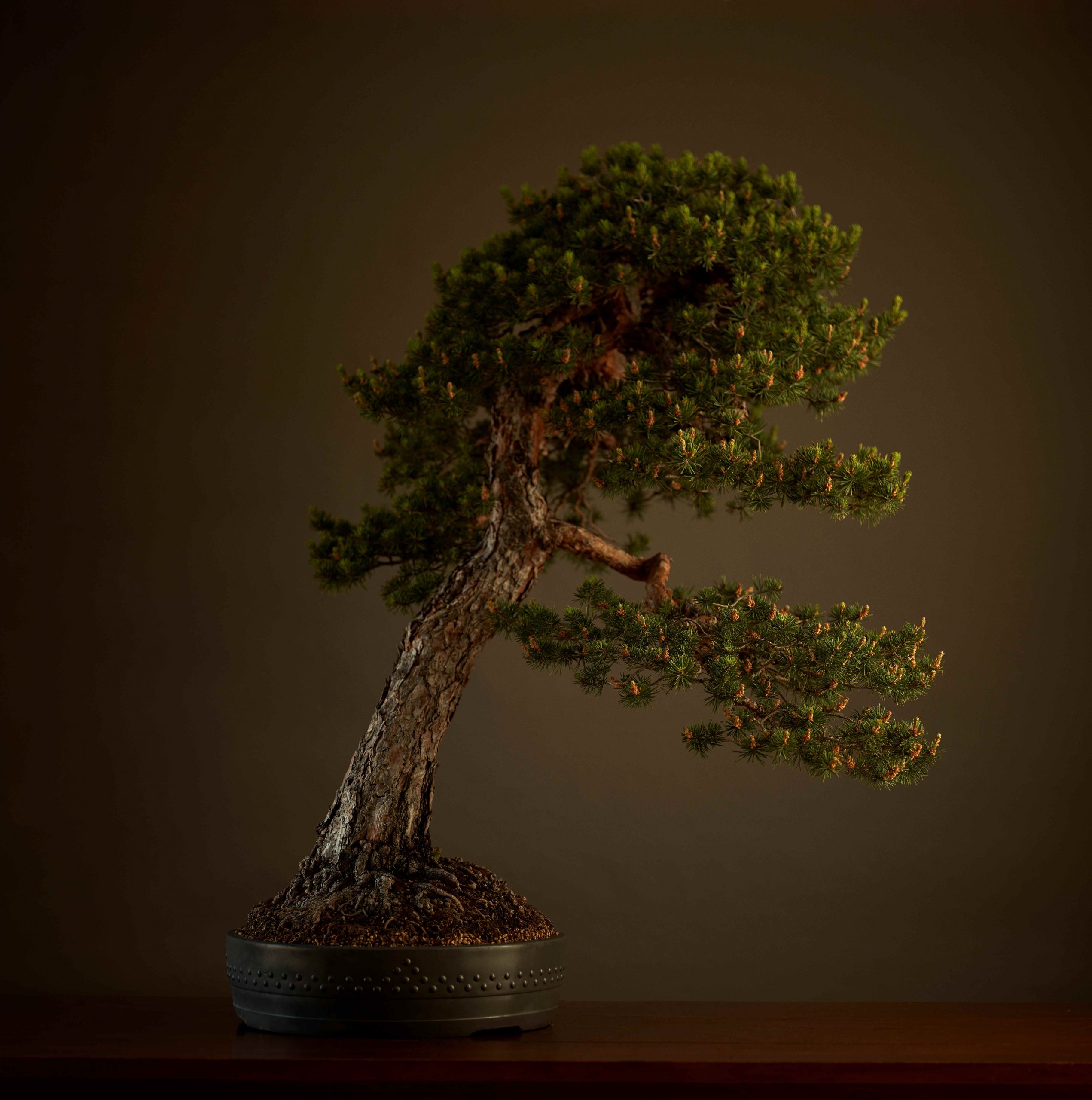
Los árboles duermen en el jardín, al parecer un estudio ha demostrado que cuando descansan cambian su postura; me fijo en ellos, las ramas parecen más bajas, los troncos algo más curvados…el tiempo perfecto para descansar, estos días no hay que producir nada.
.Solo, en la noche, el pino habla con su voz de luna…
«a los pinos el viento»
Luis Vallejo
We are still immersed in the magic of these days. Time is suspended, I read somewhere that it is a phenomenon similar to Harry Potter’s Platform 9 and ¾; you rush into the 25th and suddenly time stops..
We enter a different time, one that slows down. The trees seem to be influenced by that magic, as if they were frozen (today they might as well be).
The trees sleep in the garden, apparently a study has shown that when they rest they change their posture; I look at them, the branches seem lower, the trunks a little more curved… the perfect time to rest, these days there is nothing to produce.
Alone, in the night, the pine speaks its moon´s voice…
«The Wind among the Leaves»
Luis Vallejo
Marcescencia/Marcescence
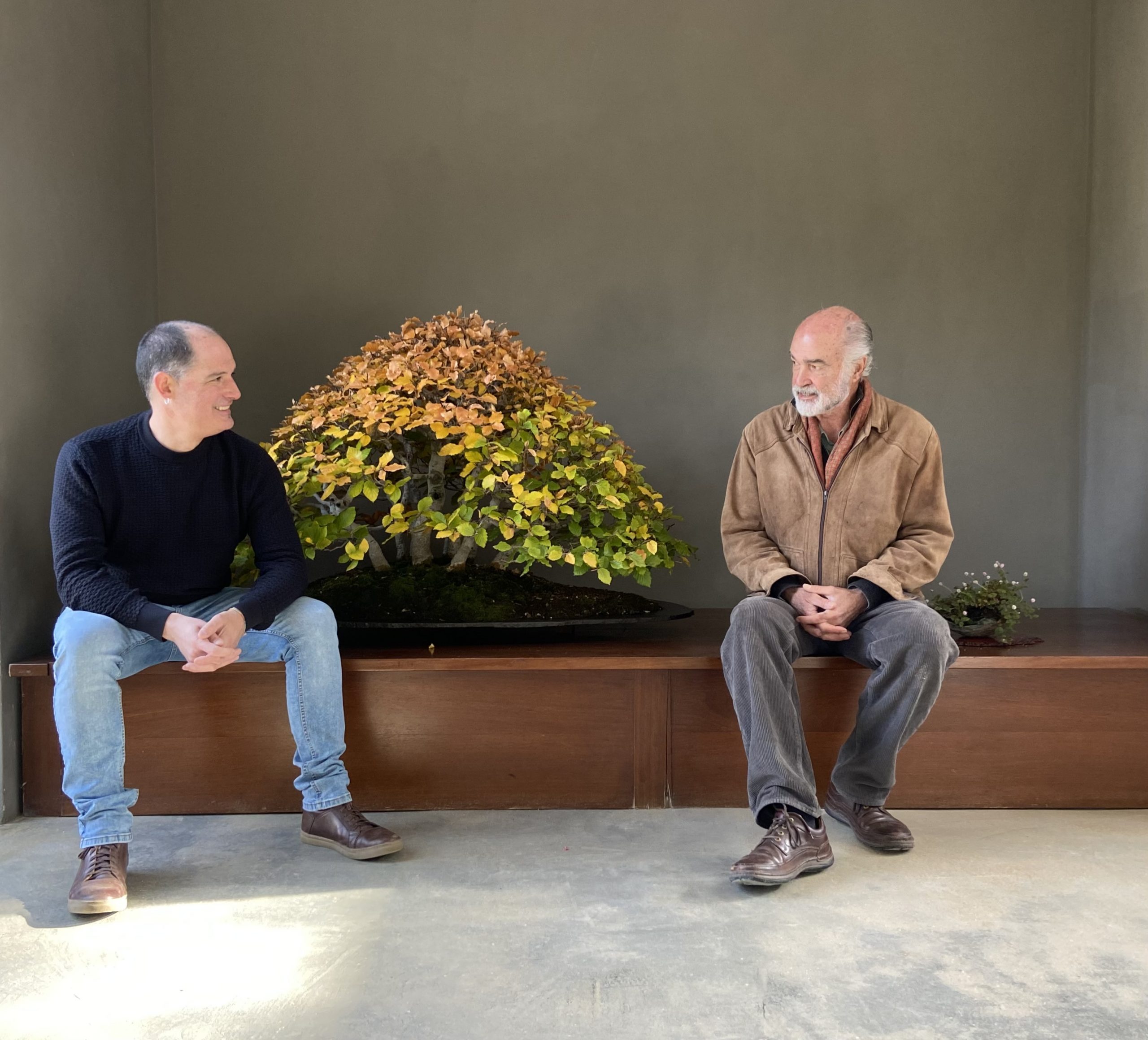
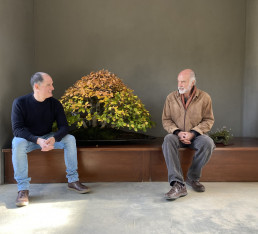
Esta semana vino a vernos Patxi; dejó el grandioso otoño de Irati para venir a ver el nuestro, algo más pequeño.
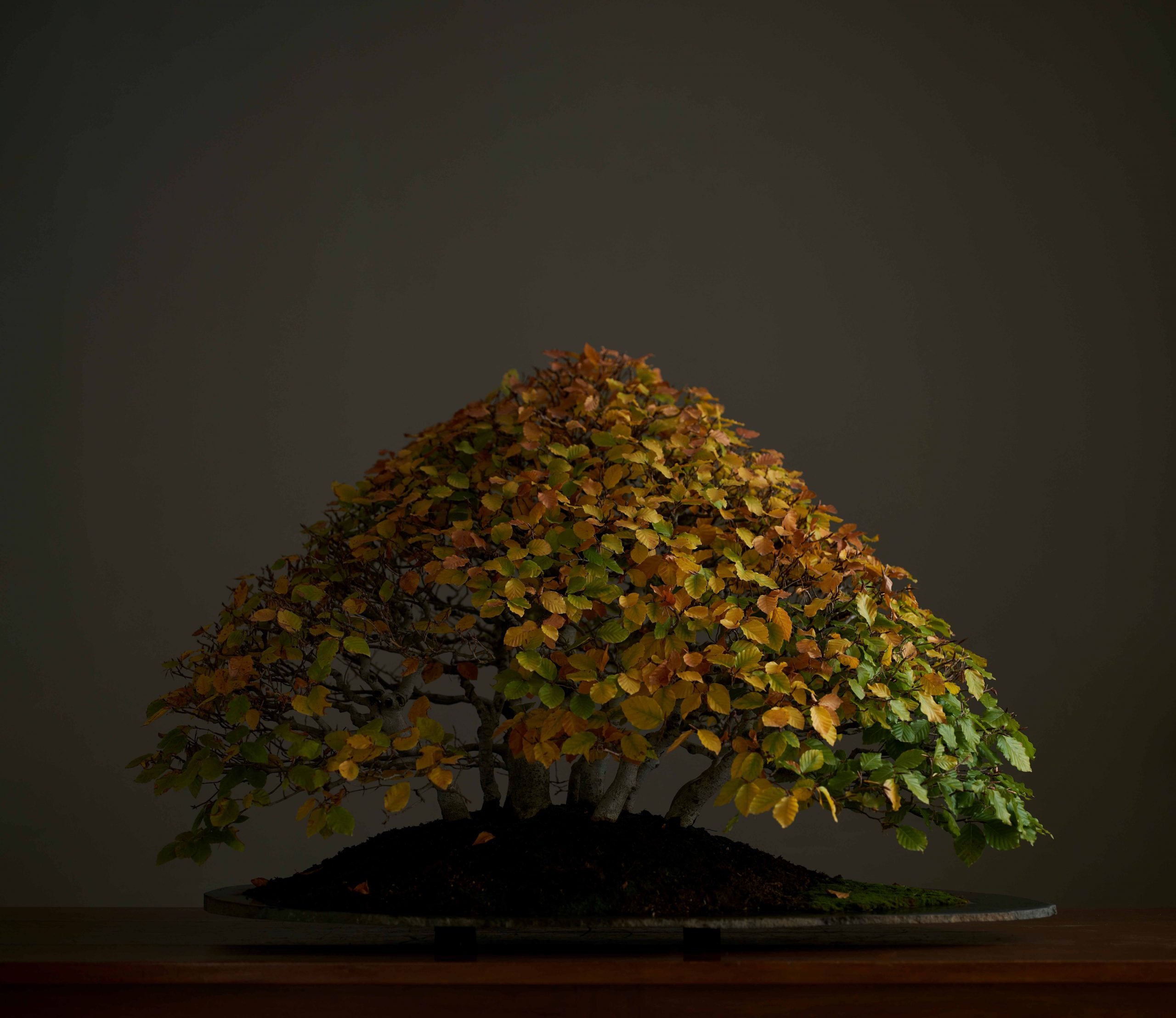
Y es que, si ya casi todos los caducos han perdido sus hojas, las hayas y los robles se empeñan en mantenerlas. Es el enigmático fenómeno de la marcescencia, un fenómeno por el cual algunos árboles retienen sus hojas en las ramas durante todo el invierno. Hay varias teorías para explicarlo; que mantienen las hojas para proteger de las heladas las yemas del año siguiente o para proteger las ramas y los brotes del ramoneo de los animales, ya que las hojas secas tienen mal sabor. También se especula con que, al desprenderse de las hojas en primavera, el árbol libera al suelo los nutrientes que contienen justo cuando más los necesita. Sea cual sea el motivo….
Caminar por la selva de Irati, en Navarra,
al final del invierno, con las hojas
marcescentes cubriendo ya el suelo y
reflejando la luz declinada del atardecer,
produce un sentimiento indefinible
“a los pinos el viento”
Luis Vallejo
This week Patxi came to see us; he left the great autumn of Irati to come and see ours, a little smaller.
And the fact is that, if almost all the deciduous trees have already lost their leaves, the beech and oak trees insist on keeping them. It is the enigmatic phenomenon of marcescence, a phenomenon by which some trees retain their leaves on their branches throughout the winter. There are several theories to explain it, that they keep the leaves to protect the following year’s buds from frost or to protect the branches and shoots from being browsed by animals, as dry leaves have a bad taste. There is also speculation that by shedding the leaves in spring, the tree releases the nutrients they contain into the soil just when it needs them most. Whatever the reason….
Walking through the Irati rain forest in Navarre,
in the late winter, with the marcescent leaves now
covering the ground and reflecting the fading light
of dusk, arouses an undefinable feeling.
The Wind among the Leaves
Luis Vallejo
Pino negro del Pirineo/Pyrenean mountain pine
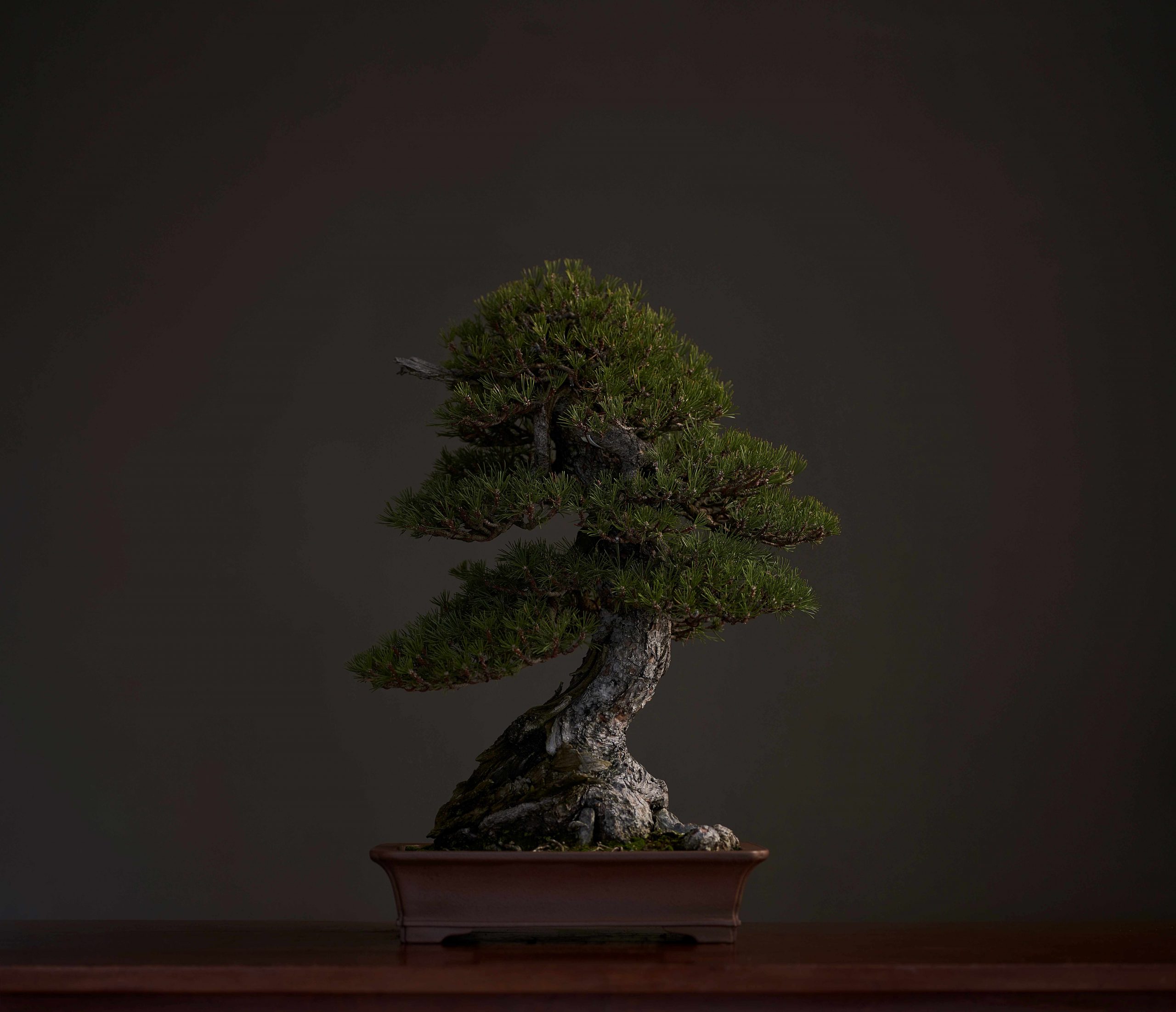
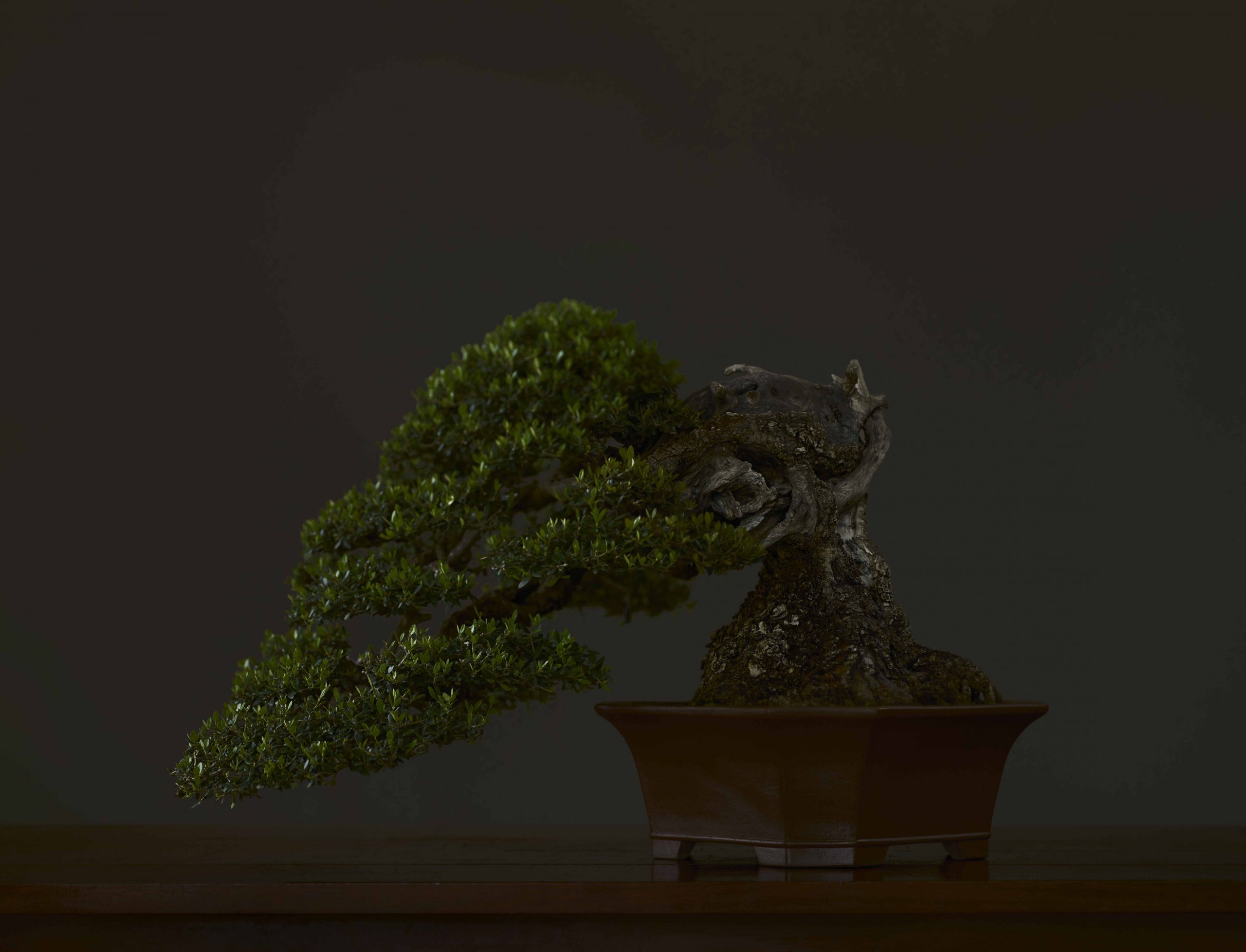
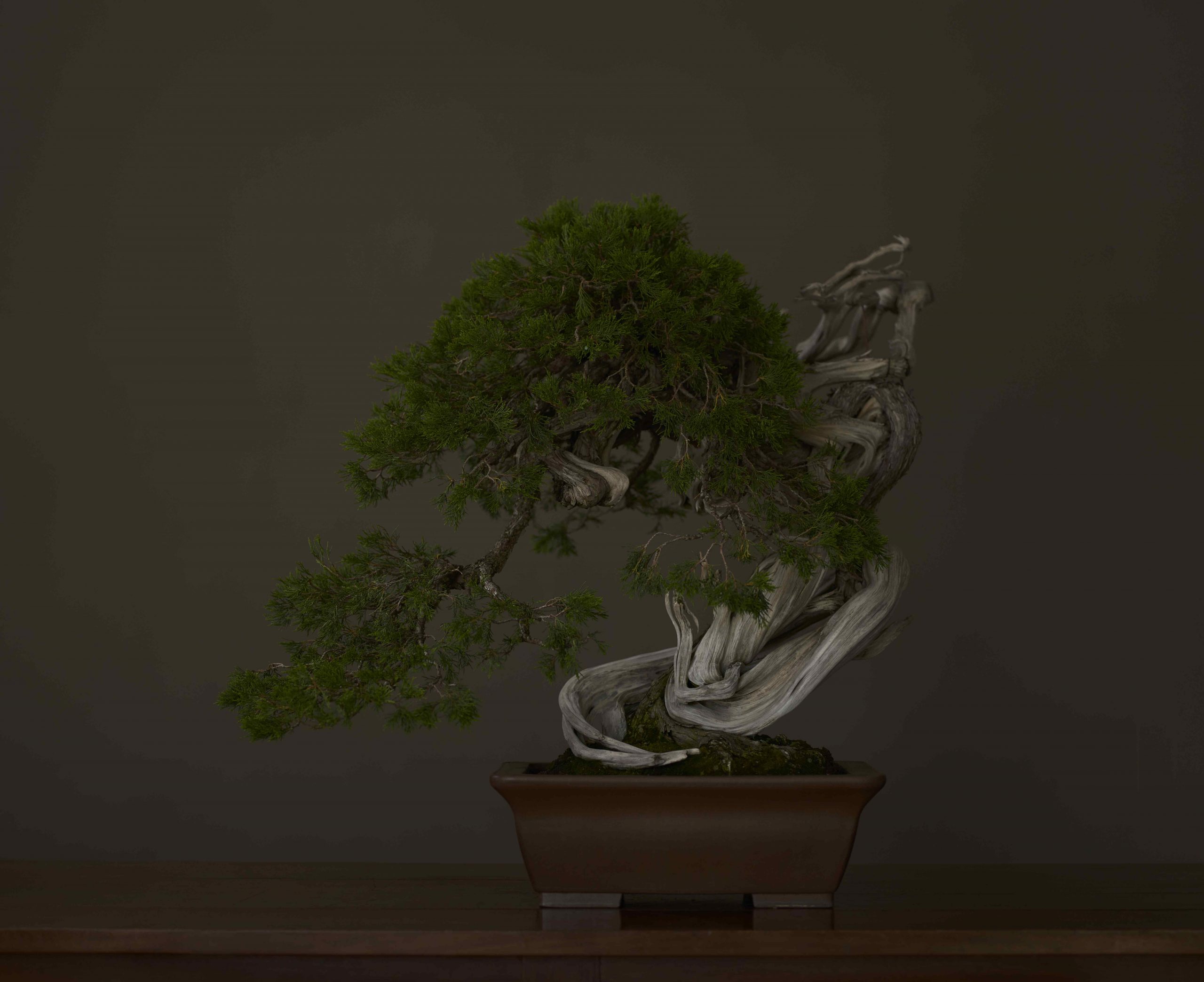
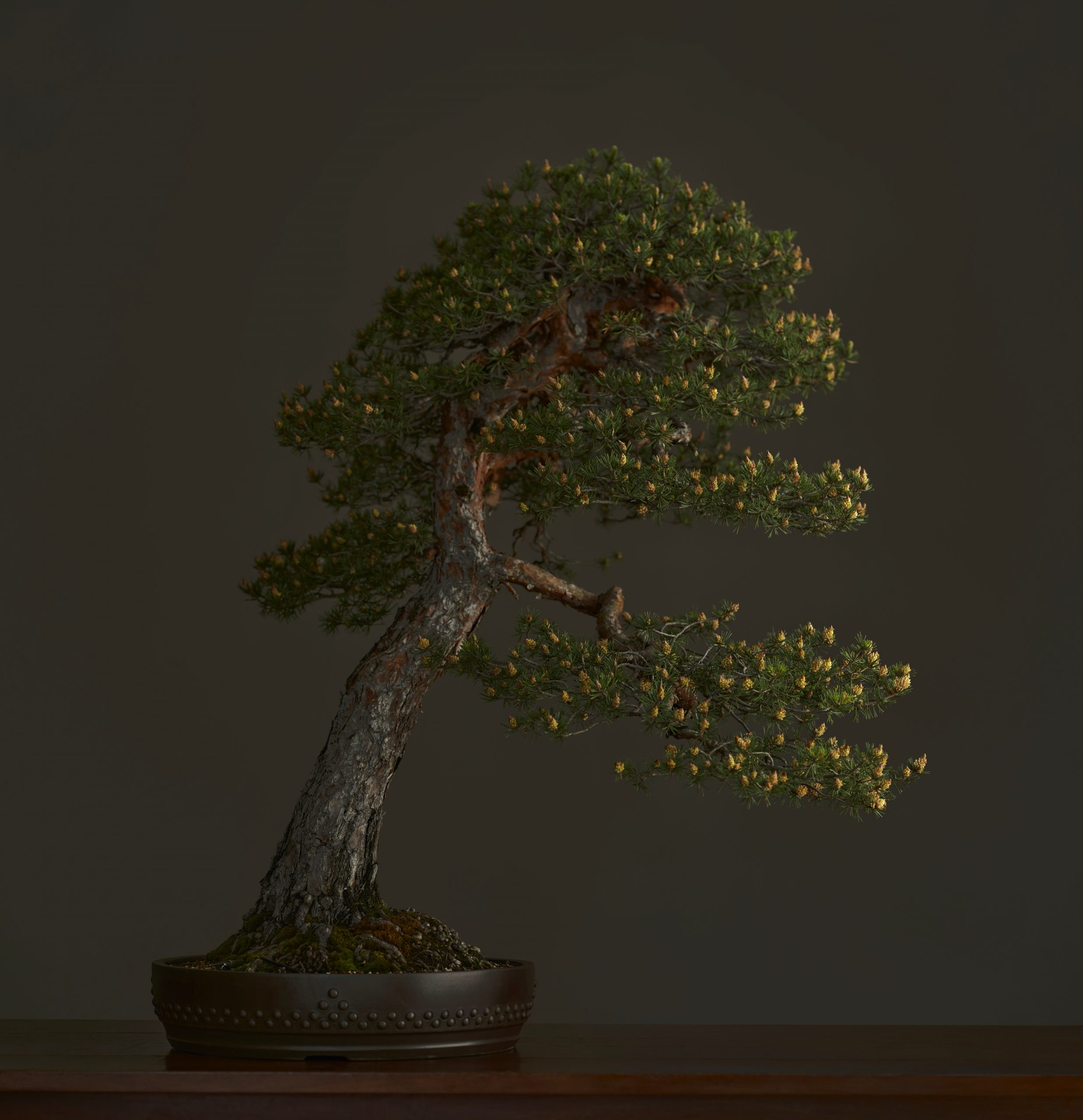
En una semana complicada en gran parte de España, un pequeño homenaje a nuestros paisajes y a nuestros árboles; olivos, encinas, alcornoques, sabinas, hayas, robles, pinos…
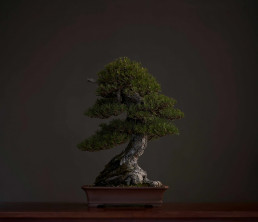
Pino negro del Pirineo.
En los altos pirenaicos de Belagua van
cojeando los rebaños de ovejas lachas entre
pinos negros, sobre un terreno kárstico
repleto de agujeros.
“a los pinos el viento”. Luis Vallejo
fotografía Fernando Maquieira.
In what has been a difficult week in much of Spain, here is a small tribute to our landscapes and our trees: olive trees, holm oaks, cork oaks, junipers, beeches, oaks, pines…
Pyrenean mountain pine.
In the pyrenean heights of Belagua the flocks
of Latxa sheep hobble along among black pines
over a Karstic terrain full of holes.
“The Wind among the Leaves”. Luis Vallejo
Photograph Fernando Maquieira.

Los árboles/The trees


Los árboles
El bonsái es una forma de mirar. Cuando miras un bonsái, vuelves a un lugar en el que una vez viste un árbol; la higuera que crecía en el patio de una casa, un pino descolgándose de un acantilado recuerdo de un viaje por carretera, las encinas de una dehesa por la que solías pasear o la primera vez que entraste en un hayedo…
Cada árbol nos lleva al lugar del que viene, nos lleva de vuelta a la naturaleza, al momento que vivimos en ella. Cuando nos visitan personas mayores nos damos cuenta de lo importante que han sido los árboles en sus vidas. Todos tienen algún recuerdo relacionado con ellos, se emocionan recordando.
La parte que corresponde a este arte es captar la esencia del árbol, provocar esa emoción, ese recuerdo. La otra parte, nos corresponde a todos; hacer posible que las generaciones futuras sigan teniendo recuerdos ligados a los árboles, a la naturaleza.
El haya, el árbol madre, mi árbol más querido. Sus hojas al caer y acumularse, producen el suelo más fértil.
Luis Vallejo. «a los pinos el viento»
The trees
Bonsai is a way of looking. When you look at a bonsai, you go back to a place where you once saw a tree; the fig tree that grew in the courtyard of a house, a pine tree overhanging a cliff that reminds you of a road trip, the holm oaks in a dehesa where you used to walk, or the first time you entered a beech forest…
Each tree takes us back to the place it came from, it takes us back to nature, to the moment we lived in it. When older people visit us we realise how important trees have been in their lives. They all have some memory related to them, they are moved by remembering.
The part that corresponds to this art is to capture the essence of the tree, to provoke emotion. The other part is up to all of us; to make it possible for future generations to continue to have memories linked to trees, to nature.
The beech, the mother-tree, the tree dearest to me. Its fallen, piled-up leaves produce the most fertile soil.
Luis Vallejo. «The Wind Among the Leaves»