Nada dura, nada está completo, nada es perfecto/Nothing lasts, nothing is complete, nothing is perfect.
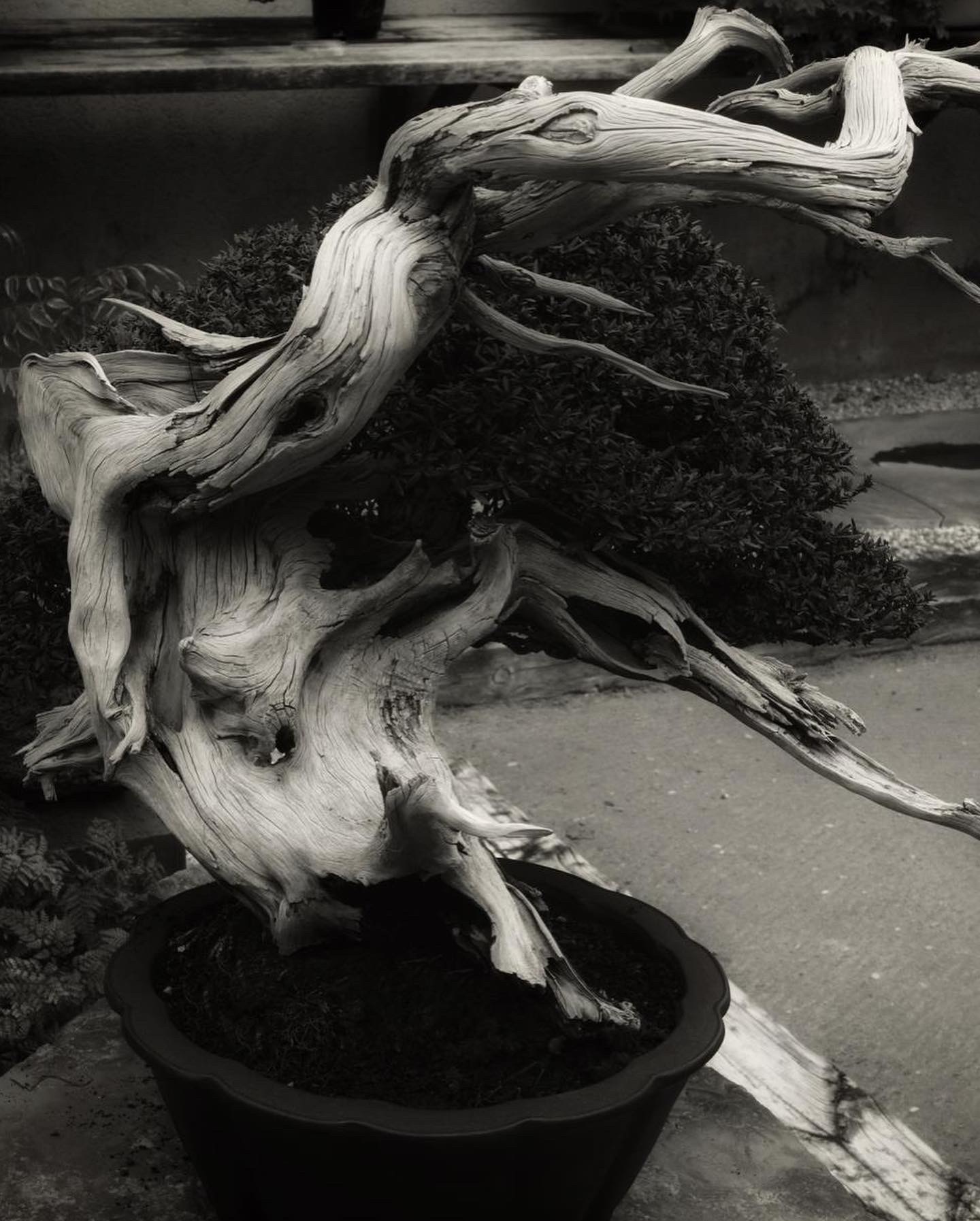
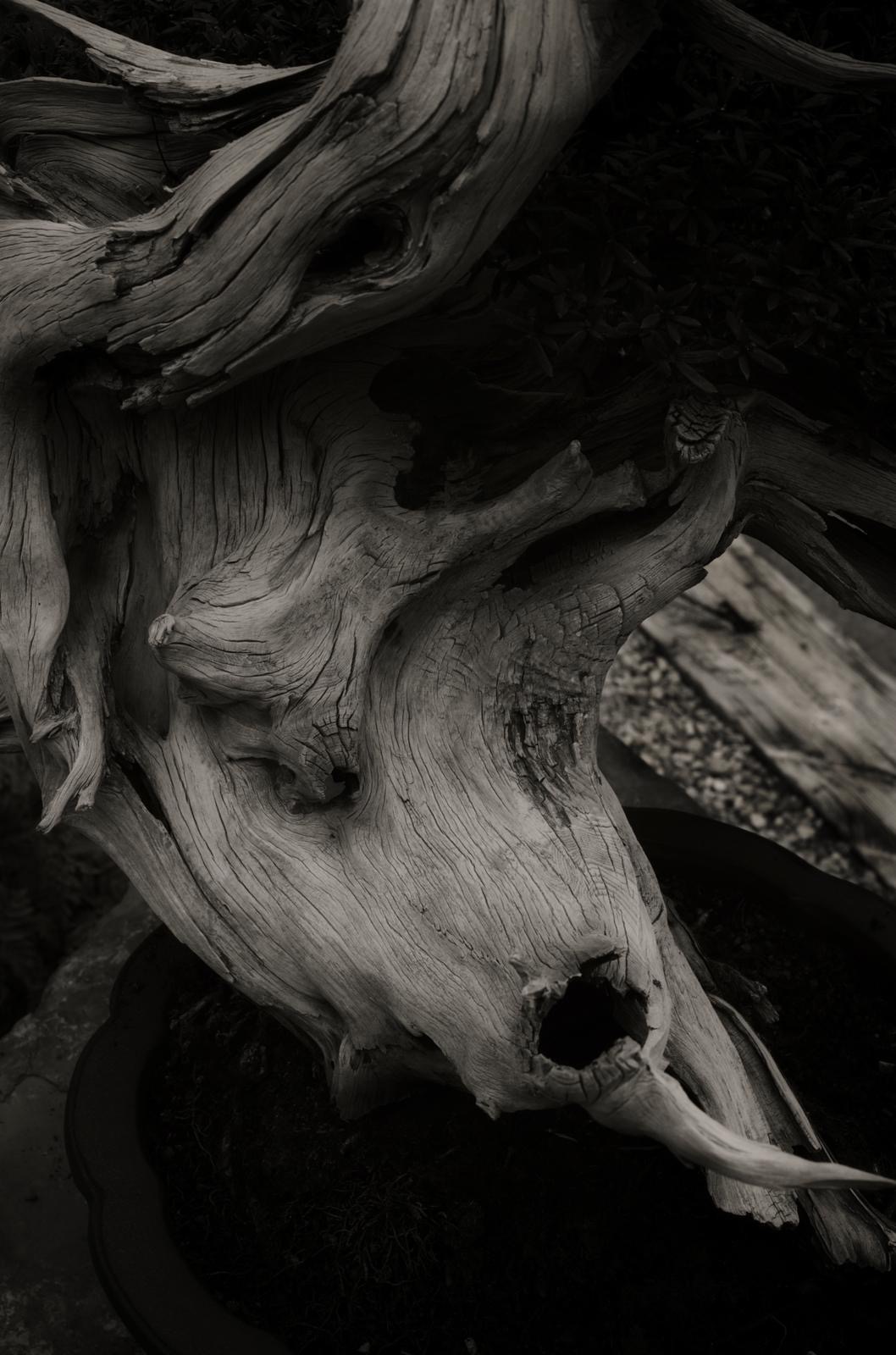
En noviembre de 2018, celebramos la exposición; “La Naturaleza y el tiempo”. Tuvimos varias conferencias y entre ellas la de Peter Warren sobre la filosofía wabi sabi. Disfrutamos también de una exposición de fotografías de los árboles de Carmen Ballvé. Ambas nos impresionaron profundamente.
Entendimos entonces que el jardín es un manifiesto wabi-sabi: imperfección, naturaleza y tiempo. No hay reglas, se trata de evocar la belleza en su forma más modesta. Buscar la armonía en lo natural, no en la ausencia de defectos, enfatizar la imperfección y el paso del tiempo; el ciclo de la vida.
Entendimos también que no solo es estética, es ese sentimiento de emoción y nostalgia que nos inunda ante la elegancia y la nobleza en la sencillez. Hay personas que tienen wabi sabi del alma; aquellas personas capaces de apreciar la belleza en cosas insignificantes que están ahí para ser descubiertas por unos pocos.
Las fotografías de Carmen Ballve, otro manifiesto wabi sabi.
In November 2018, we were holding the exhibition; ‘Nature and Time’. We had several conferences, including Peter Warren’s lecture on the wabi sabi philosophy. We also enjoyed an exhibition of photographs of the trees by Carmen Ballvé. Both made a deep impression on us.
We understood then that the garden is a wabi-sabi manifesto: imperfection, nature and time. There are no rules, it is about evoking beauty in its most modest form. To seek harmony in the natural, not in the absence of defects, to emphasise imperfection and the passing of time; the cycle of life.
We also understood that it is not only aesthetics, it is that feeling of emotion and nostalgia that floods us with elegance and nobility in simplicity. There are people who have wabi sabi of the soul; those who are able to appreciate the beauty in insignificant things that are there to be discovered by a few.
Carmen Ballve’s photographs, another wabi sabi manifesto.
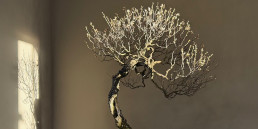
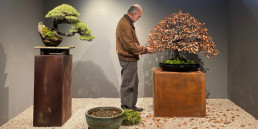


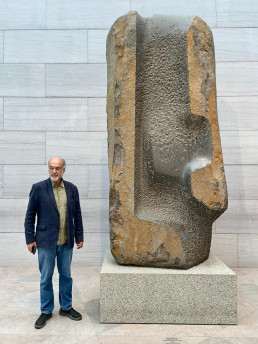
Piedra, paisajes y árboles/ Stone,landscapes and trees
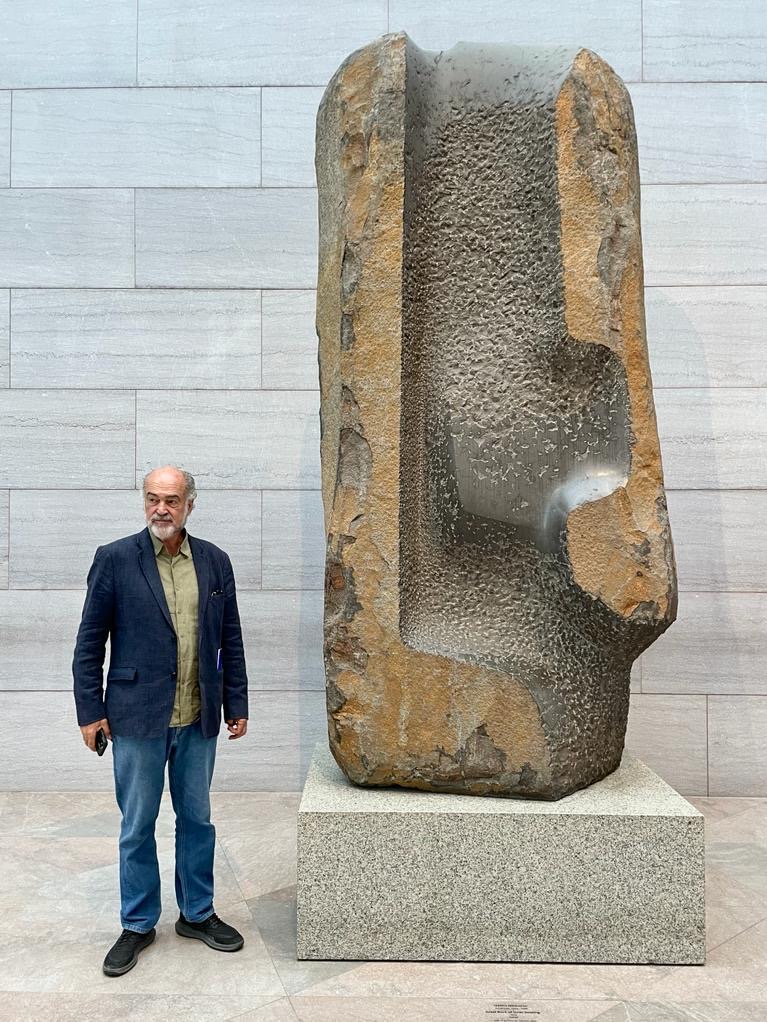
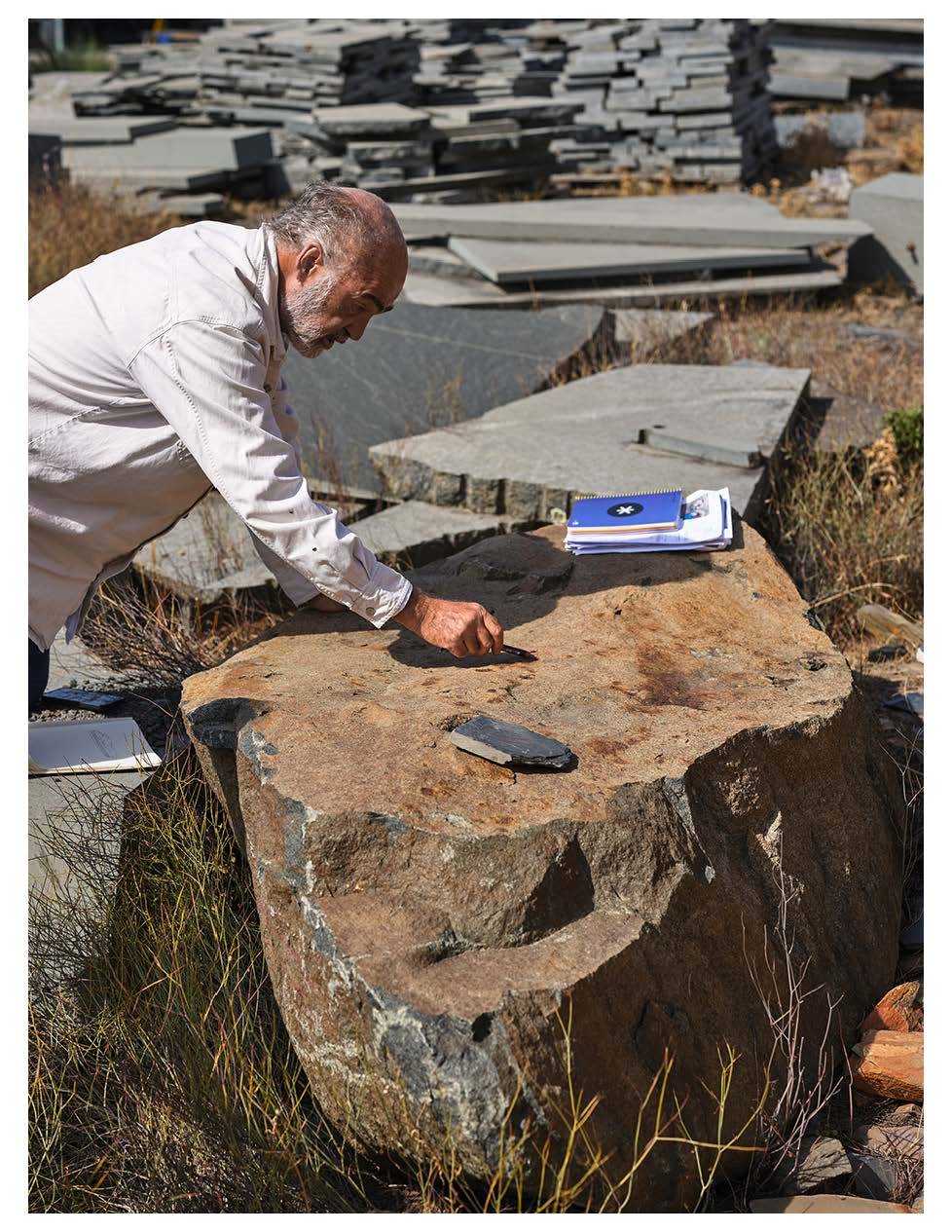
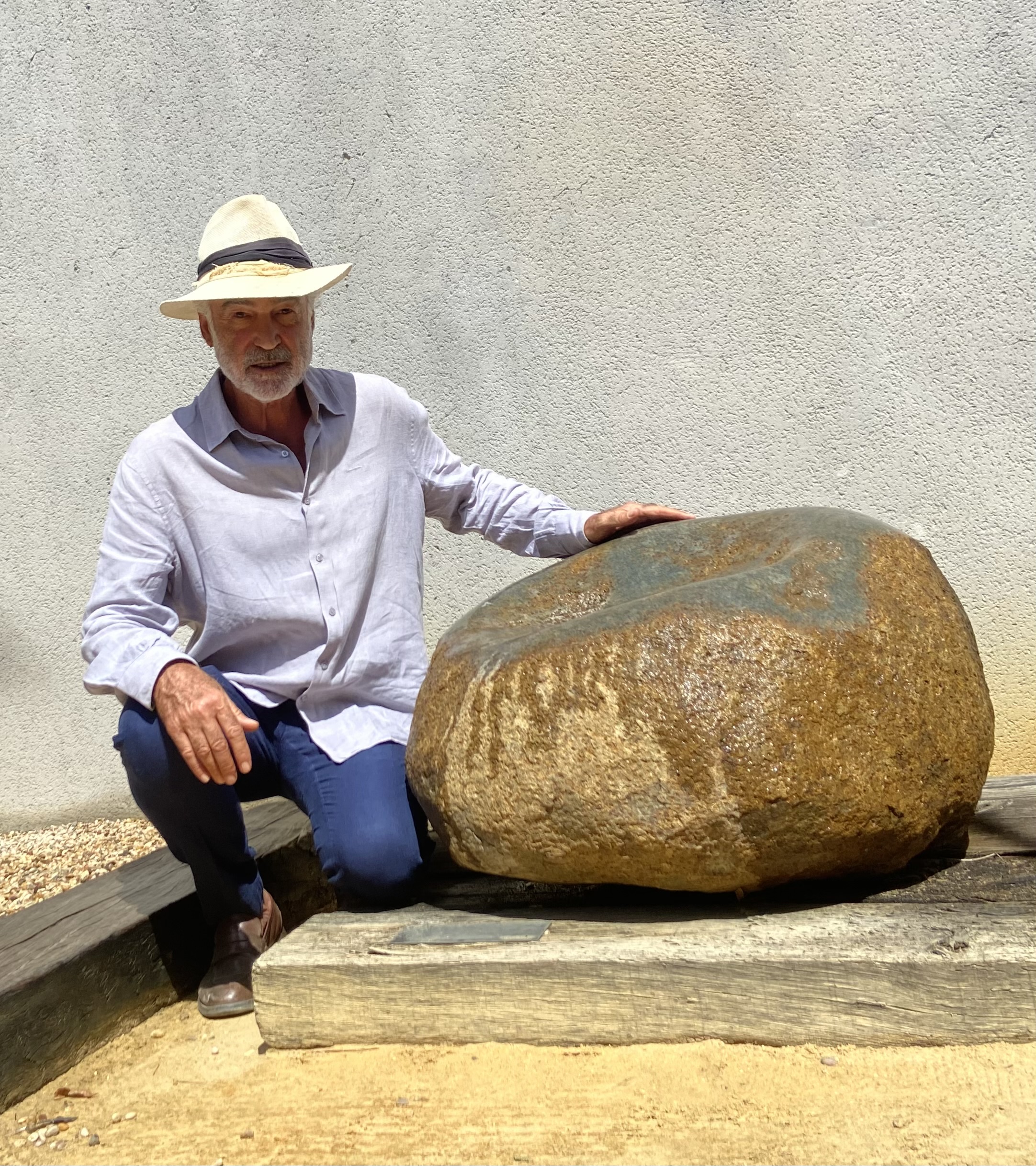
La primera foto es del 2023, Luis en Washington en la National Gallery of Art junto a una obra de Isamu Noguchi, coincidiendo con el viaje que hicimos para la presentación de su libro “a los pinos el viento”. Las siguientes son de su estudio de paisajismo, trabajando en la cantera y aquí en el jardín.
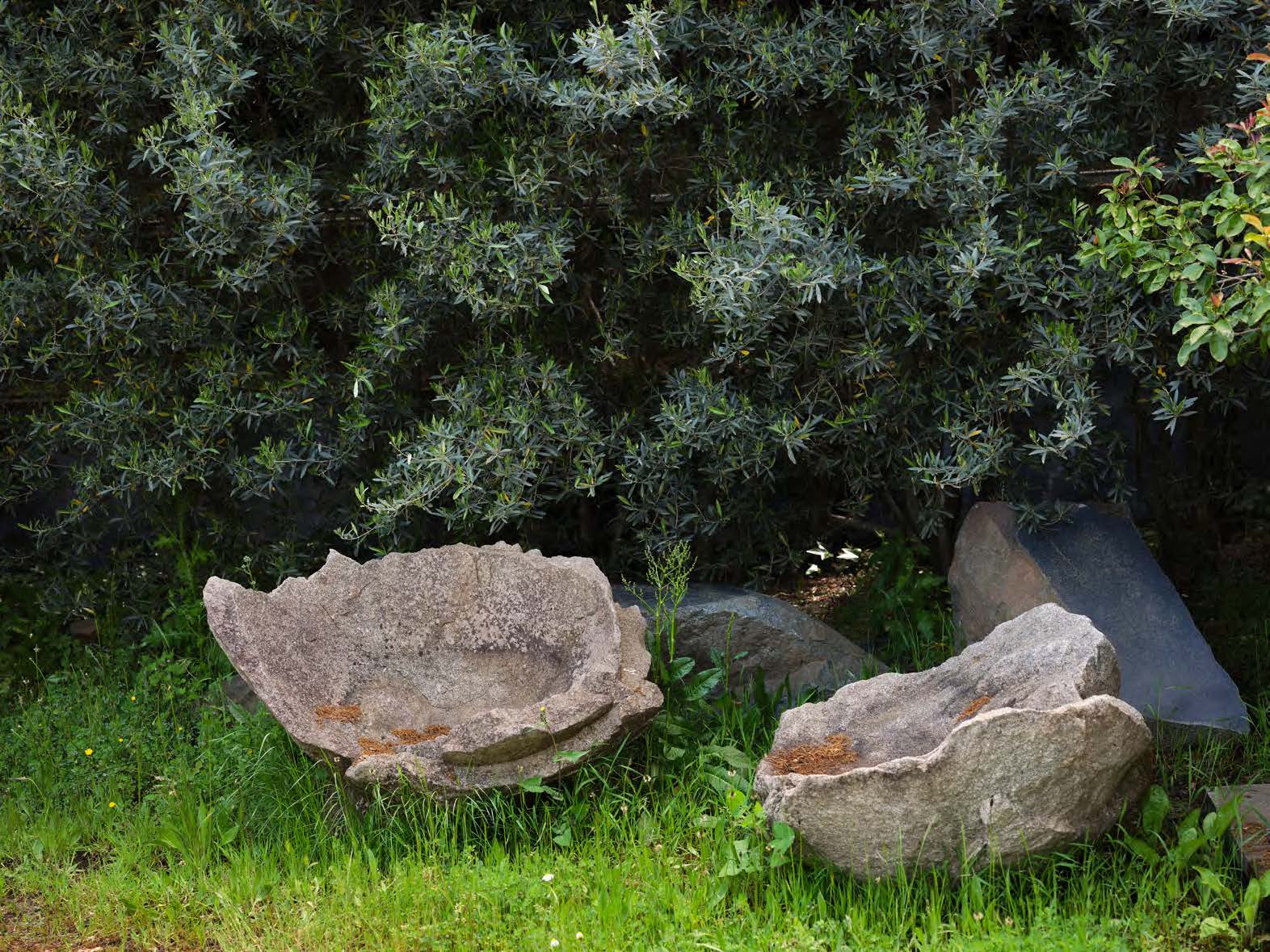
La piedra es una constante en la obra y en la vida de Luis, y aquí en el jardín no podía ser de otra manera. La piedra nos acompaña siempre; desde los grandes bancos de la entrada, pasando por los pedestales de pizarra que sostienen los árboles, las esculturas que salpican la exposición o la piedra de agua del estanque. Tenemos mil historias ligadas a estas piedras; el bolo de granito que acompaña al junípero de Kimura que estuvo a punto de viajar a un proyecto de Renzo Piano en Nueva York, las piedras espejo, negro encina, que instaló Luis junto al alcornoque o el paisaje grande de piceas que llegó hace años de Japón con la maceta partida y que puso en una laja de cuarcita de Segovia, convirtiéndolo en un punto de encuentro entre oriente y occidente…
La piedra con su presencia silenciosa es el contraste perfecto a la vitalidad de los árboles, a su naturaleza cambiante y demandante de cuidados. Para nosotros es un recordatorio de que pertenecemos a algo más grande que la propia colección. Pertenecemos a su universo de piedra, paisajes y árboles.
The first photo is from 2023, Luis in Washington at the National Gallery of Art next to a work by Isamu Noguchi, coinciding with the trip we made for the presentation of his book ‘The Wind among the Leaves”. The following are from his landscaping studio, working in the quarry and here in the garden.
Stone is a constant in Luis’ work and life, and here in the garden it could not be otherwise. Stone is always with us; from the large benches at the entrance, to the slate pedestals that support the trees, the sculptures that dot the exhibition or the water stone in the pond. We have a thousand stories linked to these stones; the granite boulder that accompanies the kimura juniper tree that was about to travel to a Renzo Piano project in New York, the oak mirror black stones that Luis installed next to the cork oak or the large landscape of spruce trees that arrived years ago from Japan with the pot broken and that he placed on a quartzite slab in Segovia, turning it into a meeting point between East and West…
The stone with its quiet presence is the perfect contrast to the vitality of the trees, to their changing and demanding nature and for us it is a reminder that we belong to something bigger than the collection itself. We belong to its universe of stone, landscapes and trees.
Última semana de agosto/Last week of August
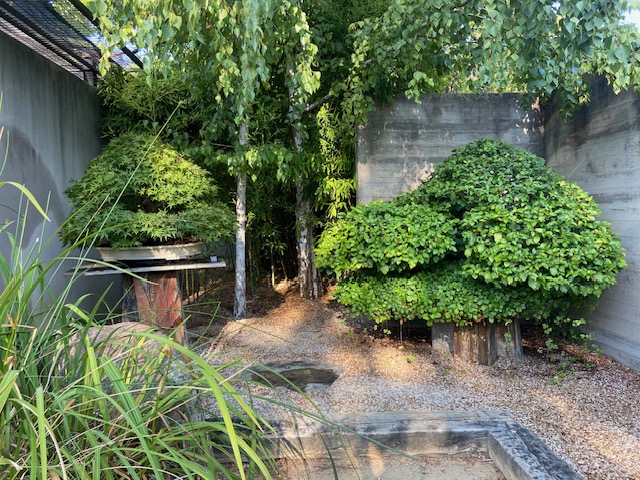
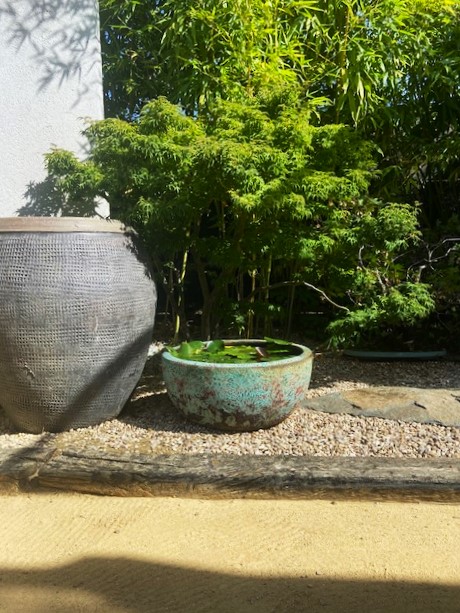
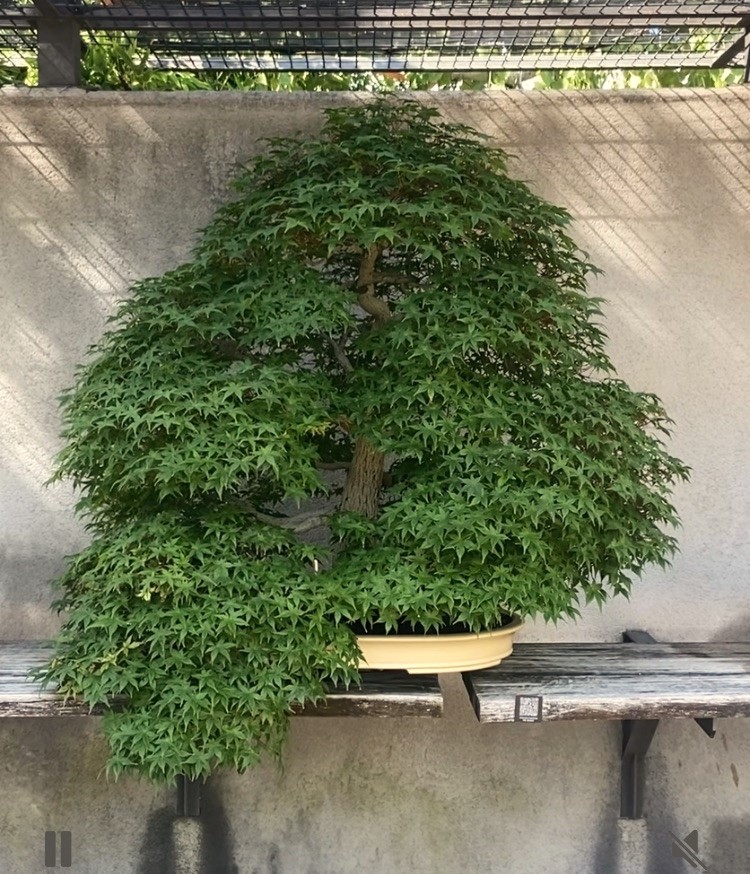
Esta mañana huele a otoño. Todavía falta para que llegue, pero el aire es más fresco y la luz ha cambiado.
Hoy en la radio hablaban de que esta semana se produce una especie de nostalgia anticipada por el final del verano; aquí de tener alguna nostalgia anticipada es por el otoño…
Poco a poco vuelve la gente, por la mañana volvemos a ver a los habituales cruzando el parque de camino al trabajo. Empezamos a preparar todo para la reapertura; los árboles volverán a su sitio, la tienda que ha servido de albergue para plantas vuelve a llenarse de libros y cerámicas. El taller a pleno rendimiento con todo el equipo de vuelta.
Y sobre todo volveremos a tener el jardín lleno de gente.
This morning smells like autumn. It is still some time away, but the air is cooler and the light has changed.
Today on the radio they were saying that this week there is a kind of early nostalgia for the end of summer; here if there is any early nostalgia it is for autumn…
Little by little people are coming back, in the morning we see again the usual people crossing the park on their way to work. We begin to prepare everything for the reopening; the trees will return to their place, the store that has served as a shelter for plants will be filled again with books and ceramics. The workshop will be back to full capacity with all the team back.
And above all, the garden will be full of people again.
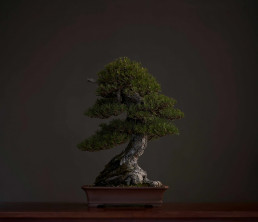
Pino negro del Pirineo/Pyrenean mountain pine
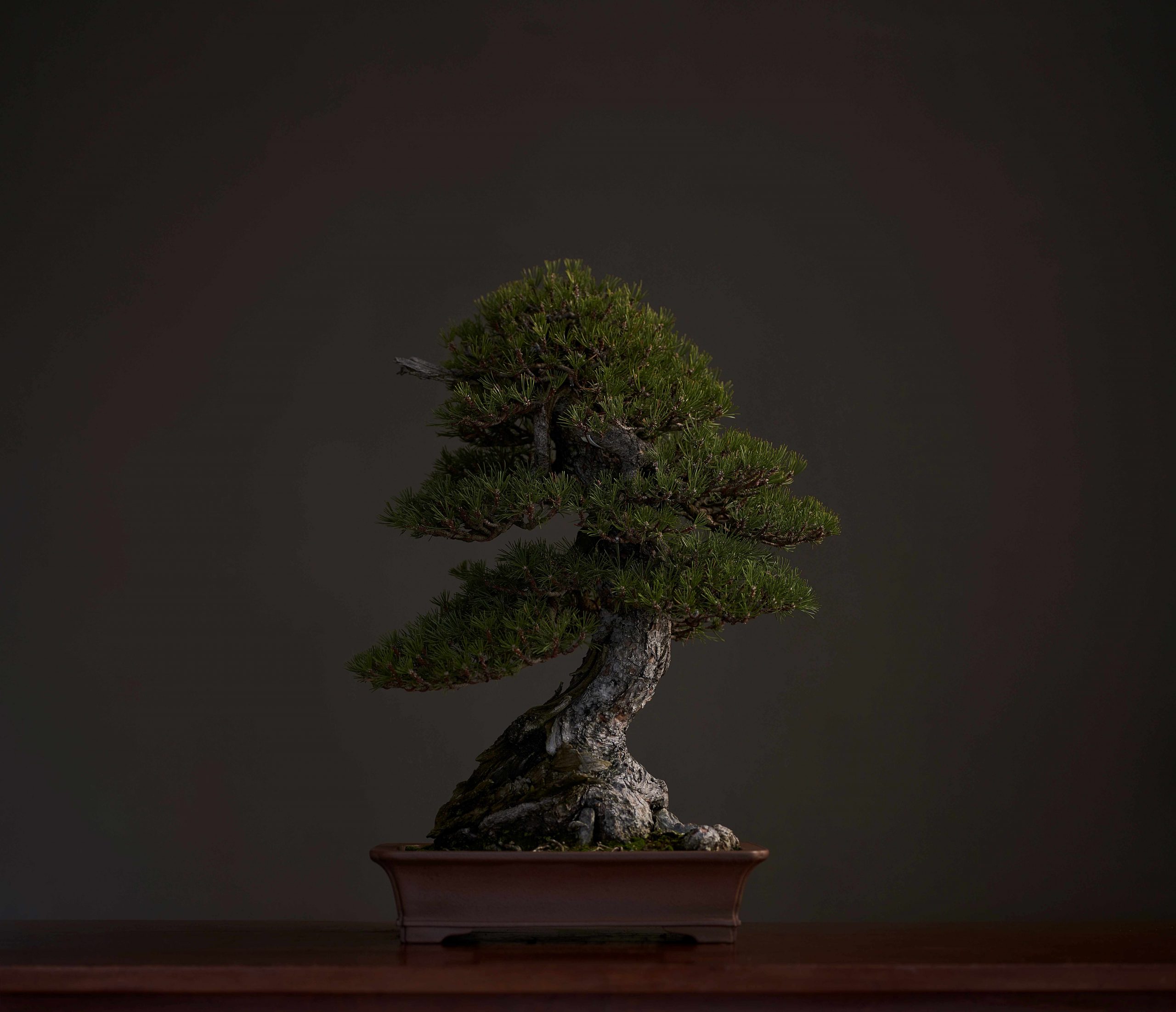
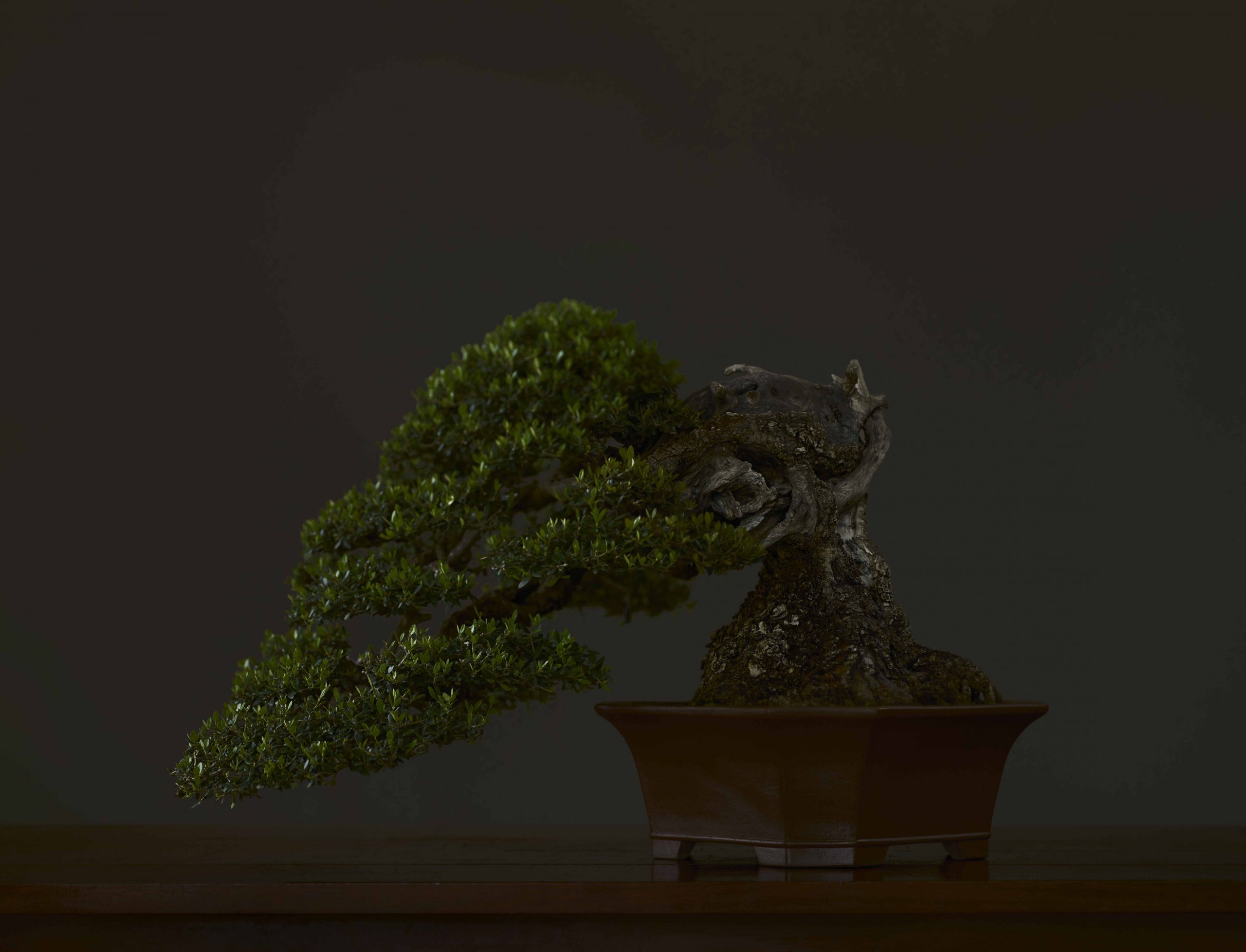
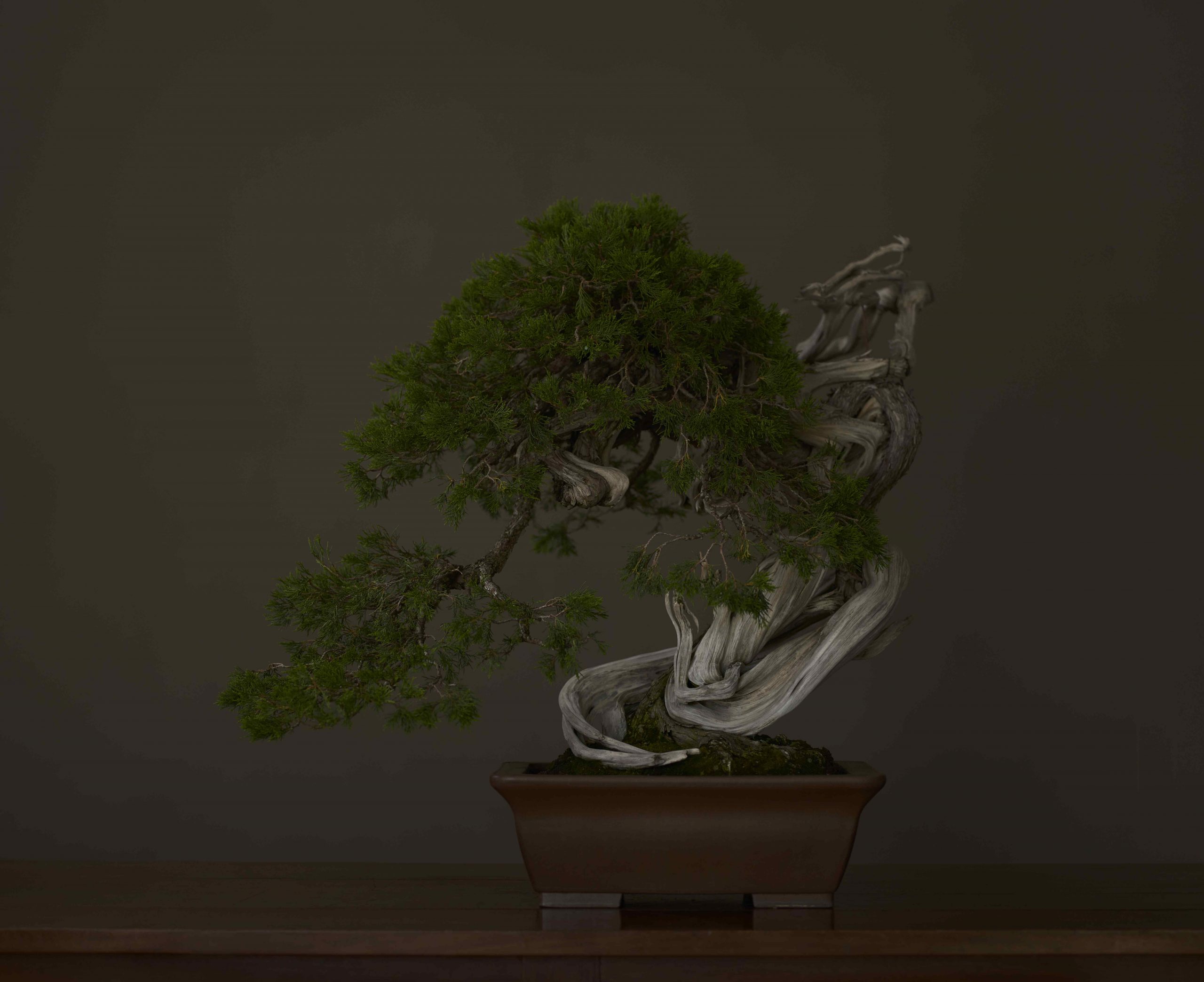
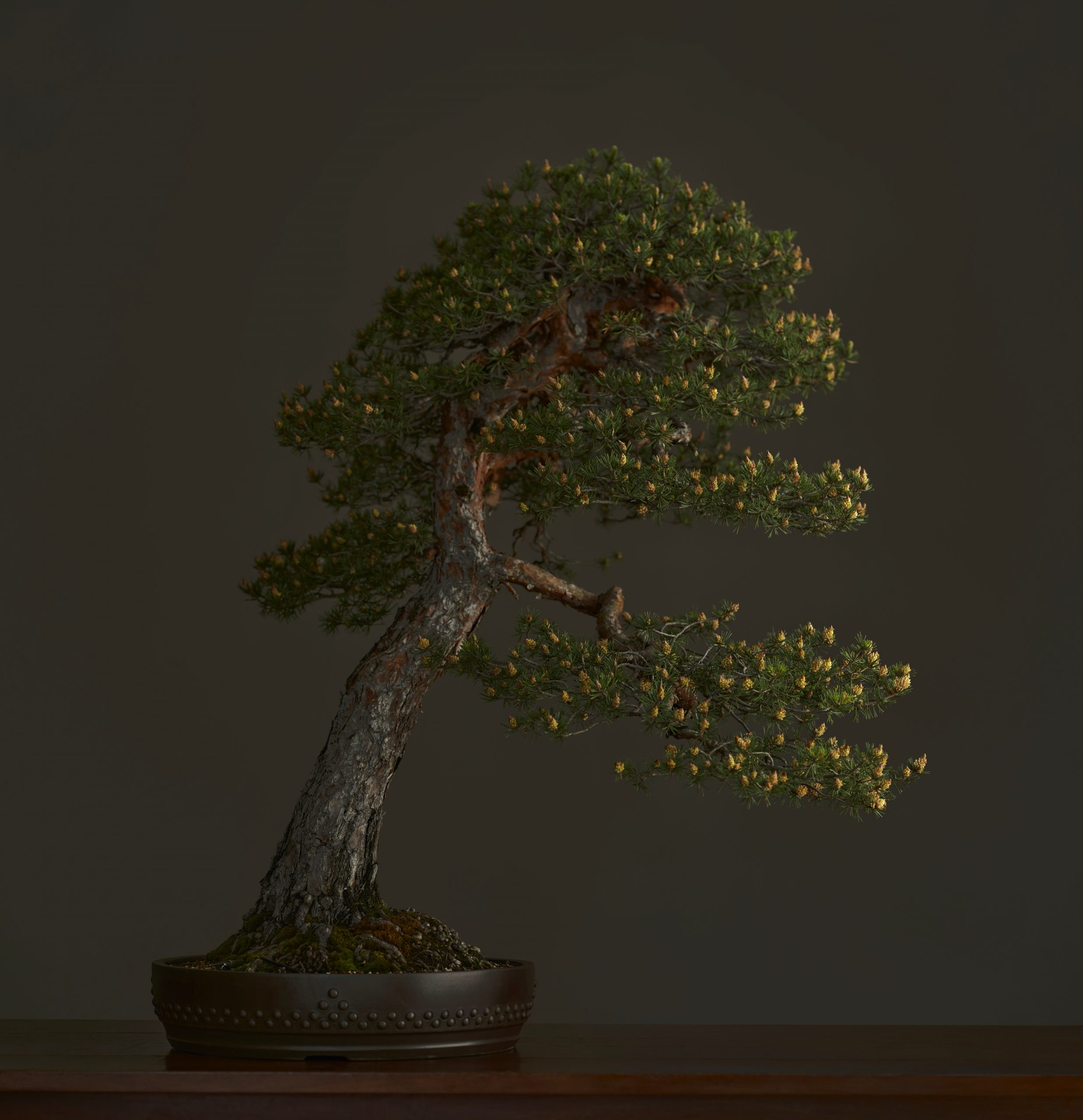
En una semana complicada en gran parte de España, un pequeño homenaje a nuestros paisajes y a nuestros árboles; olivos, encinas, alcornoques, sabinas, hayas, robles, pinos…
Pino negro del Pirineo.
En los altos pirenaicos de Belagua van
cojeando los rebaños de ovejas lachas entre
pinos negros, sobre un terreno kárstico
repleto de agujeros.
“a los pinos el viento”. Luis Vallejo
fotografía Fernando Maquieira.
In what has been a difficult week in much of Spain, here is a small tribute to our landscapes and our trees: olive trees, holm oaks, cork oaks, junipers, beeches, oaks, pines…
Pyrenean mountain pine.
In the pyrenean heights of Belagua the flocks
of Latxa sheep hobble along among black pines
over a Karstic terrain full of holes.
“The Wind among the Leaves”. Luis Vallejo
Photograph Fernando Maquieira.
Riego/Watering
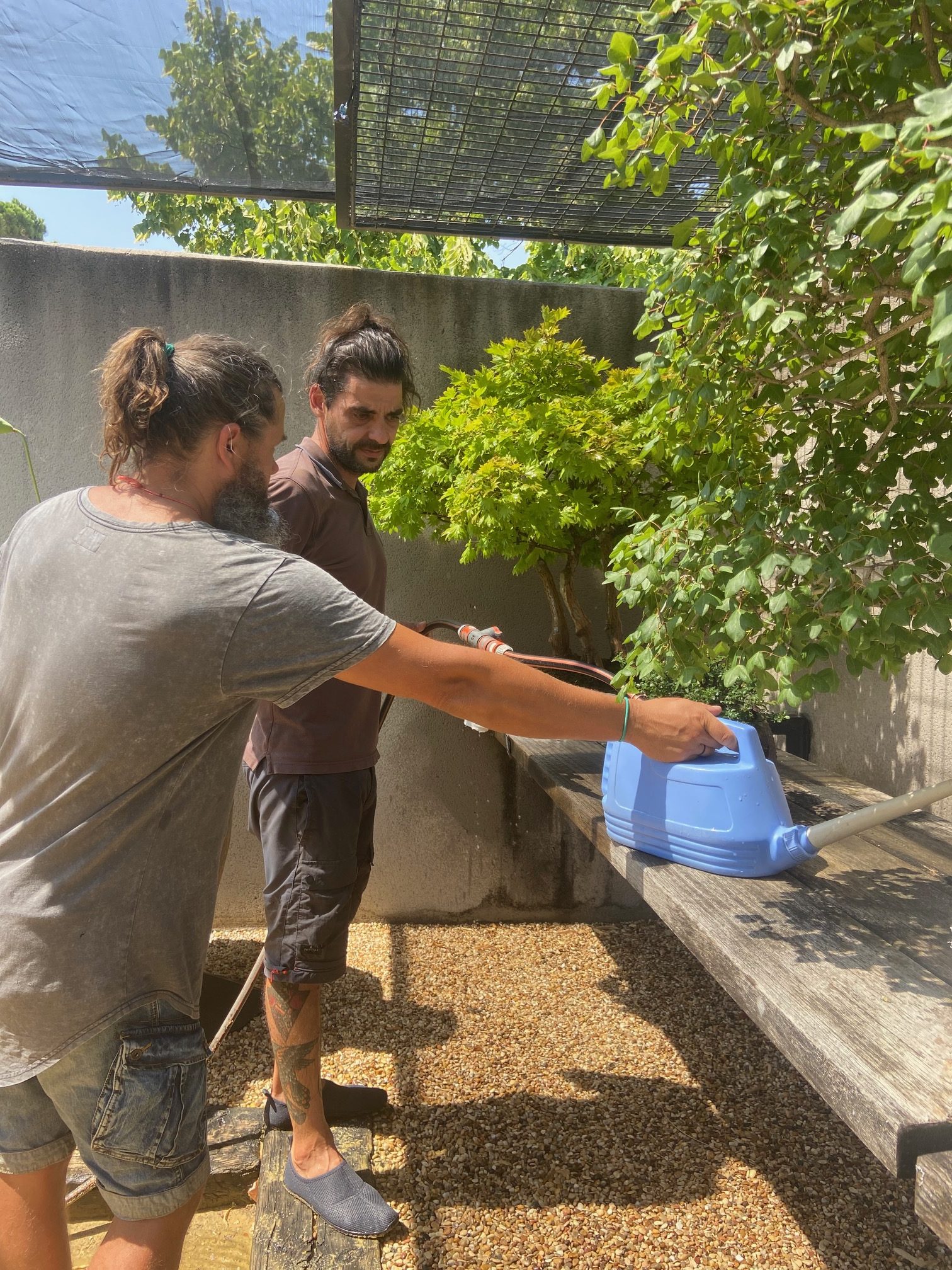
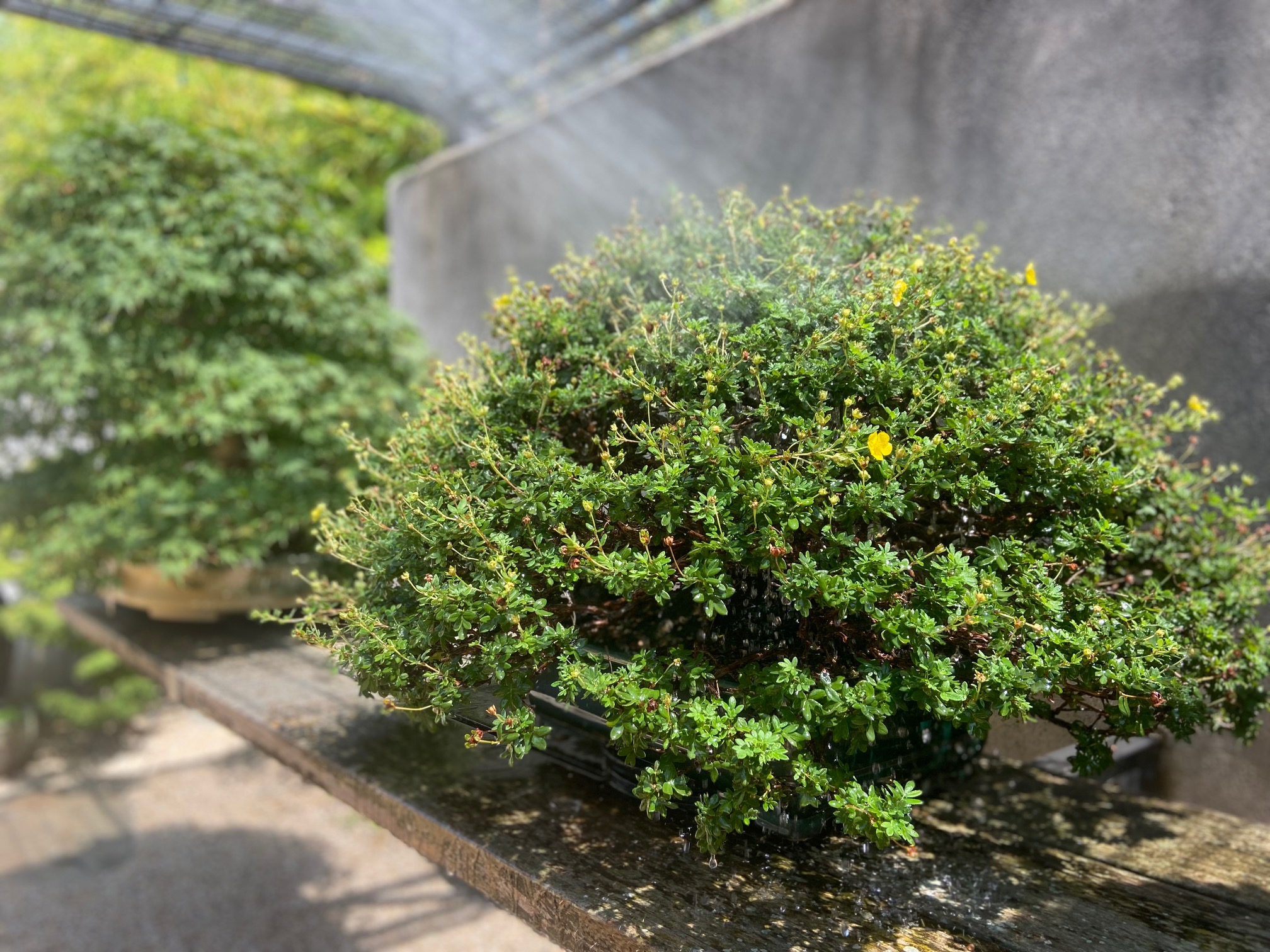
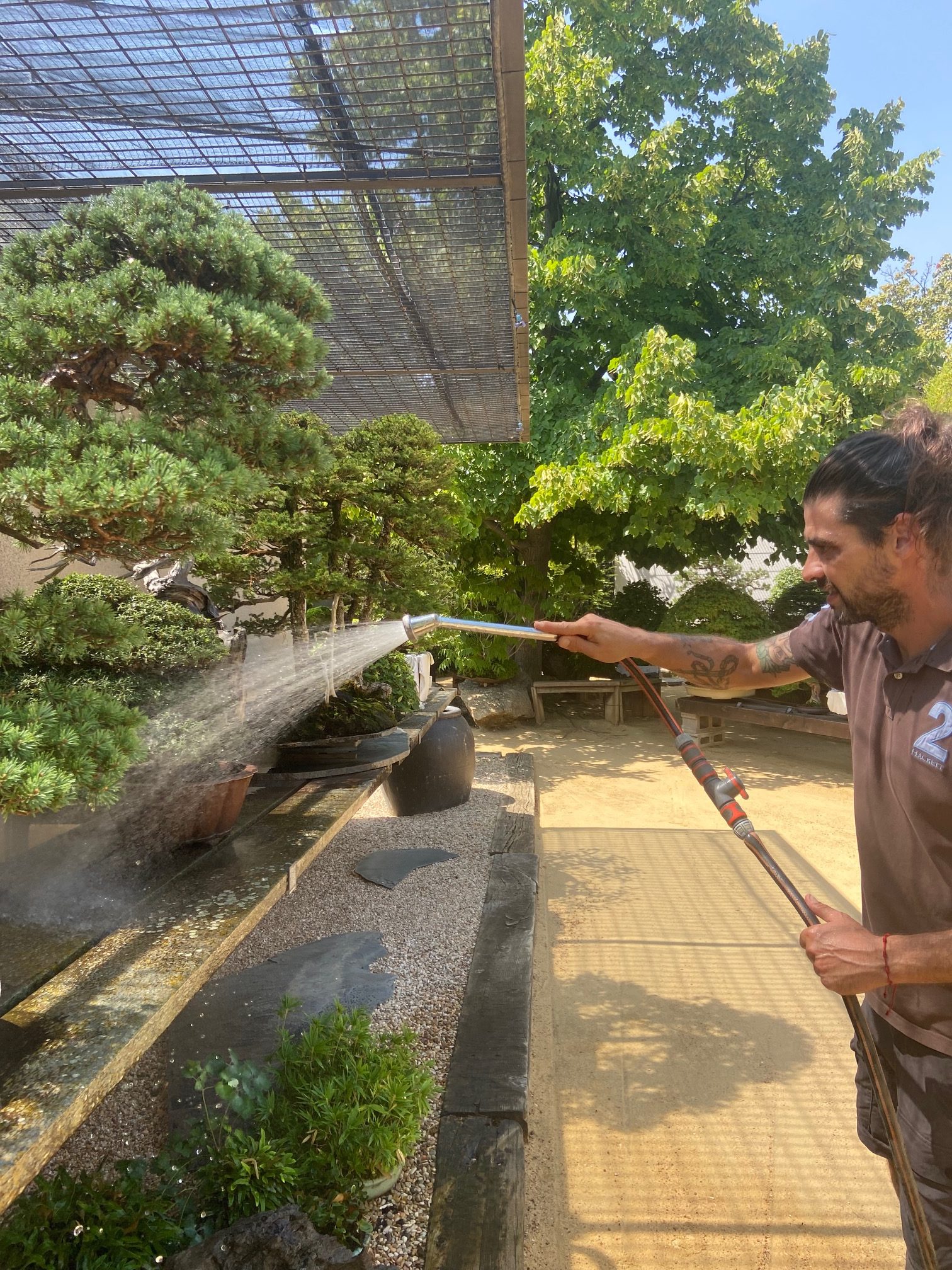
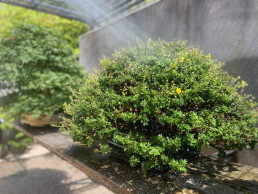
Llevamos una semana de mucho calor,, el riego lo ocupa todo.; nuestro tiempo y nuestra energía. Para saber regar hace falta experiencia,…en Japón para regar necesitas una formación de unos tres años.
Cuando te pones frente a un bonsái y tomas la decisión de regarlo o no, tienes en cuenta algunos factores; último riego, ubicación, época del año, especie, si el sustrato drena bien, profundidad de la maceta, estado general, experiencia en los días anteriores… todo esto a 40 grados y con un número considerable de arboles por regar. Si le añadimos que las nuevas generaciones riegan escuchando reguetón o el ultimo podcast sobre fenómenos UFO…igual habría que ampliar la formación unos cuantos años más…
Pero con la experiencia, la cosa no es para tanto, la decisión se toma muy rápido y el resto del tiempo aprovechas para ver los árboles, el jardín…observar las plantas que nacen en las traviesas o en las piedras. En estos días invertir tanto tiempo en algo, concentrare en una sola cosa y darle el tiempo que necesita puede ser terapéutico y cuando la temperatura no es tan alta hasta lo disfrutas.
Watering takes up all our time and energy. To know how to water properly, you need experience. It takes about three years of training to learn how to water in Japan.
When you stand in front of a bonsai and decide to water it or not, you take a number of factors into account: when it was last watered, its location, the time of year, the species, if the substrate drains well, the depth of the pot, its general condition, your experience in previous days… all this at 40 degrees and with a considerable number of trees to water. If we add to that the fact that the younger generations water while listening to reggaeton or the latest podcast on UFO phenomena… maybe we should extend the training by a few more years…
But with experience, it’s not such a big deal, the decision is made very quickly and the rest of the time you can enjoy looking at the trees, the garden… observing the plants that grow on the sleepers or stones. These days, investing so much time in something, concentrating on one thing and giving it the time it needs can be therapeutic, and when the temperature isn’t so high, you can even enjoy it.
Nombres/Names
Los nombres son importantes, de pequeños lo primero que aprendemos a nombrar es lo que mas nos importa. En el jardín tenemos nombres para todos los árboles. Según su procedencia: ” el junípero de kimura” (hay varios juníperos de Kimura, pero solo a uno lo llamamos así) “la zelcova de Gabriel García Márquez” (y su historia…) “el kaede de Kato”….y según la especie cuando solo hay uno: “el procumbens”, “el arakawa”,” el shirasawanum”…
Tenemos otro tipo de nombres, los míticos, heredados de un pasado que alguno ni hemos vivido: “el hermano pequeño” y “el hermano mayor” dos pinos albares de los primeros diseños de Luis que estaban plantados en kurama y se hicieron famosos, “el luchador de sumo”; un acebuche al que puso nombre Kobayashi mientras imitaba la postura de un luchador, “la Medusa” de Luis, un haya de melena imponente, o” la bailarina” un pino blanco bunjin que parece que está bailando.
Por último, están los nombres de estar por casa; estos surgen de un momento de necesidad o de inspiración (según se mire) de uno de nosotros. En esta categoría tenemos al pulpo, el flying rock, el no manzano, el antenas, el saca ojos, el ex feo, …y una larga lista de la que no estamos orgullosos.
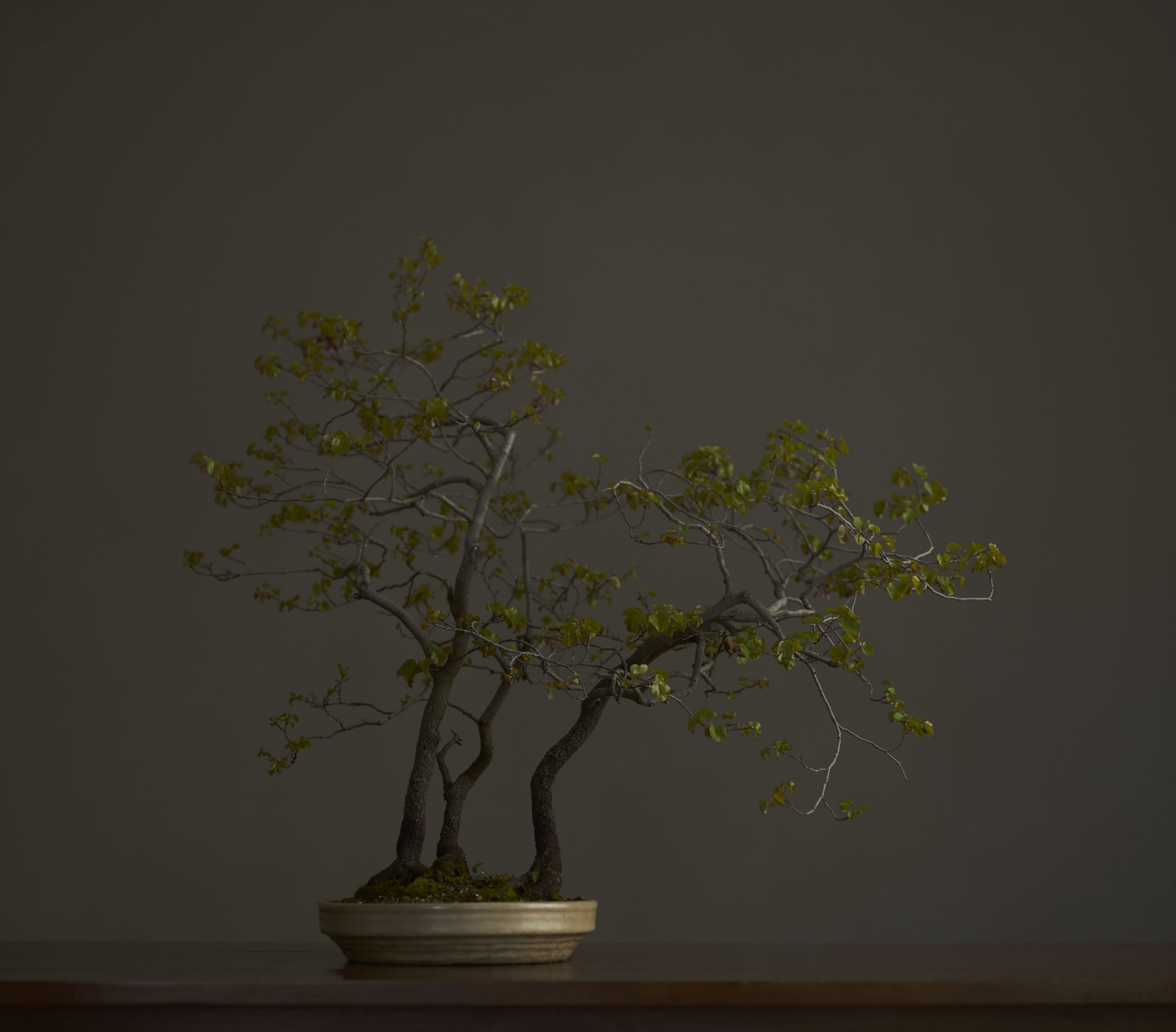
Al de la foto, un grupo de cercis silicuastrum, Luis le puso hace unos días “el castigado”. Estos días está al fondo del vivero, resguardado del sol… cree que deberíamos darle una ubicación más digna.
.
Names are important. As children, the first thing we learn to name is what matters most to us. In the garden, we have names for all the trees. Depending on their origin: ‘Kimura’s juniper’ (there are several Kimura junipers, but we only call one of them that), ‘Gabriel García Márquez’s zelkova’ (and its story…), ‘Kato’s kaede’… and depending on the species when there is only one: ‘the procumbens’, ‘the arakawa’, ‘the shirasawanum’…
We have other types of names, the mythical ones, inherited from a past that some of us have not experienced: ‘the little brother’ and ‘the big brother’, two Scots pines from Luis’s early designs that were planted in Kurama and became famous, ‘the sumo fighter’; a wild olive tree that Kobayashi named while imitating the posture of a fighter, Luis’s ‘Medusa’, a beech tree with an imposing mane, or ‘the ballerina’, a bunjin white pine that looks like it is dancing.
Finally, there are the everyday names; these arise from a moment of necessity or inspiration (depending on how you look at it) from one of us. In this category we have the octopus, the flying rock, the non-apple tree, the antennae, the eye-gouger, the ex-ugly… and a long list that we are not proud of.
The one in the photo, a group of cercis silicuastrum, was named ‘the punished one’ by Luis a few days ago. These days it is at the back of the nursery, sheltered from the sun… he thinks we should give it a more dignified location.

Equipo/Team
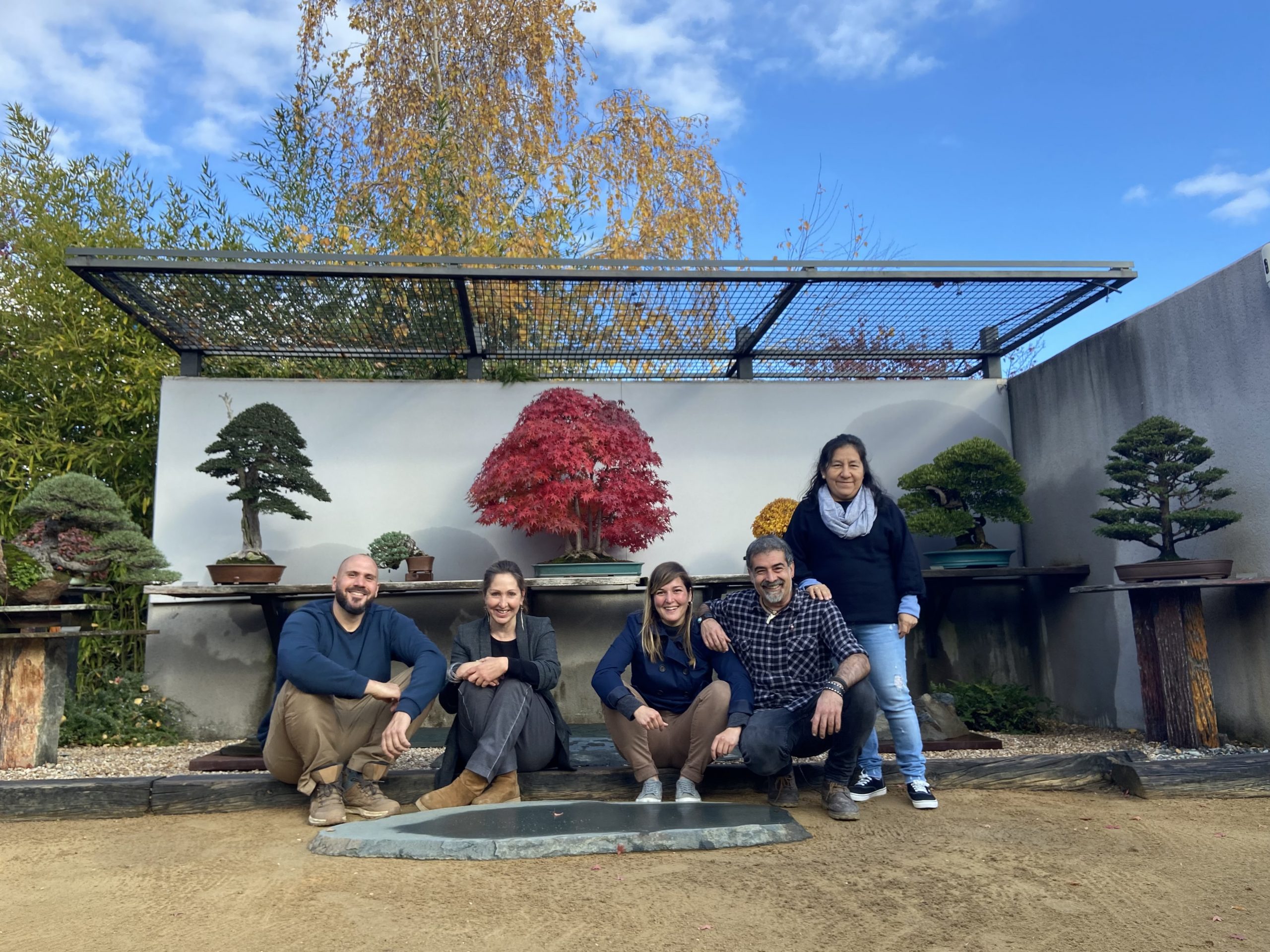
Esta es la foto del equipo en el otoño de 2021, no hemos vuelto a hacernos otra …aquí faltan personas fundamentales; Mario estaba entonces y siempre (pero no en la foto), Alejandro aún no había llegado…no es la época de nuestros primeros aprendices Rober y Álvaro…ahora Sara no está.
No es siempre el mismo equipo, pero la foto sirve para hacer un homenaje a las personas que están detrás de todas las historias que contamos aquí. Los que cuidan de los árboles y mantienen este jardín para que la gente pueda seguir disfrutándolo.
This is a photo of the team in the autumn of 2021. We haven’t taken another one since then… Some key people are missing here: Mario was there then and always has been (but not in the photo), Alejandro hadn’t arrived yet… It’s not the era of our first apprentices, Rober and Álvaro… Now Sara is gone.
It’s not always the same team, but the photo serves as a tribute to the people behind all the stories we tell here. Those who care for the trees and maintain this garden so that people can continue to enjoy it.

Los árboles/The trees


Los árboles
El bonsái es una forma de mirar. Cuando miras un bonsái, vuelves a un lugar en el que una vez viste un árbol; la higuera que crecía en el patio de una casa, un pino descolgándose de un acantilado recuerdo de un viaje por carretera, las encinas de una dehesa por la que solías pasear o la primera vez que entraste en un hayedo…
Cada árbol nos lleva al lugar del que viene, nos lleva de vuelta a la naturaleza, al momento que vivimos en ella. Cuando nos visitan personas mayores nos damos cuenta de lo importante que han sido los árboles en sus vidas. Todos tienen algún recuerdo relacionado con ellos, se emocionan recordando.
La parte que corresponde a este arte es captar la esencia del árbol, provocar esa emoción, ese recuerdo. La otra parte, nos corresponde a todos; hacer posible que las generaciones futuras sigan teniendo recuerdos ligados a los árboles, a la naturaleza.
El haya, el árbol madre, mi árbol más querido. Sus hojas al caer y acumularse, producen el suelo más fértil.
Luis Vallejo. «a los pinos el viento»
The trees
Bonsai is a way of looking. When you look at a bonsai, you go back to a place where you once saw a tree; the fig tree that grew in the courtyard of a house, a pine tree overhanging a cliff that reminds you of a road trip, the holm oaks in a dehesa where you used to walk, or the first time you entered a beech forest…
Each tree takes us back to the place it came from, it takes us back to nature, to the moment we lived in it. When older people visit us we realise how important trees have been in their lives. They all have some memory related to them, they are moved by remembering.
The part that corresponds to this art is to capture the essence of the tree, to provoke emotion. The other part is up to all of us; to make it possible for future generations to continue to have memories linked to trees, to nature.
The beech, the mother-tree, the tree dearest to me. Its fallen, piled-up leaves produce the most fertile soil.
Luis Vallejo. «The Wind Among the Leaves»

"Hay que tener agallas"/ "It take galls"


Como todos los años, el roble está lleno de agallas. Parecen pequeños frutos.
Cada vez que paso cerca pienso en la expresión “tener agallas”; que podría querer decir que las plantas son valientes por la capacidad que tienen para defenderse. Porque las agallas son eso, una defensa ante el ataque de algún insecto, signo del mecanismo de defensa de la planta…está bien que tengan agallas. Descubro que existe una ciencia que lo estudia; la cecidología, una colección de seis mil muestras en el Museo de Ciencias Naturales y que se puede saber que insecto la ha provocado en función de la forma que tenga.
Pero si algo llama la atención es la perfección absoluta de la Naturaleza porque la planta al defenderse del ataque forma una estructura para aislar la amenaza que a su vez sirve al intruso de cobijo y alimento hasta completar su desarrollo.
La decepción vino después cuando supe que la expresión viene del parecido de las agallas de los robles con los testículos, símbolo de valentía y coraje…así que en realidad la expresión es parecida a “tener pelotas”…todo menos poético…
Like every year, the oak tree is full of galls. They look like small fruits.
There is an expression in Spanish «it take galls», similar to «It take guts». Every time I pass by the tree I think of the expression; which could mean that plants are brave because of their ability to defend themselves. Because that’s what galls are, a defence against an insect attack, a sign of the plant’s defence mechanism… it’s good that they have galls. I discovered that there is a science that studies it; cecidology, a collection of six thousand samples in the Museum of Natural Sciences, and that you can tell which insect has caused it by the shape it has.
But if anything is striking, it is the absolute perfection of Nature, because the plant, when defending itself from the attack, forms a structure to isolate the threat, which in turn serves the intruder as shelter and food until it completes its development.
The disappointment came later when I found out that the expression comes from the resemblance of the gills of the oaks with the testicles, symbol of bravery and courage… so in reality the expression is similar to ‘having balls’… anything but poetic…

The pink lotus


Durante el verano todo parece peor; los árboles luchando contra el calor sofocante de Madrid, nosotros con aspecto de beduinos, el jardín descolocado, la tienda desmontada y el taller con las persianas bajadas. Solo hay algo que mejora en esta temporada, lo único que está en su momento de esplendor. Los estanques.
Han estado en el jardín desde el principio, pasan altibajos; en algún momento y en función de quien los cuida, lucen espectaculares o son simples láminas de agua estancada.
Como tantas otras cosas, se trata de un mundo apasionante con mil posibilidades. Cuando te sumerges en este mundo, aprendes sobre valores de ph y nitritos, a distinguir plantas, tipos de peces, y sobre el fascinante mundo de los aspiradores de lodo…pero nada te prepara para la explosión de vida en torno al agua; de pronto aparecen flores (que parecen de otro mundo),libélulas azules, ranas que deben haber cruzado calles y rotondas atraídas por el agua, peces que se reproducen a un ritmo exagerado y una mañana sin previo aviso te encuentras tres tortugas tomando el sol y a una garza real pescando.
No podemos dejar de mencionar a Tomás Escribano apasionado experto en plantas acuáticas y estanques, que nos ha enseñado tanto y ha introducido nuevas variedades de nenúfar a nuestros estanques.
During the summer everything seems worse; the trees struggling against the sweltering heat of Madrid, us looking like Bedouins, the garden untidy, the shop dismantled and the workshop with the blinds down. There is only one thing that is improving this season, the only thing that is at its peak. The ponds.
They have been in the garden since the beginning, they go through ups and downs; at some point and depending on who takes care of them, they look spectacular or they are a simple water sheet of stagnant water.
Like so many other things, it is an exciting world with a thousand possibilities. When you immerse yourself in this world, you learn about pH and nitrite values, how to distinguish plants, types of fish, and the fascinating world of sludge vacuums… but nothing prepares you for the explosion of life around the water; suddenly there are flowers (that seem to be from another world), blue dragonflies, frogs that must have crossed streets and roundabouts attracted by the water, fish that reproduce at an exaggerated rate, and one morning without warning you find three turtles sunbathing and a grey heron fishing.
We cannot forget to mention Tomás Escribano, a passionate expert in aquatic plants and ponds, who has taught us so much and has introduced new varieties of water lily to our ponds.