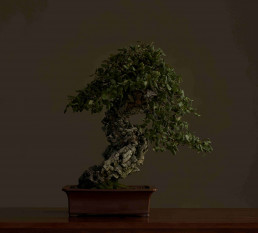
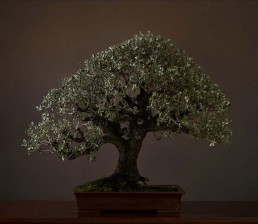
Tres Quercus y una dehesa.
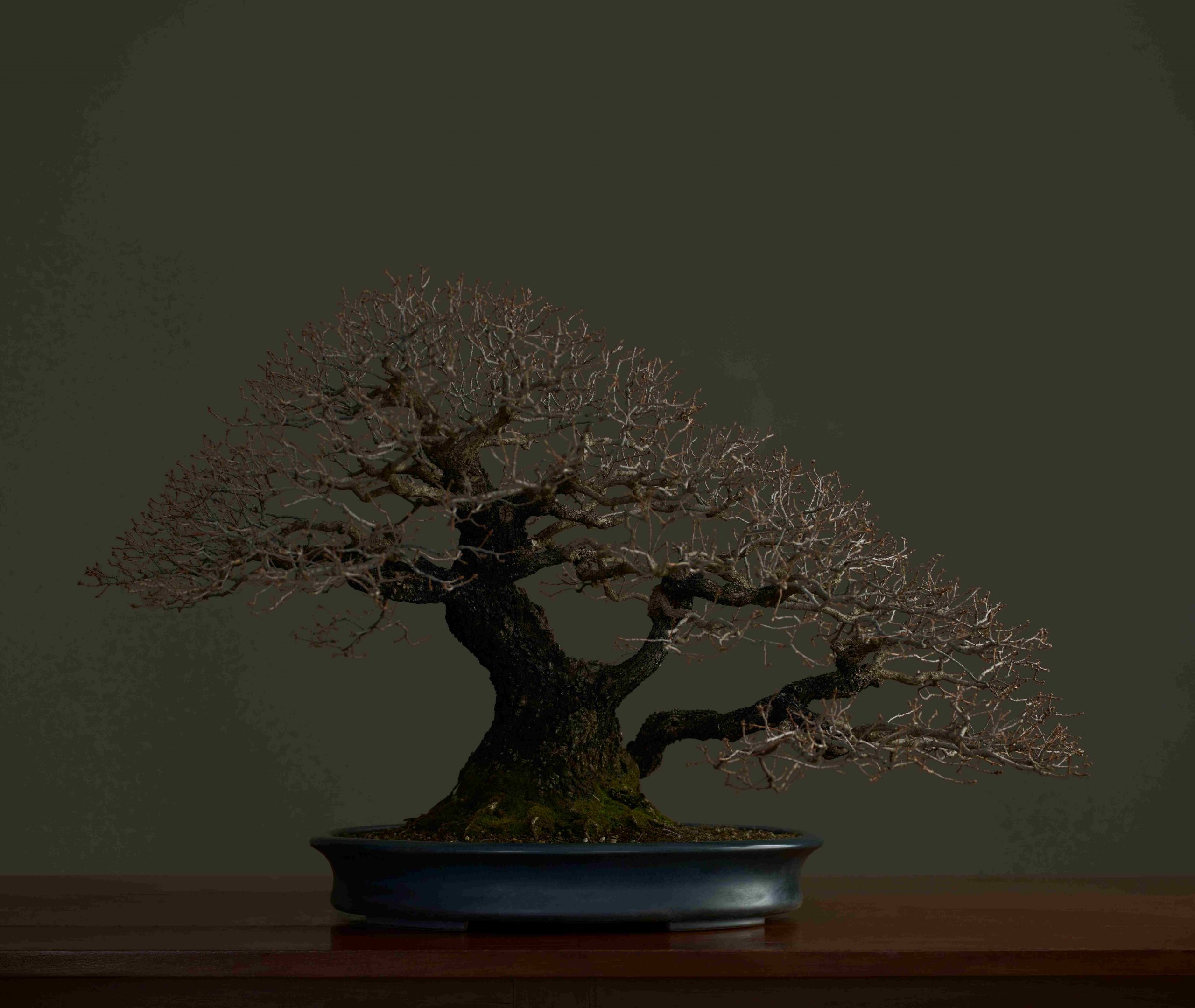
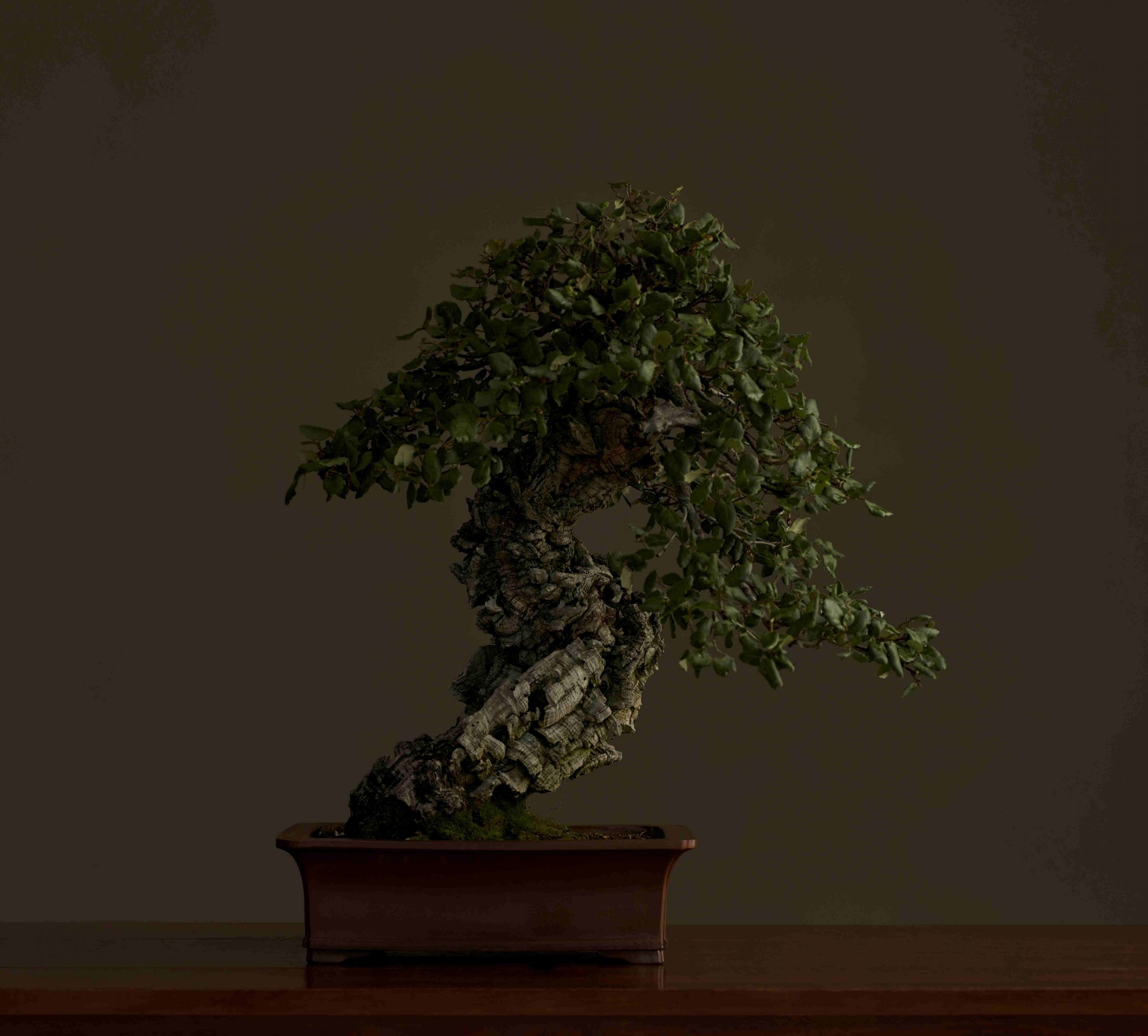
En el jardín, junto a la colección de árboles japoneses, se expone la colección de árboles autóctonos, ejemplos de flora mediterránea.
Este arte parte del profundo conocimiento de la naturaleza, del estudio del paisaje y sus árboles para así ser capaz de evocarlos en el bonsái. Los pinos albares, sabinas, olivos, encinas y alcornoques de la colección, son fruto de viajes recorriendo la geografía española, estudiándola y apreciándola.
Hoy como emblema de flora ibérica traemos a los tres quercus de la colección; Quercus ilex, Quercus faginea y Quercus suber. Hablar de los tres, es hablar de la dehesa española, un modelo único de interacción entre el hombre y el medio. Dehesa viene del latín “deffesa” o defensa… un sistema que crea sinergias interesantísimas entre agricultura, ganadería, medio ambiente y paisaje. Se crean estos pedazos aclarados de bosque mediterraneo, en los que prevalecen los árboles más interesantes, las herbáceas silvestres y se elimina gran parte del matorral. Son cortafuegos naturales de gran valor ecológico y social.
Son un mundo, un paisaje.
Millones de hectáreas de patrimonio cultural.
In the garden, alongside the collection of Japanese trees, you can see the collection of native trees, examples of Mediterranean flora.
This art stems from a deep understanding of nature and the study of the landscape and its trees, in order to be able to evoke them in bonsai. The Scots pines, junipers, olive trees, holm oaks and cork oaks in the collection are the result of journeys across Spain, studying and appreciating the country’s geography.
Today, as emblems of Iberian flora, we present the three Quercus species in the collection: Quercus ilex, Quercus faginea and Quercus suber. To speak of these three is to speak of the Spanish dehesa, a unique model of interaction between humans and the environment. The word ‘dehesa’ derives from the Latin ‘deffesa’, meaning ‘defence’… is a system that creates fascinating synergies between agriculture, livestock farming, the environment and the landscape. These patches of thinned Mediterranean woodland are created, where the most interesting trees and wild herbaceous plants prevail and much of the scrub is removed. They are natural firebreaks of great ecological and social value.
They are a world, a landscape.
Millions of hectares of cultural heritage.
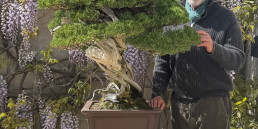
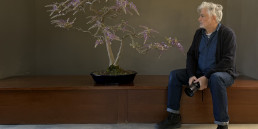

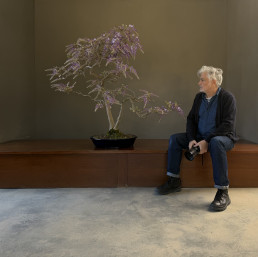
La foto del fotógrafo
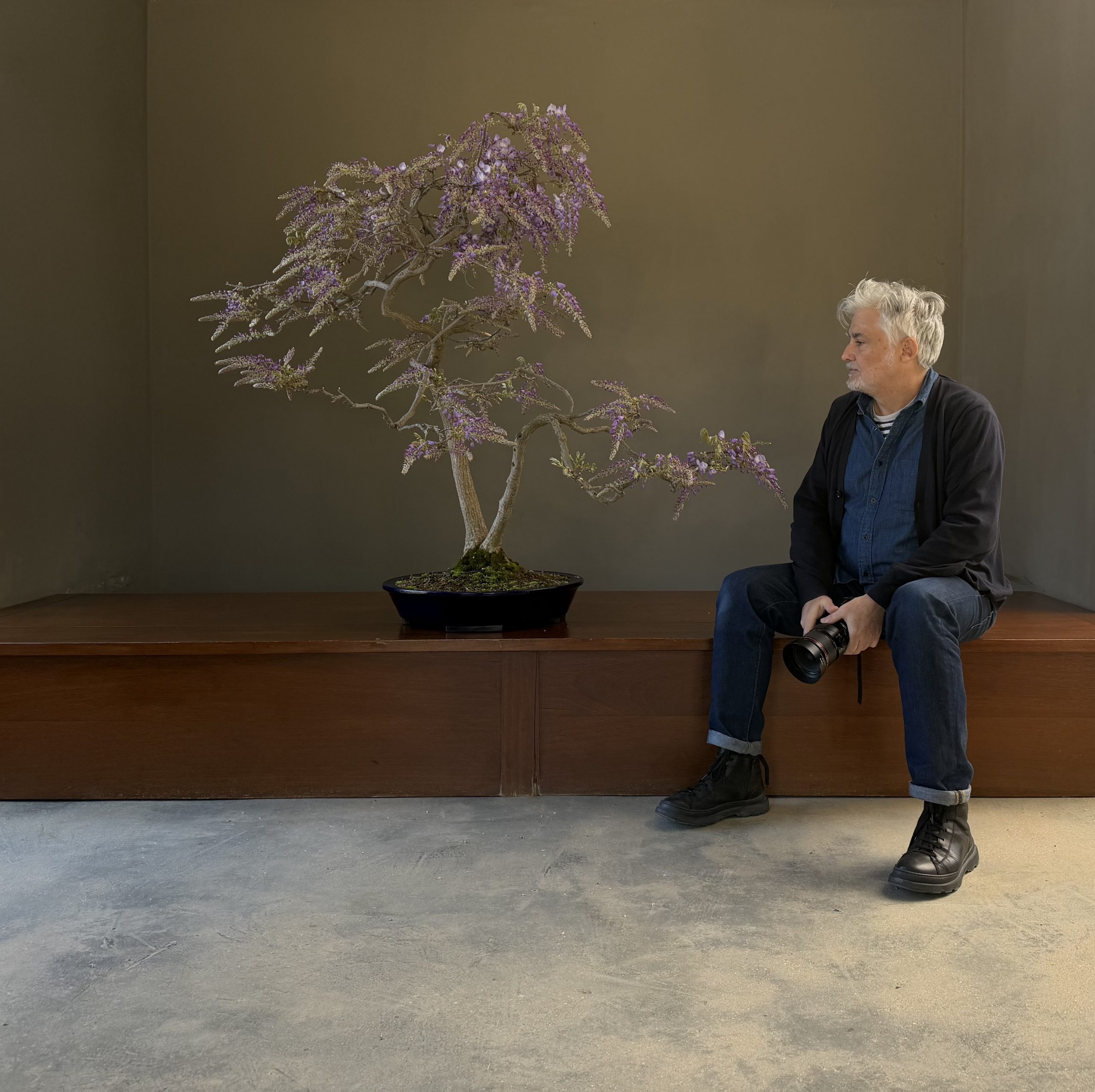
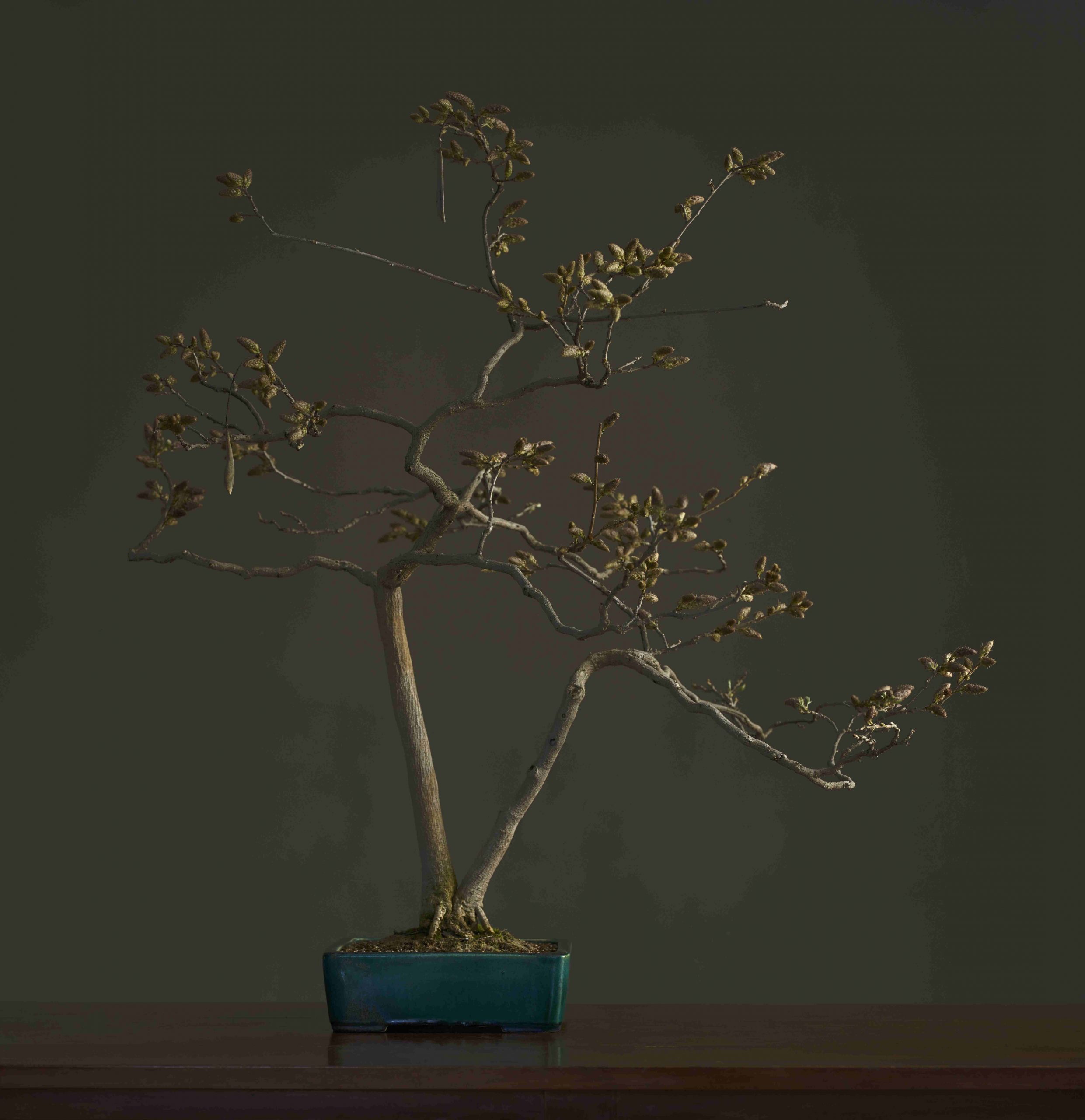
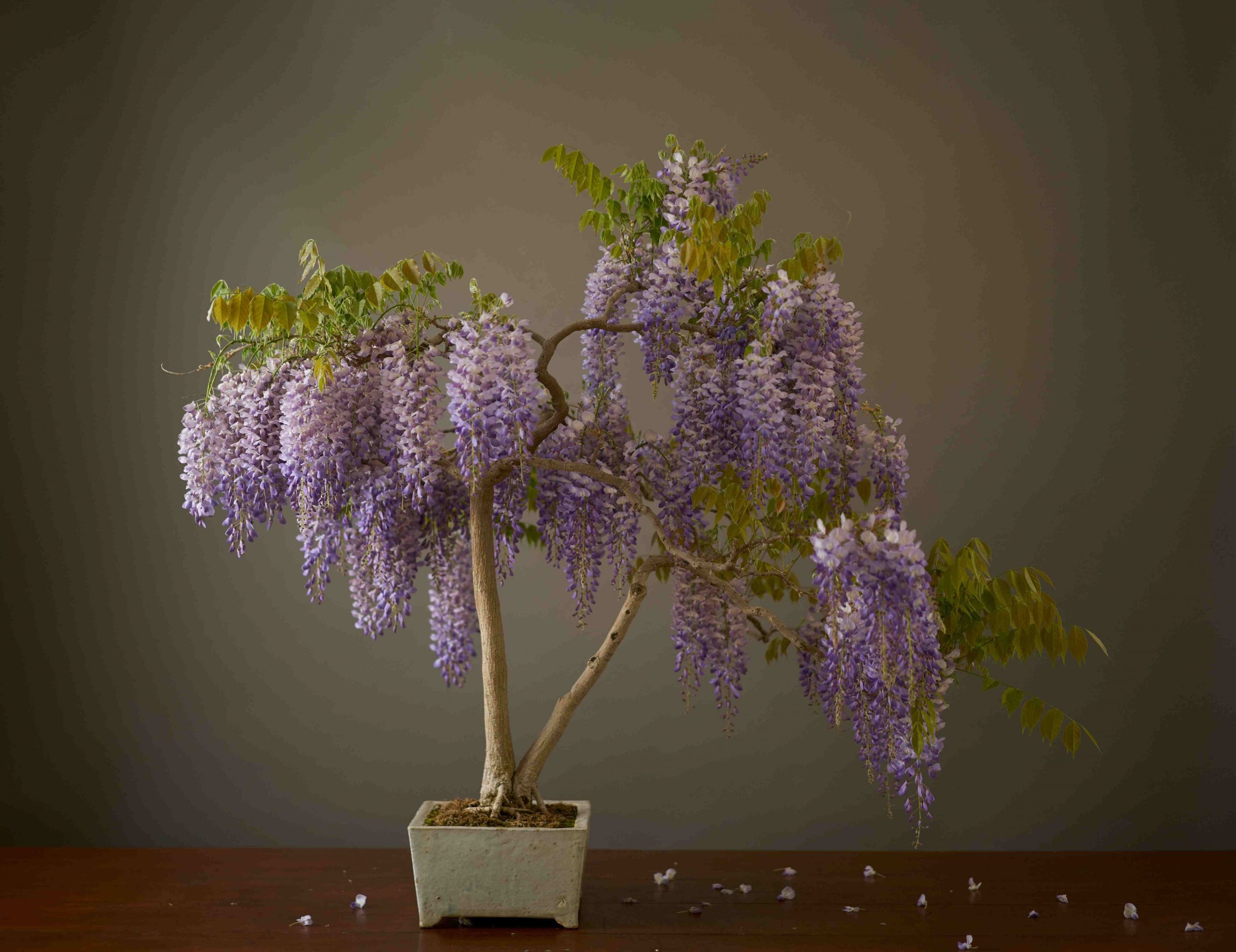
Fernando ;Maquieira llegó al jardín hace ya siete años, vino con el encargo de hacer fotografías para el libro de Luis «a los pinos el viento» y se quedó para siempre. Trajo consigo su universo de arte, barcos, museos, volcanes, islas, hormigas, arquitectura y paisaje.
Las fotografías las hace en nuestro tokonoma, aprovechando la luz natural que entra por el ventanal que tiene a su izquierda y desde el invernadero. Para el libro hizo fotos durante casi cuatro años, en todas las estaciones y en distintos momentos del día mientras Luis le contaba historias de los árboles. En sus fotos se ve el cambio de las estaciones, el paso del tiempo, los cambios de macetas, los días de sol y los nublados. Se ve su naturaleza y algo tan difícil de mostrar como es la concentración de arte y tiempo.
Ayer organizamos una sesión de fotos con los árboles de primavera. Como cuando te encuentras con viejos amigos, los árboles le cuentan lo que les ha pasado en el tiempo que no se han visto y él les hace fotos.
Fernando Maquieira arrived at the garden seven years ago; he came on assignment to take photographs for Luis’s book «The Wind among the Trees» and stayed for good. He brought with him his own world of art, ships, museums, volcanoes, islands, ants, architecture and landscape.
He takes his photographs in our tokonoma, making the most of the natural light streaming in through the large window to his left and from the greenhouse. For the book, he took photos for almost four years, across all the seasons and at different times of day, while Luis told him stories about the trees. In his photos, you can see the changing seasons, the passing of time, the changing pots, the sunny days and the cloudy ones. You can see their nature and something that is so difficult to show: the concentration of art and time.
Yesterday we organized a photo shoot with the spring trees. Just like when you meet up with old friends, the trees tell him what has happened to them since they last saw each other, and he takes their photos.
Aniversario del diario del jardín
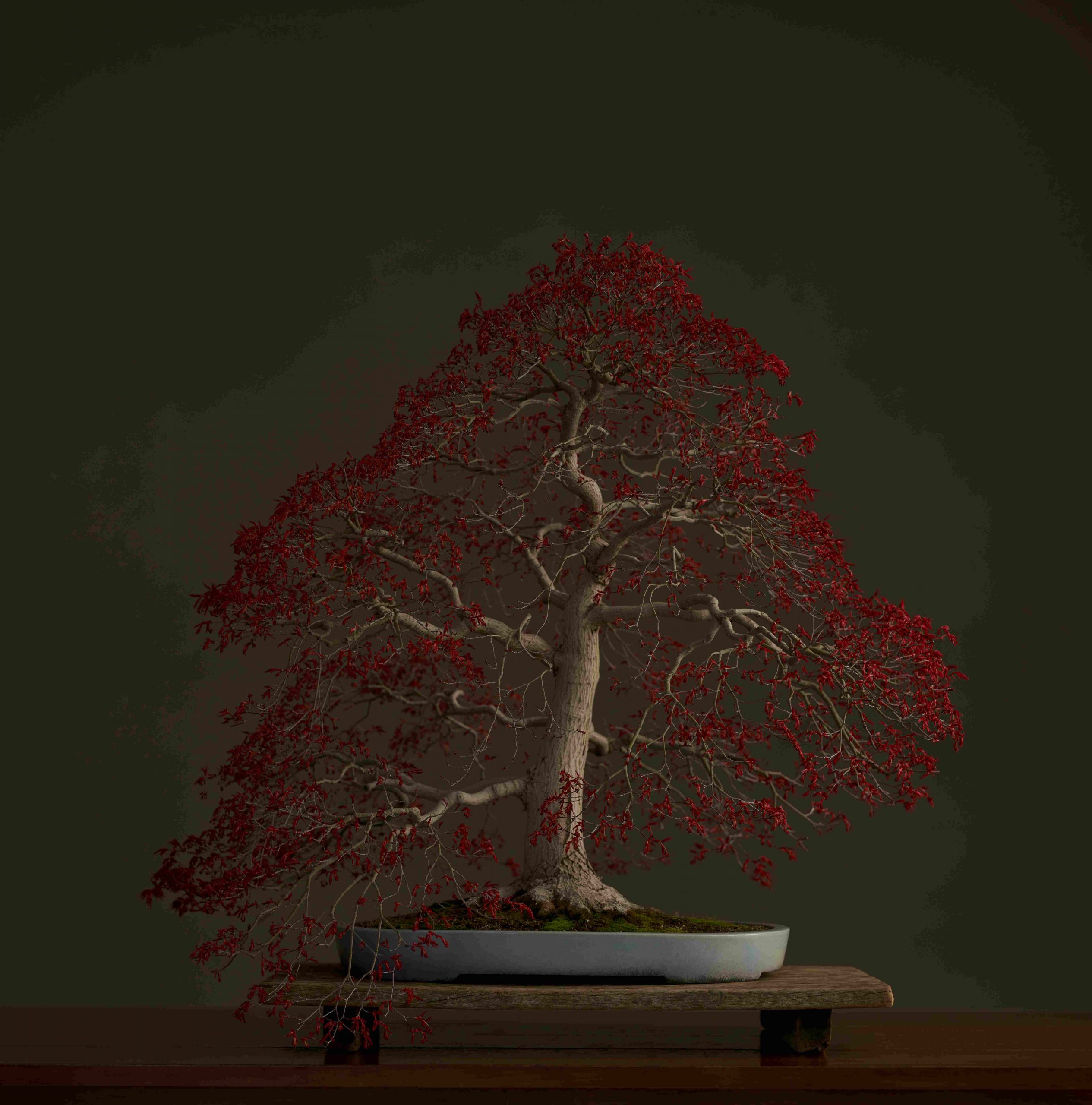
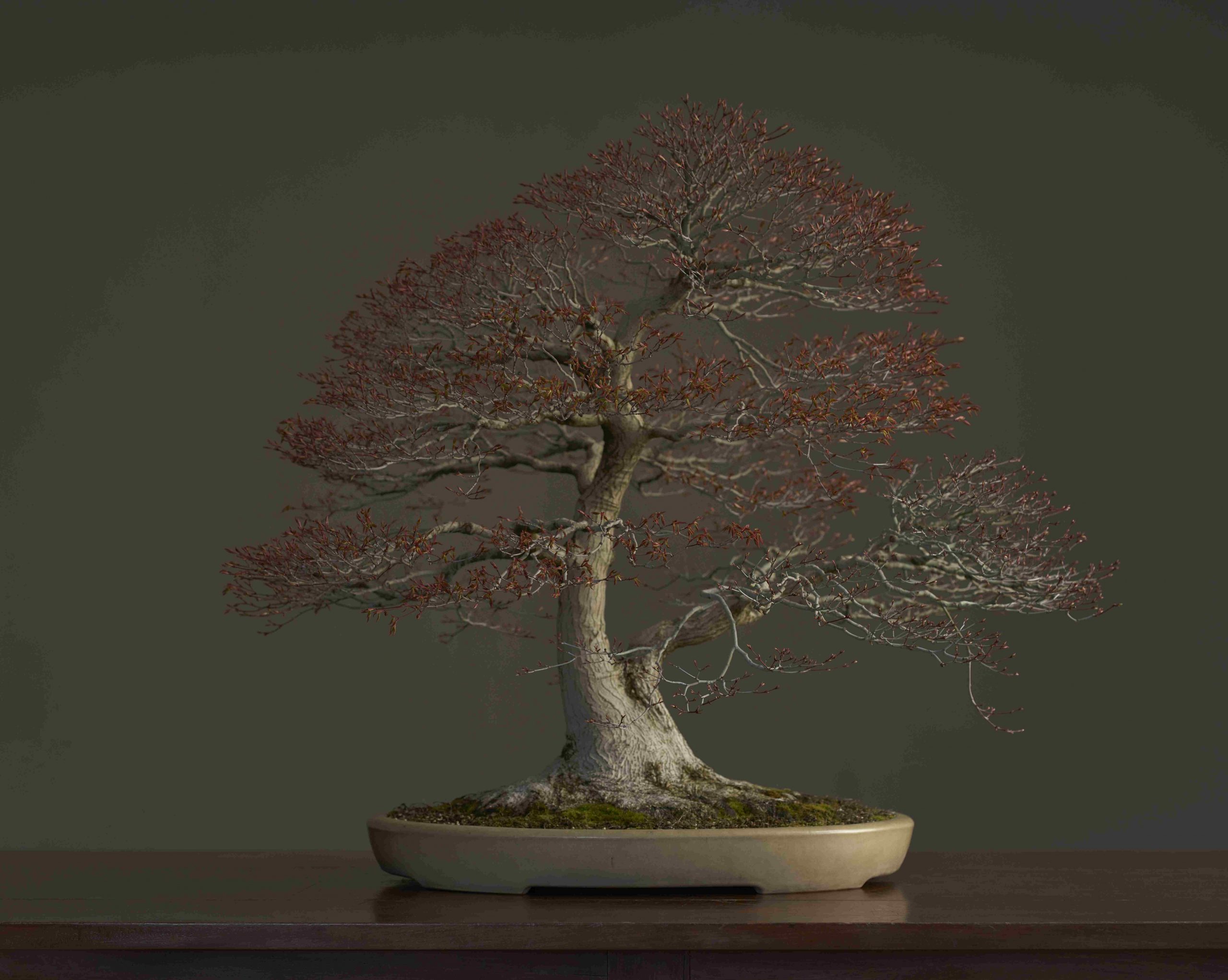
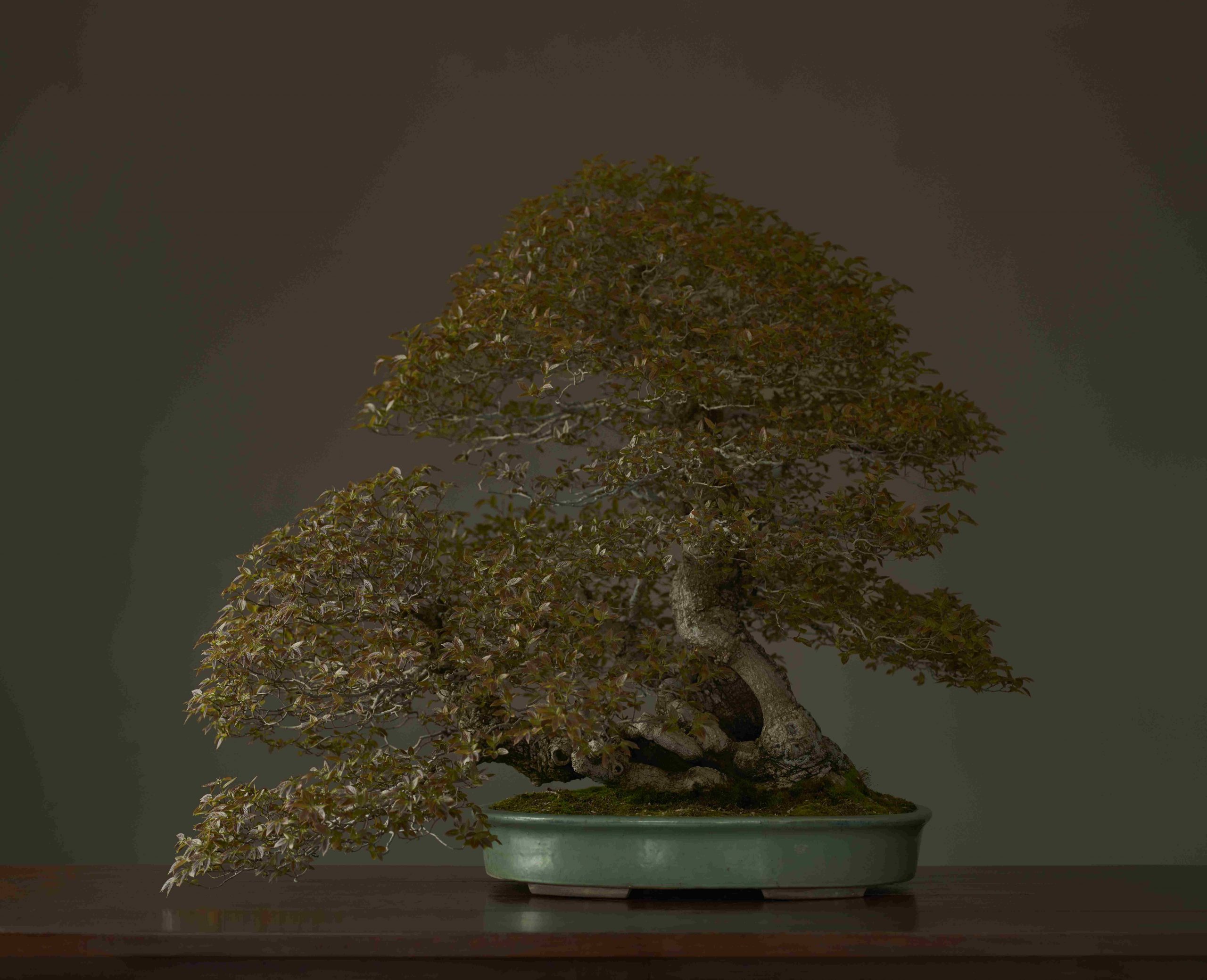
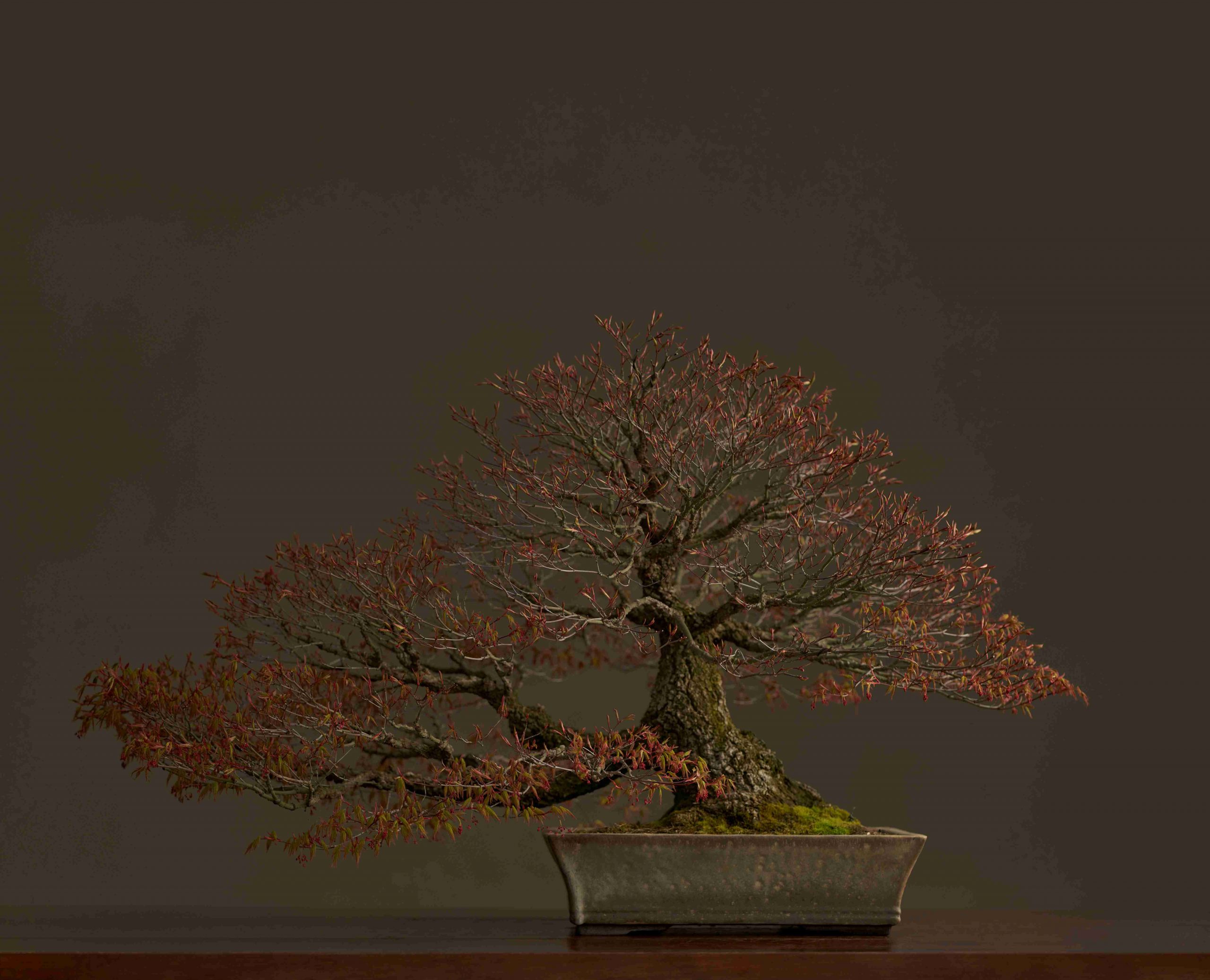
El principio de la primavera es emocionante. Todos los años se repite pero no nos cansamos. Las ramas de los caducos se llenan de brotes de colores; verdes dorados,rojos, rosados..este espectáculo es breve; dura hasta que empieza el siguiente cuando las hojas se desarrollan y con la luz del sol se ponen verdes.
De eso va este diario, de el paso de las estaciones y todo lo que nos pasa en ellas. Hoy hace un año que lo empezamos.
Gracias a los que estáis ahí.
The start of spring is exciting. It happens every year, yet we never tire of it. The branches of the deciduous trees are covered in colourful buds—golden-green, red, pink… This spectacle is fleeting; it lasts only until the next one begins, when the leaves unfurl and turn green in the sunlight.
That is what this diary is about: the passing of the seasons and everything that happens to us during them. It was a year ago today that we started it.
Thank you to all of you who are here.
El junípero de Kimura
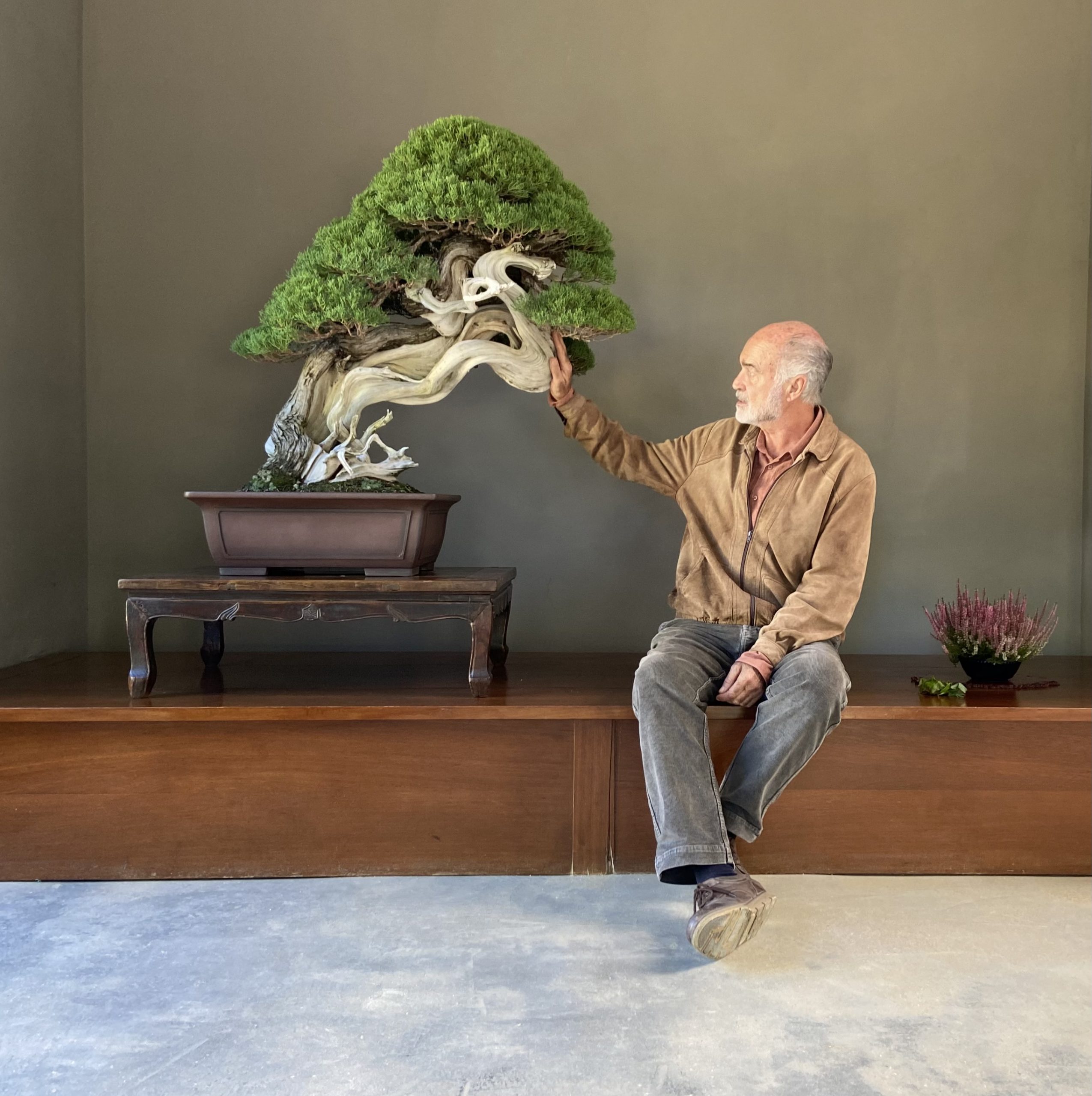
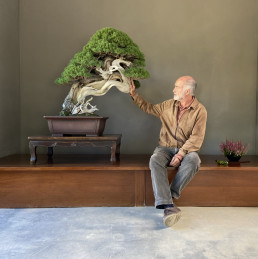
En la colección hay algunos árboles ejemplares y este es sin duda uno de ellos. Pocas veces ha estado en el tokonoma, ya que tiene un lugar de honor presidiendo la exposición, pero este mes Mario ha estado trabajándolo y aprovechamos para hacerle una foto con Luis. Llevan juntos muchos años, es uno de esos árboles con los que tiene una conexión especial.
Lo que mas llama la atención es su tronco, su vejez…dicen que tiene 300 años, cada vez que lo digo me acuerdo de la anécdota sobre un esforzado guía de museo, que en sus explicaciones sumaba a la edad de la obra, los días que llevaba trabajando e informaba al público con precisión suiza; ..»esta vasija tiene tres mil años, dos meses, tres semanas y un día…»
Es uno de esos árboles que tienen la capacidad de transportarnos, de conectarnos con la naturaleza. A los que somos de estos lares, nos lleva a pensar en lugares como el Sabinar de El Hierro y a quienes no conocen ese maravilloso lugar, les hace pensar en otros lugares únicos, con sabinas o juníperos expuestos durante años a los elementos.
Nosotros nos referimos a él como “el junípero de Kimura”, tenemos varios juníperos del gran Masahiko Kimura, pero solo a este le llamamos así. Aquí es el junípero de Kimura por excelencia.
There are some exemplary trees in the collection, and this is certainly one of them. It has rarely been in the tokonoma, as it has a place of honour presiding the exhibition, but this month Mario has been working on it and we took the opportunity to take a photo of it with Luis. They have been together for many years, It is one of those trees with which he has a special connection.
What is most striking is its trunk, its old age… they say it is 300 years old, every time I say it I am reminded of the anecdote of a hard-working museum guide who, in his explanations, would add to the age of the piece the days he had been working and inform the public with swiss precision: ‘This pot is three thousand years, two months, three weeks and one day old…’.
It is one of those trees that has the ability to transport us, to conect us with nature. For those of us who are from these parts, it makes us think of places like el Sabinar de El Hierro and for those who don’t know this wonderful place, it makes them think of another unique place with junipers or sabinas exposed to the elements.
We refer to it as ‘Kimura’s juniper tree’, we have several junipers by the great Masahiko Kimura, but only this one is called that. Here it is the Kimura juniper par excellence.
Piedra, paisajes y árboles/ Stone,landscapes and trees
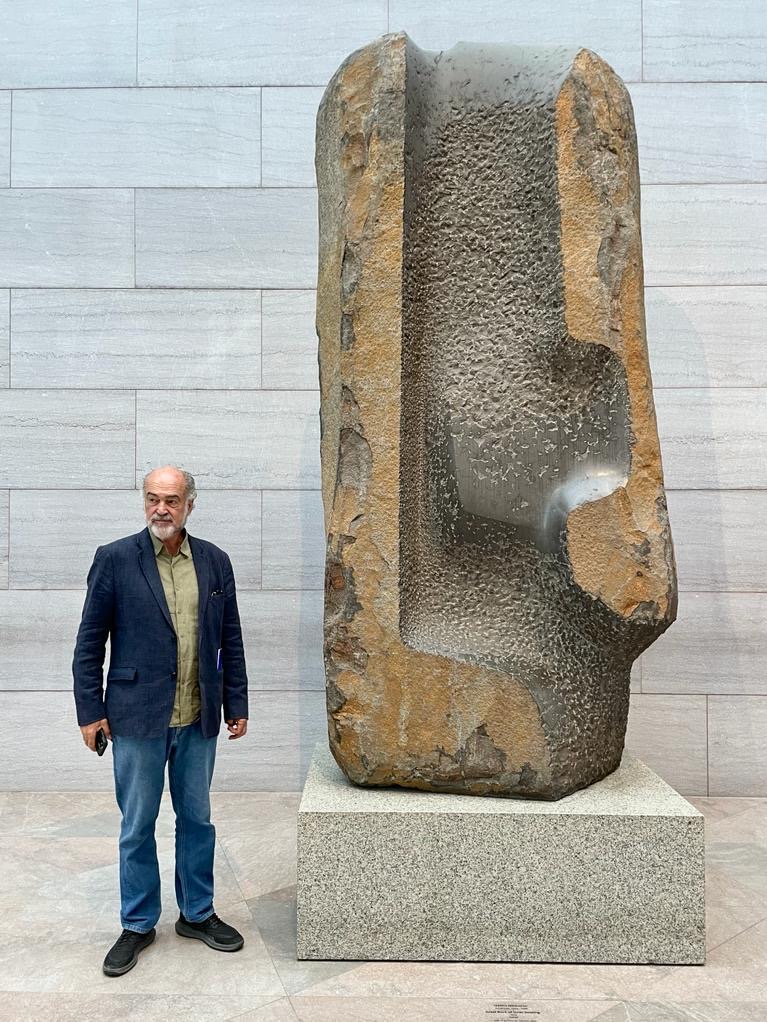
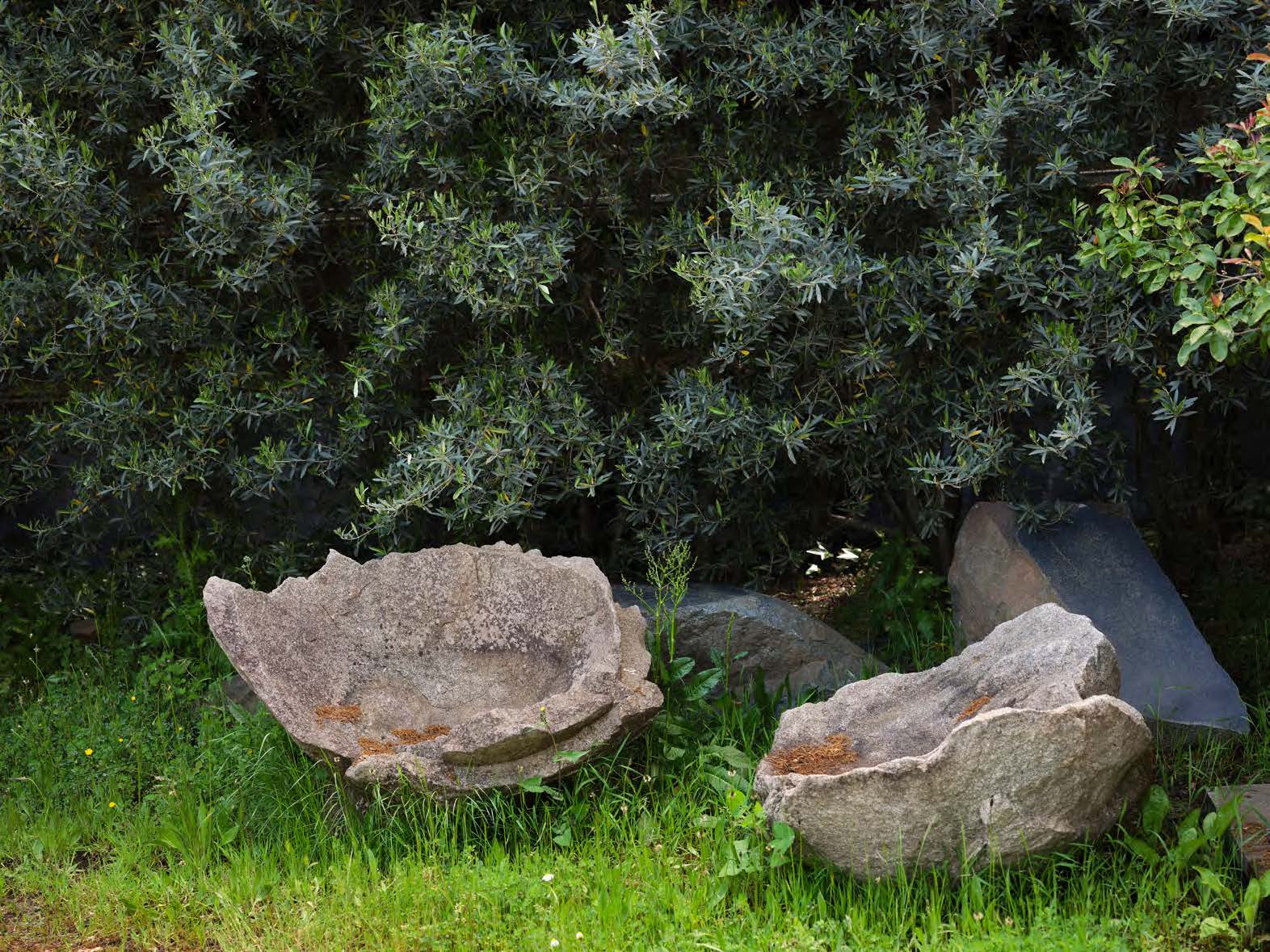
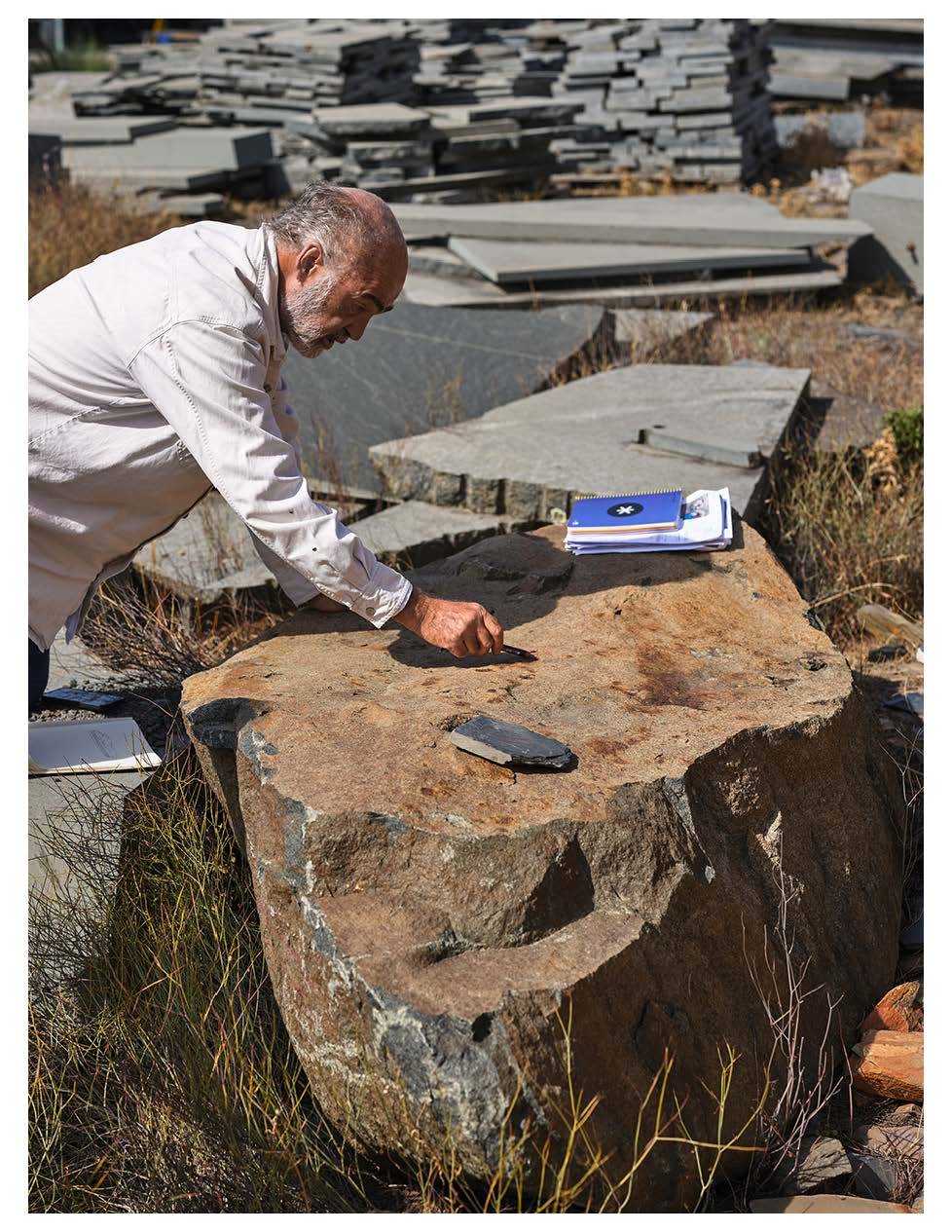
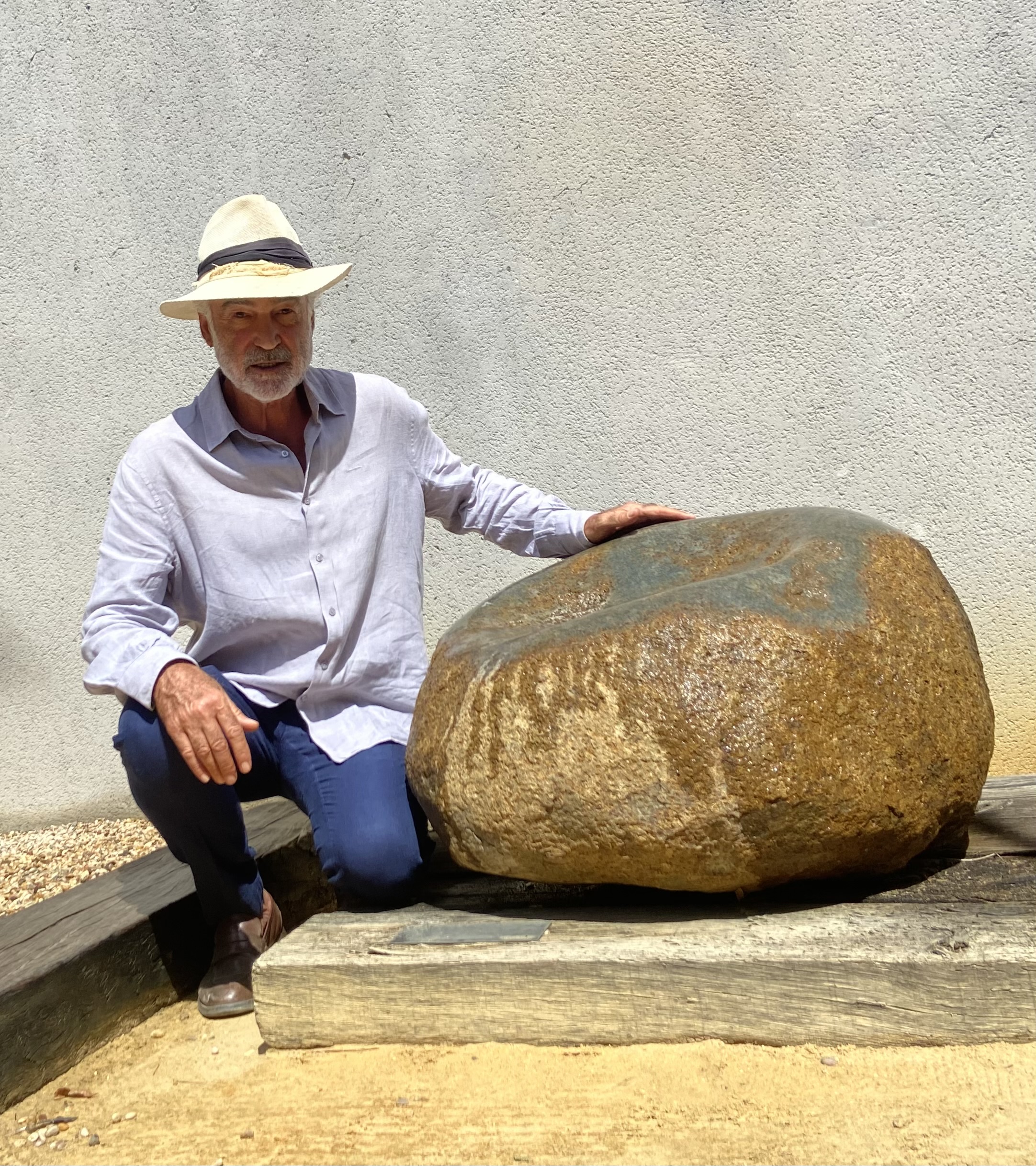
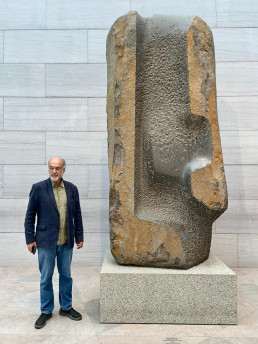
La primera foto es del 2023, Luis en Washington en la National Gallery of Art junto a una obra de Isamu Noguchi, coincidiendo con el viaje que hicimos para la presentación de su libro “a los pinos el viento”. Las siguientes son de su estudio de paisajismo, trabajando en la cantera y aquí en el jardín.
La piedra es una constante en la obra y en la vida de Luis, y aquí en el jardín no podía ser de otra manera. La piedra nos acompaña siempre; desde los grandes bancos de la entrada, pasando por los pedestales de pizarra que sostienen los árboles, las esculturas que salpican la exposición o la piedra de agua del estanque. Tenemos mil historias ligadas a estas piedras; el bolo de granito que acompaña al junípero de Kimura que estuvo a punto de viajar a un proyecto de Renzo Piano en Nueva York, las piedras espejo, negro encina, que instaló Luis junto al alcornoque o el paisaje grande de piceas que llegó hace años de Japón con la maceta partida y que puso en una laja de cuarcita de Segovia, convirtiéndolo en un punto de encuentro entre oriente y occidente…
La piedra con su presencia silenciosa es el contraste perfecto a la vitalidad de los árboles, a su naturaleza cambiante y demandante de cuidados. Para nosotros es un recordatorio de que pertenecemos a algo más grande que la propia colección. Pertenecemos a su universo de piedra, paisajes y árboles.
The first photo is from 2023, Luis in Washington at the National Gallery of Art next to a work by Isamu Noguchi, coinciding with the trip we made for the presentation of his book ‘The Wind among the Leaves”. The following are from his landscaping studio, working in the quarry and here in the garden.
Stone is a constant in Luis’ work and life, and here in the garden it could not be otherwise. Stone is always with us; from the large benches at the entrance, to the slate pedestals that support the trees, the sculptures that dot the exhibition or the water stone in the pond. We have a thousand stories linked to these stones; the granite boulder that accompanies the kimura juniper tree that was about to travel to a Renzo Piano project in New York, the oak mirror black stones that Luis installed next to the cork oak or the large landscape of spruce trees that arrived years ago from Japan with the pot broken and that he placed on a quartzite slab in Segovia, turning it into a meeting point between East and West…
The stone with its quiet presence is the perfect contrast to the vitality of the trees, to their changing and demanding nature and for us it is a reminder that we belong to something bigger than the collection itself. We belong to its universe of stone, landscapes and trees.

La joyería/The jewellery shop

Este Museo no es un jardín…es una joyería.
Todo se ordena y concibe para exponer y magnificar la belleza de los Bonsáis.
El Jardín se diseña con estética Wabi Sabi. Imperfección, fragilidad, endeblez…Con una concepción minimalista en los elementos con los que se compone. Muro, umbráculo, estanque…Y brutalista en el carácter de los materiales usados….Hormigón, roca, albero, agua…
A la manera de Kyoto…la forma de componer es asimétrica, como es concebida en los jardines y templos de la ciudad nipona.
El jardín de bonsáis de Luis Vallejo es un “jardín joyero” y también un “jardín fenomenológico” donde los sentidos adquieren un protagonismo relevante.
Jugando con la sorpresa y el efecto, el jardín de Bonsais expresa y contrapone opuestos; Color/Fondo/Textura, Sombra/Luz, Brillo/Mate, Quietud/Movimiento. Un baile de conceptos.
Para llegar al Miabi “capacidad de apreciar la belleza”. Para percibir, en los bonsáis de esta joyería…el efecto hermoso del viento y el tiempo como creador de drama, equilibrio y belleza.
Texto y dibujo del arquitecto Iñigo Ortiz @ortiz_inigo
This museum is not a garden… it is a jewellery shop.
Everything is arranged and designed to display and magnify the beauty of the Bonsai trees.
The Garden is designed with Wabi Sabi aesthetics. Imperfection, fragility, weakness… With a minimalist conception in the elements with which it is composed. Wall, umbraculum, pond…And brutalist in the character of the materials used….Concrete, rock, soil, water…
In the Kyoto way…the way of composing is asymmetrical, as it is conceived in the gardens and temples of the Japanese city.
Luis Vallejo’s bonsai garden is a “’jewellery garden”’ and also a “’phenomenological garden”’ in which the senses take on an important role.
Playing with surprise and effect, the Bonsai garden expresses and contrasts opposites; Colour/Background/Texture, Shadow/Light, Brightness/Matte, Stillness/Movement. A dance of concepts.
To reach the Miabi ‘ability to appreciate beauty’. To perceive, in the bonsai of this jewellery… the beautiful effect of wind and time as a creator of drama, balance and beauty.
Text and drawing by the architect Iñigo Ortiz @ortiz_inigo.