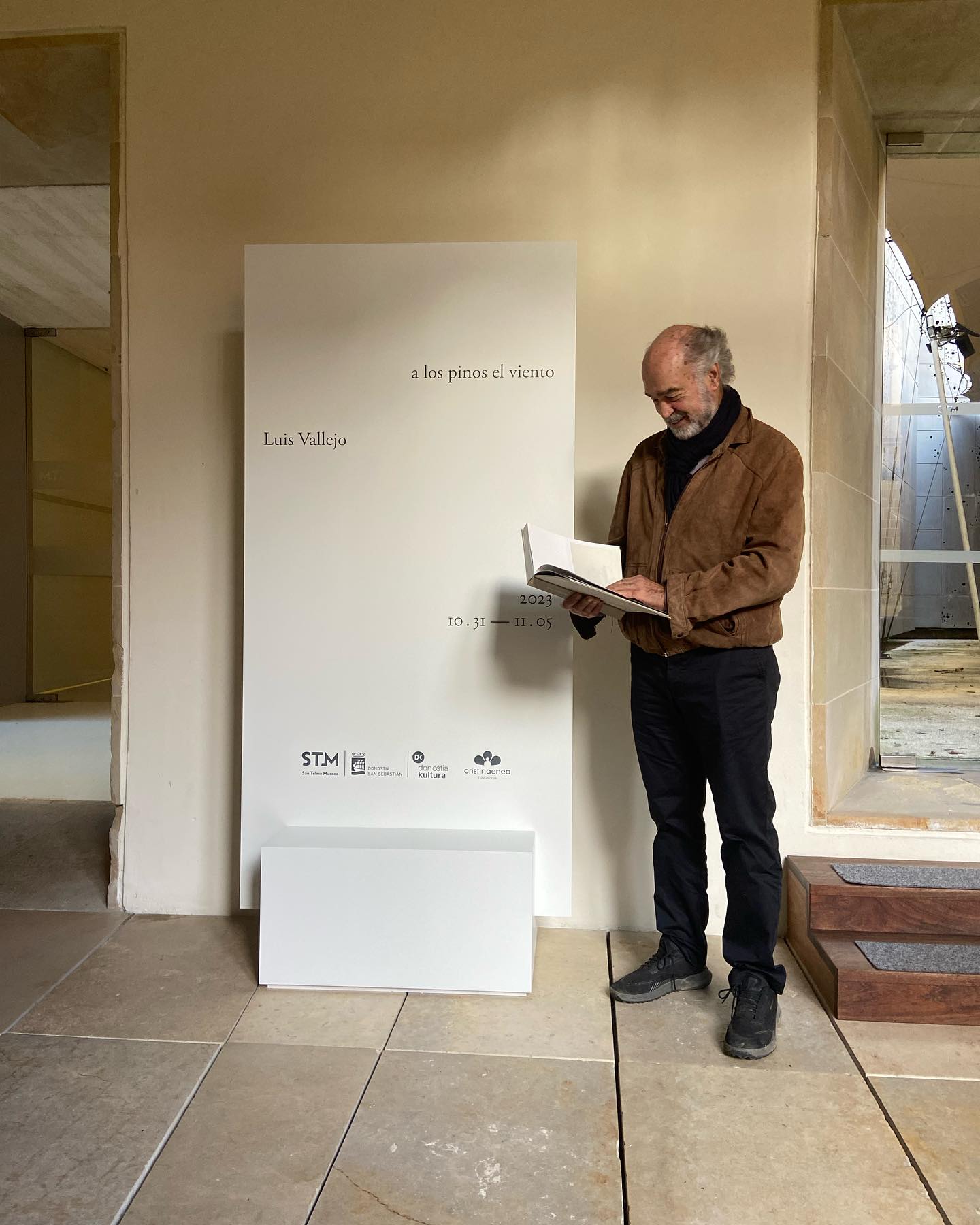

Oli
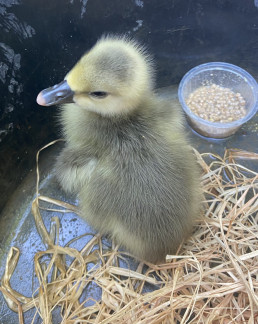


Oli.
Oli llego en una caja un mes de mayo. Un niño con un patito que había recogido en la calle frente al museo.
Se convirtió en nuestra sombra mientras regábamos en el jardín, o trabajábamos en el taller. La llamamos Oli (alguien decidió que era chica) porque apareció en la Avenida Olímpica.
Oli no paraba de crecer y se levantaba del suelo erguida de una manera muy diferente a la de un pato. Cada uno tenía una teoría, pero Google nos ayudó a identificar claramente a una cría de ganso salvaje. Para cuando lo supimos, Oli ya había decidido quien era su madre, su padre y los hermanos a los que atacar al primer descuido. Creamos una rutina de paseos por la mañana por el parque que rodea el museo para pastar, ante la sorprendida mirada de los vecinos. Empezó a nadar y poco a poco creció y le salieron unas preciosas alas. El paseo se transformó en vuelo rasante de vuelta al museo…
Cuando ya era adulta y nos dimos cuenta de que su tiempo con nosotros había terminado la llevamos a un lugar cercano donde un grupo de gansos vive junto a un lago. No hablo del “cielo de los gansos” (aunque si existe debe ser muy parecido) sino de un lugar real cerca del museo donde aún hoy, casi un año después, la visitamos y vemos cómo se separa del resto de gansos para venir a nuestro encuentro.
Oli arrived in a box one May. A boy with a duckling he had picked up in the street in front of the museum.
She became our shadow while we watered in the garden, or worked in the workshop. We called it Oli (someone decided it was a girl) because it appeared on the Avenida Olímpica.
Oli kept growing and stood upright in a very different way to a duck. Everyone had a theory, but Google helped us to clearly identify it as a baby wild goose. By the time we knew it, Oli had already decided who was his mother, father and siblings to attack at the first slip-up. We created a routine of morning walks in the park surrounding the museum to graze, to the amazed gaze of the neighbours. She began to swim and little by little she grew and sprouted beautiful wings. The walk turned into a gliding flight back to the museum…
When she was an adult and we realised that her time with us was over, we took her to a nearby place where a group of geese live by a lake. I’m not talking about ‘goose heaven’ (although if it exists it must be very similar) but a real place near the museum where even today, almost a year later, we still visit her and see how she separates from the rest of the geese to come and meet us.



Semana Santa/Easter

En el jardín la Semana Santa es tranquila, es tiempo para organizar el taller y hacer todo aquello que no se puede cuando esta todo el equipo trabajando.
A primera hora, antes de abrir, se disfruta del jardín vacío, tomando nota de lo que hay que hacer. Con estos días medio lluviosos el riego puede esperar al mediodía.
El taller necesita una mano de pintura tras los trasplantes y hay que ordenar las macetas que se apilan por todas partes…decido abonar los lotos y nenúfares que ya empiezan a brotar y traslado las plantas que tengo preparadas a la tienda. Rastrillo, limpio la entrada y ordeno la mesa de la tienda justo en el momento en que aparecen los primeros visitantes.
Las visitas en estos días suelen ser viejos conocidos, que aprovechan los días festivos y la primavera para ver la colección y gente de fuera que visita Madrid y se acerca a vernos. Con las horas de luz el horario se amplia y hay momentos de gran actividad y otros de tranquilidad absoluta. Entre el público de hoy; una apasionada de las plantas que termina llevándose un arce grande, dos kokedamas y varias plantas sobre laja de piedra…un grupo de francesas pasea por el jardín organizando el evento perfecto y espero que imaginario…dos japonesas de turismo en Madrid que no pueden creer lo que están viendo.
A pesar de estar trabajando es inevitable contagiarse por el ritmo tranquilo y reflexivo de estos días. No creo que pinte el taller hoy.
En la foto Luis, el junípero y la glicinia.
Easter is a quiet time in the garden, a time to organise the workshop and do all the things that can’t be done when the whole team is working.
In the morning, before opening, you can enjoy the empty garden, taking note of what needs to be done. With these half-rainy days the watering can wait until noon.
The workshop needs a coat of paint after the repotting season,and the pots that are piled up everywhere need to be tidied up…I decide to fertilise the lotuses and water lilies that are starting to sprout and move the plants I have prepared to the shop. I rake, clean the entrance and tidy up the shop table just as the first visitors appear.
The visitors these days are usually old acquaintances, who take advantage of the holidays and the spring to see the collection, and people from abroad who visit Madrid and come to see us. With the daylight hours, the timetable is extended and there are moments of great activity and others of absolute tranquillity.Among today´s visitors; a plant enthusiast who ends up with a large maple tree, two kokedamas and several plants on a stone slab…. a group of French women stroll through the garden organising the perfect and I hope imaginary event… two Japanese tourists in Madrid who can’t believe what they are seeing.
Despite the fact that I´m working, it is inevitable to be infected by the calm and reflective rhythm of these days. I don’t think I’ll be painting the workshop today.
In the picture Luis the juniper and the wisteria.

El jardín/The garden

Cada mañana, lo primero que hacemos es preparar el jardín. Tan importante es la colección como el lugar donde se visita. El jardín crea espacios en los que se establece un diálogo entre los árboles y el resto de los elementos; fondos, plantas, agua y piedras. Cada rincón te traslada al lugar de origen de los árboles, a la naturaleza.
Uno de nosotros rastrilla el albero que recorrerán los visitantes, se repasan los estanques y tinajas con lotos, nenúfares y peces. Seleccionamos las plantas que están en su mejor momento para colocarlas en los rincones del jardín y en la mesa de la entrada. Regamos las piedras.
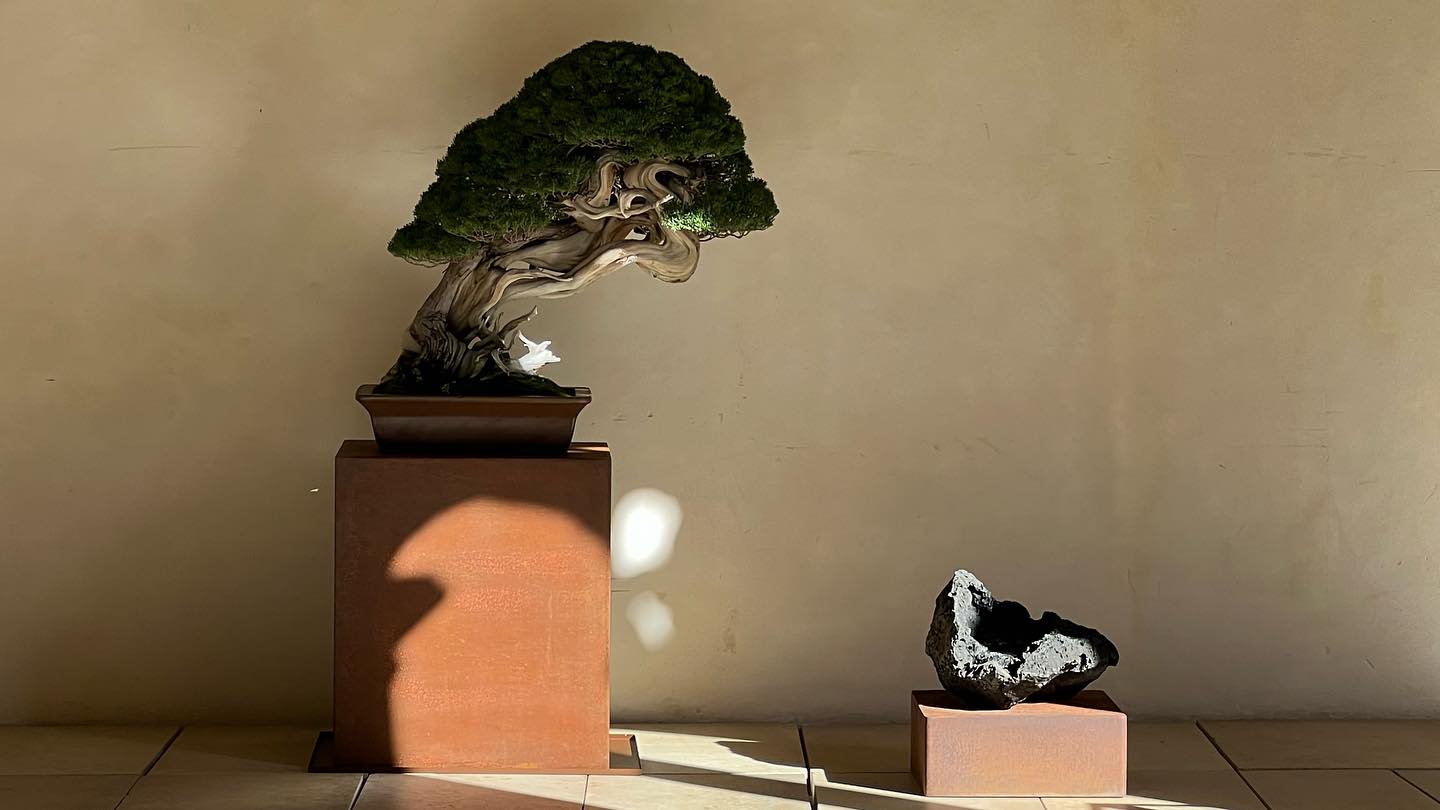
Por último, montamos el Tokonoma; espacio para recibir a los invitados, en él se presenta un árbol que nos lleva a la estación del año que estamos viviendo. El árbol acompañado de una pequeña planta, piedra o algún recipiente con agua. Una preparación para lo que estamos a punto de ver.
El jardín listo para inspirar y emocionar y nosotros preparados para el resto del día.
Every morning, the first thing we do is prepare the garden. The collection is as important as the place where it is visited. The garden creates spaces in which a dialogue is established between the trees and the rest of the elements; backgrounds, plants, water and stones. Every corner takes you back to the trees’ place of origin, to nature.
One of us rakes the ground that the visitors will walk through, we go over the ponds and jars with lotuses, water lilies and fish. We select the plants that are at their best and place them in the corners of the garden and on the entrance table. We watered the stones.
Finally, we set up the Tokonoma; a space to receive the guests, where we present a tree that takes us to the season of the year we are living. The tree is accompanied by a small plant, stone or a container with water. A preparation for what we are about to see.
The garden is ready to inspire and excite and we are ready for the rest of the day.
Nuevos ejemplares / New trees


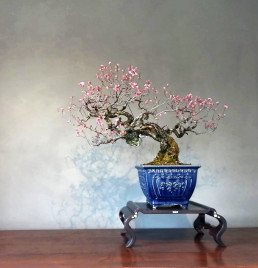
Las colecciones tienen que renovarse, unos se van para hacer sitio a los que vienen. La particularidad de esta colección es que está viva, y lo natural en algo vivo es el cambio. En ella se refleja el paso de las estaciones y el ciclo de la vida.
Árboles jóvenes que llegan a su madurez y pasan a formar parte de la exposición, árboles que terminan su ciclo vital y nos dejan o el caso de nuevos ejemplares que vienen de fuera para entrar a formar parte de ella.
Hoy damos la bienvenida a dos árboles que llegan de Japón, tras un larguísimo viaje. Los árboles viajan en barco acondicionados para resistir la travesía. El traslado se hace durante los meses en los que los árboles están menos activos y de la mano de profesionales capaces de lidiar con la burocracia que es, como en casi todo, cada vez mayor.
Tras la espera, fuimos a su encuentro a Bélgica y hoy tras un periodo de cuarentena uno de ellos luce ya en nuestro Tokonoma, recibiendo a los visitantes.
Collections have to be renewed, some leave to make room for those who come. The particularity of this collection is that it is alive, and the natural thing in something alive is change. It reflects the passing of the seasons and the cycle of life.
Young trees that reach maturity and become part of the exhibition, trees that end their life cycle and leave us or the case of new specimens that come from outside to become part of it.
Today we welcome two trees that arrive from Japan, after a very long journey. The trees travel by ship, conditioned to withstand the journey. The transfer is done during the months when the trees are less active and by professionals capable of dealing with the bureaucracy that is, as in almost everything, increasing.
After a long wait, we went to Belgium to meet them and today, after a period of quarantine, one of them is already in our Tokonoma, welcoming visitors.

Primavera/Spring


La primavera nos sorprende cada año; vemos los árboles y salimos al jardín varias veces al día, Los primeros signos: yemas que se van hinchando, mirlos en pie de guerra buscando desesperados, material para sus nidos. Y aun así un día de pronto nos sorprende la primavera.
Son días de muchas visitas, todos buscamos planes para salir después de los fríos del invierno. El jardín se llena de colegios, aficionados, familias y amantes de la naturaleza en general. La primavera compite con el otoño en términos de visitas, las dos estaciones muy breves. Con los primeros brotes de los arces, el jardín se llena de color, el deshojo brota de un color rojo intenso, el beni-shidori de color melocotón, el seigen, rosado…no pasará mucho tiempo hasta que con el sol sus hojas se pongan verdes y siga el ciclo imparable de los árboles, de las estaciones….continuará
Spring surprises us every year; we see the trees every day, we go out into the garden several times a day, we see the first signs: buds swelling, blackbirds on the warpath desperately searching for nesting material. And yet one day we are suddenly surprised by spring.
These are days of many visitors, we are all looking for plans to go out after the cold of winter. The garden fills up with school children, amateurs, families and nature lovers in general. Spring competes with autumn in terms of visits, the two very short seasons. With the first buds of the maples, the garden fills with color, the deshojo sprouts on a deep red color, the beni-shidori on a peach color, the seigen, pink…it won’t be long before with the sun their leaves turn green and the unstoppable cycle of the trees, of the seasons continues….