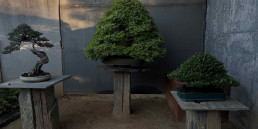



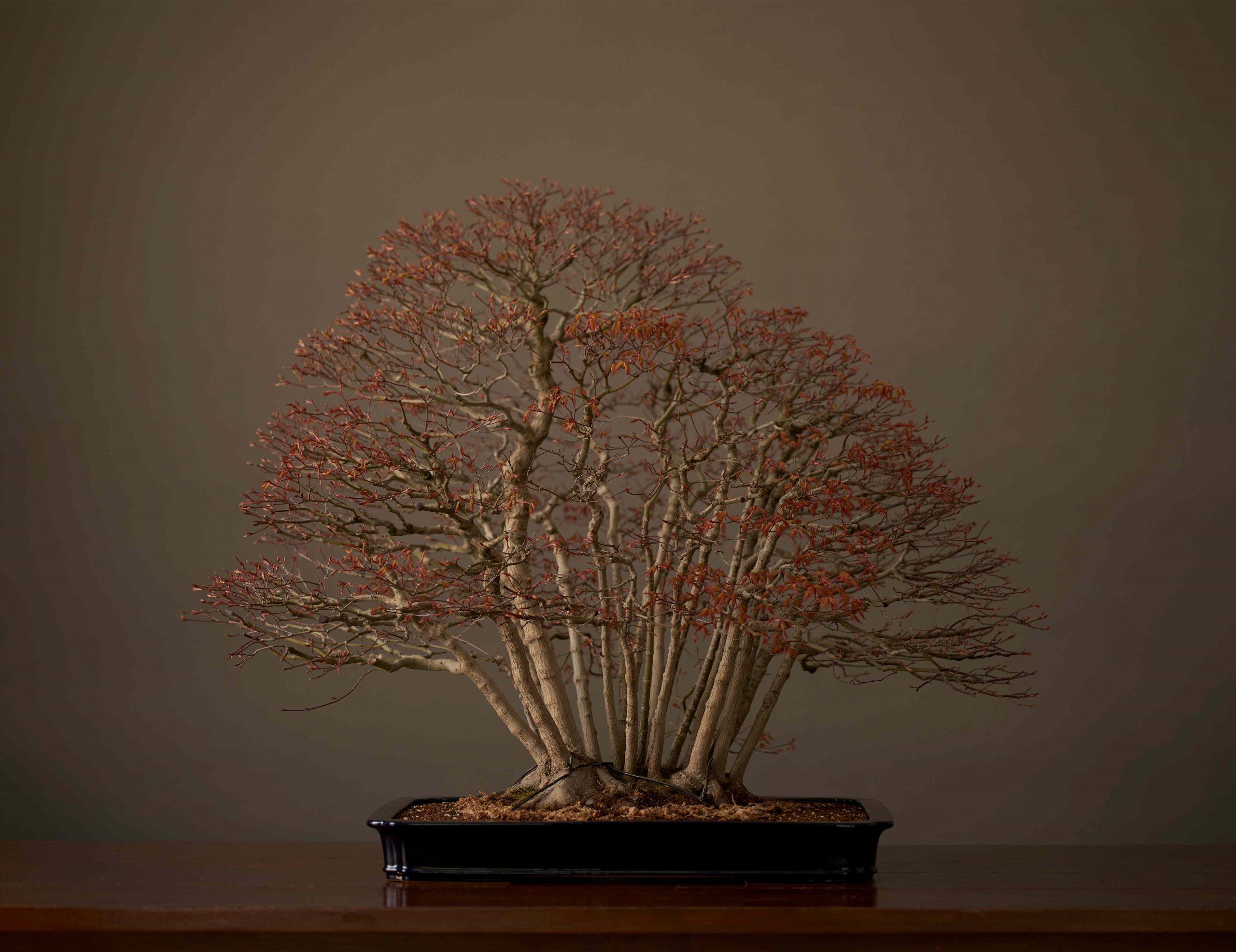
En la colección tenemos muchos bosques de muy distintas especies. Cada uno es un mundo; no solo porque entre si son muy diferentes si no porque son en si un micro mundo. Tienen una presencia muy diferente a la de un ejemplar solitario.
Existen estudios muy interesantes sobre como interactúan los bosques en la naturaleza, como sus conexiones entrelazadas por el suelo le hacen capaces de colaborar y comunicarse. Si siempre se pensó que los árboles de un bosque competían por los recursos; nutrientes, agua, luz…estos estudios hablan de que en realidad los comparten, hablan de individuos que se relacionan.
Parece que no solo comparten nutrientes; son capaces de comunicarse y avisar de plagas o amenazas. Cuentan que una arboleda de acacias en Africa aumentó la toxicidad de sus hojas cuando los antílopes se comieron las hojas de sus árboles periféricos.
…pero eso ya lo sabía Mario Benedetti:
El bosque crea
nidos, juncos, en fin
vocabulario.
In the collection we have many forests of very different species. Each one is a micro world. They have a very different presence from a single specimen.
There are very interesting studies on how forests interact in nature, how their intertwined connections through the soil make them able to collaborate and communicate. If it was always thought that the trees in a forest competed for resources; nutrients, water, light… these studies show that they actually share them, they talk about individuals that relate to each other.
But it seems they not only share nutrients; they are able to communicate and warn of pests or threats. It is said that an acacia grove in Africa increased the toxicity of its leaves when antelopes ate the leaves of its peripheral trees.
…but Mario Benedetti already knew that:
The forest creates nests
bulrushes in short
vocabulary.